Spanish Tapas Culture: How to Order and Where to Go
Walking into a crowded Spanish bar for the first time can feel like stepping onto a stage where you don't know the script and everyone else is an expert. I spent my first three months in Madrid accidentally ordering full plates of food for myself when I only wanted a snack, simply because I didn't understand the vocabulary of the counter. This guide breaks down the unwritten rules of tapas culture so you can navigate the noise, the crowds, and the menus with total confidence.
Disclosure: This post may contain affiliate links. We may earn a commission at no extra cost to you if you make a purchase through these links. Read full disclosure.
The Philosophy of the Tapa: More Than Just a Snack
In most cultures, a meal is a destination where you sit down, stay for two hours, and then head home. In Spain, "tapas" is not just a type of food; it is a social movement. When someone suggests they want to go "ir de tapas," they are inviting you to a multi-stage journey through the neighborhood. It is a fundamental part of the Spanish identity that emphasizes movement, variety, and the art of conversation over the act of consumption.
The Origins of the Tapa
The legend of the tapa is as varied as the food itself. The most common story involves King Alfonso XIII, who was served a glass of wine in a windy tavern in Cádiz. To keep the dust and flies out, the waiter placed a slice of ham over the top of the glass. The King enjoyed the "lid" (tapa) so much that he ordered another. Whether this is historically accurate or just a charming myth, it perfectly encapsulates the original purpose: a small accompaniment to a drink.
In modern Spain, this tradition has evolved but the spirit remains. In some cities, the tapa is still a free gift served with a beer or wine, while in others, it is a sophisticated culinary creation that you pay for. Understanding this distinction is the first step to becoming a savvy diner. If you are exploring the culinary roots of the country, you might find that Spanish Food and Drink: A Practical Culture Guide offers a broader perspective on how these small bites fit into the larger national diet.
The Social Aspect of Tapas
Tapas culture is built on the "barra" (the bar counter). While tourists often head straight for a table, the locals congregate around the bar. Standing up allows you to be mobile, to greet neighbors, and to leave easily when it is time to move to the next spot. It is a high-energy environment where the clinking of glasses and the shout of the bartender are the soundtrack to your evening.
This social fluidity means that tapas is rarely a solo activity. It is designed for sharing, for debating which bar has the best croquetas, and for the "paseo"—the evening stroll. If you find yourself staying in a central neighborhood found on Booking.com, you will likely see this ritual unfold every night between 8:00 PM and midnight. It is a beautiful, chaotic dance that requires a bit of thick skin and a lot of patience.
Regional Differences in Tapas Culture
Spain is not a monolith, and its food culture reflects its diverse history. In the south, specifically in Granada and Almería, the free tapa is still king. You order a "caña" (a small beer) and a plate of food appears automatically. In the north, specifically in San Sebastián and Bilbao, the culture shifts to "pintxos." These are often elaborate, gourmet bites held together by a toothpick and displayed prominently on the bar.
Moving between these regions is easy if you use Omio to check the high-speed train schedules, but your stomach will need to adjust to the different rules of engagement. In the Basque Country, you might help yourself to the items on the bar and count the sticks at the end, whereas in Seville, you must order everything from the waiter. For a deeper dive into the northern style, check out our guide on The Basque Country: Food, Coast, and Culture to see how their unique geography influences the plate.
Navigating the Spanish Tapas Bar: How to Order Like a Pro
The biggest hurdle for newcomers is the terminology of portion sizes. If you aren't careful, you will end up with far more food than you can handle, or worse, you'll be the person holding up a line of hungry locals because you're confused by the menu. The goal is to order just enough to enjoy, but not so much that you can't try the specialty at the bar next door.
Tapa, Ración, and Media Ración
The most important thing to learn is the "scale of hunger." A tapa is a single serving, usually enough for one person to have a few bites. A media ración is a half-portion, ideal for two people to share. A ración is a full plate, meant for a group of three or four. When I first arrived, I made the mistake of ordering three "raciones" for two people, and the waiter looked at me like I was planning to feed a small army.
| Portion Size | Description | Best For… |
|---|---|---|
| Tapa | Small saucer or single bite | Individual tasting or a light snack with one drink. |
| Media Ración | A medium-sized plate | Sharing between two people who want to try 3-4 items. |
| Ración | A large, full-sized plate | A group of 4 or more, or if you are staying at one bar for the night. |
| Montadito | A small, toasted sandwich | A quick filler between more elaborate dishes. |
| Pintxo | A bite-sized snack on a toothpick | Basque-style bars where you want maximum variety. |
The Unwritten Rules of the Bar Counter
In a busy Spanish bar, the person who waits politely for someone to notice them will go hungry. You have to learn the art of the "eye contact" with the bartender. Once you catch their eye, be ready with your order. There is no "wait, let me see…" in a high-volume tapas bar. You should already know if you want a "vino tinto" (red wine), a "caña" (small beer), or a "clara" (beer mixed with lemon soda).
Don't be alarmed by the napkins on the floor in traditional bars. In some old-school establishments, throwing your used paper napkin on the floor was actually a sign of a good bar—it showed it was busy and popular. While this is fading in modern, upscale places, it is still a common sight in the authentic "tascas." If you are worried about the etiquette of these local spots, reading up on Spanish Bar and Café Etiquette for Newcomers will save you a lot of second-guessing.
Dealing with the Bill and Tipping
In many traditional bars, the bartender doesn't give you a printed receipt every time you order. They might mark your total on the wooden bar with a piece of chalk or simply keep a running tally in their head. When you are ready to leave, you say "la cuenta, por favor." It is customary to pay at the very end, even if you have stood there for an hour.
Tipping is another area where expats and tourists often overthink things. In Spain, a tip is a gesture of satisfaction, not a mandatory supplement to a low wage. For a few tapas and drinks, leaving the small change (the 20 or 50 cent coins) is perfectly acceptable. For a more formal "ración" sit-down meal, a few Euros is plenty. You can find a more detailed breakdown in our article on Tipping in Spain: When, Where, and How Much to ensure you aren't over-tipping or being seen as rude.
Essential Spanish Tapas You Must Try
Every region has its specialties, but there are several "heavy hitters" that you will find from Barcelona to Badajoz. These are the staples of the Spanish diet, and each bar will claim that their version is the best in the city. If you're feeling overwhelmed, booking a food tour through GetYourGuide can be a great way to have an expert lead you to the most authentic versions of these dishes.
The Classics: Tortilla, Patatas Bravas, and Croquetas
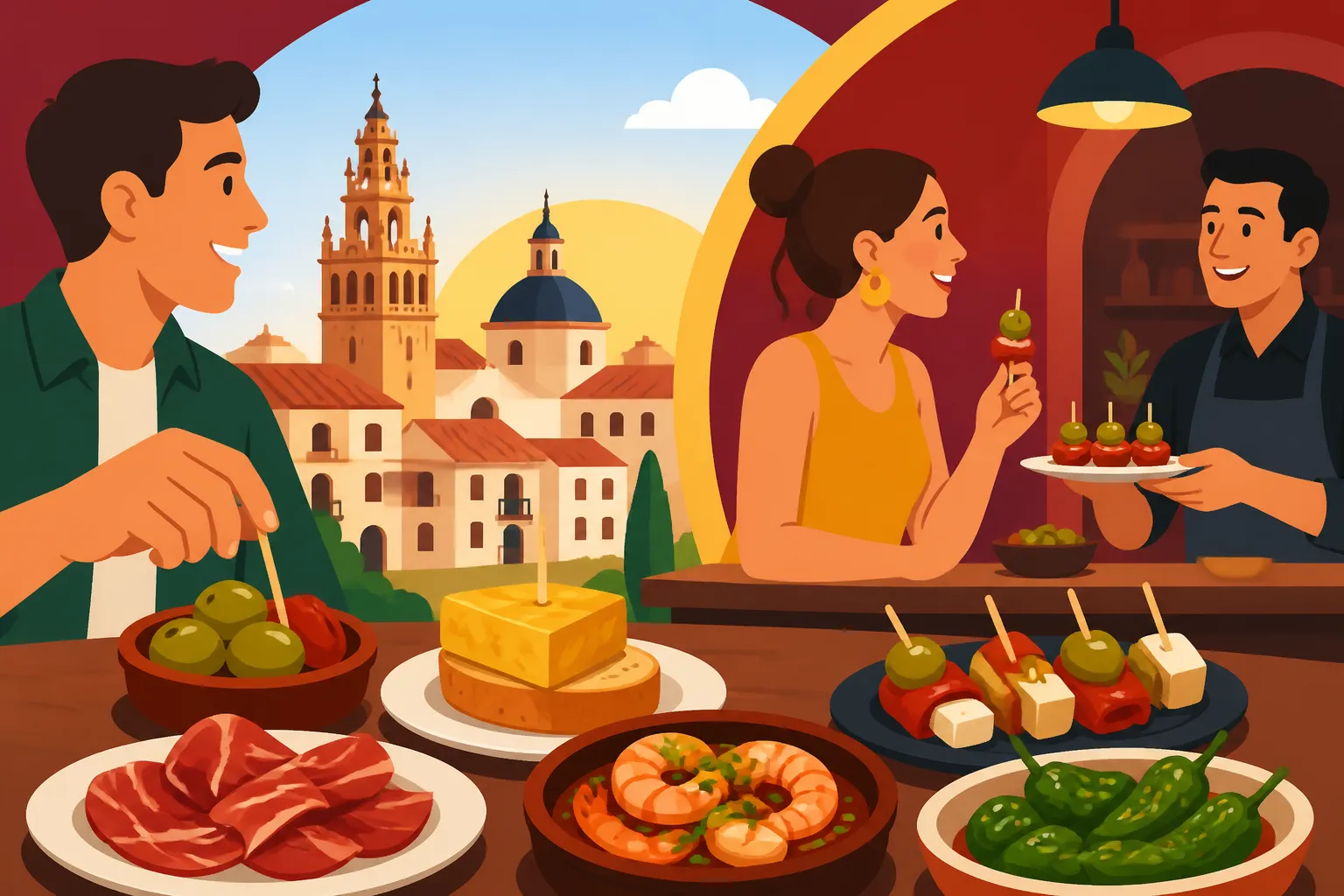
The Tortilla de Patatas is the soul of Spain. It is a thick omelet made with eggs, potatoes, and sometimes onions. The great national debate is "con cebolla" (with onion) or "sin cebolla" (without). A good tortilla should be slightly "jugosa" (juicy) in the middle. If it looks like a dry sponge, move to the next bar.
Patatas Bravas are fried potato cubes served with a spicy red sauce. In Madrid, the sauce is often a pimentón-based roux, while in Catalonia, it might be served with alioli (garlic mayo) as well. Then there are Croquetas. These are deep-fried bechamel fritters filled with jamón, salt cod (bacalao), or mushrooms. A perfect croqueta has a crisp exterior that shatters to reveal a creamy, molten center. For those who need to avoid certain ingredients, How to Eat Gluten-Free in Spain (Sin Gluten Tips) provides ways to enjoy these classics safely.
Seafood Delights: Gambas and Pulpo
Because Spain is surrounded by water, seafood tapas are ubiquitous even in the center of the country. Gambas al Ajillo (garlic shrimp) is a sensory experience; it arrives at the bar sizzling in a clay pot, the oil bubbling with sliced garlic and chili. You must use the provided bread to soak up every drop of that garlic oil—it's practically a requirement.
Pulpo a la Gallega (Galician-style octopus) is another must-try. The octopus is boiled until tender, sliced onto a wooden plate, and dusted with sea salt and smoked paprika (pimentón). It is often served over a bed of boiled potatoes. Even if you think you don't like octopus, the texture of well-prepared "pulpo" will change your mind. It is a staple of Galicia and Green Spain: A Traveler's Introduction, but you will find excellent versions in Madrid’s fish markets as well.
Cured Meats and Cheeses
No tapas crawl is complete without a plate of Jamón Ibérico. This isn't just ham; it's a cured meat from pigs that have often been fed on acorns (bellota). The fat melts at room temperature, and the flavor is complex and nutty. Often, you will see a whole leg of ham mounted on a "jamonero" stand behind the bar, with a specialized carver slicing translucent ribbons for each order.
Pair your ham with Queso Manchego, a sheep's milk cheese from the La Mancha region. It comes in various stages of aging: "fresco" (fresh), "curado" (cured), and "viejo" (aged). The aged versions have a sharp, crystalline texture that pairs perfectly with a glass of dry Sherry or a bold Rioja. If you find yourself wanting to know more about what you're drinking with these meats, our guide on Spanish Wine Regions: A Beginner's Guide is a great place to start.
Where to Go for the Best Tapas Experiences
While you can find tapas anywhere in Spain, certain cities have turned the practice into a high art form. Depending on your travel style, you might prefer the dusty, authentic taverns of the south or the sleek, Michelin-starred mini-bites of the north.
Granada: The Land of the Free Tapa
Granada is legendary among travelers for its generosity. In this city, you almost never pay for tapas. You order a drink—perhaps a Alhambra beer—and the waiter brings you a plate of meatballs, a mini-burger, or fried fish for free. As you order more drinks, the quality of the tapas often improves. It is one of the most budget-friendly ways to eat in Europe.
The area around Calle Elvira and Plaza Nueva is famous for this, but for a more local experience, head to the Calle Navas. The culture here is about staying for two or three drinks because you are curious to see what the next free tapa will be. If you are planning a trip to the south, Seville, Granada, and Córdoba: Andalusia's Great Cities offers tips on how to balance your sightseeing with your eating schedule.
San Sebastián: The Pintxo Capital
In the north, they do things differently. San Sebastián (Donostia) is arguably the food capital of the world. Here, you go for "pintxos." The Old Town (Parte Vieja) is packed with bars where the counters are hidden under mountains of creative snacks. You might find seared foie gras with fig jam, spider crab tarts, or slow-cooked beef cheeks.
Unlike the free tapas of the south, pintxos are paid for individually and can be quite pricey because of the high-quality ingredients used. The etiquette here is to take a plate, select one or two items, order a "txakoli" (local sparkling white wine), and move on. To make the most of this region, you might want to look into How to Find Authentic Restaurants in Spain (Not Tourist Traps) to avoid the more commercialized spots.
Madrid and Seville: The Traditional Heartlands
Madrid is the melting pot of Spain, meaning you can find tapas from every single province here. The area of La Latina, specifically Cava Baja, is a famous street for a Sunday afternoon tapas crawl. Meanwhile, in Seville, the focus is on tradition and outdoor living. Tapas in Seville are often enjoyed standing at high tables on the sidewalk, watching the world go by in the heat of the evening.
In these cities, the "Menú del Día" is common for lunch, but dinner is almost always reserved for tapas. You will find that What Time Do Spaniards Eat Lunch and Dinner? is crucial information here, as showing up for tapas at 6:00 PM will result in you sitting in an empty bar with the staff still cleaning the floors.
Practical Tips for Your Tapas Crawl
To truly enjoy the experience, you need to shed your "tourist" habits and adopt the local rhythm. This means changing how you think about time, hunger, and navigation.
Timing Your Visit (The Siesta Factor)
Spain runs on a different clock. Tapas bars usually open for a lunch session from 1:30 PM to 4:00 PM and then close until the evening. The real tapas action starts around 8:30 PM and reaches its peak at 10:00 PM. If you go earlier, you will be eating with other tourists. If you want the authentic, buzzing atmosphere, you have to stay up late.
This schedule is dictated by the midday heat and the long workdays. If you find yourself getting hungry at 6:00 PM, a "merienda" (afternoon snack) like Churros con Chocolate and Where to Get It can bridge the gap. Just remember that the best bars don't even start cooking their evening specials until the sun starts to go down.
Logistics and Planning Your Route
Don't try to visit ten bars in one night. You will end up exhausted and won't remember the food. A good "ruta de tapas" involves three or four well-chosen spots. Start with a bar known for its seafood, move to one famous for its meats, and finish with a place that specializes in desserts or cheese.
Using apps like Google Maps is helpful, but don't be afraid to follow the noise. If a bar is empty, there is usually a reason. If it is packed three-people deep and people are shouting, it’s probably excellent. If you are traveling between cities to try different styles, using Omio can help you plan your transitions so you arrive just in time for the evening rush.
Common Mistakes to Avoid
Even the most seasoned travelers make mistakes when they first encounter the "tapas wall of sound." Here are a few things to keep in mind so you don't stick out like a sore thumb.
Don't Stay in One Place Too Long
The most common mistake is treat a tapas bar like a standard restaurant. If you sit down at a table and order five things, you have missed the point of "ir de tapas." The goal is variety. If you like the food, have one more drink and one more bite, then move on. There is always another hidden gem around the corner.
Staying in one spot also limits your exposure to the different "house specialties." Every bar has one thing they do better than anyone else. In one place it’s the mushrooms (champiñones), in another it’s the salt cod. By moving, you get the "best of" the neighborhood. For help with the language of the menu, you might find Spanish Medical Terminology: Common Words Expats Should Know useful if you have allergies, or simply use a translation app to decode the "fuera de carta" (off-menu) specials.
Misinterpreting Menu Terms
Be careful with terms like "casero" (homemade) and "artesano." While usually a sign of quality, sometimes they are used loosely. Also, be aware of the "suplemento de terraza." In many popular areas, sitting outside on the terrace costs 10-15% more than standing at the bar. If you are on a budget, stay inside at the "barra."
Also, don't confuse a "tapa" with a "montadito." A montadito is always served on bread. If you only order montaditos, you will be very full of bread very quickly. Mix your order up with some "fritura" (fried fish) or "aliños" (marinated salads) to keep the meal balanced. If you're struggling to wake up the next morning after a late night of tapas, knowing How to Order Coffee in Spain Like a Local will be your best friend.
Disclaimer
This guide is intended for informational purposes and reflects the cultural norms and personal experiences of living in Spain. Culinary traditions and pricing can vary significantly between regions and individual establishments. Always check local opening hours and specific house rules when visiting.