The Costa del Sol and Málaga Province: Visitor Highlights
Most travelers land at Málaga-Costa del Sol Airport, grab their bags, and immediately flee to the nearest high-rise resort, never realizing they have just bypassed one of the most culturally rich provinces in Europe. I spent my first summer here making that exact mistake, sticking to the "fried fish and sangria" circuit before I finally ventured into the mountains. This guide solves the dilemma of the modern visitor by bridging the gap between the glitzy coastline and the rugged, authentic interior of Málaga.
Disclosure: This post may contain affiliate links. We may earn a commission at no extra cost to you if you make a purchase through these links. Read full disclosure.
Navigating the Capital: More Than Just a Gateway
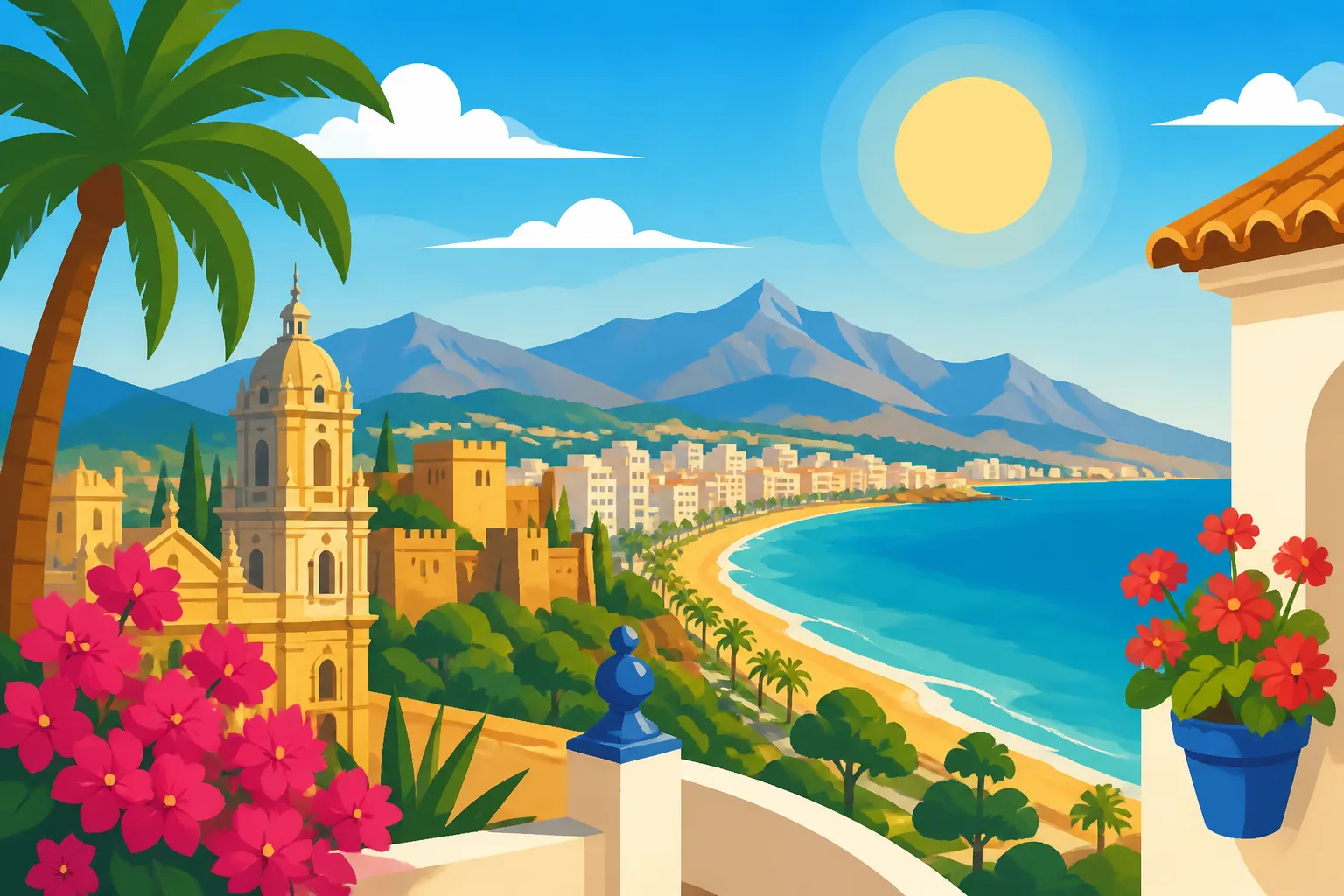
For decades, Málaga city was treated as a mere transit point, a place to endure for an hour while waiting for a bus to Marbella. If you make that choice today, you are missing out on what I consider the most vibrant city in Andalusia. The transformation over the last decade has been nothing short of miraculous. The port area, once a gritty industrial zone, is now Muelle Uno, a sleek waterfront promenade where you can sip a glass of local Victoria beer while looking up at the historic Alcazaba fortress.
When you walk through the historic center, start at Calle Larios. It is the city's main artery, and the marble-shining pavement is always impeccably clean. From here, you can weave into the side streets to find the Picasso Museum. Many people forget that Picasso was born here, and the museum housed in the Buenavista Palace is world-class. If you are planning to visit several museums in a single day, it is often worth checking How to Plan a Week in Southern Spain Without a Car to see how centralized these attractions truly are.
Logistically, getting around the city is a breeze. If you are coming from further afield, I often use Omio to compare the train and bus prices, as the María Zambrano station is a major hub for the high-speed AVE trains. Once you are in the center, everything is walkable. The city also serves as the perfect base for the C1 Cercanías train line, which hugs the coast and stops at major points like Torremolinos and Fuengirola for just a few euros.
The Alcazaba and Gibralfaro
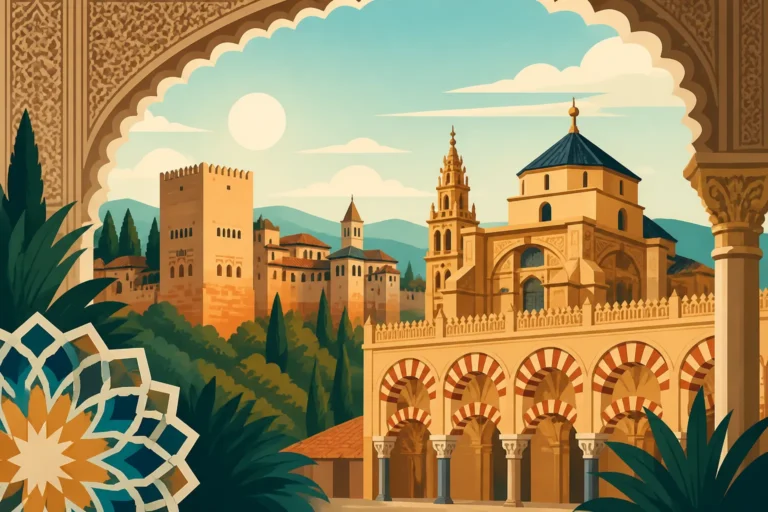
The Alcazaba is a palatial fortification from the Islamic era, and it is often called the "Lesser Alhambra." While it may not have the sheer scale of Granada’s masterpiece, it has an intimacy that I actually prefer. You can wander through the jasmine-scented gardens and Moorish arches without the suffocating crowds. Pro tip: buy the joint ticket for the Alcazaba and the Castillo de Gibralfaro. The walk up to the castle is steep—trust me, your calves will feel it—but the view of the bullring and the Mediterranean at sunset is the best in the province.
The Atarazanas Market
If you want to see where the locals actually live and breathe, go to the Mercado de Atarazanas. This is a nineteenth-century iron-clad market with a stunning stained-glass window at one end. The fish section is a sensory overload of jumping shrimp and enormous tuna. Visitors are advised to grab a stool at one of the small bars inside the market for "pescaíto frito" (small fried fish). It is the freshest seafood you will ever eat, and the atmosphere is electric. Just remember that Spanish Bar and Café Etiquette for Newcomers applies here; don't be afraid to be a little assertive to get the waiter's attention when it's busy.
SOHO and the Art District
Just south of the Alameda Principal lies SOHO, the "District of the Arts." Once a neglected neighborhood, it is now covered in massive murals by world-famous street artists like Obey and D*Face. It is the creative heart of the city, filled with craft beer bars and small galleries. It represents the "new" Málaga—edgy, youthful, and unapologetically modern.
Coastal Highlights: From Glamour to Hidden Coves
The Costa del Sol spans over 150 kilometers, and every town has a distinct personality. You have the western side, which is dominated by luxury and tourism infrastructure, and the eastern side, which feels more rugged and "Spanish." Deciding where to spend your time depends entirely on whether you want a designer cocktail or a quiet cove.
Marbella is the heavyweight champion of the coast. Most people think only of Puerto Banús—the harbor with the yachts and the Ferraris—but the real soul of Marbella is its Old Town (Casco Antiguo). The Plaza de los Naranjos is a square filled with orange trees and surrounded by whitewashed buildings. It is incredibly romantic at night. When booking accommodation in this area, I find that Booking.com offers a great range of boutique guesthouses tucked away in these narrow alleys, which offer a much more authentic feel than the massive resorts on the Golden Mile.
On the other end of the spectrum is Nerja. Located at the eastern tip of the province, Nerja has managed to avoid the high-rise blight that affected much of the coast. It is famous for the "Balcón de Europa," a promenade built on a cliff that juts out into the sea. Below the town are small, sandy coves like Playa de Burriana. If you enjoy snorkeling, the nearby Maro cliffs are a dream. The water is crystal clear, and the area is a protected natural park.
| Destination | Vibe | Best For | Typical Transport |
|---|---|---|---|
| Marbella | Luxury & History | Shopping, Dining, Old Town | Bus or Private Car |
| Nerja | Picturesque & Relaxed | Families, Caves, Snorkeling | ALSA Bus |
| Estepona | Floral & Authentic | Slow Travel, Murals, Gardens | Bus |
| Fuengirola | Busy & Convenient | Nightlife, Beach Clubs, Easy Access | C1 Train |
Estepona: The Garden of the Coast
Estepona has recently undergone a massive beautification project, and it has become my favorite coastal escape. The mayor decided to fill the streets with thousands of colorful flower pots, each street having its own color theme. It feels like walking through a living postcard. The town also features a "Mural Route," with dozens of giant paintings on the sides of apartment blocks. It is much quieter than Marbella but just as beautiful, making it ideal for those who want the Mediterranean lifestyle without the pretension.
The Luxury of Puerto Banús
If you do venture into Puerto Banús, go with an open mind. It is a spectacle of wealth. While the prices for a coffee on the front line are eye-watering, it is fascinating for people-watching. If you are staying in Málaga city, you can take an Avanza bus from the main station, which I usually book via Omio to avoid the long queues at the ticket windows. It is a world away from the quiet mountain villages, but it’s a part of the Málaga experience that shouldn't be ignored.
Mijas Costa vs. Mijas Pueblo
One common point of confusion for visitors is the difference between Mijas Costa and Mijas Pueblo. Mijas Costa is the coastal strip with beaches and modern developments. Mijas Pueblo, however, is a traditional white village perched high on a mountainside. If you are looking for the iconic Andalusia, head to the Pueblo. It is famous for its "donkey taxis," though many modern travelers now prefer to explore the cobblestone streets on foot to admire the view of the entire coastline from the mountainside.
Ronda and the Pueblos Blancos: The Soul of Andalusia
You haven't truly seen Málaga until you leave the coast. The interior of the province is home to the Serranía de Ronda, a mountain range dotted with Spain's Pueblos Blancos: Visiting the White Villages. These towns are characterized by their blindingly white houses, narrow winding streets, and a pace of life that hasn't changed in centuries.
Ronda is the undisputed star here. Perched on a massive limestone escarpment, the town is split in two by the El Tajo gorge, a 120-meter drop that will make your stomach flip. The "Puente Nuevo" (New Bridge) spans this chasm and is the most photographed site in the province. I remember standing on that bridge for the first time; the sheer scale of the landscape is impossible to capture in a photo. Because Ronda is a popular destination, I highly recommend checking How to See Ronda on a Day Trip From Málaga to plan your timing, as the day-trip buses usually arrive around 11:00 AM and leave by 4:00 PM. If you stay overnight, you get the town to yourself.
Beyond the bridge, Ronda is home to one of the oldest and most beautiful bullrings in Spain. Even if you aren't a fan of the sport, the architecture and the museum inside provide a deep dive into the cultural history of the region. For hikers, the paths that lead down into the valley offer a perspective of the bridge that most tourists never see.
Frigiliana: The Moorish Masterpiece
Located just uphill from Nerja, Frigiliana is consistently voted one of the most beautiful villages in Spain. Its "Barrio Mudéjar" is a labyrinth of steep, narrow streets with blue doors and potted geraniums. The history here is heavy with the legacy of the Moors, and you can feel it in the architecture. I suggest arriving early in the morning before the heat and the crowds arrive. There is a small "tourist train" that takes you around the village, but the best way to see it is to get lost in the backstreets.
Antequera: The Heart of the Province
Antequera is often overlooked because it is inland, but it is a crossroads of history. It features Bronze Age dolmens (UNESCO World Heritage sites), a Moorish fortress, and more churches per capita than anywhere else in Spain. It feels like a real Spanish city, not a tourist resort. If you have Renting a Car in Spain: Requirements, Insurance, and Driving Tips sorted, Antequera is a very easy drive from Málaga and serves as the gateway to the spectacular El Torcal natural park.
Casares and Gaucín
If you want to get truly off the beaten path, head to the western mountains to find Casares. This village is built into a hillside, and it looks like a pile of white sugar cubes from a distance. It is rugged, steep, and incredibly quiet. Nearby Gaucín is known as the "Balcony of the Mountains" and offers views across the Mediterranean all the way to the Rock of Gibraltar and the coast of Africa. These are the places where you can still find a local bar serving a plate of mountain ham and a glass of wine for a few euros. Just make sure you have checked Money for Travel in Spain: Cards, Cash, and ATMs because these smaller mountain spots are where cash is still king.
Adventure and Nature: Extreme Málaga
Málaga is not just for sunbathing. It is one of the most mountainous provinces in Spain, which makes it a playground for outdoor enthusiasts. The landscape changes rapidly from the sandy shores to the karst limestone formations of the interior.
The most famous adventure is the Caminito del Rey. Once known as the most dangerous walkway in the world, it has been completely refurbished and is now a safe, albeit thrilling, aerial path pinned to the walls of the Gaitanes Gorge. You walk on wooden boardwalks 100 meters above the river. It is a breathtaking experience, but tickets sell out months in advance. I always tell people to check GetYourGuide if the official website is sold out, as they often have spots on guided tours.
The walk takes about three to four hours and is linear, meaning you end in a different place from where you started. A shuttle bus brings you back to the parking area. It is not for those with severe vertigo, but for everyone else, it is a "must-do." The surrounding area of El Chorro is also a world-famous rock climbing destination.
El Torcal de Antequera
Imagine a landscape where rocks have been stacked like giant pancakes by the hands of giants. That is El Torcal. This natural park is one of the most impressive karst landscapes in Europe. Millions of years of erosion have created bizarre limestone shapes that look like animals, towers, and sculptures. There are several well-marked walking trails ranging from easy to moderate. Because it is at a high altitude, it is often 10 degrees cooler here than on the coast, which is a welcome relief if you are Visiting Spain in Summer: Heat, Crowds, and Coastal Escapes. Keep an eye out for the Iberian ibex (wild mountain goats) that frequent the area.
Sierra de las Nieves National Park
The newest National Park in Spain is the Sierra de las Nieves. It is home to the "Pinsapo" or Spanish Fir, a rare prehistoric tree that survived the last ice age. The park is a UNESCO Biosphere Reserve and offers some of the best hiking in Andalusia. The peak of Torrecilla reaches nearly 2,000 meters. If you are an avid hiker, this is where you can find true solitude. The air is crisp, the forests are ancient, and the views are endless.
Cultural Nuances: Dining and Surviving the Local Pace
Living in Málaga taught me that the clock runs differently here. If you try to eat lunch at noon or dinner at 6:00 PM, you will find yourself sitting in an empty restaurant eating "tourist food." The locals wouldn't dream of lunch before 2:00 PM or dinner before 9:00 PM. This is something you must embrace to get the best out of the province.
Understanding Spanish Meal Times and Dining Etiquette Explained is crucial. The "sobremesa"—the tradition of sitting and talking for an hour after the meal is finished—is sacred here. Never rush the bill. In fact, you will usually have to ask for it ("La cuenta, por favor") because it is considered rude for a waiter to bring the bill before you ask, as if they are trying to kick you out.
Málaga also has its own specific tapas culture. Unlike Granada, where tapas are often free with a drink, in Málaga, you usually order and pay for them. However, they are larger and more complex. I highly recommend learning Spanish Tapas Culture: How to Order and Where to Go before you arrive so you can distinguish between a "tapa" (small snack), a "media ración" (half plate), and a "ración" (full plate). Sharing is the name of the game here.
The Coffee Language
Málaga has its own unique way of ordering coffee, a legacy of the post-war era when coffee was scarce and expensive. Depending on the ratio of coffee to milk, you have specific names: un nube (a cloud, mostly milk), un sombra (a shadow, a bit more coffee), un mitad (half and half), or un café solo (black). It can be intimidating at first, but the waiters at the historic Central Café (where this system originated) are used to foreigners trying to figure it out.
Festivals and Fiestas
If you can time your visit with the Feria de Agosto (Málaga's August Fair), you are in for a wild ride. The city erupts into a week-long party with flamenco, horses, and plenty of "Cartojal," a sweet, cold white wine that is the signature drink of the fair. Just be aware that the city gets incredibly crowded. On the other hand, Holy Week (Semana Santa) is a solemn and deeply moving experience. The "tronos" (enormous religious floats) are carried through the streets by hundreds of people. It is a display of faith and tradition that is unparalleled in its intensity.
Practical Logistics: Making Your Trip Seamless
To really explore Málaga province, I recommend a mix of transport. The train system is excellent for the coast, but for the white villages and natural parks, you really need a car. I often suggest Renting a Car in Spain: Requirements, Insurance, and Driving Tips to those who want to see Ronda, Antequera, and the mountains in a single trip. The roads are generally in excellent condition, though be prepared for some hair-raising bends in the Serranía de Ronda.
When it comes to weather, Visiting Spain in Summer: Heat, Crowds, and Coastal Escapes is a real factor. July and August can be brutal, with temperatures often exceeding 35°C (95°F). This is the time to stick to the coast or the high mountains. Spring and Autumn are, in my opinion, the perfect times to visit. The almond blossoms in February and the orange blossoms in March create a scent that defines Andalusia.
Finally, always have a plan for your documents and bookings. I use Booking.com for my accommodation because the "free cancellation" option is vital when you’re exploring and might want to stay an extra night in a village you’ve fallen in love with. For tours like the Picasso Museum or the Caminito del Rey, GetYourGuide is my go-to for keeping all my digital tickets in one place.
Safety and Local Interaction
Málaga is a very safe province, but like any tourist hub, you should be mindful of pickpockets in crowded areas like Calle Larios or the bus stations. The locals (Malagueños) are famously friendly and open. Even if your Spanish is limited to "hola" and "gracias," they will appreciate the effort. Most people in the tourism industry speak English, but once you head into the mountains of the Axarquía or the Serranía, a few more phrases will go a long way. Use How to Find Authentic Restaurants in Spain (Not Tourist Traps) to find the places where you can practice your Spanish with the locals over a glass of Pedro Ximénez wine.
Disclaimer
This guide is intended for informational purposes only. While every effort has been made to ensure the accuracy of the information provided, travel conditions, opening hours, and local regulations in Spain are subject to change. Always verify specific details with official local sources before your trip.