How to Find Authentic Restaurants in Spain (Not Tourist Traps)
Oh, the quest for that truly authentic Spanish meal! I know the feeling all too well. You arrive in a new city, stomach rumbling, dreaming of paella or perfectly seasoned tapas, only to fall into the trap of an overpriced, bland restaurant right on the main square. It's a rite of passage for many of us expats and visitors, a moment of culinary disappointment amidst the excitement of Spain. But don't you worry, because I've been there, eaten the sad excuses for patatas bravas, and learned the tricks of the trade. This guide is all about helping you navigate Spain's vibrant food scene to discover those hidden gems where the locals truly feast.
Disclosure: This post may contain affiliate links. We may earn a commission at no extra cost to you if you make a purchase through these links. Read full disclosure.
The All-Too-Common Tourist Trap: What to Watch Out For
Let's be real, Spain is a tourist hotspot, and with that comes a certain amount of… well, tourist infrastructure. Some places are simply designed to catch the eye of weary travelers looking for a quick bite, often sacrificing quality and authenticity in the process. Learning to spot these places before you even sit down is your first superpower in the hunt for genuine Spanish cuisine.
Red Flags on the Menu and Facade
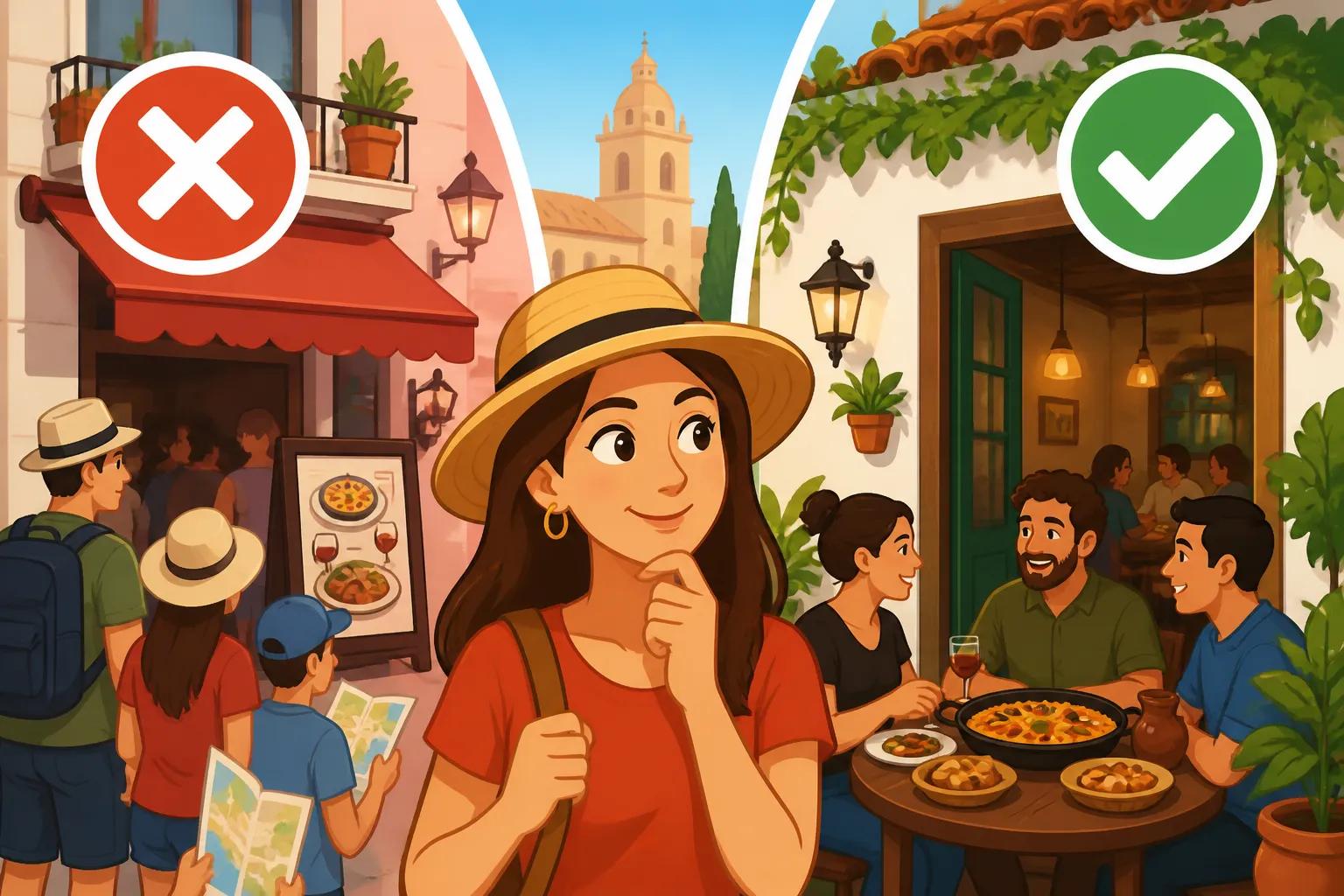
The menu itself is often the biggest giveaway. If you see a laminated, multi-page menu with poor quality, glossy photos of every single dish, alarms should be ringing. Real Spanish restaurants, especially the authentic ones, often have simpler menus. They might be written on a blackboard, a single sheet of paper, or even just recited to you by a server who's eager to share the day's fresh catches. Another huge red flag? Menus translated into six different languages, often with glaring grammatical errors. While some bilingual menus are normal in very cosmopolitan areas, an overly extensive, multi-language offering, especially outside major tourist zones, usually points to a place that caters primarily to foreigners who don't know any better.
Also, take a good look at the restaurant's exterior. Does it look overly polished, perhaps a bit too generic, with neon signs or excessively bright lighting? Authentic eateries often have a more lived-in, traditional feel, sometimes even a bit rustic. Think worn wooden tables, quirky decor that tells a story, or a simple, unassuming entrance that doesn't scream for attention. These places aren't trying to impress with flashy displays; they let their food do the talking.
Location, Location, (Bad) Location
This is perhaps the most obvious, yet most overlooked, indicator. Any restaurant directly fronting a major tourist attraction – think Plaza Mayor in Madrid, Las Ramblas in Barcelona, or right next to the Alhambra in Granada – is almost certainly going to be a tourist trap. These locations command exorbitant rents, which means they have to charge more for their food, and often cut corners on ingredients or preparation to maintain profitability. The focus here is on volume and convenience for the passing crowds, not on culinary excellence.
I’m not saying you can’t enjoy a coffee or a quick drink in these iconic squares; they’re beautiful places to people-watch! But for a proper meal, you need to be willing to walk just a few blocks away. Even moving two or three streets back from a major square can lead you to vastly superior and more affordable dining experiences. Consider it part of your cultural exploration, using tools like Omio to venture a little further afield from the main tourist hubs if you're really looking for a deep dive into regional gastronomy.
The Allure of the Hard Sell
Have you ever walked past a restaurant in Spain, and a server practically jumps out to grab your arm, loudly listing their specials or pushing you to come inside? This aggressive touting is almost always a sign to keep walking. Authentic Spanish establishments, especially those confident in their food, don't need to beg for customers. They rely on their reputation, word-of-mouth, and the quality of their dishes to draw people in. Locals know where the good food is, and those places are usually full without any need for a hard sell.
The atmosphere inside is also a clue. If the restaurant is mostly empty during peak Spanish meal times (around 2-3 PM for lunch, 9-11 PM for dinner), or if it’s full of only other foreigners, that’s a pretty good indication. The best places will be bustling with Spanish chatter, lively energy, and a general sense of being part of a local community gathering.
Hunting for Authenticity: Where the Locals Eat
Now that you know what to avoid, let's talk about how to pinpoint those truly special places. Finding authentic food in Spain isn't about luck; it's about strategy, observation, and a willingness to embrace the local way of life.
Venture Off the Beaten Path
This is the golden rule, the one piece of advice that will serve you well across Spain. Don't just stick to the main avenues and squares. Dive into the smaller side streets, explore the less-trafficked barrios (neighborhoods). These are the capillaries of Spanish cities, where daily life unfolds away from the tourist gaze. In places like Seville's Triana or Madrid's La Latina, even just a block or two away from the main drag can reveal a whole new world of culinary delights. The further you get from the immediate vicinity of a major monument or shopping district, the higher your chances of finding a local haunt.
Imagine you're near a bustling area like Plaza de España in Valencia. Instead of eating directly on the plaza, wander down a narrow street like Calle de la Paz or explore the Carmen neighborhood's labyrinthine alleys. You'll stumble upon tiny family-run restaurants, often passed down through generations, serving recipes perfected over decades. These places thrive on local patronage, so their food has to be consistently good.
Embrace the Menu del Día and Local Markets
The menú del día is a true Spanish institution and your best friend for an authentic, affordable lunch. This fixed-price, multi-course meal (typically appetizer, main, dessert, bread, and a drink) is usually offered on weekdays. If a restaurant has a menú del día, especially one that looks handwritten or changes daily based on fresh ingredients, it’s a strong indicator of local patronage. What Is a 'Menú del Día' and How Does It Work? delves into this more deeply, but generally, look for a price between 10-15 euros, though it can go up depending on the city and sophistication. It’s a fantastic way to try home-style Spanish cooking.
Another fantastic hunting ground is the local market. Forget the big, famous ones like La Boquería (which, while impressive, is now largely a tourist attraction). Seek out the neighborhood markets – Mercado de la Cebada in Madrid, Mercado Central in Valencia, or Mercado de Triana in Seville. Many of these markets have small bars or stalls (often called bares de mercado) that serve incredible, fresh food directly from the market vendors. You'll find anything from sizzling grilled seafood to traditional stews, often at stand-up counters or small tables. This is where the locals grab a quick, delicious, and incredibly fresh lunch. You can also explore Spanish Markets and Food Halls: Where to Eat and Shop for more on this.
Look for the Buzz, Listen for the Language
My favorite trick is to simply observe. Walk around at peak meal times. Which places are packed, with people spilling out onto the pavement, laughing and chatting loudly? Which places have a queue forming outside? That's usually where the magic happens. Look specifically for places buzzing with Spanish voices. If you only hear English or other foreign languages, it’s probably not the local hangout you’re seeking. The sound of lively Spanish conversation and the clatter of plates are the soundtrack of authenticity.
Also, pay attention to the age of the clientele. While there are certainly trendy spots for younger crowds, many traditional, authentic restaurants will have a mix of generations, often with older Spaniards enjoying their regular spot. This intergenerational patronage speaks volumes about the enduring quality and beloved status of an establishment.
Ordering Like a Local: Tips for a True Spanish Dining Experience
Once you've found a promising spot, knowing how to navigate the dining experience can elevate your meal from good to unforgettable. It's not just about what you eat, but how you eat it.
Understand Spanish Meal Times and Rhythms
This is crucial. Trying to find an authentic Spanish lunch at 1 PM will often lead you to tourist-centric places, as locals are still very much working. Lunch (the main meal of the day) typically starts around 2 PM and can go until 3:30 or even 4 PM. Dinner is even later, usually not kicking off until 9 PM, and often extending past 11 PM, especially on weekends. Eating at these local hours means you'll be dining alongside Spaniards, experiencing the true rhythm of their day.
If you're peckish earlier, embrace the Spanish tradition of tapeo (tapas hopping). You can graze on smaller plates and drinks from late morning through the afternoon, bridging the gap between tourist-friendly eating times and local meal times. For a full breakdown, check out Spanish Meal Times and Dining Etiquette Explained.
Navigating the Menu and Asking for Recommendations
Don't be afraid to ask for recommendations! Even if your Spanish isn't perfect, a simple " ¿Qué me recomienda? " (What do you recommend?) or " ¿Cuál es la especialidad de la casa? " (What's the house specialty?) can open doors to incredible dishes. Servers in authentic places are often passionate about their food and will be happy to guide you. They might suggest seasonal items or daily specials that aren't even on the printed menu.
When you're trying to figure out the menu, use your phone's translation app if needed, but primarily, look for classic Spanish dishes rather than generic international fare. Regional specialties are always a good bet. For instance, in Valencia, look for authentic paella valenciana (with rabbit and chicken, not seafood exclusively). In Galicia, seek out pulpo a la gallega. Each region has its culinary treasures, and diving into them is key to an authentic experience. Regional Spanish Dishes Every Visitor Should Try can give you some excellent pointers. If you need a quick cheat sheet for basic phrases, check out How to Order Food and Drinks in Spanish: A Practical Phrasebook.
Embrace the Tapas and Regional Specialties
Tapas culture is an art form in Spain, and it varies wildly by region. In Andalusia, tapas are often small, free portions served with a drink, a wonderful way to sample many different dishes. In other areas, like the Basque Country, you'll find pintxos, which are small bites typically served on a slice of bread, often paid for individually. Knowing these nuances helps you appreciate the local culinary scene. Instead of ordering one large meal, gather your companions and order a variety of tapas or raciones (larger plates meant for sharing) to get a true taste of Spanish communal eating.
My top tip for tapas? Don't settle in one place. Order one or two things, enjoy them with a drink, and then move on to the next bar. It’s called a ruta de tapas for a reason! This way, you get to experience different atmospheres, different specialties, and really immerse yourself in the local bar culture. Find out more in Spanish Tapas Culture: How to Order and Where to Go.
Leveraging Technology and Community Wisdom
Even with all your newfound observational skills, sometimes a little digital help or a good old-fashioned recommendation can really seal the deal.
Smart Use of Online Reviews and Maps
Google Maps is your best friend. When you're strolling through a neighborhood, open Maps and look for restaurants with high ratings (4.0+ stars) but, crucially, read the reviews. Are the reviews mostly in Spanish? Do they mention specific traditional dishes? Do they talk about the local atmosphere or the friendly staff? Pay attention to photos uploaded by reviewers – do they look like home-cooked meals or something churned out for tourists? Look at the restaurant's overall rating, but balance it with recent reviews and comments. Don't solely rely on the top-rated places in a tourist heavy area; they might simply be the best of the tourist traps.
Platforms like Tripadvisor can also be useful, but again, with a huge grain of salt. Filters for "local cuisine" or "traditional" can help, but always cross-reference with Google Maps reviews and your own observations. If you're looking to book a table for a larger group, especially for a slightly more upscale but still authentic experience, websites like Booking.com sometimes integrate restaurant booking features or link to local reservation systems, though direct booking with the restaurant is usually best for smaller, traditional spots.
Tap into Expat and Local Communities
Don't underestimate the power of human connection. If you know any expats living in Spain, ask them for their favorite restaurant recommendations. We've all done the hard work (and eaten the bad meals) for you! There are many expat Facebook groups or online forums where people happily share their go-to spots. A local friend's advice is gold.
You can also consider joining a food tour, especially at the beginning of your trip. Companies like GetYourGuide offer various culinary experiences. While some might be geared towards tourists, a good food tour led by a local guide can introduce you to several authentic tapas bars, teach you about local ingredients, and give you the confidence to explore on your own afterwards. Just make sure the tour emphasizes local, small businesses. They often reveal hidden gems you might never find otherwise, giving you a valuable head start on your culinary journey.
Ultimately, finding authentic restaurants in Spain is an adventure. It takes a bit of courage to step away from the obvious, a dash of patience, and an open mind (and stomach!). But trust me, the reward of a truly exquisite, local Spanish meal is worth every effort.
| Feature | Tourist Trap Restaurant | Authentic Local Gem |
|---|---|---|
| Menu | Laminated, multi-lingual, many photos, generic dishes. | Simple, often handwritten, Spanish/regional languages, daily specials. |
| Location | Directly on major squares/attractions. | Side streets, local neighborhoods (barrios), market stalls. |
| Sales Tactic | Aggressive touting, staff trying to pull you in. | Relies on reputation, word-of-mouth, no hard sell. |
| Clientele | Mostly other tourists, often empty at local peak times. | Mostly locals (Spanish speakers), bustling during peak hours, mixed ages. |
| Food Quality | Bland, mass-produced, higher prices for lower quality. | Fresh ingredients, traditional recipes, fair prices for quality. |
| Atmosphere | Overly polished, generic, loud pop music. | Lively, traditional, sometimes rustic, Spanish chatter, local music. |
| Payment | May prefer card, might have hidden charges. | Cash often preferred or appreciated, transparent pricing. |
Remember to have fun with it! Every meal, good or bad, is part of your Spanish adventure.
Disclaimer
The information provided in this guide is for general informational purposes only and does not constitute professional advice. While we strive to keep the information up-to-date and correct, we make no representations or warranties of any kind, express or implied, about the completeness, accuracy, reliability, suitability, or availability with respect to the website or the information, products, services, or related graphics contained on the website for any purpose. Any reliance you place on such information is therefore strictly at your own risk. Restaurant scenes can change rapidly, and experiences may vary.