Regional Spanish Dishes Every Visitor Should Try
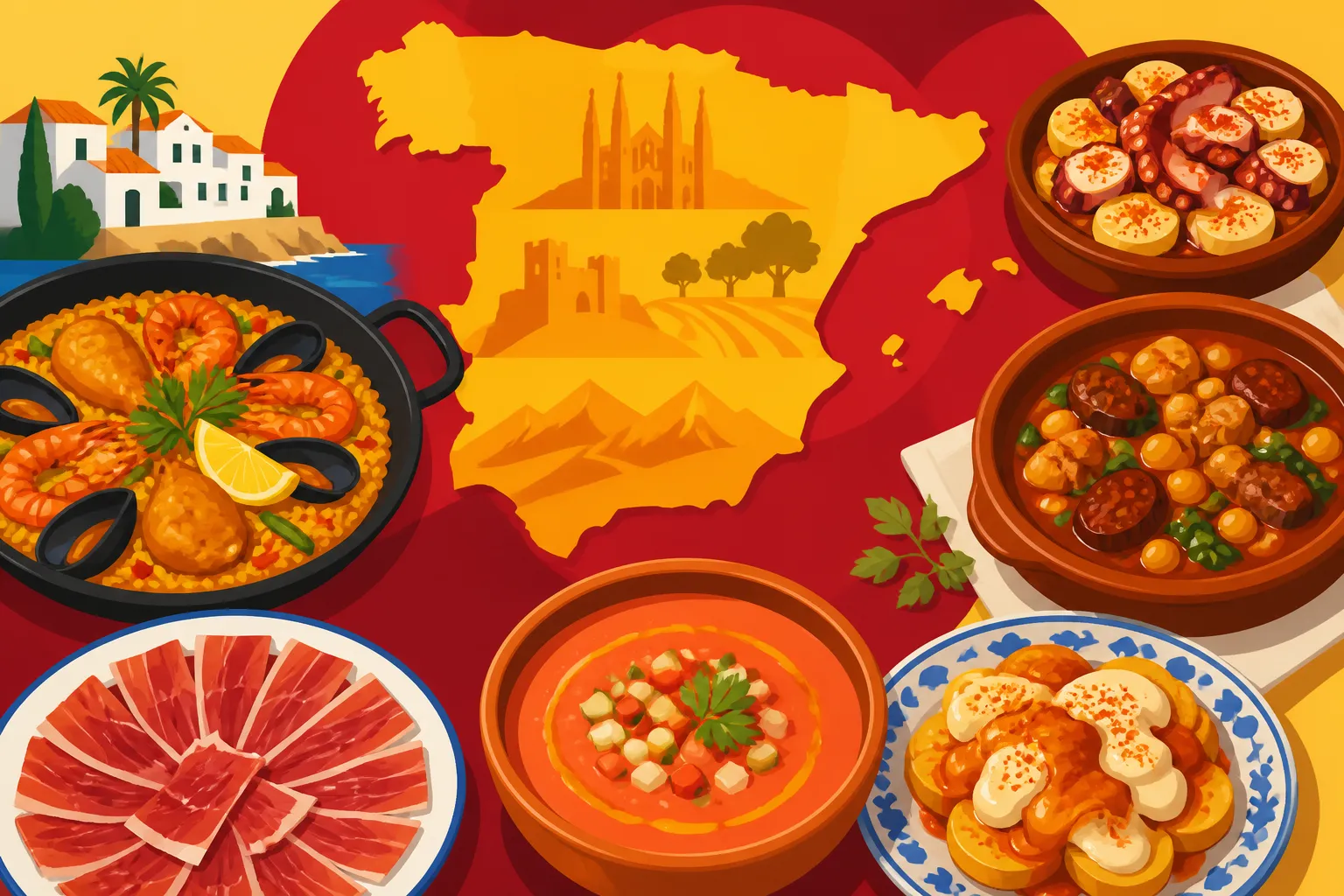
One of the biggest mistakes newcomers make in Spain is assuming that "Spanish food" is a single, unified menu you can find from the Pyrenees down to the Alboran Sea. When I first moved here, I spent my first week in Madrid desperately searching for "authentic" coastal seafood, only to realize I was 300 miles from the nearest ocean and missing out on the incredible highland stews right in front of me. This guide solves the "tourist trap" dilemma by breaking down exactly what to eat in each specific region so you never order the wrong dish in the wrong city again.
Disclosure: This post may contain affiliate links. We may earn a commission at no extra cost to you if you make a purchase through these links. Read full disclosure.
The North: Bold Flavors from the Atlantic and Mountains
The northern strip of Spain, often referred to as "Green Spain," is a culinary powerhouse that trades the olive oil-drenched images of the south for butter, cider, and some of the freshest seafood on the planet. If you are traveling through the Basque Country, Galicia, or Asturias, your palate needs to adjust to a more Atlantic influence. The weather is rainier, the grass is greener, and the food is designed to warm your soul after a day on a misty coast.
The Basque Country: Pintxos and Bacalao
In San Sebastián and Bilbao, the food culture isn't just a hobby; it’s a religion. You won't find traditional tapas here; instead, you’ll encounter pintxos. These are small, gourmet slices of bread topped with everything from spider crab to caramelized onions and goat cheese, usually pierced with a toothpick. My first time in a Basque bar, I was overwhelmed by the stacks of food on the counter. The "veteran" move is to realize that the cold ones on the counter are just the beginning; you should always check the chalkboard for the pintxos calientes (hot ones) made to order.
Beyond the bars, the Basque region is famous for Bacalao al Pil-Pil. This is cod cooked in olive oil, garlic, and chili until the gelatin from the fish emulsifies with the oil, creating a creamy, golden sauce. It sounds simple, but the technique—slowly shaking the pan in a circular motion—is an art form. If you're planning a trip to the northern coast, using Omio to compare train and bus routes is a great way to navigate between the foodie hubs of Bilbao and San Sebastián without the stress of driving through mountain tunnels.
Galicia: Octopus and Seafood
Galicia feels more like Ireland than the Mediterranean, and its food reflects that rugged, oceanic spirit. The undisputed king of the Galician table is Pulpo á Feira (also known as Pulpo a la Gallega). Traditionally served on a thick wooden plate, the octopus is boiled until tender but still firm, then sliced and doused in top-tier olive oil, sea salt, and a generous dusting of pimentón (Spanish paprika).
I remember sitting in a small "pulpería" in Santiago de Compostela, watching the chef snip the tentacles with copper scissors. It was a revelation. You should also look for Empanada Gallega, a savory pie filled with tuna, peppers, and onions, or sometimes even lamprey or scallops. The crust is bready and soaked in the flavors of the filling. For those who love seafood, this region is a must-visit, and you can often find great deals on accommodation near the famous seafood markets through Booking.com.
Asturias and Cantabria: Fabada and Cocido Montañés
When the Atlantic winds start to bite, the people of Asturias reach for Fabada Asturiana. This is a rich, heavy bean stew made with large white beans (fabes), chorizo, morcilla (blood sausage), and pork shoulder. It is the ultimate comfort food. The key is the quality of the beans; they are buttery and melt in your mouth.
In neighboring Cantabria, the specialty is Cocido Montañés. Unlike other Spanish stews, this one uses white beans and collard greens instead of chickpeas. It’s a mountain dish designed for farmers working in the cold. When eating in these regions, it’s also essential to learn the cider culture. Asturian cider is tart and still, and it must be "escanciado"—poured from a great height into a wide glass to aerate it. It’s a spectacle you’ll see in every local tavern.
The Mediterranean Coast: Beyond Just Paella
The east coast of Spain is synonymous with rice, citrus, and sun-drenched vegetables. While everyone knows paella, few visitors realize that "paella" in a restaurant with pictures on the menu in Barcelona is usually a disappointment. To truly understand the Mediterranean diet, you have to look at how each province handles its local harvest.
Valencia: The Authentic Paella
Let’s set the record straight: authentic Paella Valenciana does not contain shrimp, mussels, or calamari. If you are in Valencia and you want the real deal, expect a pan filled with saffron-infused rice, chicken, rabbit, and three types of local beans (including the large, buttery garrofó). Sometimes, you’ll even find snails in the mix.
The most sought-after part of the dish is the socarrat—the caramelized, crunchy layer of rice at the bottom of the pan. If you see locals scraping the bottom with their spoons, join in; that’s where the best flavor lives. Because authentic paella takes at least 45 minutes to prepare, many of the best restaurants require you to pre-order your rice when you book the table. Learning How to Find the Best Paella in Valencia (and Avoid Bad Ones) will save you from the "tourist yellow rice" that plagues the beachside boardwalks.
Catalonia: Crema Catalana and Suquet
Catalan cuisine is famous for Mar i Muntanya (sea and mountain) pairings, like chicken with lobster or meatballs with cuttlefish. One dish every visitor must try is Suquet de Peix, a potato-based seafood stew that was originally a "fisherman's lunch" made from the catch that didn't sell at the market. It’s flavored with a picada—a paste made of fried bread, garlic, and almonds that thickens the broth and gives it an earthy depth.
For dessert, skip the flan and go for Crema Catalana. While similar to Crème Brûlée, it is made with milk instead of cream and flavored with cinnamon and lemon zest rather than vanilla. The burnt sugar crust on top is traditional, often seared with a hot iron. If you’re staying in Barcelona, taking a food tour through GetYourGuide can help you discover the hidden "granjas" (old-fashioned dairy shops) that serve the best versions of this dessert.
The Balearic Islands: Ensaimada and Sobrassada
Off the coast in Mallorca and Ibiza, the food takes a turn toward the pork-centric and the sweet. Sobrassada is a raw, cured sausage made from ground pork, paprika, and salt. It has the consistency of a pâté and is usually spread on warm bread with a drizzle of honey. It is fatty, spicy, and addictive.
Then there is the Ensaimada, a spiral-shaped pastry made with "saïm" (pork lard). It’s light, airy, and dusted with powdered sugar. You’ll see people at the Palma de Mallorca airport carrying dozens of octagonal boxes of these pastries back to the mainland. They are the perfect accompaniment to a morning coffee, but you’ll need to understand Coffee Culture in Spain: How to Order Like a Local to make sure you get the right caffeine pairing for your pastry.
The Heart of Spain: Castilian Roasts and Comfort Food
The central plateau, or Meseta, is landlocked and experiences extreme temperatures—scorching summers and freezing winters. The food here is honest, rustic, and centered around high-quality meat and legumes. This is the land of the "Asador" (roasting house), where the wood-fired oven is the star of the kitchen.
Madrid: Cocido Madrileño
If you visit Madrid in the winter, you will see a massive pot of Cocido Madrileño on almost every table. This is a three-course meal disguised as a stew. First, they serve the sopa (a thin noodle broth made from the stewing liquid). Second comes the chickpeas and vegetables (cabbage, carrots, potatoes). Finally, the vuelco de carne arrives—a platter of chorizo, morcilla, pork belly, ham bone, and beef.
It is a marathon of eating. I highly recommend clearing your afternoon schedule after a Cocido, as a siesta is not optional—it’s a biological necessity. For those new to the capital, understanding Spanish Meal Times and Dining Etiquette Explained is crucial, as Cocido is strictly a lunch dish; eating this for dinner would be considered a cardinal sin by most Madrileños.
Segovia and Castile: Cochinillo
Just a short trip from Madrid (easily reachable by the high-speed trains you can book on Omio), Segovia is home to the world-famous Cochinillo Asado (roast suckling pig). The pig must be no more than three weeks old and fed only on its mother's milk. The result is meat so tender that tradition dictates it should be "cut" with the edge of a ceramic plate rather than a knife.
The skin is rendered into a thin, glass-like sheet of crackling that shatters when you bite into it. It’s often served in grand, rustic dining rooms with stone walls and heavy wooden tables. If you are a meat lover, this is a "bucket list" meal. While you are in the area, it's also worth exploring the Spanish Wine Regions: A Beginner's Guide to find the perfect Ribera del Duero red to cut through the richness of the pork.
The South: The Soul of Andalusia
Andalusia is where the classic images of Spain come to life: white-washed villages, flamenco, and tapas. The food here is influenced by the Moorish history of the region—think almonds, honey, and spices—and the searing summer heat, which has led to the perfection of cold soups and fried delights.
Cold Soups: Gazpacho and Salmorejo
When the thermometer hits 40°C (104°F) in Seville or Córdoba, the only logical thing to eat is Gazpacho. But forget the chunky "salsa" versions you might have seen abroad. Real Gazpacho is a smooth, drinkable emulsion of tomatoes, cucumbers, peppers, onions, garlic, vinegar, and olive oil.
However, the "pro" expat choice is often Salmorejo. Hailing from Córdoba, it is thicker and creamier than Gazpacho because it uses a significant amount of bread in the blend. It’s served in a bowl and topped with hard-boiled eggs and bits of jamón serrano. It is incredibly filling and cooling. If you find yourself in the south, checking GetYourGuide for a local cooking class is a fantastic way to learn the ratio of oil to tomato that makes these soups so velvety.
Fried Fish: Pescaíto Frito
In coastal Andalusia, particularly Cádiz and Málaga, the freiduría is a way of life. Pescaíto Frito is an assortment of small fish—anchovies, baby squid, hake, and red mullet—lightly floured and flash-fried in hot olive oil. The secret is the flour (usually a hard durum wheat) and the freshness of the oil.
The fish should be crispy and dry, never greasy. You eat them with your hands, usually with a squeeze of lemon and a cold glass of fino (dry sherry). It’s the ultimate beach food. I spent many Sunday afternoons in Málaga eating fried boquerones (anchovies) while looking at the Mediterranean, and it remains my favorite way to experience the southern lifestyle.
Regional Dish Comparison Table
To help you decide where to head for your next meal, here is a quick breakdown of what makes each region’s star dish unique.
| Region | Iconic Dish | Key Ingredients | Texture/Flavor Profile |
|---|---|---|---|
| Basque Country | Bacalao al Pil-Pil | Cod, Garlic, Olive Oil | Creamy, salty, delicate |
| Galicia | Pulpo á Feira | Octopus, Paprika, Olive Oil | Tender, smoky, rustic |
| Valencia | Paella Valenciana | Rice, Rabbit, Saffron, Beans | Savory, herbal, crunchy base |
| Madrid | Cocido Madrileño | Chickpeas, Pork, Noodle Broth | Hearty, salty, multi-course |
| Andalusia | Salmorejo | Tomato, Bread, Garlic, Jamón | Thick, cooling, creamy |
| Segovia | Cochinillo | Suckling Pig, Water, Salt | Crispy skin, melt-in-mouth meat |
Navigating the Spanish Menu: Practical Tips
Knowing the dishes is only half the battle; knowing how to find them and order them correctly will elevate your experience from "tourist" to "local." Spain’s dining culture is highly seasonal and regional, meaning you should always look for the Plato del Día (dish of the day) or the Sugerencias (suggestions).
How to Find Authentic Restaurants
Avoid any place that has a person standing outside with a menu trying to wave you in. A good Spanish restaurant doesn't need a "barker." Instead, look for places where the locals are standing at the bar or where the dining room is packed at 2:30 PM (peak lunch hour). If you’re unsure, a quick check of How to Find Authentic Restaurants in Spain (Not Tourist Traps) will give you a checklist of "red flags" to watch out for, like menus translated into six different languages with low-quality photos.
Understanding the Timing
In the US or UK, you might go for dinner at 6:00 PM. In Spain, if you show up at a restaurant at 7:00 PM, you will likely find the chairs on the tables and the staff having their own dinner. Most kitchens for dinner don't open until 8:00 PM or 8:30 PM, and they don't get busy until 9:30 PM. For lunch, the "sweet spot" is between 2:00 PM and 3:30 PM. Being out of sync with these times means you might end up in a lower-quality "tourist" spot that stays open all day. Check out Spanish Meal Times and Dining Etiquette Explained for a full breakdown of the daily food schedule.
Ordering and Tapas Culture
Don't be afraid to order "media raciones" (half portions). This allows you to try more regional dishes without getting overwhelmed. In many parts of Spain, particularly Granada and León, you get a free tapa with every drink you order. This is a great way to sample local flavors for the price of a beer. If you're nervous about the etiquette of standing at a crowded bar, reading Spanish Tapas Culture: How to Order and Where to Go will give you the confidence to dive into the crowd and shout your order like a native.
Disclaimer
The information provided in this guide is for educational and travel planning purposes only. Culinary traditions, regional recipes, and restaurant availability may change over time. While we strive to provide accurate and up-to-date information regarding Spanish regional dishes, the experience of dining in Spain can vary significantly by location and establishment. Always verify opening times and menu specialties directly with local businesses during your travels.