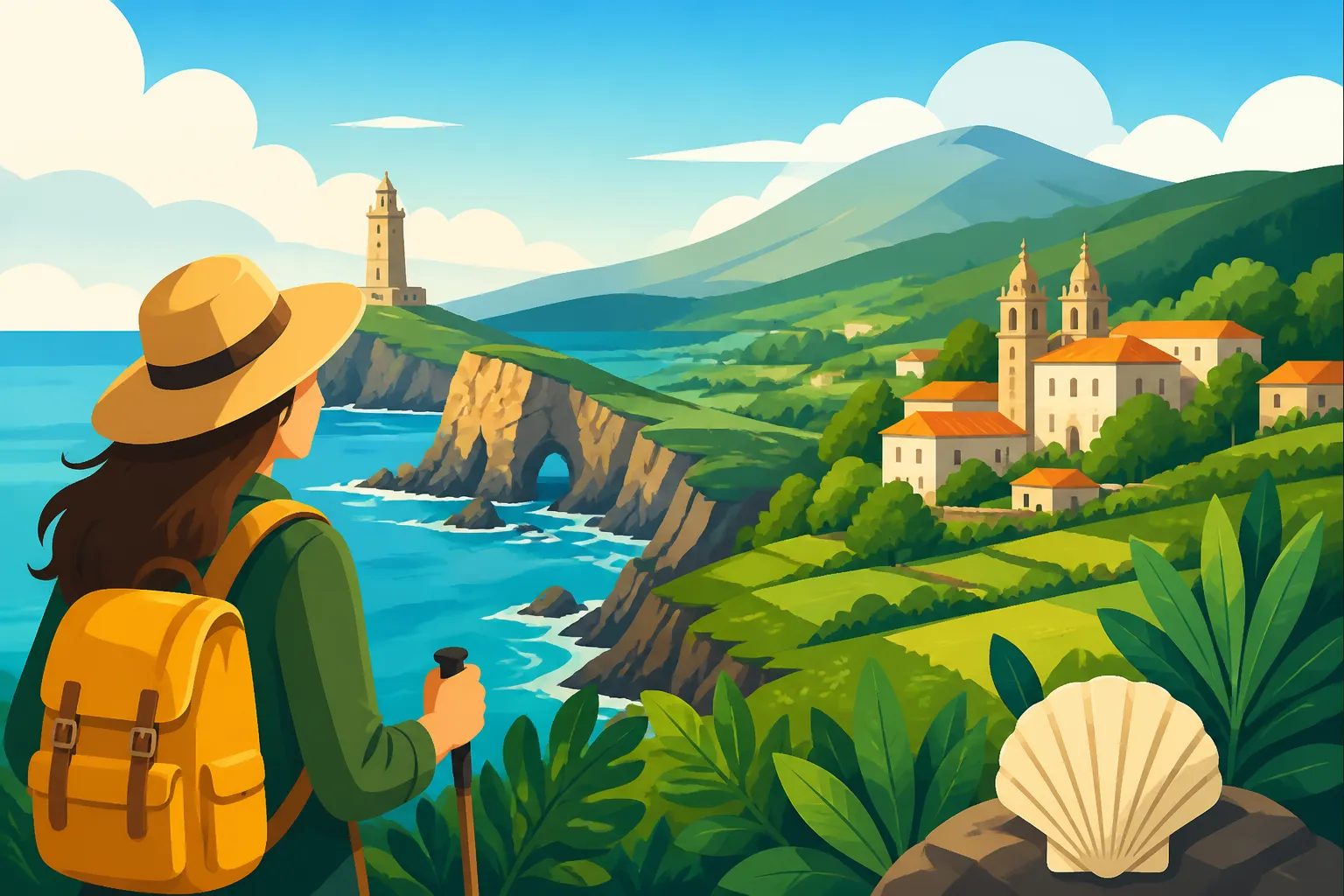
Galicia and Green Spain: A Traveler’s Introduction
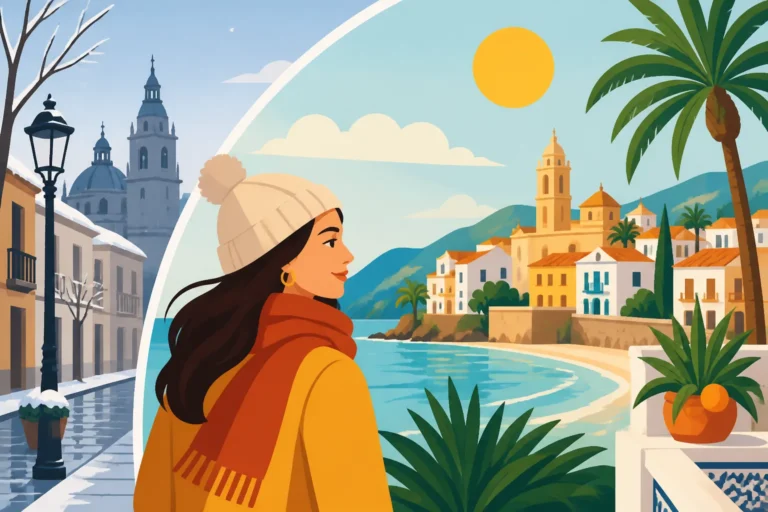
Most travelers land in Madrid or Barcelona expecting a sun-baked landscape of olive trees and arid plains, only to realize Spain’s northern coast is a lush, rain-soaked emerald paradise. I remember my first trip to Vigo; I brought nothing but linen shirts and sandals, then spent four days shivering in the Atlantic mist while hunting for a rain jacket in a local boutique. This guide solves the mystery of Galicia and Green Spain, providing a deep dive into the culture, climate, and logistical hurdles of navigating the country’s wild Atlantic north.
Disclosure: This post may contain affiliate links. We may earn a commission at no extra cost to you if you make a purchase through these links. Read full disclosure.
The Geography and Climate of Green Spain
When people ask me Is Galicia Worth Visiting? What to Expect, I usually start by describing the color green. This isn't the dusty olive green of Andalusia; it is a deep, mossy, neon-vibrant green that exists because it rains—a lot. "Green Spain" (España Verde) stretches from the Portuguese border in the west all the way to the French border in the east, encompassing the regions of Galicia, Asturias, Cantabria, and the Basque Country. It is a land defined by its relationship with the Atlantic Ocean and the Cantabrian Sea, featuring a coastline that is rugged, fractured, and intensely dramatic.
The standout geographical feature of Galicia is the "Rías." These are coastal inlets similar to Norwegian fjords but formed by flooded river valleys. The Rías Baixas (Lower Estuaries) are famous for their microclimates and white sand beaches, while the Rías Altas (Upper Estuaries) are characterized by towering cliffs and some of the highest waves in Europe. Understanding this geography is essential for planning because traveling between two points that look close on a map often requires navigating around deep water inlets or over steep mountain passes.
Then, we have to talk about the "orvallo." In Galicia, there are over 70 different words for rain. Orvallo is that fine, persistent mist that doesn't quite feel like rain until you realize you are soaked to the bone after ten minutes of walking. A standard Mediterranean packing list will often fall short here. You need layers, a high-quality waterproof shell, and an appreciation for the moody, misty atmosphere that makes these forests feel like something out of a Celtic legend. This weather is precisely what allows for the region's incredible biodiversity and the world-class agricultural products you will find at every local market.
Getting Around the Atlantic Coast
Transport in Northern Spain is a different beast compared to the high-speed AVE network that connects Madrid to the south. Because of the mountainous terrain, building tracks is an engineering nightmare. To make the most of your time, you should use tools like Omio to compare bus and train routes, as the "best" way to get between cities isn't always obvious. For example, getting from Santiago de Compostela to Oviedo might be significantly faster by ALSA bus than by train, depending on the day's schedule.
The "Feve" is a narrow-gauge railway that hugs the northern coast from Ferrol to Bilbao. It is one of the most scenic train journeys in Europe, but it is notoriously slow. It isn't a commuter line for someone in a rush; it is a "slow travel" experience. You’ll wind through tiny fishing villages, cross ancient stone bridges, and see parts of the coast that aren't even accessible by car. If you have the luxury of time, booking a leg of the Feve journey is a fantastic way to soak in the landscape, but for your main transit between hubs, the bus system is generally more reliable and frequent.
For those who prefer total independence, Renting a Car in Spain: Requirements, Insurance, and Driving Tips is highly recommended for the north. Public transport is excellent between major cities like A Coruña, Santander, and San Sebastián, but the true magic of Green Spain lies in the tiny villages like Cudillero or Combarro. Having your own wheels allows you to stop at a random "mirador" (viewpoint) or follow a sign for a hidden beach that isn't on the tourist maps. Just be prepared for narrow, winding roads and the occasional herd of cows blocking your path in rural Asturias or the Ancares mountains.
| Feature | Galicia | Asturias | Cantabria | Basque Country |
|---|---|---|---|---|
| Primary Landscape | Rías and eucalyptus forests | High peaks (Picos de Europa) | Green valleys and meadows | Rugged cliffs and rolling hills |
| Top Gastronomy | Octopus and Albariño wine | Cider and Fabada stew | Anchovies and mountain stew | Pintxos and Michelin stars |
| Cultural Vibe | Celtic, mystical, folk-heavy | Rustic, coal-mining history | Aristocratic and outdoorsy | Industrial-chic and linguistic |
| Main Transport Hub | Santiago / A Coruña | Oviedo / Gijón | Santander | Bilbao / San Sebastián |
The Culinary Soul of the North
Food in the north isn't just a meal; it’s a religion. While the rest of Spain is famous for paella, the north focuses on the bounty of the Atlantic and the richness of its mountain pastures. In Spanish Food and Drink: A Practical Culture Guide, you’ll find that the "Menú del Día" in Galicia or Asturias is often enough to feed two people. The portions are legendary. In Galicia, the king is "Polbo á feira"—octopus boiled in copper cauldrons, sliced onto wooden platters, and doused in olive oil, sea salt, and pimentón (paprika). I’ve sat in village "pulperías" where the decor hasn't changed since the 1950s, and the octopus is still served with a side of "cachelos" (local boiled potatoes) that taste better than any gourmet dish I’ve had in the city.
In Asturias and Cantabria, the focus shifts toward the mountains. You cannot leave without trying "Fabada Asturiana," a rich, smoky bean stew made with large white beans, chorizo, morcilla (blood sausage), and pork shoulder. It is the ultimate comfort food for a rainy afternoon. Then there is the cider culture. In Asturias, cider is poured from a height—a technique called "escanciar"—to aerate the liquid. It’s a performance art found in every "sidrería." You don't buy a glass; you buy a bottle, and the waiter will come by to pour a small "culín" for you whenever your glass is empty.
The Basque Country, meanwhile, offers a more refined culinary experience. San Sebastián has one of the highest concentrations of Michelin stars per capita in the world, but you don't need to spend hundreds of Euros to eat well. The "Pintxos" culture is the local take on tapas, where elaborate snacks are displayed on bar tops. From spider crab tarts to seared foie gras with fig jam, the variety is staggering. When exploring these regions, it is wise to check Regional Spanish Dishes Every Visitor Should Try to ensure you don't miss out on hyper-local specialties like "Cocido Montañés" in Cantabria or "Pimientos de Padrón" in Galicia.
Must-Visit Hubs: From Santiago to San Sebastián
Deciding where to base yourself can be tough because each province has a distinct personality. A common suggestion is to start in the west and move east. You can find a huge variety of hotels and boutique guesthouses on Booking.com, but I recommend staying in the historic "Casco Vello" (Old Town) of whichever city you choose. Santiago de Compostela is the obvious starting point. As the final destination of The Camino de Santiago: A Practical Introduction, the city has a profound energy. Watching the pilgrims arrive at the Praza do Obradoiro after walking for weeks is one of the most moving sights in Spain. The cathedral itself is a masterpiece of Romanesque and Baroque architecture, and the surrounding stone streets are filled with the sound of bagpipes.
Moving east into Asturias, the Picos de Europa National Park is a mandatory stop for nature lovers. Using GetYourGuide, you can book guided treks or 4×4 tours into the heart of the mountains to see the Lakes of Covadonga. The scenery here is alpine—jagged limestone peaks and deep green valleys that feel worlds away from the coast. Base yourself in a town like Cangas de Onís, which features a famous Roman bridge with the Asturian victory cross hanging from the center. It’s the perfect mix of history and mountain access.
Finally, you hit the Basque Country. Bilbao has transformed from a gritty industrial port into a global art hub, thanks largely to the Guggenheim Museum. But don't just stay for the museum; the city’s riverside walks and the Casco Viejo are vibrant and full of life. Just an hour away is San Sebastián, which many consider the most beautiful city in Spain. With its crescent-shaped La Concha beach and the dramatic Mount Igueldo overlooking the bay, it is the crown jewel of the north. For a deeper look at the layout of the country, check Spain's Regions and Where to Go: A Traveler's Overview.
Experiences and Cultural Immersion
The culture of Green Spain is deeply influenced by its Celtic roots, especially in Galicia and Asturias. This is not the "Flamenco and Bullfighting" version of Spain. Instead, you will hear the "gaita" (bagpipes) playing in the streets and see the "hórreos"—stone or wooden granaries raised on stilts—dotted throughout the countryside. These hórreos are iconic to the north, designed to keep the damp Atlantic ground and rodents away from the corn and grain. Every time I drive through a Galician village, I’m struck by how these ancient structures still stand alongside modern homes, a testament to the region's enduring traditions.
There is also a strong mystical element to life here. Galician folklore is filled with stories of "meigas" (witches) and the "Santa Compaña" (a mythical procession of the dead). Even today, many locals will tell you "Eu non creo nas meigas, pero habelas, hainas"—I don't believe in witches, but they exist. Participating in a "Queimada" ceremony is a highlight for many visitors. This involves a punch made of aguardiente, sugar, lemon peel, and coffee beans, which is set on fire while an incantation is read to ward off evil spirits. It’s a hauntingly beautiful experience that connects you to the pre-Christian soul of the region.
For those looking for structured activities, using GetYourGuide to find local workshops or guided historical walks can provide context that you won't get from just wandering. Whether it's a tour of the Roman walls in Lugo—the only city in the world surrounded by completely intact Roman walls—or a visit to an artisanal cheese cave in the Picos de Europa, these experiences allow you to interact with the people who keep these traditions alive. To help plan your logistics, especially if you aren't driving, take a look at Public Transport in Spain: Cards, Discounts, and Etiquette to understand how to save money on regional transit cards.
Planning Your Itinerary and Practical Tips
The biggest mistake I see tourists make is trying to see all of Green Spain in a week. The distances are deceptive, and there is so much to see that rushing through is a disservice to the experience. If you have ten days, I recommend focusing on just two regions—Galicia and Asturias, or Cantabria and the Basque Country. A great way to structure your trip is to follow How to Plan a Road Trip Through Northern Spain, which outlines the best coastal routes and stops.
- Accommodation: Use Booking.com to find "Casas Rurales." These are traditional country houses converted into guest lodgings. They offer a much more authentic experience than large hotel chains and are usually located in stunning natural settings.
- Dining Times: Northern Spaniards eat late, but perhaps not as late as Madrileños. Lunch is the main meal of the day, usually between 2:00 PM and 4:00 PM. Many restaurants in smaller villages will close their kitchens by 4:30 PM and won't reopen for dinner until 8:30 PM or 9:00 PM.
- Language: While Castilian Spanish is spoken everywhere, you will hear Galician (Galego) in Galicia and Basque (Euskera) in the Basque Country. Galician is a beautiful, melodic language that sounds like a mix of Spanish and Portuguese. You don't need to speak it, but learning a few words like "Grazas" (Thank you) will go a long way with the locals.
Remember that "Green Spain" is a place that rewards the patient traveler. It’s about the smell of the eucalyptus trees after a rain shower, the taste of a fresh scallop served in its shell, and the sound of the Atlantic crashing against the cliffs at Cabo Fisterra. It is a part of the country that stays with you long after you’ve returned home, primarily because it defies every stereotype of what Spain is "supposed" to be.
Disclaimer
This guide is intended for informational purposes only. While every effort has been made to ensure the accuracy of the information provided, travel conditions, transport schedules, and local regulations in Spain are subject to change. Always verify specific details with official local sources or service providers before your trip. The author and publisher are not responsible for any inconveniences or losses incurred while following the advice in this article.