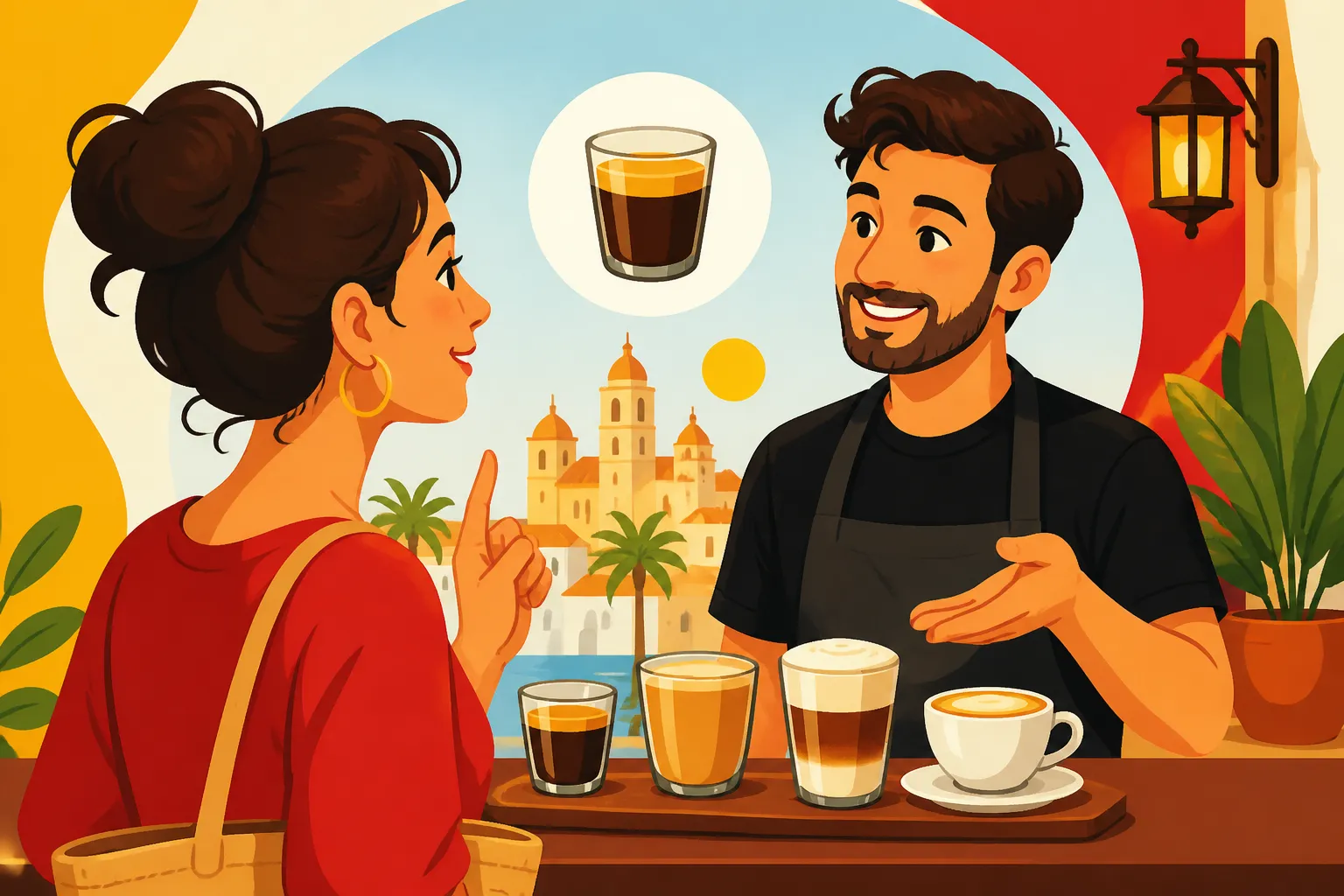
How to Order Coffee in Spain Like a Local
Oh, the Spanish coffee scene! If you're new here, you've probably already discovered that ordering a simple "coffee" can feel like stepping into a linguistic minefield. It's not just coffee; it's a ritual, a social act, and a very specific order. Forget your Venti lattes and iced pumpkin spice for a moment; Spain has its own beautiful, bewildering world of coffee, and trust me, getting it right makes all the difference. This guide is going to walk you through everything you need to know to confidently order your perfect cup, just like a true local.
Disclosure: This post may contain affiliate links. We may earn a commission at no extra cost to you if you make a purchase through these links. Read full disclosure.
Understanding the Spanish Coffee Culture
When you first arrive in Spain, you might wonder why everyone seems to be having such intense conversations over tiny cups of coffee, often standing at a bar. It's not just a beverage; it's deeply ingrained in daily life and social interaction.
More Than Just a Drink: A Daily Ritual
Unlike some cultures where coffee is a quick grab-and-go fuel, in Spain, it's a moment. Or several moments throughout the day! Your morning might start with a robust café con leche alongside a tostada con tomate. This isn't something to rush; it's a moment to ease into the day, often catching up on the news or a quick chat with the camarero.
As the morning progresses, perhaps around 10 or 11 AM, you'll see people popping into bars for a café cortado, a stronger, smaller pick-me-up. Lunch is usually followed by a café solo or another cortado to aid digestion and prolong conversation. The Spanish schedule generally pushes everything later, so don't be surprised to see people enjoying coffee well into the afternoon. It’s less about a caffeine jolt and more about the pause, the connection, and the taste. This relaxed approach is a stark contrast to the fast-paced, takeaway culture prevalent in many other countries, and it's something to truly embrace here. It's part of the broader Spanish Social Customs: Greetings, Kisses, and Personal Space you'll learn to navigate.
Bar vs. Cafetería vs. Horchatería: Where to Get Your Fix
You'll find coffee almost everywhere in Spain, but understanding the venues can help you choose the right spot.
- Bars (Bares): These are the ubiquitous pillars of Spanish social life. Don't let the name fool you; a Spanish bar is primarily a place for coffee, drinks, tapas, and light meals throughout the day. Most bars serve excellent, no-nonsense coffee, often at a lower price if you stand at the counter. They are practical, lively, and typically efficient.
- Cafeterías: These are more dedicated coffee shops, often with a wider selection of pastries (bollería) and a more relaxed, sit-down atmosphere. You might find slightly more artisanal options or specialty teas here, though the traditional Spanish coffee types remain king.
- Horchaterías: While not primarily for coffee, these spots, especially common in Valencia, specialize in horchata (a sweet, milky drink made from tigernuts) and often serve other traditional Spanish sweets. In summer, they might offer café granizado, a slushy iced coffee, which is a great alternative when the heat is intense.
Choosing where to go often depends on whether you're looking for a quick chat, a leisurely sit-down, or a specific local treat. Remember, most good coffee is found at your neighborhood bar, not necessarily a fancy cafe.
Your Essential Spanish Coffee Lexicon
Navigating the Spanish coffee menu, or rather, the unspoken coffee menu, is key. It's not about brand names; it's about the preparation.
Decoding the Menu: Common Coffee Types
Here's the rundown on the most common coffee orders you'll encounter, from the strongest to the milkiest. Master these, and you'll fit right in.
- Café Solo: This is a strong, black espresso shot, served in a small cup. It's intense, bitter, and perfect for a quick jolt after a meal. Think of it as the foundational coffee upon which all others are built.
- Café Doble: Simply two shots of café solo in a slightly larger cup. For those who need an extra kick without adding milk.
- Café Cortado: My personal favorite for an afternoon pick-me-up. It's a café solo "cut" with a dash of hot milk, served in a slightly taller, narrower glass than a solo. The milk softens the intensity without making it creamy. It's a true classic.
- Café con Leche: This is your standard "coffee with milk" and probably the most popular choice, especially in the mornings. It's roughly half coffee, half hot milk, served in a medium-sized cup. It's comforting and smooth, perfect with breakfast. For tips on starting your day right, you might also be interested in our guide to Spanish Meal Times and Dining Etiquette Explained.
- Manchado / Leche Manchada: This literally means "stained milk." It's mostly hot milk with just a tiny "stain" of coffee. It's much lighter in coffee flavor, suitable for those who prefer more milk.
- Café con Hielo: When the Spanish summer hits, this is your best friend. It's a café solo (or cortado, or con leche – specify!) served with a separate glass full of ice. You pour the hot coffee over the ice yourself. It's refreshing and quintessentially Spanish for warm weather.
- Café Bombón: A sweet treat! This is a café solo served with condensed milk at the bottom, creating a beautiful layered effect. It's very sweet and rich, more like a dessert.
- Leche y Leche: A specialty from the Canary Islands, but you might find it elsewhere. It's a café con leche with an added layer of condensed milk. Even sweeter than a bombón!
- Carajillo: A café solo with a shot of your chosen liquor, typically brandy (brandy or coñac), rum (ron), or orujo. It’s a fiery, warming drink, often enjoyed after lunch or as a digestif.
- Descafeinado de Máquina / Descafeinado de Sobre: Decaf options. "De máquina" means it's brewed from decaf beans in the espresso machine. "De sobre" means instant decaf coffee from a sachet, which is surprisingly common and perfectly acceptable.
To help you visualize, here's a quick reference table:
| Coffee Type | Description | Typical Serving Time/Occasion |
|---|---|---|
| Café Solo | Strong, black espresso shot | After meals, quick caffeine hit |
| Café Doble | Two shots of espresso | Any time a stronger solo is desired |
| Café Cortado | Espresso "cut" with a dash of hot milk, served in a glass | Mid-morning, mid-afternoon |
| Café con Leche | Half coffee, half hot milk, creamy and balanced | Breakfast, morning |
| Manchado | Mostly hot milk with a "stain" of coffee | Anytime for a milder coffee |
| Café con Hielo | Hot coffee served with a separate glass of ice | Summer months, hot weather |
| Café Bombón | Espresso with condensed milk, sweet and layered | Dessert, sweet treat |
| Carajillo | Espresso with a shot of liquor | After meals, digestif |
| Descafeinado | Decaffeinated (specify "de máquina" or "de sobre") | Anytime, especially evening |
The Milk Matters: Types and Temperatures
Just like the coffee, the milk isn't a one-size-fits-all situation. You can specify:
- Leche Caliente: Hot milk (this is the default for café con leche and cortado).
- Leche Templada: Warm milk. If you find "caliente" too hot to drink immediately.
- Leche Fría: Cold milk. Great for a cortado if you prefer it cooler.
When it comes to alternative milks, Spain is catching up, but don't expect the same variety as in some other countries. You can usually ask for:
- Leche de Avena: Oat milk. Becoming increasingly common, especially in larger cities.
- Leche de Soja: Soy milk. Widely available.
- Leche Sin Lactosa: Lactose-free milk. Also quite common.
Just say, for example, "Un café con leche de avena, por favor." You'll often find these options available, but perhaps with a small surcharge, particularly in smaller, more traditional bars.
Ordering Like a Pro: Phrases and Etiquette
Now that you know what to order, let's talk about how to order it. It’s less formal than you might think, but a few key phrases go a long way.
Your Go-To Phrases for a Smooth Order
Confidence is key! Don't be shy; the staff appreciate your effort.
- "¡Hola! Un café con leche, por favor." (Hello! A coffee with milk, please.) This is your staple.
- "¿Me pones un cortado?" (Could you give me a cortado?) "Poner" (to put/serve) is a common, informal way to ask for something at a bar.
- "Para tomar aquí." (To have here.) This is the default. Most coffee in Spain is consumed in situ.
- "Para llevar." (To take away.) While increasingly available in larger cities and more international cafes, traditional Spanish coffee culture rarely involves "to-go" cups. If you ask for this in a traditional bar, you might get a blank stare or a regular cup with a suggestion to drink it quickly. It's often easier to just drink it at the bar, which is quick anyway.
- "¿Cuánto es?" (How much is it?) Or "La cuenta, por favor." (The bill, please.) You usually pay after you've finished, often directly at the bar.
Remember, a little Spanish goes a long way. Even if you stumble, showing effort is appreciated. Our guide on Ordering Food and Drinks in Spanish: A Practical Phrasebook can give you even more conversational tools.
The Bar Experience: Standing, Sitting, and Paying
The way you experience coffee at a Spanish bar is part of the charm.
- Standing at the Bar (En la Barra): This is the most authentic, and often fastest and cheapest, way to have your coffee. You walk up, order, drink your coffee (often in just a few sips), and pay. It’s a dynamic, social hub, great for people-watching and soaking up local life. You’ll be in and out in minutes.
- Sitting at a Table (En Mesa): If you prefer to sit, either inside or on an outdoor terrace, that’s perfectly fine. Be aware that prices are often slightly higher for table service, particularly on terraces, to account for the extra service. A waiter will usually come to take your order, and you'll pay them directly when you're ready. For more on navigating these social spaces, check out Spanish Bar and Café Etiquette for Newcomers.
- Paying: Typically, you pay after you've finished your drink. If you're standing at the bar, just make eye contact with the camarero and say "La cuenta, por favor" or "Cuesta…?" and they'll tell you the total. You can pay with cash or card (most places accept cards, especially for orders over a few euros). Tipping is not usually expected for just a coffee, but if you've had great service or multiple items, rounding up the bill or leaving a small change is a nice gesture, but not obligatory like in some other countries.
Beyond the Basics: Regional Nuances and Seasonal Sips
While the core coffee types are universal, Spain's diverse regions sometimes add their own flair or preferred nomenclature. And when the summer sun beats down, a different kind of coffee takes center stage.
Coffee Across Spain: Subtle Regional Twists
While a café con leche is a café con leche pretty much everywhere, you might notice subtle shifts. For example, in certain areas, what one calls a cortado might be a touch milkier or less milky than elsewhere. In Valencia, you might hear a café del tiempo which is a café con hielo but specifically served with a slice of lemon. Don't stress too much about these nuances; if you use the main lexicon, you'll be understood. The beauty of traveling around Spain, perhaps by booking your train tickets on Omio, is experiencing these small regional differences firsthand, from the coffee to the local snacks. Each region offers its own unique rhythm and flavor, a fascinating part of exploring the country’s rich Spanish Food and Drink: A Practical Culture Guide.
The key takeaway here is flexibility. If you're unsure, just observe what others are ordering or politely ask, "¿Qué me recomiendas?" (What do you recommend?). The staff are usually happy to help you find your perfect cup.
Con Hielo and Beyond: Staying Cool in Summer
When temperatures soar, especially in the southern regions like Andalusia or inland cities like Madrid, a hot coffee might be the last thing on your mind. That's where café con hielo truly shines, and it's something every expat must master.
- The Ritual of Café con Hielo: As mentioned, you order your desired coffee (e.g., "Un café solo con hielo, por favor"). It will arrive as a hot coffee in a standard cup, and a separate glass filled with ice cubes. Crucially, often it's a cold glass straight from the freezer. You then pour your hot coffee over the ice. Some people add sugar to the hot coffee before pouring, as it dissolves better. The shock of the hot coffee hitting the cold ice is surprisingly satisfying.
- Other Cold Coffee Options: Beyond the classic café con hielo, modern cafes, particularly in more tourist-heavy areas or larger cities, might offer:
- Granizado de Café: A slushy, crushed-ice coffee drink, often quite sweet. This is a very refreshing option and can be found in horchaterías or ice cream shops (heladerías).
- Frappé: A blended iced coffee, similar to what you'd find in international coffee chains. It's less traditional but widely available.
- Café con Leche Fría: Simply a coffee with cold milk, not necessarily with ice cubes, though you can always ask for "con hielo" if you want it extra chilled.
Embracing these cold coffee options is essential for surviving and thriving during the warmer months in Spain. You can explore local food tours on platforms like GetYourGuide, which often highlight these seasonal treats and give you a chance to try them in context. It's all part of adapting to the rhythms of Spanish life, where every season brings its own delightful culinary traditions.
Enjoy your coffee journey in Spain – it's a delicious adventure!
Disclaimer
Please remember that while this guide offers comprehensive advice based on common experiences in Spain, local customs, prices, and available options can vary. Always remain observant and open to minor differences. The information provided is for general guidance and informational purposes only, and does not constitute professional advice.