How to See Ronda on a Day Trip From Málaga
Oh, the romantic allure of Ronda! I remember my first time seeing that incredible bridge spanning the gorge; it quite literally took my breath away. It’s one of those quintessential Spanish experiences, tucked away in the mountains, offering views and history that stick with you long after you’ve left. But, let’s be real, figuring out how to squeeze such an iconic destination into a day trip from the bustling coast of Málaga can feel like solving a Rubik's Cube while blindfolded. You're probably picturing scenic drives, stunning vistas, and delicious tapas, but also wondering about bus schedules, winding roads, and how to cram it all into a single day without feeling rushed. Well, my friend, you've come to the right place. This guide is going to walk you through every option and give you the inside scoop on making your Ronda day trip from Málaga not just possible, but truly memorable.
Disclosure: This post may contain affiliate links. We may earn a commission at no extra cost to you if you make a purchase through these links. Read full disclosure.
Why Ronda is a Must-See from Málaga (and the Challenges)
Ronda isn't just a pretty face; it’s a town steeped in history, drama, and natural beauty. It’s perched dramatically atop a plateau, bisected by a deep gorge, El Tajo, carved by the Guadalevín River. This unique geographical feature alone makes it a spectacle, but then you add centuries of human history on top of that, and you’ve got something truly special.
The Allure of Ronda's Puente Nuevo
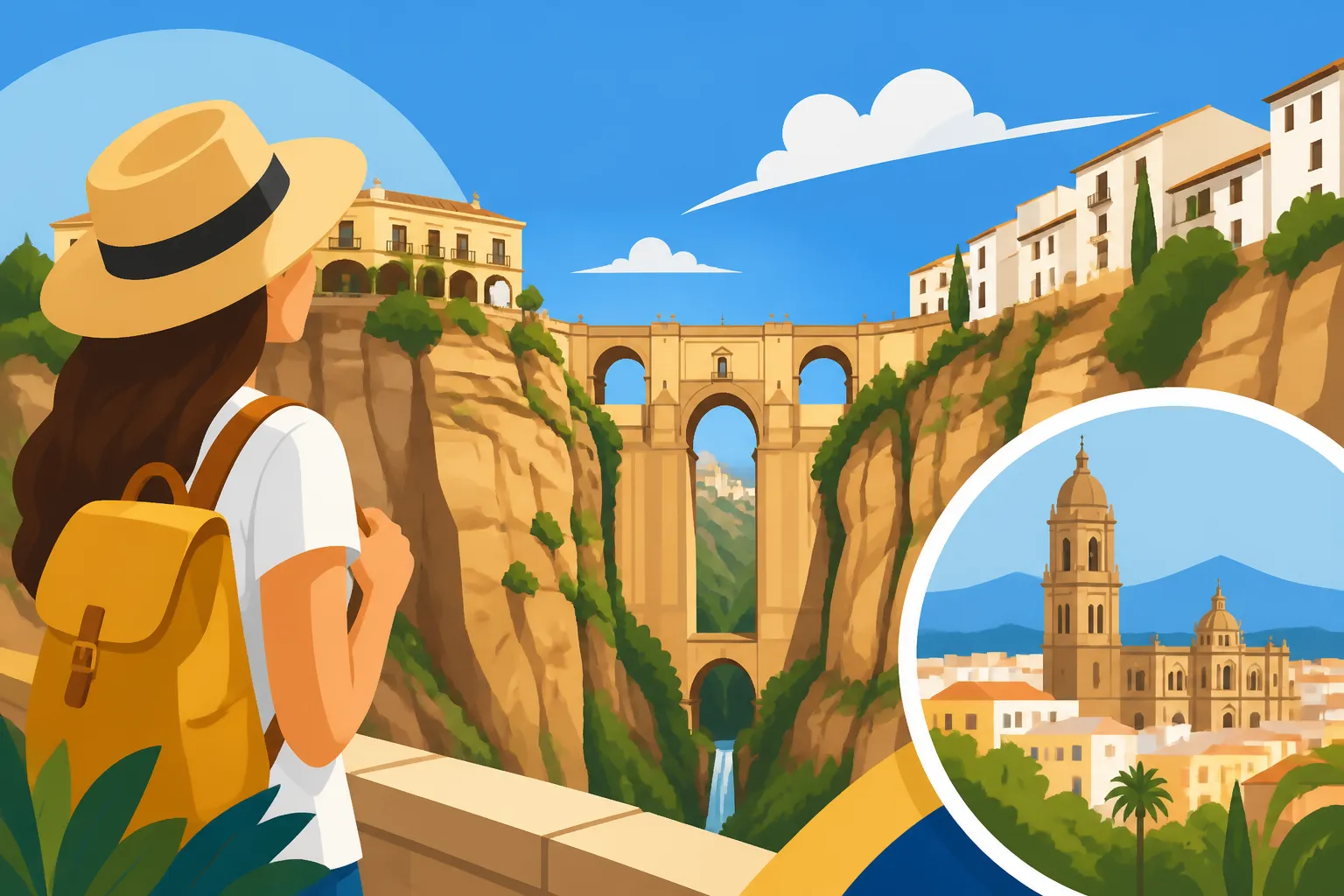
Let’s be honest, for many, the Puente Nuevo (New Bridge) is the main draw, and for good reason. This magnificent 18th-century bridge connects the old Moorish town with the newer, El Mercadillo district, straddling a 120-meter chasm. Standing there, gazing down into the gorge, feeling the ancient stones beneath your feet, it’s impossible not to feel a sense of awe. The engineering feat alone is astounding, but it’s the sheer audacity of its placement, the way it blends with the natural rock, that makes it so captivating. You’ll spend a good chunk of time just taking photos from every angle, I promise. It’s iconic, it’s grand, and it lives up to every postcard image you’ve ever seen.
More Than Just the Bridge
While the Puente Nuevo might steal the show, Ronda offers so much more. You’ve got the historic Plaza de Toros, one of Spain’s oldest and most revered bullrings, which also houses a fascinating museum. Even if bullfighting isn't your cup of tea, the architecture and history here are compelling. Wander through the charming old town (La Ciudad) with its narrow, cobbled streets, and you’ll stumble upon treasures like the Palacio de Mondragón, a beautiful palace with lovely gardens and a rich history, once a royal residence. Then there’s the Casa del Rey Moro with its famous water mine and hanging gardens, offering incredible views (just be prepared for a lot of steps down into the gorge!). You can also peek into the Iglesia de Santa María la Mayor, a stunning church built on the site of a former mosque. Every corner turned reveals another piece of Ronda’s unique tapestry.
The Day Trip Dilemma
Now, about those challenges. Ronda is nestled inland, about 100 kilometers (60 miles) from Málaga. This isn't a quick hop-skip-and-a-jump. The journey involves either navigating winding mountain roads if you drive, or relying on public transport schedules, which can feel a bit restrictive when you’re on a tight day trip agenda. You’ll be keenly aware of the clock, wanting to soak in every moment but also needing to catch that last bus or train back. Plus, the town itself, while walkable, has its fair share of inclines and steps, so you'll want to conserve your energy and plan your route wisely. But don't despair, it's absolutely doable, and the rewards far outweigh these minor logistical hurdles!
Getting to Ronda from Málaga: Your Transport Options
Deciding how to get to Ronda is usually the biggest decision for a day-tripper. Each option has its own set of pros and cons, catering to different budgets, preferences, and comfort levels. Let’s break them down.
The Bus: The Most Common & Budget-Friendly Way
For most expats and tourists, the bus is the go-to option for reaching Ronda from Málaga. It's generally reliable, relatively inexpensive, and offers direct service.
The primary bus company operating this route is Avanza Bus (formerly part of the Damas group). They have several departures daily from Málaga's main bus station (Estación de Autobuses de Málaga). You can find this station right next to the María Zambrano train station, which is super convenient if you're arriving in Málaga by train or staying nearby.
- Booking: It's always a good idea to buy your tickets in advance, especially during peak season or for specific times. You can easily do this online via the Avanza Bus website or through platforms like Omio, which allows you to compare different transport options. You can also purchase tickets directly at the bus station ticket counter. Just remember, spontaneity in Spain is great, but for a day trip with a fixed return, planning ahead is your friend.
- Journey Time: The bus ride typically takes about 1 hour and 45 minutes to 2 hours. It's a scenic journey, climbing into the mountains, so you'll get some lovely views along the way. Just be prepared for some twists and turns!
- Cost: A one-way ticket usually costs between €10-€15, making it a very economical choice for a round trip.
Pros of the Bus:
- Cost-Effective: Definitely the cheapest way to travel independently.
- Direct: No changes needed, which simplifies the journey.
- Convenient Departure: Málaga's bus station is well-connected.
Cons of the Bus:
- Fixed Schedule: You're beholden to their timetable, which can feel restrictive for a day trip. Missing your return bus could be a major headache!
- Comfort: While generally comfortable, it's still a bus ride. Some people might find the winding roads a bit much.
If you’re relying on public transport to get around, our guide on Intercity Buses in Spain: Networks, Booking, and Tips might be useful for understanding how these services work more broadly.
Train to Ronda: Scenic but Less Direct
Taking the train to Ronda can be a lovely, picturesque option, especially if you enjoy watching the landscape unfold. However, it's typically less direct and often involves a transfer, usually in a town like Antequera.
Renfe is Spain's national railway company, and they operate the trains. You'll depart from Málaga María Zambrano station.
- Booking: Similar to buses, booking in advance through the Renfe website or Omio is advisable.
- Journey Time: Because of the potential transfer, the train journey can sometimes take longer than the bus, often around 2.5 to 3 hours, depending on the connections.
- Cost: Train tickets can vary significantly depending on the type of train (some are faster than others) and how far in advance you book. Expect it to be generally more expensive than the bus, potentially €15-€25 each way.
Pros of the Train:
- Scenic Views: The train often offers stunning views of the Andalusian countryside that you might not get from the bus.
- Comfort: Generally, trains offer a bit more space to stretch out and move around than buses.
Cons of the Train:
- Less Direct: The need for a transfer can add complexity and potentially lengthen the journey.
- Cost: Usually more expensive than the bus.
- Fewer Departures: Train schedules might be less frequent than bus schedules.
For general advice on navigating Spain's rail system, you might find our article on Traveling Around Spain: Trains, Buses, Flights, and Car Hire helpful.
Driving to Ronda: Freedom and Flexibility (with a Caveat)
Ah, the open road! Renting a car gives you ultimate flexibility. You can leave when you want, stop for photos at picturesque viewpoints, and explore at your own pace. However, it’s not without its challenges.
- The Route: From Málaga, you'll typically take the A-357 towards Campillos, then connect to the A-367 or A-369 towards Ronda. The roads are generally well-maintained, but they are winding, especially as you get closer to Ronda, climbing through mountainous terrain. If you're not comfortable with switchbacks and steep inclines, this might be a more stressful option.
- Parking in Ronda: Ronda has several public parking lots (like Parking El Ruedo, Parking Martinez Astein, or Parking La Concepción). These are usually paid parking. It’s best to aim for one slightly outside the absolute center and be prepared for a short walk. In peak season, finding a spot can take a little patience.
- Car Rental: You can rent cars from Málaga Airport or various city locations. Major international companies like Hertz, Avis, Europcar, and local Spanish options are readily available. Book in advance for better rates.
Pros of Driving:
- Maximum Flexibility: You set your own schedule, from departure to stops to return.
- Scenic Stops: Allows you to pull over at designated viewpoints for breathtaking photo opportunities.
- Independence: No need to worry about public transport schedules.
Cons of Driving:
- Winding Roads: Can be challenging for some drivers, especially on narrow, mountain passes.
- Parking: Finding and paying for parking in Ronda can add a layer of stress.
- Cost: Car rental fees, fuel, and parking can add up, making it potentially the most expensive option.
Before you hit the road, take a look at our guide on Renting a Car in Spain: Requirements, Insurance, and Driving Tips to ensure you're fully prepared.
Organized Tours: Hassle-Free Exploration
If you prefer to sit back, relax, and have all the logistics handled for you, an organized tour is an excellent choice. Many tour operators run day trips to Ronda from Málaga.
- What's Included: These tours usually include round-trip transportation, often with pick-up points in Málaga city center or at the airport. They typically provide an English-speaking guide who will share insights into Ronda's history and culture. Many tours will also include entry fees to some attractions (like the bullring or a palace), and some might even offer a tapas lunch.
- Booking: You can book these tours through various travel agencies, online platforms like GetYourGuide or Booking.com's tours section. GetYourGuide, for example, has a wide selection of tours departing from Málaga that often combine Ronda with other picturesque white villages (Pueblos Blancos), giving you even more bang for your buck.
Pros of Organized Tours:
- Convenience: No need to worry about driving, parking, or public transport schedules.
- Expert Guidance: A knowledgeable guide enhances your understanding and experience of Ronda.
- Often Combined: Many tours will also take you to other charming Pueblos Blancos like Setenil de las Bodegas, making it a multi-stop adventure.
Cons of Organized Tours:
- Less Flexibility: You're on the tour's schedule and itinerary, with limited time at each stop.
- Group Pace: You move at the pace of the group, which might feel rushed if you like to linger, or slow if you prefer a quicker pace.
- Cost: Generally the most expensive option, but often includes entries and guiding.
| Transport Option | Journey Time (approx.) | Typical Cost (one-way) | Flexibility | Experience Level |
|---|---|---|---|---|
| Bus | 1h 45m – 2h | €10-€15 | Low (fixed schedule) | Easy |
| Train | 2h 30m – 3h | €15-€25 | Medium-Low (fixed schedule, potential transfer) | Moderate |
| Car (Rental) | 1h 30m – 2h | €40-€80+ (rental, fuel, parking) | High (self-paced) | Intermediate (mountain driving) |
| Organized Tour | Full Day (8-10h) | €60-€100+ (includes transport, guide, often entries) | Very Low (set itinerary) | Easiest |
Crafting Your Perfect Ronda Itinerary (Even for a Day Trip)
Even with limited time, you can have an incredibly fulfilling day in Ronda. The key is to prioritize and move efficiently without feeling frantic. Here's a suggested flow to make the most of your visit:
Morning Arrival: Maximizing Your First Hours
Aim to arrive in Ronda between 10:00 AM and 11:00 AM. This gives you a good chunk of the day before the main lunch rush and allows you to experience the morning light.
- First Stop: Puente Nuevo & Alameda del Tajo (10:00 AM – 12:00 PM):
- If you arrive by bus or train, you'll walk up towards the town center. Head straight for the Puente Nuevo. Spend time taking in the views from the various miradores (viewpoints). Walk across the bridge, and then make your way to the Alameda del Tajo, a beautiful tree-lined park that offers more spectacular panoramic views of the gorge and the plains below. The balconies here, sometimes called the "Balcony of the Romantics," are perfect for photos.
- From there, it’s a short walk to the Plaza de Toros. Give yourself about an hour to explore this historic bullring and its museum. The museum offers a great insight into the history of bullfighting and its cultural significance in Spain.
- Coffee Break & People Watching (12:00 PM – 12:30 PM):
- By now, you've probably worked up an appetite for a coffee. Find a cafe near the Plaza de Toros or along Calle Espinel (Ronda's main shopping street) for a quick café con leche and perhaps a tostada. It’s a great way to observe local life and recharge.
Afternoon Exploration: Delving Deeper
After your initial awe-inspiring views, it’s time to explore Ronda’s charming old town and soak in its history.
- Wander the Old Town & Palacio de Mondragón (12:30 PM – 2:30 PM):
- Cross the Puente Nuevo again and head into La Ciudad, Ronda’s older, Moorish quarter. Lose yourself in the labyrinthine streets, discovering hidden courtyards and ancient churches.
- Make your way to the Palacio de Mondragón. This palace offers beautiful architecture, lovely Mudejar gardens, and a small municipal museum that provides context to Ronda's past. The courtyards are particularly tranquil.
- Consider a visit to the Casa del Rey Moro if you’re up for some exercise. The descent to the water mine is steep, with 200+ steps, but the views from the bottom are unparalleled, and the hanging gardens are delightful. Just remember, you have to climb back up!
- Lunch (2:30 PM – 3:30 PM):
- This is Spain, so lunch is a serious affair! You'll find plenty of restaurants in the old town or around the Plaza del Socorro. Seek out a spot that offers a menú del día for a good value, multi-course meal. Or, dive into the local tapas scene. Our guide to Spanish Tapas Culture: How to Order and Where to Go will definitely help you navigate the delicious options. Remember, lunch typically runs later in Spain, so don't be surprised if places are bustling well into the afternoon. If you are conscious of Spanish Meal Times and Dining Etiquette Explained, you'll fit right in!
Evening Departure: Last Views and Souvenirs
As the afternoon light begins to soften, it's time for some final moments and preparations for your journey back to Málaga.
- Final Stroll & Souvenir Hunting (3:30 PM – 4:30 PM):
- Enjoy one last walk across the Puente Nuevo, perhaps lingering at a different viewpoint this time. The changing light can create entirely new photo opportunities.
- Ronda has many small shops selling local crafts, leather goods, and regional wines. Pick up a souvenir or a bottle of something delicious to remember your trip.
- Head Back to the Bus/Train Station (4:30 PM onwards):
- Give yourself ample time to walk back to your departure point. Ronda's bus station is a reasonable walk from the main sights, and the train station is a bit further. Always build in extra time, especially if you get turned around or want to grab one last ice cream.
- Aim to catch a bus or train that gets you back to Málaga at a reasonable hour, allowing for some relaxation before dinner.
Practical Tips for Your Ronda Day Trip
Making the most of a day trip often comes down to the little details. Here are a few practical pointers I've picked up over my years here.
What to Wear and Bring
- Comfortable Shoes are NON-NEGOTIABLE: I cannot stress this enough. Ronda's cobbled streets, inclines, and the numerous steps in places like the Casa del Rey Moro will punish anything less than sturdy, comfortable footwear. Leave the heels at home, trust me.
- Layers: Depending on the season, mountain weather can be unpredictable. Even if it's warm in Málaga, Ronda can be cooler, especially with the wind whipping through the gorge. Bring a light jacket or scarf that you can easily take off or put on.
- Water Bottle: Stay hydrated! You'll be doing a lot of walking, and shops aren't always exactly where you need them.
- Camera & Portable Charger: You'll want to capture every angle of that bridge. Ensure your phone or camera battery is fully charged, and consider bringing a portable power bank.
- Sun Protection: Even on cloudy days, the Spanish sun can be fierce. A hat, sunglasses, and sunscreen are always a good idea.
Language Barrier and Local Etiquette
While many people in tourist areas like Ronda might speak some English, knowing a few basic Spanish phrases can go a long way. Locals appreciate the effort! Even a simple "Hola," "Gracias," "Por favor," and "Disculpe" (Excuse me) can make interactions smoother. Our Survival Spanish for Travelers: Key Phrases to Learn First guide is a great place to start for some useful phrases. Don’t be afraid to try! Most Spaniards are wonderfully patient and helpful. Also, remember that things often move at a slightly slower pace here – embrace it, you're on vacation!
Managing Your Time Wisely
A day trip means making choices. You won't be able to see every single church, museum, and viewpoint.
- Prioritize: Before you go, decide on your top 2-3 must-see sights. If you get to more, that’s a bonus!
- Check Opening Hours: Verify the opening hours of any specific attractions (like the bullring or palaces) before you go, especially if you're traveling on a public holiday. Our Public Holidays in Spain: How They Affect Travel and Opening Hours post might be useful here.
- Pace Yourself: It's tempting to rush, but try to enjoy the journey. Stop for that extra photo, savor that coffee. It's a day of exploration, not a race.
Where to Eat
Ronda offers a fantastic culinary scene, from traditional Andalusian fare to modern interpretations.
- Tapas Bars: For a quick, delicious, and authentic experience, seek out local tapas bars away from the main tourist traps. Look for places bustling with locals.
- Restaurants with Views: Many restaurants near the Puente Nuevo offer incredible views, though they might be a bit pricier. If a scenic meal is important to you, consider booking ahead or arriving early.
- Local Specialties: Don't miss out on local specialties like rabo de toro (oxtail stew), cordero a la miel (lamb with honey), or local cheeses and cured meats.
Ronda is truly a gem, and a day trip from Málaga is a fantastic way to experience its unique charm. With a little planning and an adventurous spirit, you'll have an unforgettable experience navigating its stunning landscapes and rich history.
Disclaimer
Please remember that travel information, especially regarding public transport schedules and prices, can change. Always check the official websites of bus and train operators, and tour companies for the most current information before you travel. Enjoy your adventure in Ronda!