Spanish Food and Drink: A Practical Culture Guide
Most expats arrive in Spain expecting a 6:00 PM dinner, only to find restaurants shuttered and streets quiet while locals are just beginning their afternoon coffee. I remember wandering through Madrid at 7:30 PM during my first week, starving and confused, while everyone else seemed to be enjoying a second wind of energy. This guide decodes the complex rhythms, regional flavors, and social etiquette of Spanish food and drink to help you dine like a local.
Disclosure: This post may contain affiliate links. We may earn a commission at no extra cost to you if you make a purchase through these links. Read full disclosure.
Understanding the Spanish Meal Clock
The single biggest hurdle for any newcomer to Spain is the schedule. It is not just about being "late"; it is a entirely different biological rhythm that revolves around the sun and the workday. In Spain, food is not a chore to be squeezed between meetings; it is the anchor of the day. If you try to eat on a Northern European or American schedule, you will likely end up eating in "tourist traps" that stay open all day but serve subpar frozen food.
To truly integrate, you must learn What Time Do Spaniards Eat Lunch and Dinner?. The day typically starts with a very light "primer desayuno" (first breakfast) consisting of a coffee or a small piece of pastry at home. However, the real magic happens around 10:30 AM or 11:00 AM. This is "el almuerzo" or the mid-morning break. You will see offices empty out as workers head to the nearest corner bar for a "tostada con tomate" (toast with grated tomato and olive oil) and a second coffee. This bridge keeps you going until the main event of the day.
The afternoon meal, "la comida," is the most important. Starting anywhere from 2:00 PM to 3:30 PM, this is a multi-course affair that can last two hours. It is the time for the What Is a 'Menú del Día' and How Does It Work?—a fixed-price menu that offers incredible value for a three-course meal. After this, the country collectively slows down. By 6:00 PM, many Spaniards enjoy "la merienda," a small snack like a piece of fruit or a yogurt, to tide them over because dinner—"la cena"—rarely begins before 9:00 PM, and often stretches past 11:00 PM on weekends.
The Art of the Morning Coffee and Tostada
Breakfast in Spain is rarely about eggs and bacon. Instead, it is a ritual of simplicity. When you walk into a local bar, you will hear the rhythmic thumping of the coffee porter and the whirring of the industrial orange juicer. Ordering is an art form. You should know How to Order Coffee in Spain Like a Local to avoid the "tourist tax" of a generic latte. A "café con leche" is the standard, but you might prefer a "cortado" (espresso with a splash of milk) or a "café solo" (straight espresso).
The food is equally specific. The "tostada" is king. You can have it with "tomate y aceite" (tomato and oil), "mantequilla y mermelada" (butter and jam), or for a more substantial start, topped with "jamón ibérico." In the south, particularly in Andalusia, the bread is often a "mollete"—a soft, white bread roll that is toasted to perfection. This morning pause is also the best time to observe Spanish social life; the bar is a community hub where the news is discussed and the waiter knows everyone’s name.
La Comida: The Sacred Lunch Hour
If you take only one piece of advice from a veteran expat, let it be this: make lunch your biggest meal. From 2:00 PM to 4:00 PM, the "Menú del Día" becomes your best friend. Originally instituted by law to ensure workers had access to a nutritious meal, it now serves as the backbone of Spanish gastronomy. For a set price, usually between 12 and 18 Euros, you receive a "primer plato" (usually a salad, soup, or pasta), a "segundo plato" (meat or fish), a "postre" (dessert) or coffee, and often bread and wine.
Dining during this window requires patience. You will notice that Spanish Meal Times and Dining Etiquette Explained involves a lot of "sobremesa." This is the period after the meal is finished when the plates are cleared, but no one leaves. People sit for thirty minutes or more, sipping coffee or a "chupito" (a small digestif), and talking. It is considered slightly rude to rush off immediately after the last bite. When you are traveling between cities using Omio, try to time your arrival for 1:30 PM so you can find a spot before the 2:15 PM rush hits.
La Cena and the Merienda Transition
Dinner is a lighter affair compared to lunch, but no less social. Because Spaniards eat lunch so late and so heavily, dinner at 9:30 PM might just be a plate of cheese and ham, a "tortilla de patatas," or a salad. However, the social aspect remains paramount. It is the time when families and friends gather at outdoor "terrazas" to enjoy the cooler evening air.
If you have children, do not worry about the late hours. It is perfectly normal to see toddlers playing in the plaza at 11:00 PM while their parents finish dinner. The transition from the afternoon to the evening is bridged by "la merienda," which is especially important for kids. It is the time for "churros con chocolate" or a "bocadillo" (sandwich). Understanding this rhythm is key to avoiding the irritability that comes with "hanger" when you find that most kitchens are closed between 4:30 PM and 8:30 PM.
Tapas Culture and the Art of Sharing
Tapas are perhaps Spain's most famous culinary export, yet they are often misunderstood by visitors. A "tapa" is not just a small plate of food; it is a style of eating and socializing. The word "tapar" means to cover, originating from the practice of placing a slice of bread or ham over a glass of wine to keep out flies. Today, it represents a mobile dinner. Instead of sitting at one restaurant for three hours, you move from bar to bar, having one drink and one small snack at each.
In many parts of Spain, like Granada or León, you still get a free tapa with every drink you order. In other cities like Madrid or Seville, you usually pay for them. It is important to know the difference between a "tapa" (a tiny snack), a "media ración" (a half portion), and a "ración" (a full plate meant for sharing). This is where Spanish Tapas Culture: How to Order and Where to Go becomes essential knowledge for navigating the crowded, standing-room-only bars of the historic centers.
Pintxos vs Tapas: A Regional Distinction
In the north of Spain, particularly in the Basque Country and San Sebastián, you won't find many "tapas." Instead, you will find "pintxos." These are elaborate culinary creations usually served on a slice of bread and held together with a toothpick (a "pintxo"). The etiquette here is different. You often pick what you want from the counter yourself, and at the end, the bartender counts the toothpicks on your plate to determine the bill.
Pintxos are often more sophisticated than standard tapas, featuring ingredients like caramelized onions, goat cheese, foie gras, or spider crab. Walking into a pintxo bar can be overwhelming because of the sheer variety. If you are staying in the north, booking a guided food tour via GetYourGuide can be a great way to learn which bars specialize in "gilda" (the classic pepper, olive, and anchovy skewer) and which are famous for their grilled mushrooms or "bacalao" (cod).
How to Order at a Busy Spanish Bar
Ordering in a traditional Spanish bar can feel like a contact sport. They are often loud, crowded, and seemingly chaotic. The floor might even be littered with used napkins—traditionally a sign that the bar is popular and the food is good. To get service, you need to be assertive but polite. Catch the waiter’s eye and say "Perdona" or "Cuando puedas" (when you can). Do not wait for them to come to you with a menu; often, the menu is chalked on a wall or simply doesn't exist beyond what you see on the counter.
When ordering for a group, it is common to order a few "raciones" to be placed in the middle of the table. Everyone eats from the same plates using their own forks. This communal style of dining is the heart of Spanish social life. If you are unsure of what to get, look at what the locals are eating and point. You can’t go wrong with "Tortilla de Patatas," "Pimientos de Padrón" (small green peppers, some of which are spicy), or "Croquetas."
Tipping and Payment Etiquette
One of the most frequent questions from expats is about Tipping in Spain: When, Where, and How Much. Unlike in the United States, tipping is not mandatory and is not a percentage of the bill. Most Spaniards will leave the small change left over from a bill—perhaps 50 cents or a Euro for a round of drinks. For a nice dinner, leaving 2 to 5 Euros is considered very generous. Waiters are paid a living wage and do not rely on tips to survive, though they always appreciate the gesture.
When it comes to paying, "separar la cuenta" (splitting the bill) can be tricky in traditional bars. Most places prefer one person to pay the whole amount, and then the group settles up amongst themselves later, often using the mobile payment app Bizum. If you must split, ask "puedes cobrarnos por separado?" before the waiter starts typing into the machine. Be prepared that in very busy, old-school bars, they may only accept cash for small amounts under 5 or 10 Euros.
Regional Specialties: A Culinary Tour
Spain is not a monolith; it is a collection of distinct regions with vastly different climates, histories, and ingredients. What you eat in the rainy, green hills of Galicia is nothing like what you find in the sun-drenched plains of Andalusia. Understanding these Regional Spanish Dishes Every Visitor Should Try is the key to appreciating the depth of Spanish cuisine. Spain’s geography dictates its plate: the coast brings incredible seafood, the mountains bring cured meats, and the central plains provide the wheat and grapes.
For those planning their travel routes, Booking.com can help you find accommodation in specific "foodie" neighborhoods, like the Triana district in Seville or near the Mercado de San Miguel in Madrid. Every province has its "Plato Típico," and locals take immense pride in their local produce. If you are in a town and don't know what to order, ask "Qué es lo más típico de aquí?" and prepare for a passionate explanation of a dish that has likely been made the same way for centuries.
| Region | Iconic Dish | Key Ingredients | Best Time to Eat |
|---|---|---|---|
| Valencia | Paella Valenciana | Rabbit, chicken, green beans, saffron rice | Lunch (Never dinner!) |
| Galicia | Pulpo a la Gallega | Octopus, paprika, olive oil, boiled potatoes | Feast days and Sundays |
| Madrid | Cocido Madrileño | Chickpeas, various meats, vegetables, broth | Winter lunch |
| Andalusia | Gazpacho / Salmorejo | Tomato, cucumber, peppers, garlic, bread | Summer lunch |
| Basque Country | Bacalao al Pil-Pil | Salt cod, garlic, olive oil chili | Dinner or lunch |
| Asturias | Fabada Asturiana | Large white beans, chorizo, morcilla, lard | Cold winter days |
The Paella of Valencia and Rice Culture
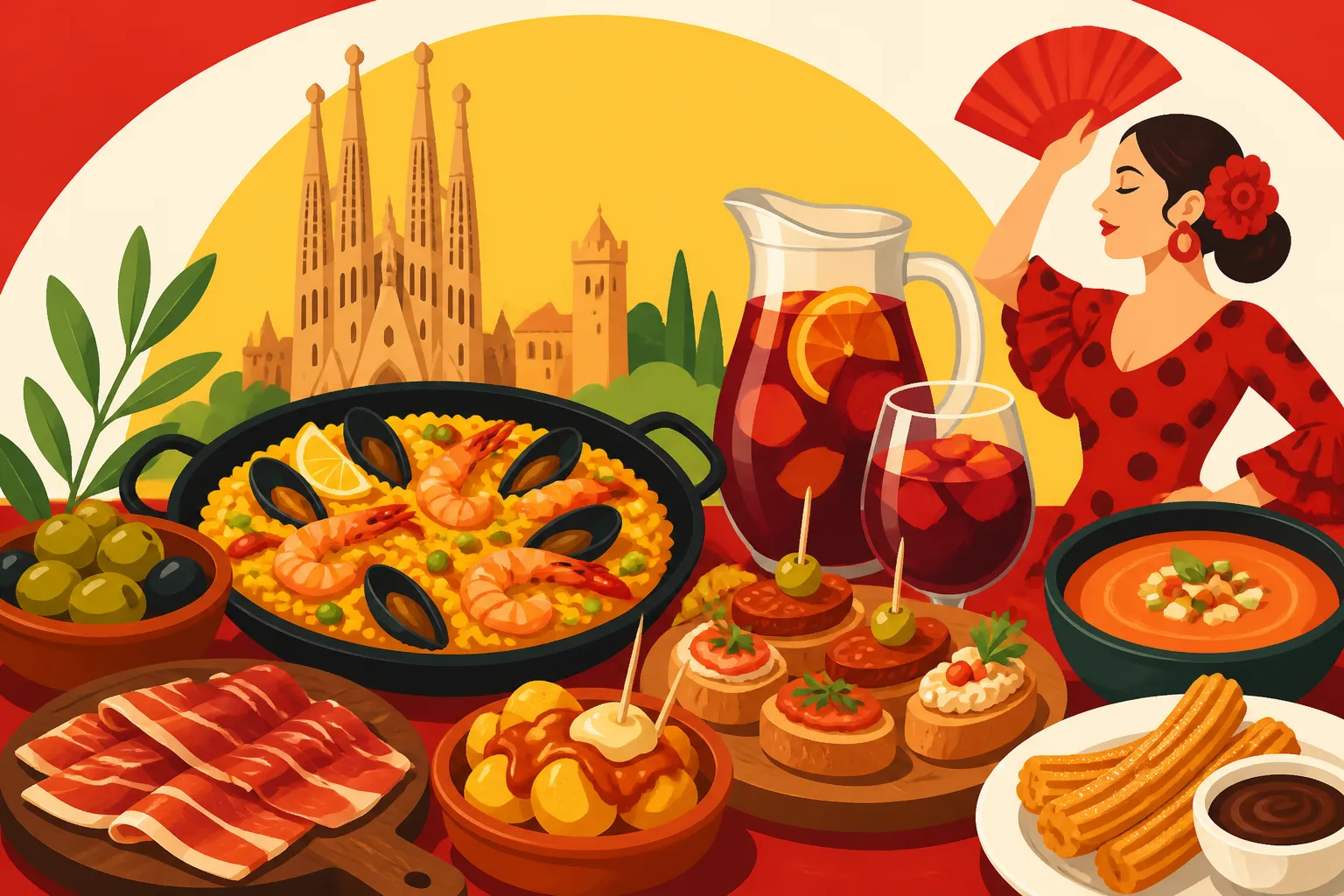
The world thinks of paella as the national dish of Spain, but to a Spaniard, it is specifically Valencian. Real "Paella Valenciana" does not contain seafood; it is a land-based dish made with rabbit, chicken, and snails. The seafood version we often see is "Paella de Marisco." Crucially, paella is a lunch dish. It is heavy and takes a long time to digest. If you see a restaurant serving paella for dinner, it is a red flag that they are catering specifically to tourists.
The "socarrat" is the most prized part of the paella—it is the toasted, caramelized layer of rice at the very bottom of the pan. It is considered the height of culinary skill to achieve the perfect socarrat without burning the rice. Beyond paella, look for "Arroz Negro" (black rice colored with squid ink) or "Fideuá," which is a similar concept but made with short, thin noodles instead of rice. When looking for the best spots, How to Find Authentic Restaurants in Spain (Not Tourist Traps) will advise you to look for places where the rice is cooked to order, usually taking at least 20 to 30 minutes.
The Seafood of the North: Galicia and Cantabria
In the northwest, the Atlantic Ocean provides a bounty that is arguably the best seafood in Europe. Galicia is famous for its "Pulpo a la Gallega"—tender octopus served on wooden platters, drizzled with high-quality olive oil and dusted with "pimentón" (paprika). The tradition of eating octopus is so deep that many towns have "pulperías" dedicated entirely to this one dish.
This region is also the home of "mariscadas" (seafood platters) featuring barnacles ("percebes"), which are dangerous to harvest and therefore expensive, as well as scallops, crabs, and mussels. The quality of the raw ingredient is so high that preparations are usually simple: boiled in salt water or grilled with a bit of garlic. This is also where you will find the best white wines, like Albariño, which perfectly complement the briny flavors of the coast.
Meats and Stews of the Interior
As you move into the heart of the country, the diet becomes more robust. Castile and León are famous for "Asados" (roasts). "Cochinillo" (suckling pig) from Segovia is legendary—it is roasted in wood-fired ovens until the skin is as thin and crisp as glass, and the meat is so tender it is traditionally carved with the edge of a ceramic plate. "Lechazo" (suckling lamb) is the specialty in Valladolid and Burgos.
In the winter, the "Cocido" is the king of the table. This is a multi-stage stew. First, you are served the broth with small noodles. Then, the chickpeas and vegetables are brought out. Finally, a platter of various meats—chorizo, morcilla (blood sausage), pork belly, and beef—is served. It is a marathon of a meal designed to ward off the biting cold of the high Spanish plateau. If you are staying in Madrid, many historic "tabernas" serve this on a specific day of the week, usually Tuesday or Wednesday.
Navigating the Drinks Menu
Drinking in Spain is deeply integrated into daily life, yet public drunkenness is generally frowned upon. Alcohol is almost always accompanied by food, even if it is just a small bowl of olives or salty almonds. The variety of drinks available is vast, ranging from the world-class wines of the Rioja region to the refreshing summer coolers found in the beach bars of the south.
Understanding the Spanish Wine Regions: A Beginner's Guide will help you navigate a wine list that can be intimidating. Spain has more land under vine than any other country in the world, and the value for money is extraordinary. Even a "vino de la casa" (house wine) in a humble bar is often of a much higher quality than a mid-range bottle in London or New York.
Vino: From Rioja to Sherry
Spanish red wine (Vino Tinto) is categorized by how long it has been aged in oak. "Joven" is young and fruity; "Crianza" has been aged for at least two years (one in oak); "Reserva" for three years; and "Gran Reserva" for five. While Rioja is the most famous region, Ribera del Duero is often preferred by those who like bolder, more powerful reds. For white wine (Vino Blanco), Rueda (made with Verdejo grapes) and Rías Baixas (Albariño) are the top choices.
Sherry, or "Jerez," is another uniquely Spanish treasure. Forget the sweet, sticky cream sherries your grandmother might have kept in a cupboard. Authentic Sherry from the "Sherry Triangle" in Andalusia ranges from bone-dry "Fino" and "Manzanilla" to the complex, nutty "Amontillado." A chilled glass of Fino with some salty "Jamón Ibérico" is one of the most perfect food pairings in existence.
Cerveza and the Vermut Ritual
Beer is the most common drink for "tapeo." It is usually served as a "caña"—a small glass that ensures the beer stays cold until the last sip. In Spain, beer is meant to be refreshing rather than a complex craft experience, although the craft beer scene is growing in cities like Barcelona and Madrid. Popular national brands include Mahou, Estrella Galicia, and Alhambra. If you want a larger glass, ask for a "doble" or a "tanque."
One of the most charming traditions returning to Spanish cities is "La Hora del Vermut" (the Vermouth Hour). Before lunch, locals gather to drink sweet, red vermouth served on tap, usually over ice with a slice of orange and an olive. It is an appetite stimulant and the perfect social lubricant for a Sunday morning. It is often served with "banderillas" (small pickled skewers) or tinned seafood like cockles or mussels, which are considered a high-end delicacy in Spain.
Non-Alcoholic Favorites and Coffee Culture
If you don't drink alcohol, you won't be left out. A "mosto" is a delicious, unfermented grape juice that tastes like the essence of the vineyard. In the summer, nothing beats a "Horchata de Chufa," a creamy, nut-based drink from Valencia made from tiger nuts. And of course, there is "Gaseosa" (a lightly sweet soda water) which is often mixed with wine to make "Tinto de Verano"—a much more local and refreshing alternative to the tourist-heavy Sangria.
Coffee is a pillar of Spanish life. We have already mentioned How to Order Coffee in Spain Like a Local, but it's worth noting that the "Café Solo" is the default espresso. If you want it over ice in the summer, order a "café con hielo." The waiter will bring you a hot coffee and a separate glass with one large ice cube. You sugar the coffee while it's hot, then pour it expertly over the ice. It is an essential skill for surviving a Spanish July.
Practical Tips for Dining Out in Spain
Spanish service can sometimes seem "gruff" or "slow" to those used to the over-attentiveness of North American service. In Spain, the philosophy is that once you have the table, it is yours for as long as you want it. The waiter will not bring the bill unless you ask for it ("La cuenta, por favor"), because they consider it rude to "kick you out." You have to be proactive in getting their attention.
When choosing a place to eat, avoid anywhere with pictures of food on a board outside or anyone standing on the street trying to beckon you in. These are classic tourist traps. Instead, look for places where people are standing at the bar and the noise level is high. If you are looking for something specific or high-end, using Booking.com to check recent reviews from other travelers can help steer you toward quality.
Dealing with Allergies and Dietary Requirements
Spain has improved significantly in its handling of allergies, particularly gluten intolerance ("celiaquía"). By law, menus must list allergens, often using a set of icons at the bottom of the page. However, the concept of being vegetarian or vegan can still be a challenge in rural areas. "Ensalada Mixta" (mixed salad) often comes with tuna and hard-boiled eggs by default, so you must specify "sin atún y sin huevo."
If you have a severe allergy, it is a good idea to have a printed card in Spanish explaining your condition. Most modern restaurants in big cities are very accommodating, but in a traditional village bar, cross-contamination is a real risk. Always clarify: "Soy alérgico a…" (I am allergic to…) rather than just saying you don't like something.
The Mystery of the Bread Charge and Water
When you sit down, a basket of bread (and sometimes olives or a small tapa) will likely be placed on the table. This is rarely free. It is called the "cubierto" or "pan y picos" charge, usually ranging from 1 to 2 Euros per person. If you don't touch it, you can sometimes ask for it to be removed from the bill, but it's generally accepted as part of the cover charge.
Tap water is perfectly safe to drink in almost all of Spain, though in coastal areas like Valencia or Barcelona, it can have a strong chlorine taste, so many locals prefer bottled water ("agua con gas" for sparkling or "agua sin gas" for still). If you want tap water, ask for "una jarra de agua," which is now legally required to be provided for free in restaurants, though some places may still be reluctant to offer it.
Common Mistakes and Cultural Faux Pas
The biggest mistake is ordering Sangria. While it exists, it is largely a drink for tourists. Locals are much more likely to order a "Tinto de Verano" (red wine with lemon soda or gaseosa). It is lighter, cheaper, and more refreshing. Another faux pas is asking for butter for your bread at dinner; olive oil is the only acceptable fat for bread in a Spanish restaurant, and even then, it is usually reserved for breakfast or specifically for dipping if high-quality oil is provided.
Don't expect to eat an early dinner. If you show up at a restaurant at 7:00 PM, you will likely find the staff eating their own meal or just starting to set the tables. Embrace the "siesta" rhythm. Have a late lunch, take a nap or a quiet rest in the afternoon, and join the "paseo" (the evening stroll) at 8:00 PM before heading to dinner at 9:30 PM.
Understanding Opening Hours and Holidays
Many shops and family-run restaurants close in the afternoon, usually from 2:00 PM to 5:00 PM. This is not for a nap, but to allow the staff to go home and eat the "comida" with their families. On Sundays, many places are closed entirely, especially in smaller towns. Always check the "horario" on Google Maps or the restaurant's social media before making a long trip.
Public holidays ("festivos") can also catch you off guard. Spain has many national, regional, and even town-specific holidays. On these days, almost everything will be closed, but the restaurants that remain open will be packed with families celebrating. Planning ahead and perhaps booking a table a few days in advance is essential during these times.
Disclaimer
The information provided in this guide is based on cultural norms and general practices in Spain as of 2026. Culinary traditions and legal requirements (such as allergen labeling) may vary by region or change over time. Always verify specific restaurant details, opening hours, and health-related information locally. This guide is for informational purposes and does not constitute professional culinary or legal advice.