Spanish Meal Times and Dining Etiquette Explained
Walking into a bustling Spanish plaza at 7:00 PM only to find every kitchen closed and the locals just finishing their afternoon coffee can be a soul-crushing experience for any hungry traveler. I vividly remember my first week in Seville, wandering the streets with a growling stomach, wondering if I had somehow missed dinner entirely. This guide breaks down the unique clock of Spanish dining so you can eat like a local and avoid the "tourist trap" hunger cycle.
Disclosure: This post may contain affiliate links. We may earn a commission at no extra cost to you if you make a purchase through these links. Read full disclosure.
The Daily Rhythm: Why Spain Eats So Late
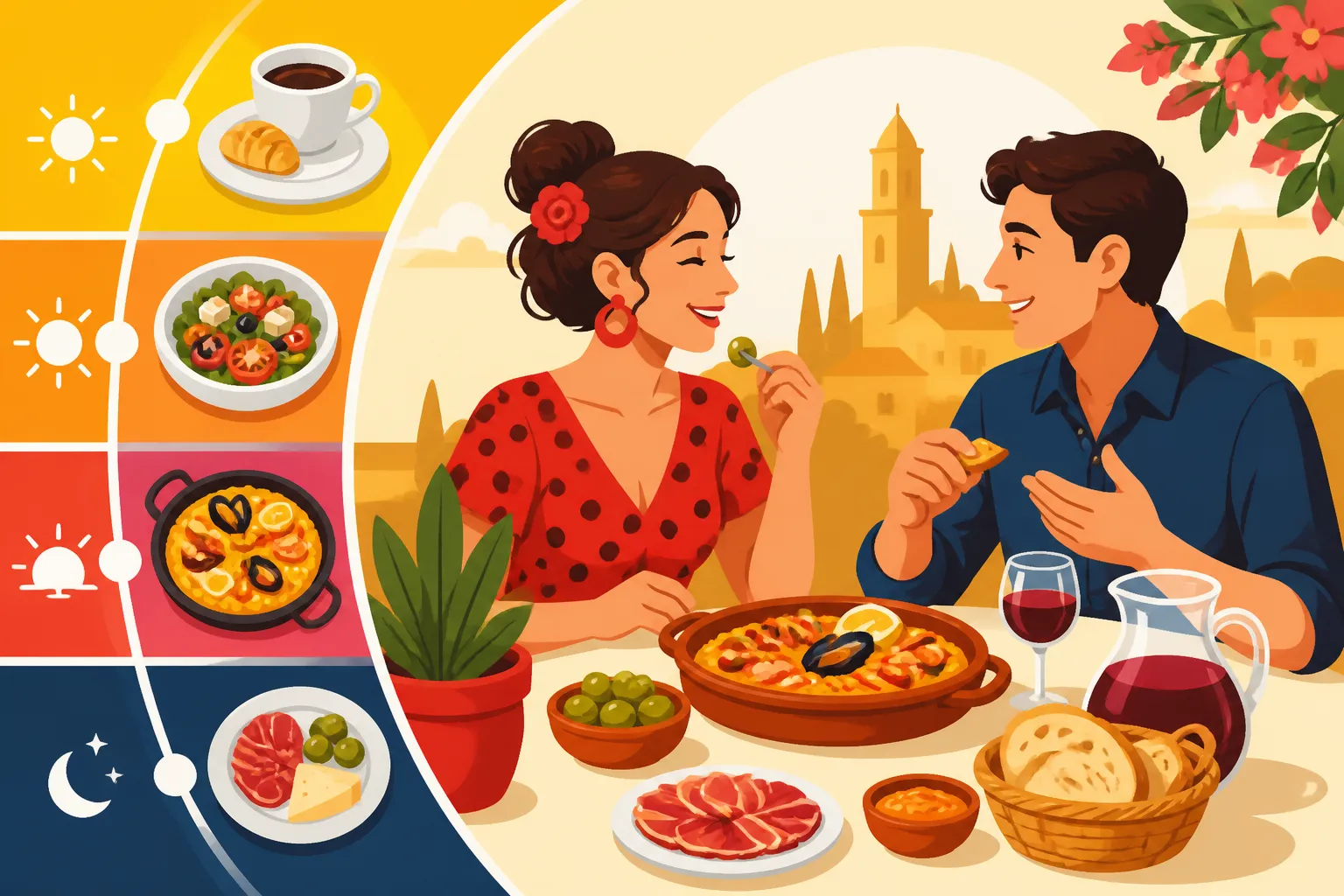
If you try to find a sit-down dinner at 6:00 PM in Spain, you are going to be disappointed. The most important thing to understand about Spanish culture is that the clock runs differently here. While the rest of Europe is winding down, Spain is often just getting its second wind. This isn't just a quirk; it is a deeply ingrained social structure that dictates when people work, sleep, and, most importantly, eat.
The Siesta and the Solar Clock
The misconception about the "siesta" is that everyone is sleeping. In reality, the mid-afternoon break is a functional response to the intense heat and a historical shift in time zones. Spain is technically in the wrong time zone (it should be on GMT like the UK and Portugal), which means the sun is at its highest much later in the day. Because of this, the "midday" meal actually happens when the sun is hottest, usually between 2:00 PM and 4:00 PM.
When I first moved here, I struggled with the afternoon shutdown. You’ll see shops close their metal shutters and streets go quiet. This is the time for la comida, the main meal of the day. Understanding this rhythm is vital for your planning. If you are using Omio to book a train between cities, try to schedule your arrivals before 2:00 PM or after 8:00 PM to ensure you aren't stuck looking for food when the kitchens are on hiatus.
The Social Importance of Late Dining
In Spain, eating is rarely just about fuel; it is the primary form of socializing. Dinner, or la cena, is pushed back to 9:00 PM or 10:00 PM because the workday often ends later, and the evening is reserved for strolling (el paseo) and meeting friends. The late-night buzz in a Spanish city is infectious, but it requires a total recalibration of your internal hunger clock.
If you find yourself arriving late at your hotel booked through Booking.com, don't panic if it's 10:30 PM. In cities like Madrid, Barcelona, or Valencia, that is actually prime time for a lively meal. The atmosphere at midnight in a Spanish bistro is often more energetic than a London pub at 8:00 PM. You have to embrace the late hours to truly experience the heart of the country.
Breakfast and the Mid-Morning Break
Spanish breakfast is a multi-stage affair that might seem confusing at first. It starts small and builds up as the morning progresses. If you are used to a massive plate of eggs and bacon at 7:00 AM, you’ll need to adjust your expectations. Most Spaniards start with something very light at home and save the "real" breakfast for later in the morning at a local café.
El Desayuno: Keep it Light
The first breakfast, el desayuno, usually happens early and is very simple. This might be a café con leche (coffee with milk) and a few galletas (biscuits) or a piece of toast. It’s a quick ritual to wake up the system before heading out the door. If you are staying in a central apartment, you'll hear the clinking of porcelain from the bars downstairs as early as 7:30 AM.
For travelers, this is the best time to enjoy a quiet moment before the crowds arrive at major landmarks. It is often wise to grab a quick coffee and then use GetYourGuide to book an early morning skip-the-line tour. You’ll beat the heat and the masses, and you’ll be finished just in time for the second, more substantial stage of the morning.
El Almuerzo: The Second Breakfast
Between 10:30 AM and 11:30 AM, the workforce of Spain decamps to the nearest bar for el almuerzo. This is a sacred mid-morning break where the "real" eating happens. You’ll see construction workers, lawyers, and students sitting side-by-side. The star of the show is usually a tostada con tomate, aceite, y sal—toasted bread rubbed with fresh tomato, drizzled with extra virgin olive oil, and sprinkled with sea salt.
You might also see people ordering a pincho de tortilla (a slice of Spanish potato omelet). This is where you’ll start to understand Spanish Food and Drink: A Practical Culture Guide. It’s not just a snack; it’s a social necessity. If you skip this, you will never make it to the 3:00 PM lunch without feeling faint. It’s also the perfect time to practice your Spanish Language and Everyday Communication for Visitors by ordering your coffee specifically: un cortado (espresso with a splash of milk) or un café solo (black espresso).
La Comida: The Sacred Lunch Hour
In most Western cultures, lunch is a quick sandwich at a desk. In Spain, la comida is the king of meals. It is a sit-down, multi-course event that typically takes place between 2:00 PM and 4:00 PM. This is when the majority of the population stops working, and it is the best time to eat high-quality food for a very reasonable price.
The Menú del Día
The best-kept secret for any traveler is the Menú del Día. Originally introduced decades ago to provide affordable, nutritious meals for workers, it has become a staple of Spanish life. For a fixed price—usually between €12 and €18—you get a starter (primer plato), a main course (segundo plato), a drink (often wine or beer), bread, and dessert or coffee.
Visitors are often advised to look for the handwritten chalkboards outside small restaurants. If the menu is only in Spanish and the place is packed with locals, you’ve found a winner. To help you navigate these menus, it’s worth checking out What Is a ‘Menú del Día’ and How Does It Work? for a deeper dive into what to expect. It is the most cost-effective way to eat like royalty while exploring the country.
Timing and Expectations
If you show up at a restaurant for lunch at 12:30 PM, you will likely find the staff still setting the tables or eating their own meal. Most kitchens don't even open until 1:30 PM at the earliest. By 2:30 PM, the place will be deafeningly loud and full of energy. This is a great time to slow down. Don't expect a quick "in and out" service; the staff expects you to stay for at least an hour.
If you are planning a busy day of sightseeing, you need to account for this gap. Many museums and shops close during these hours, so it's the perfect time to indulge in a long, leisurely lunch. Understanding Spanish Meal Times and Dining Etiquette Explained means accepting that you cannot rush a Spanish waiter. They aren't being slow; they are giving you the space to enjoy your meal without feeling pressured to leave.
Merienda and the Pre-Dinner Tapas
Because lunch ends around 4:00 PM and dinner doesn't start until 9:00 PM, there is a massive five-hour gap that needs to be filled. This is where the merienda and the early evening tapas culture come into play. It is a transitional period where the city shifts from work mode into social mode.
La Merienda: The Afternoon Snack
Around 5:00 PM or 6:00 PM, especially for families with children, it’s time for la merienda. This is usually something sweet, like a pastry, or perhaps a small sandwich (bocadillo). In the winter, this is the prime time for churros con chocolate. If you're in Madrid, visiting San Ginés during this window is a classic experience, though you'll be competing with locals finishing their workday.
For expats and digital nomads, this is often the time when you'll find people working from cafes. However, be aware that many traditional bars might be closed between 4:30 PM and 8:00 PM. If you are hungry during this "dead zone," look for pastelerías or cafes that stay open all day.
Tapas Culture and Etiquette
As the sun begins to set, the ir de tapas ritual begins. This is not dinner; it’s a precursor to dinner. You move from bar to bar, having one drink and one small snack at each. It’s a dynamic, standing-up kind of affair. In some cities like Granada or Jaén, these tapas come free with your drink, which is a delightful surprise for any budget traveler.
Knowing Spanish Tapas Culture: How to Order and Where to Go is essential for navigating the crowded bars. You’ll often have to elbow your way to the bar and catch the waiter's eye. Don't be shy—it’s not considered rude to be assertive in a crowded Spanish bar. If you see napkins on the floor in a traditional place, don't be disgusted; historically, it was a sign of a busy, popular bar (though this is changing in more modern establishments).
Dinner and the Art of the Over-Table Talk
Dinner in Spain, or la cena, is traditionally a lighter meal than lunch, though it is no less social. Because it happens so late, people tend to eat smaller portions to avoid going to bed with a heavy stomach. However, on weekends, dinner can turn into an all-night event.
La Cena: Lighter but Later
While lunch is about the Menú del Día, dinner is often about raciones—larger plates of food shared among a group. You might order a plate of jamón ibérico, some patatas bravas, and a salad. It’s a communal way of eating that reflects the Spanish Customs, Etiquette, and Social Life where the group is prioritized over the individual.
If you are dining out, 9:30 PM is the "normal" time to start. If you go at 8:00 PM, you will likely be the only person in the restaurant, and you might find the staff still doing their pre-shift prep. By 11:00 PM, the restaurant will be at its peak. This late-night culture is one of the things I love most about living here, but it does take a few weeks for your body to stop demanding food at 6:30 PM.
Sobremesa: The Post-Meal Ritual
Perhaps the most important word in the Spanish dining lexicon is sobremesa. It literally means "over the table," and it refers to the time spent talking after the food has been finished. In many countries, the bill is brought as soon as you put your fork down. In Spain, this is considered incredibly rude.
The sobremesa can last for thirty minutes or two hours. It usually involves a round of coffees, perhaps a chupito (a small shot of local liqueur like hierbas or pacharán), and plenty of conversation. The table is yours for the night. To understand more about these unwritten social rules, check out Spanish Etiquette for Expats: Greetings, Invitations, and Daily Life. It will help you feel much more comfortable when the waiter seemingly "ignores" you at the end of the meal—they are actually just respecting your sobremesa.
Essential Spanish Dining Etiquette
Beyond the timing, there are several "hidden" rules that can make or break your dining experience. Spain is a relaxed country, but it has specific expectations when it comes to the table. Failing to follow these won't get you kicked out, but knowing them will certainly earn you more respect from the staff.
Tipping and Paying the Bill
One of the most common questions I get from newcomers is about tipping. Unlike the US, there is no "20% rule" here. In casual bars or for a Menú del Día, leaving a few small coins (the "chatarra") is perfectly sufficient. In a nicer restaurant, a 5-10% tip is considered very generous and is usually reserved for exceptional service.
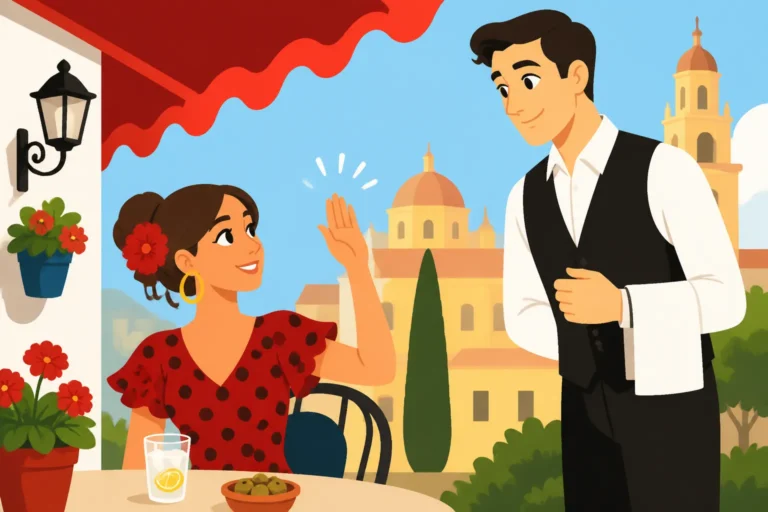
When it comes to paying, you must ask for the bill (la cuenta). A waiter will almost never bring it to you unsolicited because they don't want to make you feel rushed. A simple hand gesture—as if you are writing in the air—accompanied by "La cuenta, por favor," is the standard way to handle this. For more on managing your money while out, see Money in Spain for Expats: Banking, Taxes, and Everyday Payments.
Bread, Water, and "Hidden" Fees
In many Spanish restaurants, a basket of bread will be placed on the table automatically. Be aware that this is rarely free. It usually costs between €1 and €2.50 per person (often listed as pan y picos or cubierto). If you don't want it, you can politely ask the waiter to take it away, though it's often better to just accept it as part of the experience.
Similarly, "free" tap water isn't as common as in some other countries. While a new law requires restaurants to offer free tap water, many still prefer you to order bottled water (agua con gas for sparkling or agua sin gas for still). If you want tap water, specifically ask for "un vaso de agua del grifo." If you're concerned about the local supply, you might want to read Tap Water in Spain: Safety, Taste, and Filtration Tips before you start ordering carafes of it.
Quick Reference: Spanish Meal Schedule
| Meal Time | Spanish Name | Typical Food | Context |
|---|---|---|---|
| 08:00 – 09:30 | El Desayuno | Coffee, biscuits, or a small pastry | Light start at home or a quick bar stop |
| 10:30 – 11:30 | El Almuerzo | Tostada with tomato, tortilla, coffee | The "real" breakfast; essential for energy |
| 14:00 – 16:00 | La Comida | Three-course Menú del Día | The main meal of the day; everything closes |
| 17:30 – 19:30 | La Merienda | Sweets, churros, or a small bocadillo | Afternoon bridge to keep hunger at bay |
| 20:30 – 22:00 | La Hora de Tapas | Small shared plates, beer, or vermouth | Socializing before the main dinner |
| 21:30 – 23:30 | La Cena | Salad, shared raciones, or light meat/fish | Lighter than lunch, but very social and late |
Regional Variations in Dining
While the general schedule holds true across the country, there are regional nuances that can surprise you. For instance, in the north, specifically the Basque Country, the "tapas" are called pintxos, and they are often displayed on the bar top. You simply take what you want and count the toothpicks at the end to pay. This requires a level of trust and a specific etiquette that you can learn about in The Basque Country: Food, Coast, and Culture.
In the south, in Andalusia, the heat dictates even later dinner times during the summer months. It's not uncommon to see families with small children sitting down for dinner at 11:00 PM in July to escape the lingering daytime heat. If you're traveling during the hotter months, check Heatwaves in Spain: Health Precautions for Expats to ensure you're staying hydrated and safe while following the local rhythm.
Finally, in Catalonia, meal times can sometimes be slightly earlier—closer to the rest of Europe—but only by about thirty minutes. No matter where you are, the key is to observe. If the restaurant is empty, there’s usually a reason. If there’s a crowd standing on the sidewalk with glasses of wine, that’s where you want to be. The best experiences in Spain are found by following the noise and the locals, rather than a strict guidebook schedule.
Avoiding Common Tourist Pitfalls
One of the biggest mistakes tourists make is eating at 6:30 PM at a restaurant located on a main tourist plaza with pictures of food on the menu. These places stay open all day because they know foreigners are hungry, but the quality is almost always inferior and the prices are double what a local would pay. By following the Spanish Meal Times and Dining Etiquette Explained, you ensure that you are eating when the kitchens are fresh and the "real" chefs are working.
If you are truly starving at 7:00 PM, head to a supermarket or a frutería for some fruit and cheese, or find a bar that serves conservas (high-quality canned seafood like mussels or cockles) which don't require a hot kitchen. This will tide you over until the restaurants open at 8:30 PM or 9:00 PM. Trust me, waiting for a proper Spanish dinner is always worth the extra hour of hunger. You’ll be rewarded with better food, a more vibrant atmosphere, and the feeling that you are finally living in sync with this beautiful country.
Disclaimer
This guide is intended for informational purposes and reflects the personal experiences and cultural observations of the author. While we strive to provide the most up-to-date information regarding Spanish customs and dining schedules, local practices may vary by region, season, and individual establishment. Always check local opening hours and regulations during your travels.