What Is a ‘Menú del Día’ and How Does It Work?
Oh, the Menú del Día! If you're new to Spain, you've probably seen those chalkboards outside restaurants, or little printed sheets handed out around lunchtime. It can be a bit confusing at first, especially if your Spanish is still finding its feet, or if you're used to a different dining culture. Trust me, I've been there, staring at a list of dishes, wondering if I'm ordering enough, too much, or entirely the wrong thing! But let me tell you, mastering the Menú del Día is like unlocking a secret level of expat living. It’s not just a meal; it's a cornerstone of Spanish daily life, an economic lifeline for many, and often, your best bet for a fantastic, authentic, and affordable lunch. This guide will help you understand exactly what it is, how it works, and how to make the most of this wonderful Spanish tradition.
Disclosure: This post may contain affiliate links. We may earn a commission at no extra cost to you if you make a purchase through these links. Read full disclosure.
The Heart of Spanish Lunch Culture: What Exactly is a Menú del Día?
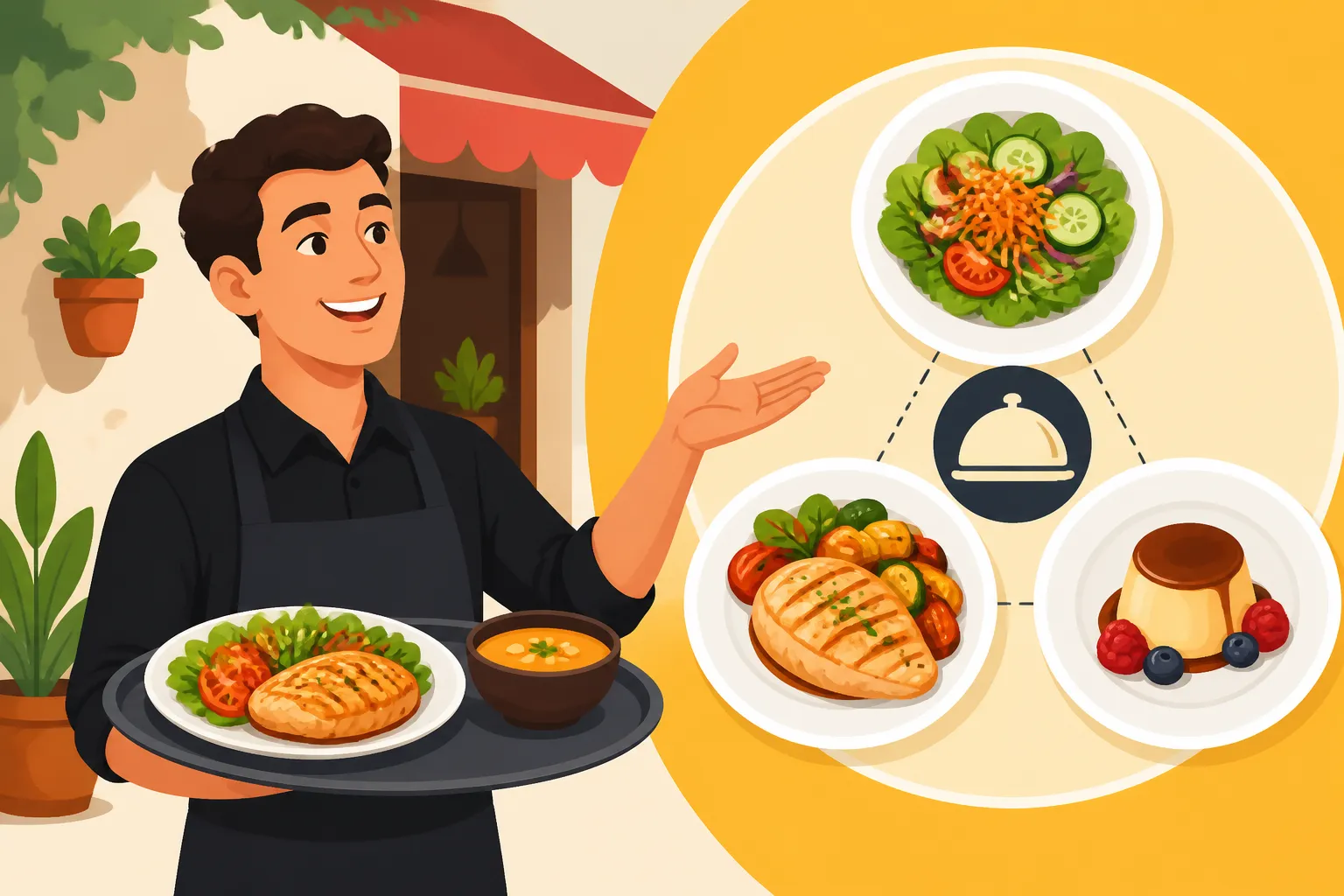
The Menú del Día, literally "Menu of the Day," is a fixed-price, multi-course lunch offering that you'll find in nearly every traditional Spanish restaurant, especially on weekdays. It’s designed to provide a complete, hearty, and balanced meal at an incredible value. Think of it as the ultimate power lunch, but for everyone, from construction workers to office staff to savvy expats like us.
Origins and Philosophy: More Than Just a Cheap Meal
The concept of the Menú del Día dates back to the Franco era, specifically to 1964, when a government decree established the "Tourist Menu." The idea was to offer tourists a standardized, affordable meal to boost the country's appeal as a travel destination. While its initial purpose was tourism-focused, it quickly evolved into an essential part of daily Spanish life, especially for local workers. It ensured that everyone, regardless of income, had access to a nutritious, hot meal during their long midday break.
Today, its philosophy remains largely the same: provide substantial, homemade food at a reasonable price. It’s a testament to the Spanish appreciation for a proper, unhurried lunch, contrasting sharply with the quick sandwich-at-your-desk culture found in many other countries. It’s a social ritual, a chance to refuel, and a moment to connect. While the government mandate is long gone, the tradition has stuck, woven deep into the fabric of Spanish culture, and it's something you simply have to experience.
The Typical Structure: A Multi-Course Feast Explained
When you order a Menú del Día, you're not just getting a single dish; you're embarking on a culinary journey that typically includes five main components, often more:
- Primero (First Course): This isn't just an appetizer; it's a significant starter. You'll usually have 3-5 options. Common choices might include a hearty lentil stew (lentejas), a comforting vegetable soup (sopa de verduras), a fresh mixed salad (ensalada mixta), pasta dishes, or a plate of rice (arroz a banda, paella). It's designed to be nourishing and prepare your palate for the main event.
- Segundo (Second Course): This is your main dish, almost always involving meat or fish. Again, you'll typically get 3-5 options. Expect things like grilled pork loin (lomo a la plancha), chicken with a sauce (pollo en salsa), hake (merluza) cooked in various ways, or perhaps a simple fried egg with fries (huevos fritos con patatas) if you’re looking for comfort food. These are usually served with a side, often fries or a small salad.
- Postre o Café (Dessert or Coffee): After two substantial courses, it's time for a sweet finish or a caffeine kick. Dessert options are often simple but satisfying: yogurt, fresh fruit, flan, arroz con leche (rice pudding), or sometimes a small pastry. If you're not keen on dessert, a coffee (espresso, café con leche, etc.) is almost always an option instead.
- Bebida (Drink): This is where the value truly shines! Your drink is included in the price. You'll generally be offered water (agua), soft drinks (refrescos), beer (cerveza), or a glass of house wine (vino de la casa). Often, they'll bring a whole bottle of water and a small bottle of wine to the table, which you can share if you're dining with others. Don't be shy; it's all part of the deal!
- Pan (Bread): A basket of bread is always included. It's there to mop up delicious sauces, accompany your salad, or just nibble on between courses. In some places, they might even offer a small aperitivo (a little snack like olives or nuts) before your first course arrives, usually on the house.
This comprehensive offering ensures you leave feeling utterly satisfied, without breaking the bank.
Navigating the Menú del Día: Practical Tips for Expats
As a foreigner, stepping into a bustling Spanish restaurant at lunchtime can feel a bit like organized chaos. But with a few pointers, you'll be ordering your Menú del Día like a seasoned local in no time.
How to Spot a Good Menú (and Avoid Tourist Traps)
Finding a truly great Menú del Día is an art, but there are definitely some tell-tale signs:
- Look for Locals: This is probably the golden rule. If a place is packed with Spanish families, workers in overalls, or local office staff, you're likely onto a winner. Restaurants catering primarily to tourists might offer a menú, but the quality and value might not be as authentic.
- Handwritten or Simple Boards: Often, the best spots will have a simple handwritten chalkboards or printouts daily. This suggests fresh ingredients and dishes that genuinely change based on what's available at the market. A laminated, unchanging menu with photos might indicate a less authentic experience.
- Location, Location, Location: Venture a street or two away from the main tourist squares and attractions. These areas tend to have more local, traditional eateries where the menú is king.
- Price Point: While prices vary by city and region, a typical Menú del Día generally ranges from €10 to €15, sometimes up to €20 in fancier establishments or larger cities like Madrid or Barcelona. Be wary of anything significantly higher, unless it’s a truly gourmet offering. Conversely, something suspiciously cheap might compromise on quality.
- Kitchen Sounds & Smells: Trust your senses! A good sign is the hustle and bustle of a working kitchen and the aroma of delicious, home-cooked food wafting out.
Sometimes, after a long morning exploring, perhaps you've booked a walking tour through GetYourGuide, and you're famished. You'll want to avoid the obvious tourist traps right outside major landmarks and instead, follow the scent of good food a block or two away.
Ordering Like a Local: Phrases and Etiquette
Once you've picked your spot, here’s how to confidently order:
- Getting the Menu: When seated, if they don't offer it right away, simply ask, "¿Tienen Menú del Día, por favor?" (Do you have a Menu of the Day, please?).
- Choosing Your Courses: Take your time to look over the options. If there's something you don't understand, don't hesitate to ask, "¿Qué es [dish name], por favor?" (What is [dish name], please?). The waitstaff might not be fluent in English, but they'll often try to explain or point.
- Stating Your Choices: When the waiter comes, you'll state your choices for the first and second course, then your drink, and finally if you want coffee or dessert. For example: "De primero, quiero la sopa de verduras. De segundo, el lomo a la plancha. Para beber, agua y una caña, por favor. Y de postre, el flan." (For the first course, I'd like the vegetable soup. For the second, the grilled pork loin. To drink, water and a small beer, please. And for dessert, the flan.)
- Sharing: If you're with someone, they'll usually bring a full bottle of water and a small bottle of wine. It's perfectly normal to share these.
- Pacing: The Menú del Día is often served quite efficiently, especially if the restaurant is busy. Don't expect a super leisurely meal, but it’s still more relaxed than grabbing a fast-food bite.
Dietary Considerations and Flexibility
This is where the Menú del Día can sometimes be a bit tricky, but it's not impossible to navigate.
- Vegetarians/Vegans: Traditional Spanish cuisine, especially in menú form, is very meat and fish-centric. You might find a good "primero" like a salad, gazpacho, or vegetable soup, but the "segundo" can be challenging. Look for "platos de verduras" (vegetable dishes) or sometimes "huevos fritos" (fried eggs). It's always worth asking if they can prepare something vegetarian, like a large salad or grilled vegetables, but expect less flexibility compared to ordering à la carte. Clearly state: "Soy vegetariano/a. ¿Hay alguna opción vegetariana para el segundo plato?" (I am vegetarian. Is there a vegetarian option for the second course?).
- Allergies: For serious allergies, explaining it in Spanish can be crucial. Have key phrases ready: "Soy alérgico/a a [allergen, e.g., gluten, cacahuetes – peanuts]. ¿Este plato contiene [allergen]?" (I am allergic to [allergen]. Does this dish contain [allergen]?). While awareness is growing, cross-contamination might be a concern in smaller kitchens, so always exercise caution.
- Gluten-Free: This is similar to vegetarian options. Some dishes, like grilled meat or fish with a simple side, might be naturally gluten-free, but ask about sauces or preparation. Bread will always be regular wheat bread unless specifically requested and available.
While the Menú del Día is generally set, many establishments are becoming more accustomed to diverse dietary needs, especially in larger cities. But don't expect a complete overhaul of their daily offerings.
Why Embrace the Menú del Día? Pros, Cons, and Common Scenarios
There’s a reason the Menú del Día has endured and thrived in Spain. It offers a unique dining experience, but like anything, it has its quirks.
The Unbeatable Value and Culinary Adventure
The most obvious benefit is the incredible value for money. For a price that might get you just a main course and a drink elsewhere, you get a full, multi-course meal with bread and a beverage. It's truly difficult to eat as well or as affordably any other way.
Beyond the cost, it’s a culinary adventure. It forces you to try dishes you might not otherwise order à la carte. This is how you discover those hidden gems of Spanish home cooking – the stews, the regional specialities, the simple yet flavourful preparations that locals cherish. It's a fantastic way to sample authentic Spanish food without feeling overwhelmed by a huge menu. You'll get to experience the real pulse of Spanish daily life.
The speed and efficiency are also a huge plus, especially if you're out and about. Service is usually prompt, making it perfect for a satisfying lunch before you continue your sightseeing or catch your next train or bus. If you've been using a tool like Omio to plan your travels between cities, knowing you can grab a quick, delicious, and filling menú before or after your journey is a huge relief.
Potential Drawbacks and Surprises
While wonderful, the Menú del Día isn't without its limitations:
- Limited Choices: You're usually choosing from a handful of options for each course. If you’re a picky eater or have very specific cravings, you might find it restrictive.
- Quality Variation: Like any restaurant, quality varies widely. A cheap menú isn't always a great menú. Some places excel, while others might offer more generic fare. This is where those "spotting a good menú" tips come in handy.
- Language Barrier: The menu itself might be entirely in Spanish, and the staff might not speak much English, especially in smaller towns. This is a great opportunity to practice your Spanish phrases!
- Not a Dinner Option: The Menú del Día is almost exclusively a lunchtime offering. Don't expect to find it for dinner.
- Weekend Availability: Many restaurants do not offer the Menú del Día on weekends or public holidays, or if they do, the price will often be higher, reflecting the more relaxed dining pace and often different, more elaborate dishes. Always check the sign or ask if it's the "menú del día" or "menú de fin de semana" (weekend menu).
Here's a quick comparison to help solidify the differences:
| Feature | Menú del Día | À la Carte |
|---|---|---|
| Courses | Fixed multi-course (starter, main, dessert/coffee) | Individual dishes ordered separately |
| Price | Fixed price, includes drink and bread | Individual dish prices, drinks/bread extra |
| Availability | Primarily weekday lunch | Anytime during opening hours, lunch & dinner |
| Flexibility | Limited choices, few substitutions | Wide selection, more customizable |
| Value | Excellent, highly economical | Can be more expensive for a full meal |
| Food Style | Often traditional, home-style Spanish dishes | Broader range, including international or gourmet |
| Pace | Generally efficient, quicker | Often more leisurely, relaxed |
Beyond Lunch: When and Where to Find This Culinary Gem
The Menú del Día is a truly Spanish institution, and understanding its rhythm is key to fully appreciating it.
Typical Hours and Availability
The name "Menu of the Day" isn't just a suggestion; it literally means it's for that day and usually for that part of the day. You'll find it offered exclusively during lunch hours, which in Spain, typically run from around 1:30 PM to 4:00 PM. Don't expect to find a Menú del Día available for dinner. Dinner in Spain is usually a later, lighter affair, or a chance to enjoy tapas.
On weekends (Saturdays and Sundays) and public holidays, many establishments either don't offer a Menú del Día at all, or they offer a "Menú de Fin de Semana" (Weekend Menu) or "Menú Especial" (Special Menu). These weekend versions are almost always more expensive, often by €5-€10 or more, and might feature slightly more elaborate dishes or a wider array of choices. Always check the price and what's included before you commit. If you're planning a weekend getaway and looking for a good deal on food, it's best to factor in a slightly higher lunch budget or consider picnic options.
Regional Variations and Local Twists
While the core concept of the Menú del Día remains consistent across Spain, you'll find wonderful regional variations that reflect local cuisine and specialities. For example:
- In Andalusia, particularly during the hotter months, you might find refreshing gazpacho or salmorejo as a "primero." Fish dishes will be much more prevalent in coastal areas.
- In Catalonia, look for dishes like fideuà (a noodle paella) or local vegetable preparations. You might even find a hearty escudella i carn d'olla in winter.
- In the Basque Country or Galicia, expect exceptional seafood and meat dishes, often with more robust flavors and heartier portions, reflecting the cooler climates and strong culinary traditions. Don't be surprised to find a sidrería (cider house) offering a special menu centered around their cider and specific dishes.
- In Madrid, you'll often encounter classic Castilian fare, like cocido madrileño (a chickpea stew) as a very filling "primero" in winter, or various grilled meats.
These regional differences make exploring Spain's diverse gastronomy a true delight. If you’re ever planning a multi-city trip, perhaps booking your hotels through Booking.com, try to research what local dishes are typically included in a menú del día in each destination. It's a fantastic way to immerse yourself in the local food scene without having to decipher entire restaurant menus.
The Menú del Día is more than just a convenient meal option; it’s an authentic slice of Spanish life. It’s where business is discussed, friendships are forged, and good food is savored. So, next time you’re feeling peckish around lunchtime on a weekday, ditch the sad sandwich and dive headfirst into this wonderful tradition. You’ll eat well, save money, and gain a deeper appreciation for the rhythms of Spain.
Disclaimer
Please note that while this guide provides comprehensive information based on general knowledge and typical experiences in Spain, rules, prices, and availability can vary. Always confirm details directly with establishments. Culinary offerings and restaurant practices are subject to change.