Spain’s Regions and Where to Go: A Traveler’s Overview
Choosing where to go in Spain is a logistical nightmare because every province feels like a completely different country. When I first moved here, I thought I could see "Spain" in a week, only to realize I’d barely scratched the surface of Andalusia. This guide meticulously breaks down every major region to help you navigate the beautiful, confusing diversity of my adopted home.
Disclosure: This post may contain affiliate links. We may earn a commission at no extra cost to you if you make a purchase through these links. Read full disclosure.
Understanding the Diversity of Spains Autonomous Communities
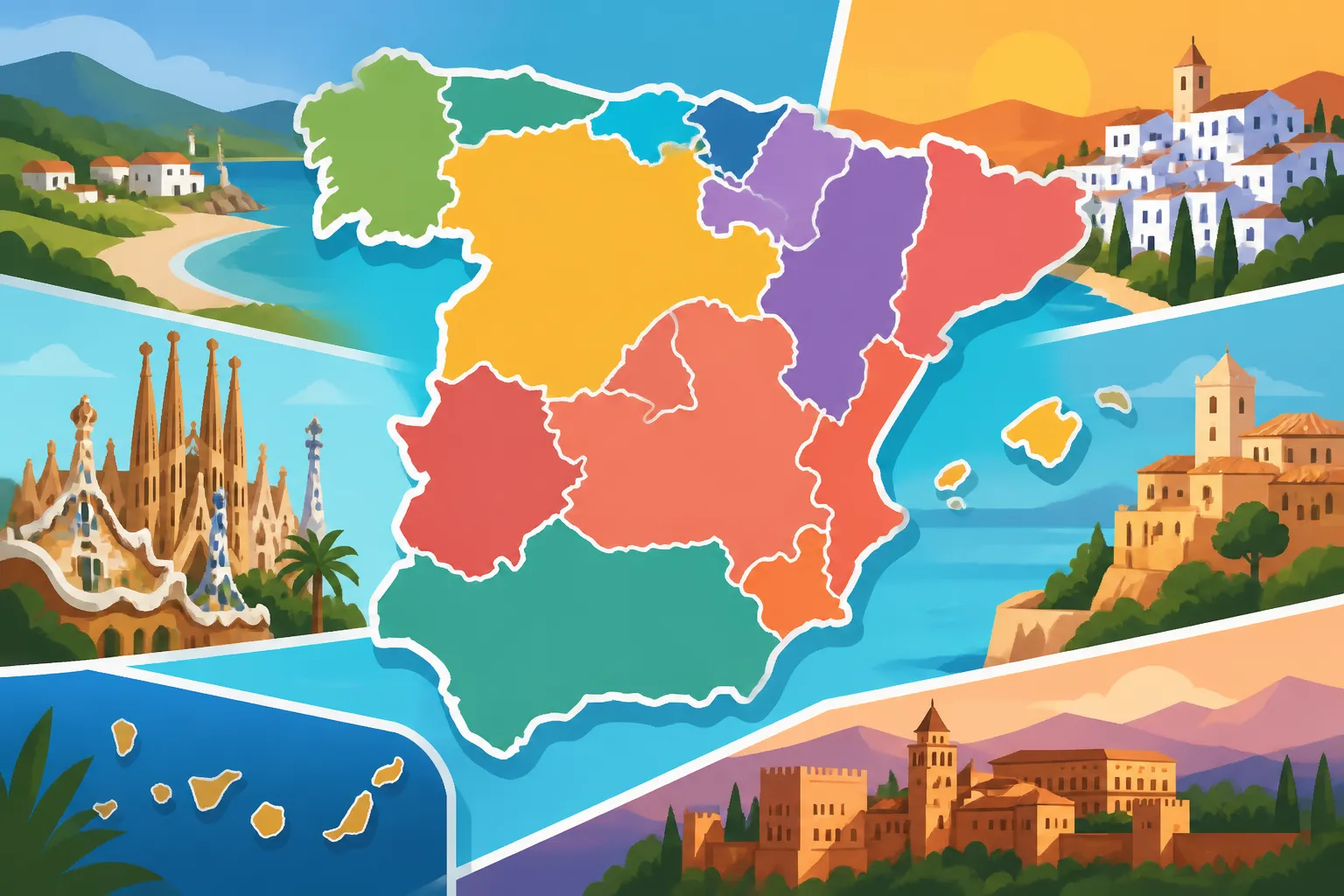
One of the first things you realize when living here is that Spain isn’t a monolith; it’s a collection of 17 autonomous communities, each with its own pride, history, and occasionally, its own language. When you cross the border from the dusty plains of Castile into the lush, rain-soaked mountains of Asturias, it feels like you’ve switched continents. Understanding these regional identities is the key to planning a trip that actually makes sense.
The "real Spain" doesn't exist in just one place. It exists in the intersection of the dry heat of the south and the misty cliffs of the north. Each region manages its own healthcare, education, and even parts of its transport. This decentralization means that a Festivals, Fiestas, and Public Holidays in Spain calendar can vary wildly depending on whether you are in Seville or Santander. You might find a city completely shut down for a local saint's day that nobody forty miles away has even heard of.
The Impact of Regional Languages and Identity
In regions like Catalonia, the Basque Country, and Galicia, you’ll see signs in two languages. Don’t let this intimidate you. While everyone speaks Spanish (Castellano), the local tongue—be it Catalan, Euskera, or Gallego—is a point of deep cultural pride. I remember my first time in a small village in the Pyrenees; I tried to use my basic Spanish, and while the locals were perfectly kind, their eyes lit up when I recognized the Catalan names for the local dishes.
This regionalism also dictates the pace of life. The "Siesta" is a reality in the scorching south, but in the bustling streets of Madrid or Bilbao, it’s much less common. Understanding these nuances helps you set realistic expectations for opening hours and social norms. If you’re trying to plan a multi-city trip, I highly recommend checking out Madrid, Barcelona, and Spain's Great Cities: Explorer's Guide to see how these massive urban hubs differ from their surrounding rural landscapes.
Regional Flavors and Culinary Borders
You cannot talk about Spanish regions without talking about food. The gastronomy changes as frequently as the scenery. In the north, it’s all about hearty bean stews and Atlantic seafood. In the east, rice is king. In the south, the art of the fry—pescaíto frito—is unmatched. I’ve spent years exploring these differences, and I still get surprised by a local cheese or a specific way of curing ham that only exists in one specific valley.
If you are a foodie, your itinerary should be a map of flavors. You might start with the pintxos of San Sebastián before heading south for a proper gazpacho. For a deeper dive into how to navigate these menus without looking like a total tourist, take a look at our guide on Spanish Tapas Culture: How to Order and Where to Go. It will save you from the embarrassment of ordering paella for dinner in a region where it’s strictly a lunch dish.
The Heart of the Peninsula Madrid and Castile
Madrid is the geographical and political heart of the country, but the surrounding region of Castile is where the "classic" image of Spain was born. This is the land of vast plains, medieval castles, and the legendary Don Quixote. Living in Madrid for several years taught me that while the city is a 24-hour whirlwind of energy, the real soul of central Spain lies in the "silent" provinces that surround it.
The climate here is what the locals call nueve meses de invierno y tres de infierno (nine months of winter and three of hell). It’s a dry, harsh landscape that has produced some of the most resilient and hospitable people I’ve ever met. When you leave the capital, you enter a world of walled cities like Ávila and Roman aqueducts in Segovia that make the modern world feel very far away.
Madrid The High Energy Capital
Madrid doesn't have the beach of Barcelona or the ancient Moorish architecture of Granada, but it has a "vibe" that is impossible to replicate. It is a city of neighborhoods. From the hipster bars of Malasaña to the elegant boulevards of Salamanca, there is a place for everyone. My favorite Sunday ritual is still wandering through the El Rastro flea market before heading to a traditional tavern for a vermouth on tap.
For travelers, Madrid is the perfect jumping-off point. Because of the radial nature of the country’s infrastructure, you can get almost anywhere from here. I often use Omio to compare the fast train prices against the long-distance buses when I want to head out for a weekend. The city’s museums, like the Prado and the Reina Sofía, are world-class, but the real magic is in the late-night dinners that don’t even start until 10:00 PM.
Castile and Leon The Land of Castles
Castile and Leon is the largest autonomous community in Spain and, in my opinion, one of the most underrated. This is where you go if you want to see history that isn't polished for tourists. Cities like Salamanca, with its golden sandstone buildings and one of the oldest universities in the world, feel like living museums. I remember sitting in the Plaza Mayor there, arguably the most beautiful square in Spain, just watching the students and locals mingle under the arches.
Beyond the cities, this region offers incredible nature, like the Picos de Europa in its northern reaches. It’s also the place to find some of the best roast meats in the world. If you find yourself in a small Castilian village, look for a Mesón and order the lechazo (roast lamb). It’s a culinary experience that defines the rugged, honest nature of this region.
Castile-La Mancha Windmills and Wilderness
South of Madrid lies Castile-La Mancha. This is the land associated with Miguel de Cervantes and his famous knight. The iconic windmills of Consuegra, perched on a ridge overlooking the endless plains, are a must-see. I’ve spent many afternoons driving through these dusty roads, stopping at roadside ventas for a wedge of Manchego cheese and a glass of local red wine.
It’s a region of startling contrasts. You have the jagged, dramatic cliffs of Cuenca, where the "Hanging Houses" cling to the rocks, and the lush wetlands of the Tablas de Daimiel. It’s a place that requires a car and a bit of patience, but the rewards are a sense of space and timelessness that you won’t find on the crowded coasts.
The Sunny South Andalusia's Moorish Magic
Andalusia is the Spain of the imagination. It’s the home of flamenco, bullfighting, and the breathtaking remnants of the Al-Andalus empire. When people think of Spain, they are often thinking of Andalusia. I lived in Seville for a year, and it changed my entire perspective on time and celebration. In the south, life isn't just lived; it's performed.
The heat in the summer is legendary—often exceeding 40°C (104°F)—which is why the cities are designed with narrow, winding streets that provide permanent shade. It’s a region of intense colors: the white-washed walls of the pueblos blancos, the deep blue of the Atlantic and Mediterranean, and the lush green of the olive groves that seem to go on forever.
The Great Moorish Cities Seville, Cordoba, and Granada
The "Golden Triangle" of Andalusia consists of Seville, Córdoba, and Granada. Each offers a different flavor of the region’s complex history. Seville is the flamboyant sister, with its massive cathedral and the orange-scented streets of the Santa Cruz quarter. Córdoba feels more intimate, centered around the Mezquita, a mosque-cathedral that is one of the most stunning buildings on earth. I’ve walked through those red-and-white arches a dozen times, and it never fails to take my breath away.
Granada, sitting at the foot of the Sierra Nevada mountains, is the home of the Alhambra. My pro-tip for Granada: book your Alhambra tickets months in advance through GetYourGuide or the official site, because they sell out instantly. And don't forget that Granada is one of the few places left where you get a substantial free tapa with every drink. It’s a city that feels mystical, especially when you hear the call to prayer (now a historical echo) or the strumming of a flamenco guitar in the caves of Sacromonte.
The Pueblos Blancos and the Sierras
If you want to escape the city heat, you head to the mountains. The Pueblos Blancos (White Villages) of Cádiz and Málaga are stunning. Places like Grazalema or Zahara de la Sierra are perched on hillsides like splashes of white paint. I’ve spent many weekends hiking the trails between these villages, where the only sounds are the bells of mountain goats and the wind through the pines.
These villages offer a glimpse into a slower pace of life. The elderly men sit on benches outside the local pharmacy, and the smell of woodsmoke and roasting peppers fills the air. It’s a perfect area for a road trip, though the roads can be terrifyingly narrow. For those planning a trip, Traveling Around Spain: Trains, Buses, Flights, and Car Hire gives a great overview of how to navigate these trickier rural routes.
The Costa del Sol and the Atlantic Coast
Andalusia has two very different coastlines. The Costa del Sol is the famous one, stretching from Málaga to Estepona. It’s a hub for sun-seekers and has some of the best infrastructure in the country. Using Booking.com to find a beachside villa here is a standard move for many European holidaymakers. However, if you head west past Gibraltar, you hit the Costa de la Luz on the Atlantic side.
The Atlantic coast is windier, wilder, and much less developed. It’s a paradise for windsurfers in Tarifa and for those who love wide, golden beaches like Bolonia, where you can explore Roman ruins right on the sand. The seafood here, particularly the bluefin tuna from Barbate, is world-renowned. It’s the side of Andalusia that feels a bit more "Bohemian" and rough around the edges.
The Mediterranean Coast Catalonia and Valencia
The eastern coast of Spain is defined by the Mediterranean Sea. This is a region of trade, art, and a certain cosmopolitan flair that sets it apart from the rest of the country. Catalonia and Valencia are the heavy hitters here, offering everything from the avant-garde architecture of Barcelona to the futuristic City of Arts and Sciences in Valencia.
The climate is milder than the interior, with humid summers and gentle winters. This is where you find the famous "Spanish lifestyle" that many expats move here for: long lunches by the sea, evening strolls along the promenade, and a culture that is deeply connected to the water.
Catalonia More Than Just Barcelona
Barcelona is the crown jewel, a city where Gaudí’s surrealist dreams come to life. Walking through the Eixample district or gazing up at the Sagrada Família is a rite of passage for any traveler. But Catalonia is much more than its capital. To the north lies the Costa Brava, where the Pyrenees meet the sea. I remember diving into the crystal-clear coves of Cadaqués and feeling like I was in a Dalí painting—which makes sense, as his house is just around the corner.
To the south of Barcelona is the Costa Daurada and the historic city of Tarragona, which boasts some of the best Roman ruins in Spain. The Catalan hinterland is also home to world-class vineyards and the jagged peaks of Montserrat. It’s a region with a very strong sense of identity, and you’ll often hear Catalan spoken more than Spanish in the smaller towns.
Valencia The Land of Rice and Light
Valencia is Spain’s third-largest city and, in my opinion, offers the best quality of life. It’s flatter, greener (thanks to the Turia Park, a diverted riverbed that snakes through the city), and much more affordable than Madrid or Barcelona. It’s also the birthplace of paella. If you want to see where it all began, take a short trip to the Albufera lagoon, where the rice is grown in shimmering paddies.
The region of Valencia also includes the Costa Blanca, home to popular spots like Alicante and Denia. This area is a favorite for expats because of its incredible microclimate. Whether you are looking for the nightlife of Benidorm or the quiet, cobbled streets of Altea, this coast has a massive range of options. For those looking to settle or stay longer, Beaches, Islands, and Coastal Escapes in Spain provides more detail on these sunny havens.
The Balearic Islands Mediterranean Perfection
Just off the coast lie the Balearic Islands: Mallorca, Menorca, Ibiza, and Formentera. Each has a distinct personality. Mallorca is the versatile big sister, with its rugged mountains and chic capital, Palma. Menorca is the quiet, UNESCO-protected retreat. Ibiza is world-famous for its clubs, but it also has a stunning, hippie-chic interior that many people miss.
Formentera is the smallest and feels like the Caribbean, with water so turquoise it looks fake. Getting between them is easy by ferry, but in the summer, you need to book everything well in advance. I’ve found that the best way to see the "real" Balearics is to rent a scooter and head away from the main resort towns into the pine-scented interior.
Regional Snapshot Comparison
| Region | Primary Vibe | Must-Eat Dish | Best Time to Visit |
|---|---|---|---|
| Andalusia | Passionate, Moorish, Sunny | Gazpacho / Salmorejo | Spring (April-May) |
| Catalonia | Avant-Garde, Coastal, Proud | Calçots (seasonal onions) | Late Spring / Early Autumn |
| Madrid/Castile | Historic, Intense, Central | Cochinillo (Suckling Pig) | May or October |
| Basque Country | Culinary, Rugged, Modern | Pintxos / Chuletón | Summer |
| Galicia | Celtic, Misty, Seafood-heavy | Polbo á feira (Octopus) | Summer |
| Canary Islands | Volcanic, Exotic, Relaxed | Papas Arrugás | Year-round |
Green Spain The Wild Atlantic North
If you are tired of the heat and the crowds, head north. "Green Spain" consists of Galicia, Asturias, Cantabria, and the Basque Country. It looks more like Ireland or Switzerland than the typical image of Spain. It’s a land of cider, cows, emerald-green pastures, and a coastline that is as dramatic as it is dangerous.
Traveling here requires a raincoat, even in August, but the payoff is some of the best food in the world and a lack of mass tourism that makes every discovery feel personal. I’ve spent weeks driving along the northern coast, and every time I round a corner and see a hidden beach tucked between massive cliffs, I wonder why I’d ever go anywhere else.
The Basque Country A Culinary Powerhouse
The Basque Country (Euskadi) is world-renowned for its food. San Sebastián has more Michelin stars per square meter than almost anywhere else, but the real joy is "crawling" through the old town’s bars for pintxos. Unlike tapas, pintxos are usually elaborate bite-sized creations held together with a toothpick. My record is six bars in one night, and I still didn't try everything I wanted.
Bilbao, once a gritty industrial port, was transformed by the Guggenheim Museum. It’s now a hub of modern art and architecture. The Basque people are famously industrious and reserved, but incredibly warm once you get to know them. The landscape is a mix of deep valleys and surfing beaches like Mundaka, which boasts one of the best left-hand waves in the world.
Asturias and Cantabria Peaks and Pits
Asturias is the heart of "Old Spain." It was the only part of the peninsula not conquered by the Moors, and the locals are very proud of that history. It’s a land of cider (sidra), which is poured from a great height to aerate it—a skill I have yet to master without soaking my shoes. The Picos de Europa mountains offer some of the best hiking in Europe, with jagged limestone peaks and deep gorges.
Cantabria, its neighbor, is home to the stunning Altamira cave paintings (the "Sistine Chapel of Prehistoric Art") and the elegant city of Santander. This region is perfect for families who want a mix of beach time and mountain adventure. The beaches here, like Oyambre or Comillas, are wide, clean, and rarely crowded, even in the height of summer.
Galicia The Celtic Corner
Galicia feels like the end of the world—literally, at Cape Finisterre. It is a region of rías (fjords), granite stone houses, and bagpipe music. The capital, Santiago de Compostela, is the terminus of the Camino de Santiago, and the energy in the main square when the pilgrims arrive is electric. I’ve sat there for hours just watching people weep with joy as they finish their hundred-mile journeys.
The seafood in Galicia is unparalleled. Whether it’s the percebes (goose barnacles) harvested from the treacherous rocks or the simple, perfect pulpo (octopus) served on a wooden plate with paprika and sea salt, it’s a religious experience for your taste buds. For a practical look at how to get around this rainy but rewarding corner, check out High-Speed Trains in Spain (AVE): Routes, Booking, and Savings as the new high-speed lines have finally made Galicia more accessible from Madrid.
The Canary Islands Subtropical Escapes
The Canary Islands are technically part of Africa, located off the coast of Morocco, but they are culturally and politically Spanish. For an expat living in the rainy north or the freezing central plains, the Canaries are the ultimate winter escape. They offer a "perpetual spring" with temperatures rarely dipping below 20°C (68°F).
The islands are volcanic, which means the landscapes are otherworldly. From the sand dunes of Gran Canaria to the lunar plains of Lanzarote, it feels like you’ve left Earth. Each island has its own microclimate; you can be tanning on a black sand beach in the morning and hiking through a misty laurel forest in the afternoon.
Tenerife and Gran Canaria The Big Two
Tenerife is dominated by Mount Teide, the highest peak in Spain. The north of the island is lush and traditional, while the south is a sun-baked tourist hub. I prefer the north, particularly the town of La Orotava, with its colonial architecture and stunning views. Gran Canaria is often called a "miniature continent" because it contains almost every type of landscape imaginable within its circular borders.
Both islands have vibrant capitals—Santa Cruz and Las Palmas—that feel like real Spanish cities rather than just resort towns. They are also home to some of the best Carnival celebrations in the world outside of Rio de Janeiro. If you’re planning a winter visit, it’s worth checking out Spanish Food and Drink: A Practical Culture Guide to understand the unique Canarian ingredients like mojo picon sauce and gofio.
Lanzarote and Fuerteventura Fire and Wind
Lanzarote is a masterpiece of environmental design, thanks to the artist César Manrique. He ensured the island maintained its traditional white-and-green aesthetic, which contrasts beautifully with the black volcanic soil. Timanfaya National Park is a must; you can literally see steam rising from the ground as the earth’s heat cooks food for the local restaurant.
Fuerteventura is the island of wind and sand. It has the best beaches in the archipelago, particularly the vast dunes of Corralejo. It’s a mecca for kitesurfers and those who just want to disappear into a landscape of turquoise water and golden sand. It’s much quieter than the big two, making it perfect for a "digital detox" or a long, slow holiday.
Hidden Gems Extremadura, Aragon, and La Rioja
Finally, there are the regions that most tourists skip, which is a massive mistake. Extremadura, bordering Portugal, is a land of conquistadors and Roman ruins. Mérida has a Roman theater that is still used for performances today. It’s also the place where the best jamón ibérico comes from, as the pigs roam free in the massive oak forests called dehesas.
Aragon, in the northeast, contains the central Pyrenees. It’s a land of high-altitude adventures and the stunning city of Zaragoza, with its massive Basilica del Pilar. And then there is La Rioja, the smallest mainland region and the heart of Spain’s wine culture. I spent a long weekend in Logroño, the capital, and the "Calle del Laurel" is quite possibly the best street for tapas in the entire country.
These regions offer an authenticity that is getting harder to find on the coasts. They are places where you can still find a three-course lunch with wine for twelve euros and where the locals are genuinely curious about why you chose to visit their town. For more tips on the logistics of reaching these off-the-beaten-path spots, our guide on Traveling Around Spain: Trains, Buses, Flights, and Car Hire is an essential resource.
Important Regional Travel Disclaimer
While I strive to provide the most accurate and up-to-date information based on my personal experiences and current regional data, things in Spain can change rapidly. Local laws, transport schedules, and opening hours for monuments often shift due to regional government decisions or seasonal changes. Always verify specific travel details, especially regarding train bookings and museum entry, through official regional websites or reputable booking platforms before finalizing your plans. This guide is for informational purposes and should be used as a starting point for your own research into the magnificent diversity of Spain.