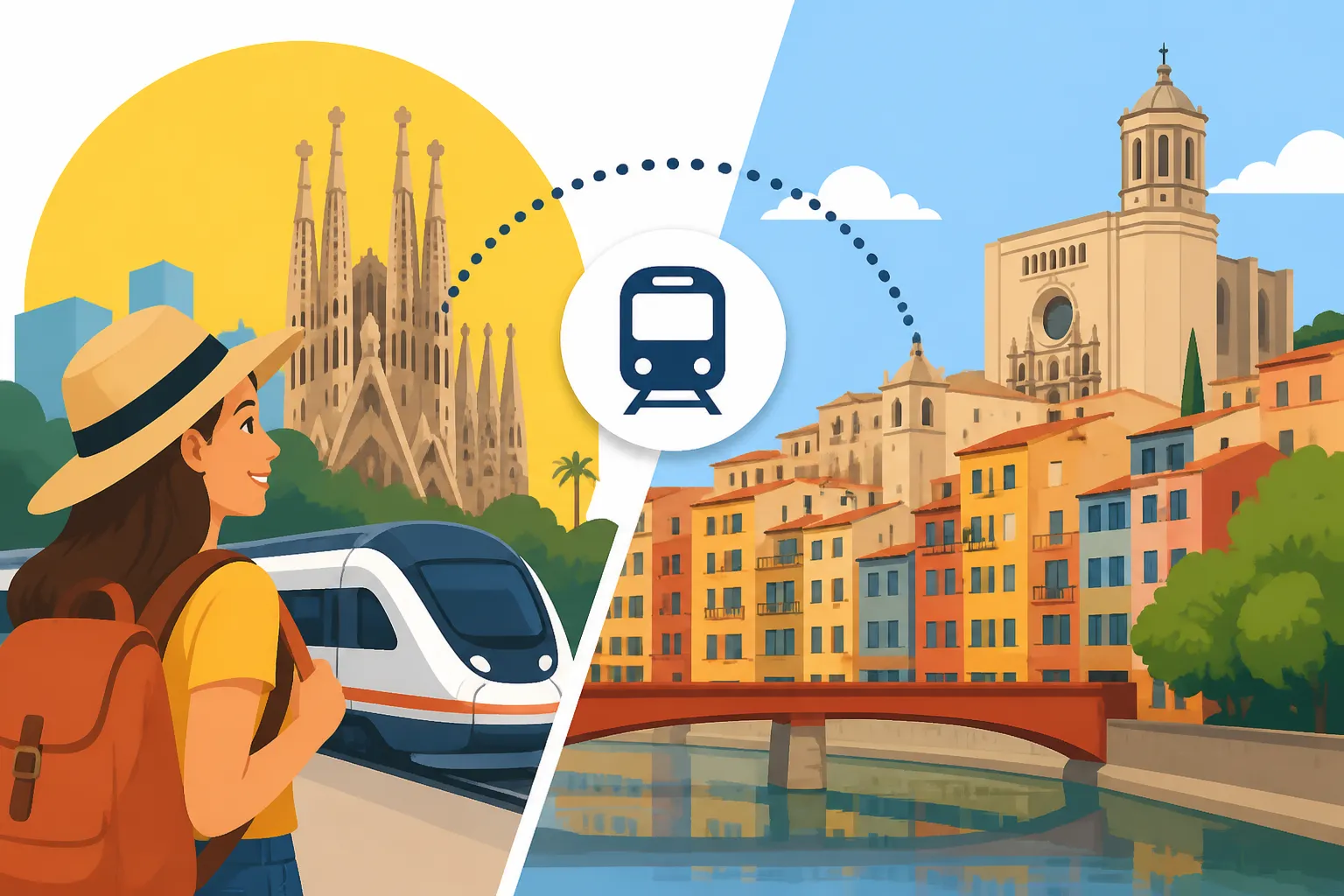
How to Visit Girona From Barcelona Without a Car
Oh, the allure of Girona! It's one of those Catalan gems that truly captures your heart, and if you're like many expats or tourists in Spain, you're probably wondering how on earth you navigate outside of Barcelona without the hassle of a rental car. Trust me, I've been there, staring at Google Maps, wondering if a car is truly necessary. The great news is, it absolutely isn't! This guide is going to walk you through every step of planning a fantastic, car-free day trip to Girona from Barcelona, making sure you soak up all the charm without any of the driving stress.
Disclosure: This post may contain affiliate links. We may earn a commission at no extra cost to you if you make a purchase through these links. Read full disclosure.
Why Ditch the Car for a Girona Day Trip?
When you’re dreaming of ancient city walls, vibrant riverside houses, and cobblestone streets, the last thing you want is the headache of navigating unfamiliar Spanish roads, searching for parking, or fretting over rental car insurance. Spain’s public transport system, especially in Catalonia, is remarkably efficient and makes day trips like this not just possible, but genuinely enjoyable.
The Joys of Spanish Public Transport
Let's be real, driving in a foreign country can be intimidating. Between deciphering road signs in Spanish, understanding local driving customs, and wrestling with GPS that sometimes has a mind of its own, it can quickly turn a relaxing day out into a stressful ordeal. Spanish public transport, particularly the train network, is a breath of fresh air. It’s reliable, often scenic, and allows you to kick back, enjoy the ride, and perhaps even catch up on some reading about Girona’s fascinating history. Imagine gazing out at the picturesque Catalan countryside instead of squinting at a map! It's also often a more economical choice when you factor in fuel costs, tolls (which can add up quickly in Spain), and parking fees, which are rarely cheap in popular tourist destinations.
Stress-Free Exploration
One of the biggest advantages of not having a car is the freedom from parking woes. Girona, especially its beautiful medieval Old Town (Barri Vell), is primarily a pedestrian zone. Parking garages are typically on the outskirts, meaning you'd still have a decent walk into the heart of the city anyway. By taking the train or bus, you arrive directly into Girona’s central area, usually within easy walking distance of the main attractions. This means more time exploring ancient Roman walls, wandering through the Jewish Quarter, or finding the perfect spot for a coffee, and zero time circling for a parking space. It truly lets you immerse yourself in the city's unique atmosphere without a logistical cloud hanging over your head.
Your Train Journey from Barcelona to Girona
When it comes to getting to Girona, the train is often the expat's preferred choice for its speed and convenience. It's a fantastic way to travel, and Renfe, the national rail company, offers several options.
High-Speed (AVE/Avant) vs. Regional Trains
You essentially have two main categories of trains that connect Barcelona to Girona: the high-speed options (like AVE or Avant) and the regional (Media Distancia or Rodalies) trains.
- High-Speed Trains (AVE/Avant): These are your quickest option. The AVE (Alta Velocidad Española) and its regional counterpart, Avant, are modern, comfortable, and get you to Girona in a flash, often as little as 37-40 minutes. They depart from Barcelona Sants station. The downside? They tend to be more expensive, especially if you don't book in advance. However, if time is precious and you want maximum efficiency, these are your best bet. The journey is smooth, and you'll often find amenities like onboard Wi-Fi and power outlets.
- Regional Trains (Media Distancia): These are slower, taking around 1 hour and 20 minutes to 1 hour and 40 minutes, but they are significantly more affordable. They also depart from Barcelona Sants, but make more stops along the way. If you’re on a tighter budget or don’t mind a slightly longer, more leisurely journey, the regional trains are an excellent choice. They offer a more "local" experience, and while they might not have all the bells and whistles of the high-speed trains, they are perfectly comfortable for a day trip.
Choosing between them really comes down to your budget and how much time you want to spend traveling versus exploring. For those of us who appreciate getting to our destination swiftly, a high-speed ticket can be well worth the extra cost. You might also want to check out our guide on how to buy AVE train tickets in Spain and save money for more tips.
Booking Your Tickets Like a Pro
Booking your train tickets in Spain, especially for popular routes, is pretty straightforward once you know the ropes.
- Renfe's Official Website: The most direct way to book is through Renfe's official website. While it has improved leaps and bounds over the years, some expats still find it a bit… Spanish to navigate, especially if your Spanish isn't quite fluent yet. Be prepared for potential translation quirks and ensure you have a payment method that works internationally. You can usually select your seats and print your tickets at home or use a mobile ticket.
- Third-Party Platforms: For a smoother, more user-friendly experience, many expats swear by platforms like Omio or Booking.com. These sites act as intermediaries, allowing you to compare prices across different train and bus operators, often in English, and streamline the booking process. They add a small service fee, but for many, the convenience is worth it. They often simplify the process of understanding ticket types and picking the best time slot for your travel.
- At the Station: You can always buy tickets directly at Barcelona Sants station. There are ticket counters with staff (though not always English-speaking, so a few key Spanish phrases can help!) and automated ticket machines. For high-speed trains, it's highly recommended to book in advance, especially during peak season or holidays, as tickets can sell out or be much more expensive on the day. Regional train tickets are generally easier to purchase last-minute.
When booking, consider purchasing a return ticket (ida y vuelta) as it can sometimes be cheaper than two one-way tickets. Also, remember that some fares (like 'Promo' or 'Promo+') for high-speed trains are non-refundable or non-changeable, so read the conditions carefully. You'll definitely want to know how early should you book high-speed trains in Spain? for the best deals.
Navigating Barcelona Sants Station
Barcelona Sants is a bustling hub, and for a first-timer, it can feel a bit overwhelming. But don't fret; it's quite manageable.
- Arrival and Orientation: Aim to arrive at Sants at least 20-30 minutes before your high-speed train departure, or 15-20 minutes for regional trains. The station has multiple levels. The main concourse for departures and arrivals is usually on the ground floor.
- Finding Your Platform (Vía): Look for large electronic display boards (pantallas) that show train numbers, destinations, departure times, and importantly, the "vía" (platform number). Platform numbers are usually announced closer to departure, so don't panic if you don't see it right away. High-speed trains often have a security check similar to an airport, where you pass your luggage through a scanner, so factor in a few extra minutes for that.
- Ticket Validation: For regional trains (Cercanías/Rodalies), you might need to validate your ticket by inserting it into a turnstile before accessing the platform. For high-speed trains, your ticket will usually be checked by staff before you board.
- Amenities: Sants has plenty of shops, cafes, and restrooms, so you can grab a coffee or a snack for your journey. There are also information desks if you get truly lost, but a basic understanding of train terms in Spanish will go a long way.
The Bus Option: A Slower but Scenic Route
While trains are fast, buses offer a different kind of charm, often a more budget-friendly price point, and sometimes even more flexible routing. They’re a perfectly viable, car-free option for your Girona adventure.
Sagalés and Other Bus Operators
For the Barcelona to Girona route, Sagalés is the primary bus company. They operate frequent services connecting Barcelona's Estació del Nord to Girona. The journey time typically ranges from about 1 hour and 30 minutes to 2 hours, depending on traffic and the specific route. You can check their official website for schedules and to purchase tickets directly. Other, smaller operators might serve specific towns along the way, but for a direct Barcelona-Girona trip, Sagalés is your main port of call. Booking bus tickets can also be done through aggregators like Omio, which can be very helpful for comparing prices and times if you're exploring multiple options.
Where to Catch the Bus in Barcelona
Barcelona's main bus terminal, Estació del Nord, is where most long-distance and regional buses depart. It's conveniently located near the Arc de Triomf, making it easily accessible via metro (L1 red line) or a pleasant walk from many central areas.
- Getting There: If you're coming from Barcelona Sants, you can take the metro (L3 green line to Paral·lel, then L2 purple line to Arc de Triomf, or L5 blue line to Sagrada Familia then L2 to Arc de Triomf) or a taxi. It’s also often serviced by local buses.
- Inside Estació del Nord: The station is well-organized with multiple platforms. You’ll find ticket counters for various bus companies, information screens, and basic amenities like cafes and restrooms. Again, aim to arrive a bit early, say 20 minutes before departure, to find your platform and get settled without rushing.
Pros and Cons of Taking the Bus
Just like with trains, there are trade-offs to consider when choosing the bus for your trip to Girona.
Pros:
- Cost-Effective: Generally, bus tickets are cheaper than train tickets, especially compared to high-speed rail. This can be a big plus for budget-conscious travelers.
- Scenic Route: Buses often take routes that offer lovely views of the Catalan countryside, winding through towns and rural landscapes that you might miss on the faster train. It can be a more immersive way to see the region.
- Flexibility: There can sometimes be more departure times or slightly more varied routes available, giving you more options to fit your schedule.
- Less Crowded: Depending on the time of day, buses can sometimes feel less crowded than popular train routes, offering a more relaxed journey.
Cons:
- Longer Travel Time: This is the most significant drawback. Buses almost always take longer than high-speed trains, and are comparable to or slightly longer than regional trains. Traffic can also cause unpredictable delays, especially entering or exiting Barcelona.
- Comfort: While modern buses are comfortable, they generally offer less space to move around compared to trains. If you’re prone to motion sickness, the winding roads might be a factor.
- Fewer Amenities: While some buses offer Wi-Fi, it's not as universally reliable as on high-speed trains, and power outlets might be less common.
Ultimately, the bus is a solid, reliable choice, particularly if you prioritize cost savings and don't mind a slightly longer journey. It’s a great way to experience a different aspect of Spanish travel.
Arriving in Girona: Getting Around on Foot
Once you step off the train or bus in Girona, you’ll immediately appreciate how compact and walkable the city is. No car needed at all here!
From Girona Station to the Old Town
Both the train and bus stations in Girona are centrally located, making your transition to exploring the city seamless.
- Train Station: Girona's main train station (Girona Estació) is literally a stone's throw from the modern commercial centre and just a short walk from the historic Old Town. Once you exit the station, you'll want to head towards the River Onyar, which acts as a natural division between the new and old parts of the city. A brisk walk will get you to the famous colourful houses of the Onyar River in about 10-15 minutes, and from there, the Cathedral and Jewish Quarter are just a few more minutes uphill.
- Bus Station: The bus station is generally adjacent to the train station, so the walking distances and directions are essentially the same. You'll navigate similar routes to get to the heart of Girona's historic core.
It's a pleasant walk, often through tree-lined boulevards, and offers a gentle introduction to the city before you dive into its ancient wonders.
Embracing Girona's Walkability
Girona is a city made for walking. Its charm lies in its narrow, winding medieval streets, hidden courtyards, and ancient staircases that lead to breathtaking views. You simply wouldn't want a car in the Old Town even if you could drive one there.
- The Barri Vell: This is the historical heart of Girona and is almost entirely pedestrianized. Here you'll find the majestic Girona Cathedral, the Call Jueu (Jewish Quarter) with its labyrinthine alleyways, and the Arab Baths. Every corner offers a new photo opportunity or a quaint shop to discover.
- City Walls (Passeig de la Muralla): For incredible panoramic views, you can walk along sections of Girona's ancient city walls. Access points are scattered throughout the Old Town, and it’s a truly unique way to see the city from above.
- Onyar River Houses: Don't miss strolling along the bridges crossing the Onyar River, admiring the iconic colourful houses that line its banks – they are Girona's most recognisable postcard image.
Wear comfortable shoes! You'll be doing a fair bit of walking, including some uphill climbs, but the rewards are absolutely worth it. This walkability is a major reason why visiting Girona from Barcelona without a car is not just feasible, but genuinely preferable.
Public Transport within Girona (If Needed)
While Girona's Old Town is best explored on foot, there is a local bus network (TEISA) if you need to venture further afield or have mobility issues. The buses connect the city centre with various neighbourhoods and outlying areas. However, for a typical day trip focused on the main sights, it's highly unlikely you'll need to use local public transport. The main attractions are so concentrated that walking is by far the most efficient and enjoyable way to get around. You might find this useful when looking for Public Transport Discounts in Spain: Youth, Senior, and Resident Options.
Making the Most of Your Car-Free Girona Visit
So, you've arrived, you're on foot, and you're ready to explore. Girona offers a wealth of sights and experiences for a memorable day trip.
Must-See Sights Accessible by Foot
Girona is packed with history and beauty, all within easy walking distance.
- Girona Cathedral: Dominating the skyline, this magnificent cathedral boasts the widest Gothic nave in the world. Prepare for a climb up its grand staircase, but the interior and views are well worth it. Look for the ancient tapestries and religious art inside.
- Jewish Quarter (Call Jueu): One of the best-preserved Jewish quarters in Europe, its narrow, winding streets and stone buildings transport you back in time. Explore the alleys, discover hidden patios, and visit the Museum of Jewish History to learn about Girona's significant Jewish heritage.
- Passeig de la Muralla (City Walls): As mentioned, walking along these ancient walls offers superb views of the city and surrounding countryside. You can access different sections, and it's a fantastic way to get your bearings.
- Onyar River Houses: These colourful houses, hanging precariously over the Onyar River, are Girona's signature sight. Stroll across the various bridges, including the famous Eiffel Bridge (Pont de les Peixateries Velles), designed by Gustave Eiffel before his more famous Parisian project.
- Arab Baths (Banys Àrabs): Despite their name, these baths are Romanesque in style, inspired by Muslim bathhouses. They offer a fascinating glimpse into medieval daily life and a wonderfully atmospheric space to wander through.
- Game of Thrones Filming Locations: For fans of the show, Girona served as King's Landing and Braavos. Many tour companies offer themed walks, or you can simply follow a map to spot familiar locations like the Cathedral steps or the Jewish Quarter alleys. For more unique experiences, check out GetYourGuide.
Don't rush through these. Take your time, get lost (a little!) in the alleys, and truly soak in the atmosphere.
Practical Tips for a Smooth Day
Even without a car, a little planning goes a long way for a comfortable and enjoyable day trip.
- Comfortable Shoes: This cannot be stressed enough. Girona's cobblestones and hills are beautiful but unforgiving on ill-suited footwear.
- Stay Hydrated: Especially in warmer months, carry a water bottle. There are cafes and fountains, but having your own water is always wise.
- Map or Phone App: While getting lost is part of the fun, a good map (physical or on your phone) will help you navigate the Old Town's maze-like streets and ensure you don't miss anything. Google Maps works well, but consider downloading an offline map.
- Plan Your Meals: Girona is renowned for its gastronomy. Research a few restaurants in advance, especially for lunch, to avoid wandering aimlessly when hunger strikes. From traditional Catalan fare to Michelin-starred dining, there's something for everyone. You'll want to explore the Spanish Tapas Culture: How to Order and Where to Go for a truly authentic experience.
- Weather Appropriate Gear: Spain's weather can be unpredictable. Check the forecast and pack layers, an umbrella, or sunscreen as needed. A small backpack to carry essentials is always helpful.
- Early Start: To maximise your time in Girona and beat some of the crowds, especially at popular attractions, aim for an early train or bus from Barcelona. This also gives you more flexibility if you decide to linger longer at a particular spot.
Guided Tours and Experiences
If you prefer a structured visit or want to delve deeper into Girona's history and culture, joining a guided tour is an excellent car-free option.
- Walking Tours: Many local companies offer walking tours focusing on specific themes, such as Girona's medieval history, Jewish heritage, or even Game of Thrones filming locations. These tours, often available through platforms like GetYourGuide, are a fantastic way to gain insights from local experts and make the most of your time. They eliminate the need for extensive self-research and ensure you hit all the highlights with fascinating commentary.
- Food Tours: For the culinary curious, a food tour can be an unforgettable experience. Girona boasts incredible local produce and traditional dishes. A guided food tour will take you to hidden culinary gems, allowing you to taste local delicacies and learn about Catalan gastronomy. You'll be ready to impress everyone with how to order coffee in Spain like a local!
- Bike Tours: While the Old Town is best on foot, some tours offer bike rentals for exploring the flatter parts of the city or venturing slightly beyond the centre, giving you a different perspective. These are easy to arrange from the city centre.
A table comparing the three main transport options will help solidify your choice:
| Feature | High-Speed Train (AVE/Avant) | Regional Train (Media Distancia) | Bus (Sagalés) |
|---|---|---|---|
| Journey Time | 37-40 minutes | 1h 20m – 1h 40m | 1h 30m – 2h (traffic dependent) |
| Cost | Higher (can be significantly more if booked last-minute) | Lower (most affordable train option) | Lowest (generally cheaper than all train options) |
| Departure Point (BCN) | Barcelona Sants | Barcelona Sants | Barcelona Estació del Nord |
| Arrival Point (Girona) | Girona Estació (main train station) | Girona Estació (main train station) | Girona Bus Station (next to train station) |
| Comfort | Very high, modern, spacious, amenities often included | Good, standard train seating | Good, standard bus seating, can feel more cramped |
| Booking | Recommended in advance (Renfe, Omio) | Can be bought on day (Renfe, Omio) | Recommended in advance (Sagalés, Omio) |
| Best For | Time-sensitive travelers, those seeking maximum comfort | Budget-conscious travelers, leisurely pace | Ultra-budget travelers, slightly more scenic route |
| Flexibility | Good frequency, but less flexible ticket changes on cheaper fares | Good frequency, generally flexible tickets | Good frequency, can be impacted by traffic |
As you can see, visiting Girona from Barcelona without a car isn't just possible, it's the recommended way to experience this captivating city. Whether you opt for the lightning-fast AVE or the scenic bus, you'll find that the journey is part of the adventure, leaving you free to immerse yourself fully in Girona's timeless beauty without the usual travel headaches. Enjoy your trip!
Disclaimer
Please note that travel information, including schedules, prices, and operating companies, can change. Always verify the latest details directly with the transport providers (Renfe, Sagalés, Omio, GetYourGuide, Booking.com) before planning your trip. This guide provides general advice and personal insights based on typical experiences.