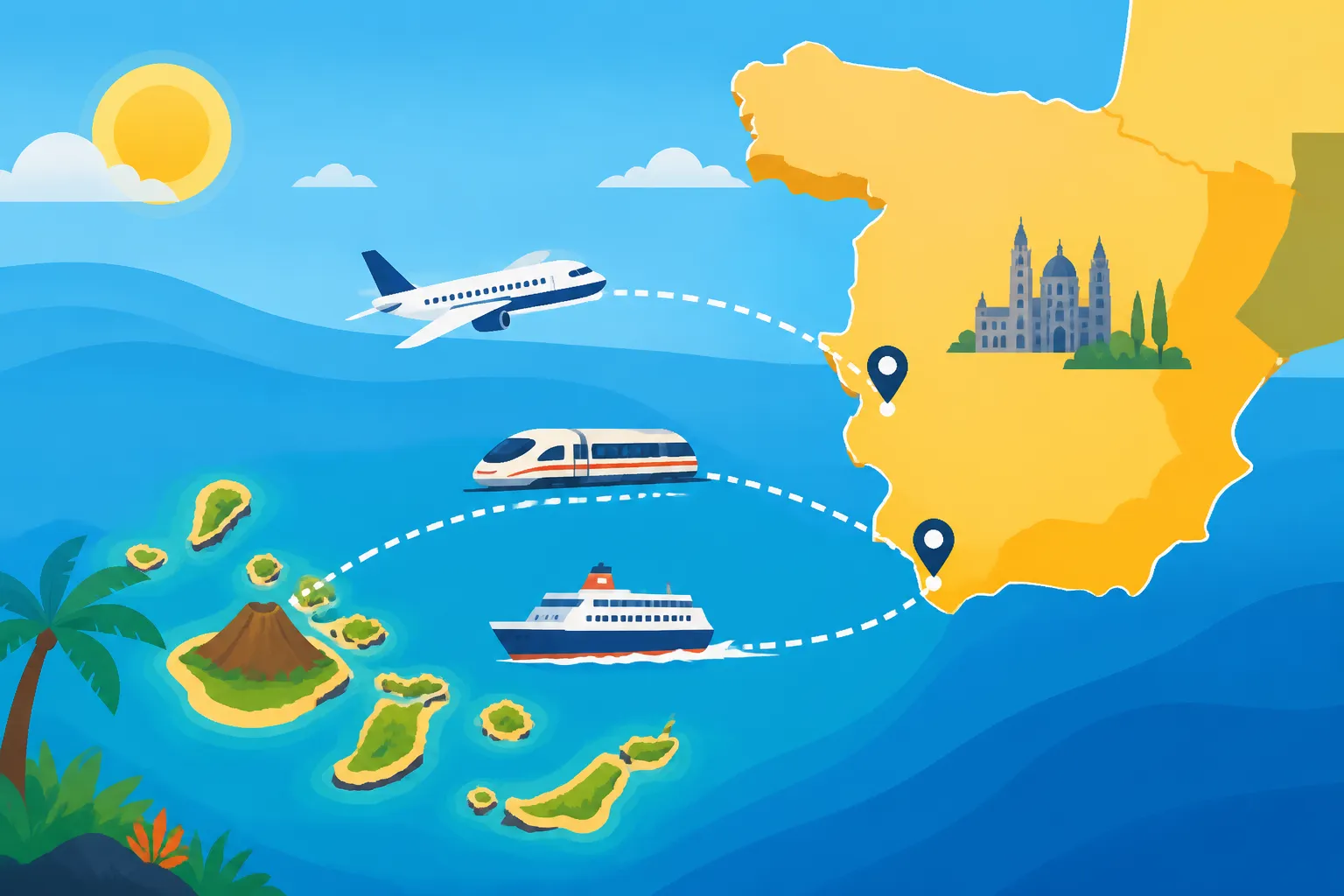
How to Reach the Canary Islands From Mainland Spain
So, you're on mainland Spain, perhaps soaking up the history in Seville or enjoying the urban buzz of Barcelona, and the allure of the Canary Islands starts to whisper. Maybe you're dreaming of volcanic landscapes, year-round sunshine, or those incredible black sand beaches. The big question, though, is how exactly do you bridge that significant gap across the Atlantic to these Spanish gems? It can feel a bit daunting, like planning a whole other trip, but trust me, with a little know-how, getting there is much simpler than it seems. This comprehensive guide will walk you through all your options, from soaring through the skies to cruising the open seas, helping you plan your perfect escape to the Canaries.
Disclosure: This post may contain affiliate links. We may earn a commission at no extra cost to you if you make a purchase through these links. Read full disclosure.
Flying to the Canary Islands: The Most Common Route
Let's be honest, for most of us, flying is going to be your go-to option for reaching the Canary Islands from mainland Spain. While the islands are technically part of Spain, they’re quite a distance from the peninsula, sitting closer to the coast of Africa than to Europe. This geographical reality makes air travel the most practical, efficient, and often, the most economical choice.
Why Flying is Usually Your Best Bet
The primary reason to fly is, without a doubt, speed and convenience. A direct flight from Madrid or Barcelona will get you to most of the major Canary Islands in around 2.5 to 3.5 hours. Compare that to days on a ferry, and the choice becomes pretty clear for anyone on a standard holiday schedule. For expats living in Spain, this also means easier weekend getaways or shorter breaks without eating up precious vacation time on transit. The journey by air is just more comfortable, allowing you to quickly shift from city life or mainland adventures to island tranquility.
Moreover, the sheer volume of flights means competitive pricing, especially if you book in advance or travel during off-peak seasons. You'll find a wide array of airlines serving the routes, which fosters a healthy competition that benefits us, the travelers.
Choosing Your Departure Airport on the Mainland
Spain's mainland offers several excellent departure points, but two stand out for their frequency and range of flights to the Canaries:
- Madrid-Barajas Adolfo Suárez Airport (MAD): This is arguably your best bet. As Spain's largest and busiest airport, Madrid offers the most direct flights to almost all the Canary Islands daily. You'll find a multitude of carriers and flight times, making it incredibly flexible. If you're coming from another part of Spain, getting to Madrid is relatively easy via high-speed trains or domestic flights.
- Barcelona-El Prat Airport (BCN): Close behind Madrid, Barcelona also provides numerous direct connections to the Canaries, particularly to Tenerife and Gran Canaria. If you're starting your journey from Catalonia or the eastern coast, Barcelona is a convenient and well-connected hub.
Beyond these two giants, you might also find seasonal or less frequent direct flights from other regional airports like Seville (SVQ), Valencia (VLC), or even Málaga (AGP). These can be fantastic if you're already in those regions and want to avoid an extra connection, but do check schedules carefully as they tend to be less frequent.
Selecting Your Arrival Island and Airport
The Canary Islands are an archipelago of eight main islands, and seven of them have commercial airports. Each island offers a unique flavor, so your choice will depend on what kind of trip you're after.
- Tenerife: The largest island, home to Mount Teide. It has two airports: Tenerife North Airport (TFN), which mainly handles inter-island flights and some mainland connections, and Tenerife South Airport (TFS), the major international gateway. Most flights from mainland Spain will arrive at TFS.
- Gran Canaria: Known for its diverse landscapes, from golden beaches to mountainous interiors. Gran Canaria Airport (LPA) is a major hub and receives a huge number of flights from the mainland.
- Fuerteventura: Famous for its stunning beaches and water sports. Fuerteventura Airport (FUE) is well-connected.
- Lanzarote: Distinctive for its volcanic landscapes and César Manrique's influence. Lanzarote Airport (ACE) welcomes many mainland flights.
- La Palma: "The Beautiful Island," lush and green with a dramatic volcanic landscape. La Palma Airport (SPC) has direct connections, though fewer than the larger islands.
- La Gomera: Known for its ancient laurel forests and hiking trails. La Gomera Airport (GMZ) is smaller and primarily serves inter-island flights, so you'd likely fly to Tenerife first and then take a short ferry or connecting flight.
- El Hierro: The smallest and westernmost island, a biosphere reserve. El Hierro Airport (VDE) also mostly handles inter-island connections.
For your first visit, or if you're looking for the easiest access, Tenerife South and Gran Canaria are your best bets, offering the most frequent and direct flights.
Finding the Best Deals on Flights
Navigating flight prices can feel like a game, but with a few strategies, you can snag some great deals.
- Book in Advance: Especially during peak seasons like summer, Christmas, or Semana Santa, prices can skyrocket. Aim to book at least 2-3 months out, if not more, for the best rates.
- Be Flexible with Dates: If your schedule allows, flying mid-week (Tuesday, Wednesday) or during off-peak hours can significantly cut costs. Even shifting your travel by a day or two can make a big difference.
- Use Comparison Sites: Websites like Omio, Skyscanner, and Google Flights are your best friends here. They allow you to compare prices across multiple airlines and find the cheapest dates. Sometimes even checking a direct airline's website after using a comparison site can reveal even better deals. Booking.com also offers flight booking services that can be handy if you're bundling your travel with accommodation.
- Consider Budget Airlines: Airlines like Ryanair, Vueling, and easyJet frequently offer very competitive prices to the Canary Islands. Just be mindful of their baggage policies and extra fees, which can quickly add up if you're not careful.
- Set Price Alerts: Many flight comparison sites allow you to set up alerts for specific routes. You'll get an email when prices drop, ensuring you don't miss a good deal.
When looking for flights, you might find it useful to compare options, especially if you're also considering train or bus travel within Spain for other parts of your journey. Remember, for broader travel logistics within Spain, you might find more comprehensive tips in our guide on Traveling Around Spain: Trains, Buses, Flights, and Car Hire.
Taking a Ferry to the Canary Islands: An Adventurous Alternative
While flying is definitely the fastest way to get to the Canary Islands, it's not the only way. For some, the journey is as much a part of the adventure as the destination, and that's where the ferry comes in. It's a much slower pace, but it offers a unique experience, especially if you're traveling with a car or simply prefer sea travel.
When to Consider a Ferry Trip
A ferry journey from mainland Spain to the Canaries is not for the faint of heart or those short on time, but it has distinct advantages:
- Bringing Your Car: This is perhaps the biggest draw. If you're planning an extended stay, a road trip across the islands, or simply prefer the convenience of your own vehicle, the ferry allows you to bring it along without the hassle and cost of renting one on arrival. Just imagine the freedom of exploring Tenerife or Gran Canaria with your own wheels!
- Fear of Flying: For those who experience aerophobia, the ferry offers a viable, albeit longer, alternative.
- Desire for a Slower Journey: Sometimes, we just want to slow down. The multi-day ferry trip can be a relaxing transition, offering sea views, fresh air, and a different perspective on travel. It's a proper maritime adventure.
- Excess Luggage: If you're moving to the islands or simply carrying a lot of gear (think surfboards, diving equipment, etc.), the ferry's luggage allowance is far more generous than an airline's.
Mainland Departure Ports
Currently, direct ferry services to the Canary Islands depart from two main ports in Andalusia:
- Cádiz: This historic port city has long been a gateway to the Atlantic. Ferries from Cádiz typically head to Gran Canaria (Las Palmas), Tenerife (Santa Cruz), and sometimes to La Palma.
- Huelva: Located further west along the Andalusian coast, Huelva also offers regular ferry connections to the Canaries, primarily to Gran Canaria and Tenerife.
Both ports are easily accessible from other parts of Spain, though getting to them will likely involve an internal flight, train, or bus journey.
Ferry Operators and Routes
There are a couple of key ferry operators that run services between the mainland and the Canary Islands:
- Naviera Armas Trasmediterránea: This is one of the most prominent names. They operate regular services from both Cádiz and Huelva, with routes reaching Gran Canaria (Las Palmas), Tenerife (Santa Cruz), Lanzarote (Arrecife), and Fuerteventura (Puerto del Rosario). Their ships are well-equipped with cabins, restaurants, and entertainment.
The journey itself is quite long, usually taking between 36 to 48 hours, depending on the specific route and destination island. You'll spend at least one night, sometimes two, onboard. Prices vary significantly based on the season, cabin choice (from basic seating to luxurious suites), and whether you're bringing a vehicle. It’s always best to check their official websites for the most up-to-date schedules and fares.
What to Expect Onboard
These are not just basic transport vessels; they're more like mini-cruise ships, designed for comfort during long journeys.
- Cabins: Unless you're on a very tight budget, booking a private cabin is highly recommended. It provides a comfortable bed, private bathroom, and a quiet space to relax, essential for a multi-day trip.
- Amenities: You'll typically find restaurants, cafeterias, bars, shops, and sometimes even a swimming pool or cinema onboard. It’s a chance to unwind, read a book, and enjoy the rhythm of the sea.
- Pet Travel: Many ferries are pet-friendly, allowing you to bring your furry companions. There are usually designated pet areas, and sometimes even pet-friendly cabins, but always confirm the specific rules and book well in advance, as pet spaces can be limited.
- Sea Sickness: If you're prone to motion sickness, make sure to bring appropriate medication. While modern ferries are generally stable, the Atlantic can be unpredictable.
For a smoother journey and less stress, remember to keep your essential travel documents handy.
Inter-Island Travel Once You Arrive
Okay, so you've made it to your chosen Canary Island. But what if you want to explore more than one? This is where the beauty of the archipelago truly shines, with an excellent network of inter-island transport allowing for seamless island hopping.
Flying Between Islands
For quick connections between the larger islands, domestic flights are often your best and quickest option.
- Binter Canarias: This is the regional airline of the Canary Islands and your main carrier for inter-island flights. They connect all the major airports with frequent services, making it possible to hop from Tenerife to Gran Canaria, Lanzarote, Fuerteventura, La Palma, El Hierro, or La Gomera (via Tenerife). The flights are short, often less than an hour, and offer stunning aerial views.
- Canaryfly: Another local airline offering similar routes, often at competitive prices.
Booking these flights is usually straightforward through their websites or using comparison sites. This method is ideal if you're trying to maximize your time on the islands and cover a lot of ground quickly.
Ferry Services for Island Hopping
For shorter distances, especially between neighboring islands, or if you prefer a more leisurely pace and want to enjoy the sea, inter-island ferries are fantastic.
- Fred Olsen Express: Known for its high-speed catamarans, Fred Olsen Express offers very fast and frequent connections between many islands, particularly popular for the Tenerife-La Gomera route or between Gran Canaria and Fuerteventura.
- Naviera Armas Trasmediterránea: Also provides extensive inter-island services, connecting most of the Canary Islands. These ferries tend to be a bit slower than Fred Olsen's fast-craft but are generally comfortable and can often carry vehicles.
Taking a ferry allows you to see the coastlines, enjoy the sea breeze, and often feels like a mini-adventure in itself. Prices are generally reasonable, and it’s a great way to link two or three islands into a single itinerary without feeling rushed. You can often book tickets online or directly at the port.
Planning Your Island Hopping Itinerary
Deciding which islands to combine can be the toughest part, as each has its own charm!
- Focus on Regions: To minimize travel time, consider grouping geographically close islands. For example, Tenerife and La Gomera are a classic pairing due to their proximity. Lanzarote and Fuerteventura are also easily combined.
- Consider Your Interests: If you love hiking, La Palma or La Gomera are excellent. For beaches and water sports, Fuerteventura is king. For diverse landscapes and activities, Tenerife and Gran Canaria are hard to beat.
- Factor in Travel Time: Even short flights and ferries take time for boarding, disembarking, and transfers to and from ports/airports. Don't overschedule your days.
- Local Tours: Once you're on an island, consider local tours to maximize your exploration without the hassle of driving or public transport. Companies like GetYourGuide offer a vast array of excursions, from volcano hikes in Lanzarote to whale watching in Tenerife, making it easy to experience the highlights.
If you're still weighing your options for different parts of Spain, our article The Balearic Islands: Choosing Between Mallorca, Menorca, and Ibiza might offer a good comparison for other Spanish archipelagos, though the Canaries truly stand in a league of their own.
Practical Tips for a Smooth Journey
Alright, we've covered the "how to get there" and "how to get around." Now, let's talk about those little nuggets of wisdom that make the difference between a good trip and a fantastic one. We think these tips are golden.
Booking in Advance, Especially for Peak Seasons
I cannot stress this enough: book everything well in advance. This applies to flights, ferries, and especially accommodation. The Canary Islands are a hugely popular destination, both with international tourists and mainland Spaniards.
- Summer Holidays (July-August): Expect higher prices and limited availability.
- Christmas and New Year: A peak time for those seeking winter sun. Book months ahead.
- Semana Santa (Easter Week): Another significant holiday period in Spain, leading to increased domestic travel.
- Carnival (February/March): Particularly in Tenerife and Gran Canaria, Carnival is a massive event, and accommodation can be scarce and pricey.
Booking early not only secures your spot but almost always saves you money. Don't be that person scrambling for an overpriced room a week before departure; I've been there, and it's no fun! For general advice on travel timing, our guide When to Visit Each Spanish Region for the Best Weather could offer more context for seasonal planning across Spain.
Essential Documents
While traveling within Spain (which includes the Canaries), for Spanish residents, your TIE (Tarjeta de Identidad de Extranjero) or NIE (Número de Identificación de Extranjero) certificate along with a valid passport/ID is usually sufficient. For EU citizens, a national ID card is fine. Non-EU citizens will need their passport and their valid Spanish residency card (TIE).
- Always carry physical copies and digital backups of your ID, tickets, and booking confirmations.
- Check airline/ferry specific requirements: Some budget airlines can be sticklers for ID rules, so double-check before you travel.
Packing Considerations
The Canary Islands boast a famously mild, spring-like climate year-round, but packing smart is still key.
- Layer Up: Evenings can be cooler, especially in higher elevations.
- Sun Protection: High SPF sunscreen, a hat, and sunglasses are non-negotiable. The sun here is strong, even in winter.
- Swimwear: Obvious, but don't forget it!
- Comfortable Shoes: Essential for exploring towns, hiking volcanic trails, or just strolling along promenades.
- Rain Gear (Optional): If you're visiting the greener northern parts of islands like Tenerife or La Palma, a light rain jacket might come in handy, especially in winter.
Budgeting for Your Trip
The Canaries can be done on a budget or in luxury, depending on your style. Here’s a quick overview of what to consider:
- Flights/Ferries: As discussed, these are your primary costs.
- Accommodation: Options range from budget hostels and apartments to luxury resorts. Using sites like Booking.com is excellent for finding varied options and often offers free cancellation.
- Food: Eating out can be very affordable, especially if you stick to local restaurants (often called guachinches in Tenerife) and tapas bars. Supermarkets are widely available for self-catering.
- Activities: From free beach days and hiking to paid excursions (volcano tours, water parks, boat trips), budget for your chosen adventures. GetYourGuide is a good place to browse and book activities in advance.
- Transport on the Island: Car rental is popular for flexibility, but public buses are efficient and cost-effective on most islands. Taxis are also readily available.
For a deeper dive into managing your finances while exploring Spain, our guide Money for Travel in Spain: Cards, Cash, and ATMs can offer some useful insights into currency exchange and payment methods.
Accommodation on the Islands
Just like on the mainland, you have a vast array of choices. From bustling tourist resorts in the south of Tenerife or Gran Canaria to charming rural casas rurales (country houses) in the more tranquil north of the islands, there's something for everyone.
Table: Flying vs. Ferry to the Canary Islands
| Feature | Flying | Ferry (from Mainland) |
|---|---|---|
| Travel Time | 2.5 – 4 hours (direct) | 36 – 48 hours |
| Convenience | Fast, frequent, wide choice of airlines | Slower, less frequent, limited departure ports |
| Cost | Often cheaper, especially if booked early | Can be more expensive, especially with car/cabin |
| Luggage | Strict limits, extra fees for heavy bags | Very generous allowance, ideal for large items |
| Vehicle Transport | Not possible, must rent on arrival | Possible and often the main advantage |
| Experience | Quick, efficient | Leisurely, scenic sea journey, overnight stay |
| Best For | Short trips, saving time, budget travelers | Long stays, bringing a car, fear of flying |
Whether you choose the swift convenience of a plane or the adventurous pace of a ferry, the Canary Islands are waiting to welcome you with their unique blend of natural beauty and vibrant culture. So go ahead, start planning your escape!
Disclaimer
Please remember that travel regulations, flight schedules, and ferry services can change. Always check the most up-to-date information directly with airlines, ferry operators, and relevant government sources before making your travel plans. This guide provides general information based on typical conditions.