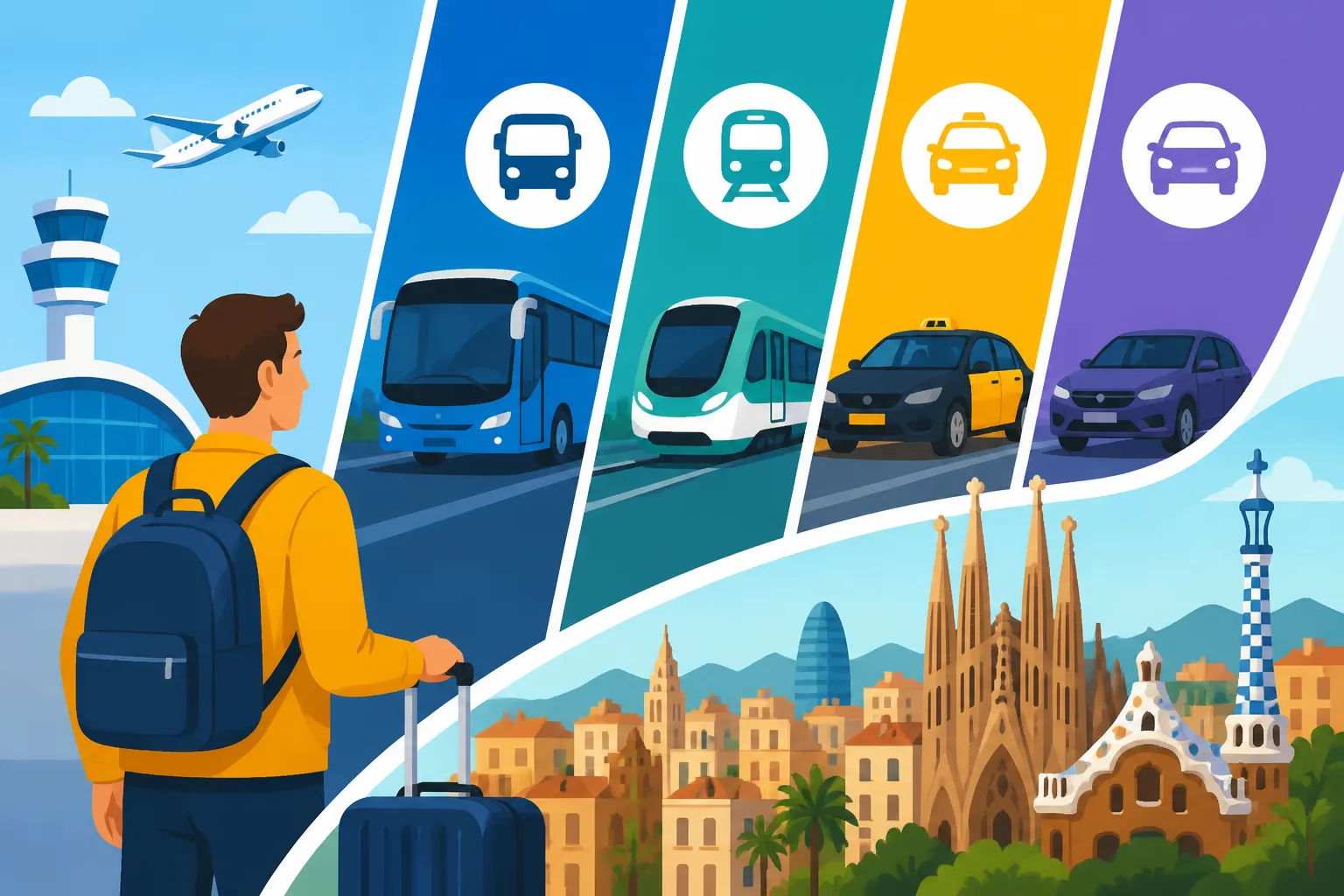
How to Get From Barcelona Airport to the City Center
Stepping off a plane in a new country, especially after a long flight, can feel like you've just landed on another planet. The last thing you need is a riddle about how to get from the airport to your actual destination. Believe me, I’ve been there, hauling luggage, squinting at signs, and wishing for a magic carpet. This guide will cut through the noise and lay out every option you have for getting from Barcelona-El Prat Airport (BCN) into the vibrant heart of the city, making your arrival as smooth as a glass of good Spanish vermut.
Disclosure: This post may contain affiliate links. We may earn a commission at no extra cost to you if you make a purchase through these links. Read full disclosure.
Navigating Barcelona-El Prat Airport BCN to the City: Your First Steps
Barcelona's airport, affectionately known as El Prat or BCN, is a pretty well-oiled machine, but it can still be a bit disorienting if you don't know your way around. Your journey into the city really starts the moment you land, so let's break down those initial considerations.
Understanding Barcelona-El Prat's Terminals
Barcelona-El Prat has two main terminals: T1 and T2. Now, T2 is actually split into T2A, T2B, and T2C, but for most practical purposes, just think of it as "T2." The vast majority of international and larger airlines operate out of T1, while many budget airlines and some regional flights use T2. It's crucial to know which terminal you're arriving at because some transport options only serve one or the other directly, or have different pick-up points.
If you happen to arrive at one terminal and need to get to the other, don't fret! There's a free, efficient green airport shuttle bus (Bus Trànsit) that runs frequently between T1 and T2, 24 hours a day. It takes about 10-15 minutes, depending on traffic, so factor that into your planning if you’re connecting or meeting someone at a different terminal. This bus is clearly marked and easy to find just outside the arrivals areas of both terminals.
Initial Considerations: Time, Budget, and Destination
Before you even think about which bus or train to jump on, take a moment to consider three things: how much time you have, how much you're willing to spend, and exactly where in Barcelona you're trying to go. Are you heading straight to your Airbnb in Gràcia? Meeting a friend at Sants Estació? Or perhaps kicking off your grand tour at a hotel near Plaça Catalunya?
If you're in a hurry and money isn't a huge concern, a taxi or private transfer might be your best bet for speed and convenience. If you're on a tight budget or just want to experience local life from the get-go, public transport options like the train or local bus are incredibly cost-effective. Your arrival time also plays a role – some services run less frequently late at night or very early in the morning, while others stop completely, pushing you towards taxis or night buses. Thinking these through briefly will save you a lot of fumbling and frustration later on.
Public Transport Options: The Budget-Friendly & Efficient Routes
Ah, public transport! The lifeblood of any bustling city, and Barcelona is no exception. It’s often the most economical and, surprisingly, often the most efficient way to get into the city, especially during peak traffic.
The Aerobús: Your Direct Express Shuttle
The Aerobús is probably the most popular option for many visitors and expats, and for good reason. It’s a dedicated express bus service that connects both terminals directly to Plaça Catalunya, a major central hub in Barcelona. It’s fast, frequent, and incredibly straightforward.
There are two lines: A1 for Terminal 1 and A2 for Terminal 2. The buses are clearly marked with their terminal number and a distinctive blue color, so you can't miss them. They run roughly every 5-10 minutes, from early morning (around 5:30 AM) until late at night (around 1 AM), making it a reliable choice for most arrivals. The journey typically takes about 30-35 minutes to Plaça Catalunya, with a few convenient stops along the way like Plaça Espanya and Gran Via-Urgell. Tickets can be bought online via their official website or platforms like Omio, directly from the driver (cash only, usually), or from ticket machines at the bus stops. A single ticket is a few euros, and a return ticket is slightly discounted. Children under 4 travel free. It’s perfect if you have moderate luggage and want a quick, hassle-free ride to the city center.
Barcelona Metro (L9 Sud): The Modern Underground Link
For those who prefer the underground or are staying a bit further afield, the Barcelona Metro offers a modern and convenient option. The L9 Sud (South) line connects both T1 and T2 of Barcelona Airport directly to the city's metro network.
To use the metro from the airport, you'll need a special airport ticket, which is slightly more expensive than a regular single metro ticket. Standard multi-journey tickets like the T-Casual are generally not valid for the airport section of L9 Sud, although there are integrated passes like the Hola Barcelona Travel Card that do include airport travel. The L9 Sud line doesn't go directly to major city center hubs like Plaça Catalunya or Sants Estació. Instead, it connects to other metro lines at stations like Zona Universitària, Collblanc, and Torrassa. From there, you'll need to transfer to reach your final destination. While it might involve a change, the metro is very reliable and unaffected by surface traffic. The journey to Zona Universitària is about 25-30 minutes, and then you add the time for your connection. This is a great option if your accommodation is on a metro line easily accessible from L9 Sud.
RENFE Train (R2 Nord): A Classic Rail Connection
For a more traditional rail journey, the RENFE Cercanías (local train) R2 Nord line is a solid choice. This option only serves Terminal 2 (T2), so if you arrive at T1, you'll first need to take the free airport shuttle bus to T2 to catch the train. The train station is connected to T2B via a covered walkway.
The R2 Nord train offers a very useful route, stopping at key Barcelona hubs like Sants Estació (main train station, great for connections to other parts of Spain or the metro L3 and L5 lines) and Passeig de Gràcia (another major transport hub with connections to metro lines L2, L3, and L4, and close to many popular areas). The journey to Sants Estació takes about 19 minutes, and to Passeig de Gràcia, it’s about 26 minutes. A major advantage of the RENFE train is that it does accept the popular T-Casual integrated transport ticket, making it a very economical option if you plan to use public transport extensively during your stay. This train runs roughly every 30 minutes, from early morning until around 11 PM. It's a fantastic choice for those staying near Sants or Passeig de Gràcia, or who have onward train travel plans. Planning your trips via train is also part of Traveling Around Spain: Trains, Buses, Flights, and Car Hire.
Local Buses (TMB): The Economical Choice
For the absolute budget traveler or those arriving very late or early, Barcelona's local bus network (TMB) offers a couple of options. While slower than the express Aerobús, these are the cheapest way if you already have a multi-person or multi-journey ticket.
During the day, the TMB Bus 46 connects both T1 and T2 with Plaça Espanya. It's slower because it makes more stops, takes local routes, and is subject to traffic. The journey can take 40-60 minutes. Like the RENFE train, the Bus 46 accepts regular TMB tickets, including the T-Casual, which is a great way to save money on Cost of Living in Spain: Realistic Budgets and Savings Tips.
For late-night arrivals when other options have stopped, the NitBus (night bus) lines N17 (from T1) and N18 (from both T1 and T2) are your lifesavers. They operate hourly between approximately 11 PM and 5 AM, connecting the airport to Plaça Catalunya. These buses are a bit slower, typically taking 40-50 minutes, but they're incredibly valuable for odd-hour arrivals. Again, they accept standard TMB tickets, so your T-Casual will work here too. If you’re trying to manage your expenses and have some time, these buses are a lifesaver.
Private & Convenient Options: When Comfort is Key
Sometimes, after a long flight, navigating public transport isn't what you need. Or perhaps you're traveling with family, a lot of luggage, or simply crave the comfort of a direct, door-to-door service. That's when private options shine.
Taxis: Door-to-Door Service
Barcelona’s official black and yellow taxis are plentiful, reliable, and offer the ultimate in convenience. You'll find taxi ranks clearly marked outside both T1 and T2 arrivals. Just follow the signs; there’s usually a queue, but it moves quickly.
One of the great things about taxis in Spain is that they operate on a meter, so you shouldn't have to haggle over prices. However, there are fixed supplements for airport pick-ups/drop-offs and late-night or holiday journeys. A typical ride from the airport to the city center (say, Plaça Catalunya or Eixample) will usually cost between €30-€40, depending on your exact destination, traffic, and any applicable supplements. If you’re unsure, you can always ask the driver for an approximate fare to your specific address before you set off. Don't be shy; it's perfectly normal to inquire. While generally honest, it's good practice to ensure the meter is running or confirm the approximate rate, just to avoid any expat frustrations you might hear about. Taxis are perfect for large groups or families, especially if you have several suitcases.
Ride-Sharing & Pre-Booked Transfers
While traditional taxis are dominant, ride-sharing services are also available in Barcelona. Companies like Cabify and Free Now (which also partners with local taxis) operate here. The main advantage is often being able to book and pay via an app, which can be reassuring if your Spanish isn't quite up to speed for a chat with a taxi driver. However, pick-up points at the airport might be less obvious than the official taxi ranks, sometimes requiring a short walk.
Alternatively, you can opt for a pre-booked private transfer. Services available through platforms like GetYourGuide or Booking.com allow you to arrange a car and driver to meet you directly at arrivals, holding a sign with your name. This is often seen as the most stress-free option, as everything is paid for in advance, and you have a guaranteed pick-up, even if your flight is delayed. The cost will be higher than a regular taxi, often starting from €45-€60, but for peace of mind, especially if you're traveling with young children, a lot of gear, or are simply exhausted, it can be well worth the splurge. This is particularly handy if you’re trying to get directly to your specific accommodation after a long journey without any surprises.
Here's a quick comparison of your main transport options:
| Transport Option | Terminal Access | Cost (Approx.) | Travel Time (Approx.) | Convenience | Best For |
|---|---|---|---|---|---|
| Aerobús (A1/A2) | T1 & T2 | €7.25 single | 30-35 min | High | Quick, direct to city center (Plaça Catalunya) |
| Metro L9 Sud | T1 & T2 | €5.50 airport ticket | 25-30 min + transfer | Medium | Budget, direct metro access to some areas |
| RENFE Train (R2N) | T2 only (shuttle to T1) | €4.90 single / T-Casual | 20-25 min | Medium-High | Budget, direct to Sants/Passeig de Gràcia |
| Local Bus (TMB 46) | T1 & T2 | €2.40 single / T-Casual | 40-60 min | Low-Medium | Very budget-conscious, longer journey |
| NitBus (N17/N18) | T1 & T2 | €2.40 single / T-Casual | 40-50 min | Medium (night) | Late-night arrivals |
| Taxi | T1 & T2 | €30-€40 | 20-30 min | Very High | Direct, door-to-door, lots of luggage |
| Private Transfer | T1 & T2 | €45-€60+ | 20-30 min | Highest | Ultimate convenience, pre-arranged peace of mind |
Choosing Your Best Route: Practical Scenarios
Now that you know all the options, let's look at some common situations and which transport method might be best for you.
Arriving Late at Night
Barcelona, like the rest of Spain, definitely comes alive at night, but airport transport options do thin out after midnight. If your flight lands between 1 AM and 5 AM, your choices are more limited:
- NitBus (N17 or N18): This is your best public transport bet. It’s cheap, runs roughly hourly, and takes you to Plaça Catalunya. It's safe, but be prepared for a slightly longer journey. Remember that your Mobile Phone Plans in Spain: Prepaid vs Contract for Foreigners will come in handy here for checking schedules or calling a taxi.
- Taxi: Always available, taxis will be lined up outside both terminals. This is the quickest and most comfortable option, but also the most expensive due to night tariffs. It might be worth the splurge for peace of mind and safety when you're tired and it's dark.
- Pre-booked Private Transfer: If you're particularly anxious about late-night arrivals or just want to minimize hassle, arranging a transfer via GetYourGuide or Booking.com guarantees someone will be waiting for you, regardless of how late your flight is.
Traveling with Lots of Luggage or Family
Wrangling suitcases and children through a busy public transport system is no one's idea of a fun start to a holiday. For comfort and ease with bulky items or little ones:
- Taxi: Hands down, the most convenient. You load your luggage, buckle up, and you're dropped right at your door. Many taxis are large enough to accommodate a family and several bags.
- Private Transfer: Even more tailored than a taxi, a pre-booked transfer can often accommodate specific requests like child seats, and the driver will assist with luggage. This is especially good if you’ve been looking into Renting a Car in Spain: Requirements, Insurance, and Driving Tips but decided against driving yourself from the airport.
- Aerobús: A decent compromise if you want to save money but still want dedicated luggage racks and minimal transfers. The journey is direct, and the stops are well-known, making it easier to manage with kids or bags than multiple metro changes.
Budget-Conscious Travel
If you're watching your euros from the moment you land, Barcelona offers some very affordable public transport options that still get you into the heart of the city efficiently. Knowing a few key phrases from Spanish Language and Everyday Communication for Visitors will also help if you need to ask for directions!
- RENFE Train (R2 Nord) with a T-Casual: If you're arriving at T2, or don't mind the free shuttle from T1 to T2, the RENFE train is excellent value, especially if you buy a T-Casual ticket. This multi-person ticket can be used for 10 journeys across various public transport modes, making it very economical for subsequent travel around Barcelona (check out Getting Around Spanish Cities: Metro, Bus, Tram, and Bikes for more on this).
- Local Bus (TMB 46 or NitBus): The cheapest single-journey options, especially if you already have a T-Casual. They take longer, but the cost difference is significant. This is a great choice if you're not in a rush and want to maximize your savings right from the start.
- Metro L9 Sud (with Hola Barcelona Travel Card): While a single airport metro ticket is pricier, if you plan to use Barcelona's public transport extensively over a few days, the Hola Barcelona Travel Card might be a good investment. It covers the airport metro journey and unlimited rides for a set period, offering good value overall. This card is also a savvy choice if you're navigating Spanish Shopping: Supermarkets, Markets, and Budget Strategies and other daily errands.
Ultimately, Barcelona has a robust and varied transport system from its airport. By considering your personal needs – whether it's speed, cost, or comfort – you can choose the best route to begin your Spanish adventure smoothly and stress-free. It's just one of the many practical aspects of Living in Spain as a Foreigner: Complete Housing & Daily Life Guide that you'll quickly master. And remember, understanding a bit of Spanish Customs, Etiquette, and Social Life always helps in any new setting, even just knowing a "gracias" can go a long way. When it comes to Staying Safe in Spain: Practical Safety Tips for New Residents, Barcelona's public transport is generally safe, but always keep an eye on your belongings.
Disclaimer
The information provided in this guide is for general informational purposes only and is subject to change. Transport schedules, routes, and prices can vary based on public holidays, seasonal demand, operational updates, and local regulations. Always verify the latest information directly with the service providers (e.g., Aerobús, TMB, RENFE, taxi services) or consult official airport resources before making your travel plans.