Madrid for First-Time Visitors: Neighborhoods and Highlights
Arriving at Barajas with heavy luggage and a dead phone is a rite of passage every newcomer fears. I spent my first three hours in Madrid going the wrong way on the Circular line, sweating through my shirt while everyone else looked effortlessly chic. This guide cuts through that confusion, mapping out the best neighborhoods and highlights for your first visit.
Disclosure: This post may contain affiliate links. We may earn a commission at no extra cost to you if you make a purchase through these links. Read full disclosure.
Navigating Madrid Diverse Neighborhoods
Madrid is not a city that reveals itself all at once. It is a collection of distinct "barrios," each with its own heartbeat, social rules, and architectural DNA. For a first-timer, choosing where to base yourself is the difference between feeling like a frantic tourist and feeling like you have finally come home. When you are looking for accommodation, platforms like Booking.com offer a wide range of options, from historic guesthouses in the old center to sleek apartments in the northern districts.
Centro and Sol: The Heartbeat of the City
Puerta del Sol and the surrounding streets of Centro are the geographical and emotional center of Spain. This is where you will find the "Kilometer Zero" stone, the starting point for all Spanish radial roads. It is loud, crowded, and unapologetically busy. Living or staying here means being within walking distance of almost everything, but it also means navigating a sea of selfie sticks and street performers. Many visitors find that Sol is where you meet people, but the side streets are where you actually eat.
Just a few blocks away lies Plaza Mayor, a stunning 17th-century square that has hosted everything from markets and bullfights to trials during the Spanish Inquisition. While the restaurants directly on the square are pricey, the surrounding alleys hide legendary spots for a "bocadillo de calamares" (squid sandwich). This area is the gold standard for Spanish Tapas Culture: How to Order and Where to Go because you can hop from one century-old tavern to another in a matter of seconds. Be prepared for the noise; Centro never truly sleeps, and the garbage trucks at 3:00 AM are a reality of life in the capital.
Malasaña and Chueca: Modern Vibes and Nightlife
If you want to understand the modern soul of Madrid, you have to spend time in Malasaña. This was the epicenter of "La Movida Madrileña," the counter-cultural movement that exploded after the end of the Franco dictatorship. Today, it is a hipster paradise filled with vintage clothing stores, craft beer bars, and coffee shops where people actually bring their laptops. The streets are narrow and covered in street art, giving it a gritty but welcoming vibe.
Right next door is Chueca, the city’s world-famous LGBTQ+ neighborhood. It is one of the most inclusive and vibrant areas in Europe. Even if you aren't there for the nightlife, the Plaza de Chueca is a fantastic spot for people-watching with a vermouth in hand. The energy here is infectious, and the dining scene is incredibly diverse. When you are planning your arrival, knowing How to Get From Madrid Airport to the City Center will get you to these trendy spots much faster than trying to figure out the bus system on the fly.
Salamanca: Luxury and Tree-Lined Avenues
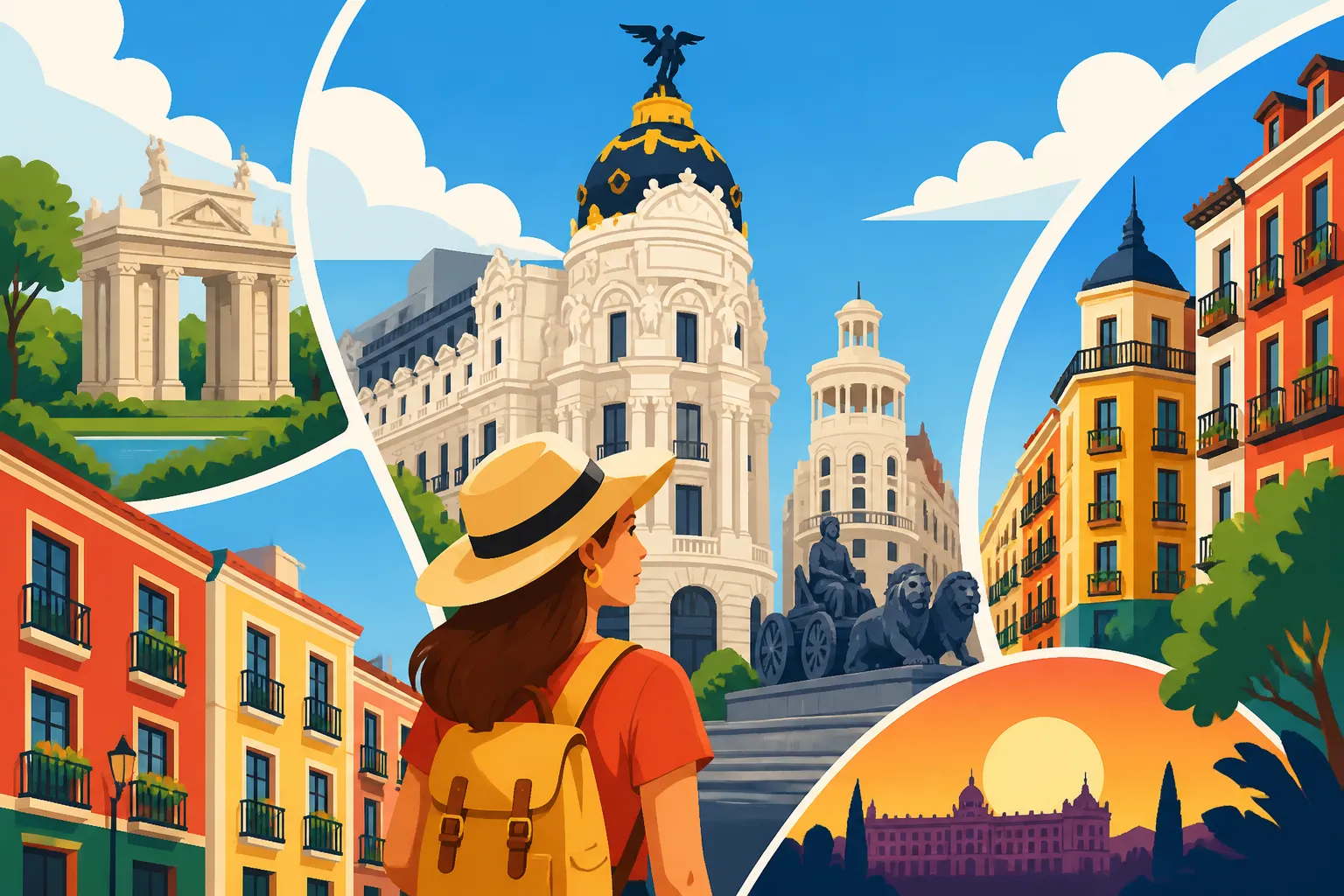
For those who prefer a more refined experience, Salamanca is the place to be. This is Madrid's "Golden Mile," where the streets are wide, the buildings are ornate, and the shoppers are dressed in high-end designer labels. It feels distinctly different from the rest of the city—more orderly and quiet. It is a great place to stay if you want to be near the big museums but want to escape the chaos of the city center at night.
Salamanca is also home to some of the city's most prestigious restaurants and the Platea Madrid, a spectacular gourmet food hall located in a converted cinema. It is a neighborhood that demands a certain level of decorum, but it is also where you will find some of the best-maintained parks and boutique hotels. Using Booking.com to find a hotel in this area can lead to some truly spectacular rooftops that offer views over the Retiro Park.
Iconic Landmarks and Historical Highlights
Madrid’s history is written in its stone. From the Moorish walls near the river to the grand Bourbon palaces, the city offers a visual timeline of Spain’s rise as a global empire. For a first-time visitor, the sheer scale of the historical sites can be overwhelming. It is wise to pick two major sites per day to avoid "museum fatigue," a real condition that hits right around the third hour of staring at Velázquez paintings.
The Royal Palace and Almudena Cathedral
The Palacio Real is the largest functioning royal palace in Europe by floor area, and it is a masterpiece of Baroque and Neoclassical architecture. Even though the Royal Family doesn't actually live there (they live in the more modest Palace of Zarzuela), it is still used for state ceremonies. The Armory and the Royal Pharmacy are two of the most underrated sections that provide a fascinating glimpse into the daily life of past monarchs.
Right across the plaza is the Almudena Cathedral. Interestingly, it took over a hundred years to build and was only consecrated in 1993. This explains why the interior feels surprisingly modern and colorful compared to the ancient cathedrals you might see in Seville or Toledo. To make the most of your visit, I highly recommend using GetYourGuide to book a skip-the-line ticket, especially during the spring and autumn months when queues can stretch for hours in the direct sun.
The Golden Triangle of Art
No trip to Madrid is complete without visiting at least one of the three museums that make up the Golden Triangle: the Prado, the Reina Sofía, and the Thyssen-Bornemisza. The Prado is the heavyweight, housing one of the world’s finest collections of European art. Standing in front of Goya’s "Black Paintings" or Velázquez’s "Las Meninas" is a transformative experience. However, the museum is massive, so having a plan or a focused audio guide is essential.
For a change of pace, the Reina Sofía focuses on 20th-century art and is home to Picasso’s "Guernica." Seeing the scale of that painting in person is something no textbook can prepare you for. If you are on a budget, look for How to Get Into the Prado Museum for Free to take advantage of the daily free hours, though you should be ready to stand in line about 45 minutes before the doors open. If you want a more curated experience, GetYourGuide offers several "Art Walk" tours that connect the history of these three institutions.
Plaza Mayor and the Habsburg Legacy
The area known as "Madrid de los Austrias" refers to the old center built during the reign of the Habsburg dynasty. The architecture here is characterized by slate-topped spires and red-brick facades. Walking through these streets feels like stepping back into the 1600s. Plaza Mayor is the crowning jewel of this district. Its uniform buildings and the statue of Philip III in the center create a perfect enclosed world.
The legacy of the Habsburgs extends to the many "Conventos" hidden behind nondescript walls in the center. At the Convento de las Descalzas Reales, you can see an incredible collection of tapestries and art in a building that was once a royal palace. Navigating this area requires a good pair of walking shoes and a healthy dose of patience, as the cobblestones can be brutal. If you are worried about the cost of all these entries, checking Money in Spain for Expats: Banking, Taxes, and Everyday Payments can give you a better idea of how to manage your daily travel budget in Euros.
Green Spaces and Outdoor Escapes
One of the things that surprised me most when I first moved here was how much the "Madrileños" value their outdoor time. Madrid is one of the greenest capital cities in the world, and its parks are the communal "living rooms" for residents who often live in small, dark apartments. When the sun is out, the parks are where the city really comes to life.
Retiro Park: The City Lungs
El Retiro is more than just a park; it is a UNESCO World Heritage site and the soul of the city. Once a royal garden, it was opened to the public in the late 19th century. On any given Sunday, you will find puppet shows, fortune tellers, joggers, and families enjoying the sunshine. The "Estanque grande de El Retiro" (the big pond) is where you can rent a rowboat and spend a lazy forty minutes paddling under the watchful eye of the Alfonso XII monument.
Don't miss the Palacio de Cristal (Crystal Palace), a stunning glass and iron structure originally built to house exotic plants from the Philippines. It now hosts contemporary art installations and is one of the most photographed spots in the city. Since the park is so large, it is a great place to decompress after a morning of museums. Just be sure to follow Staying Safe in Spain: Practical Safety Tips for New Residents by keeping an eye on your belongings while you nap on the grass, as pickpockets occasionally target distracted tourists in green spaces.
Casa de Campo and Madrid Río
If Retiro is the elegant garden, Casa de Campo is the wild forest. It is five times the size of New York's Central Park and was formerly a royal hunting ground. You can reach it via the Teleférico (cable car) from Pintor Rosales, which offers incredible views of the Royal Palace and the city skyline. Inside, there is a large lake surrounded by restaurants, a zoo, and an amusement park. It is the perfect escape if you have kids or just want to feel like you have left the city entirely.
Connecting the city to the park is Madrid Río, a massive urban regeneration project that turned the area around the Manzanares River into a linear park. It has dozens of play areas, fountains you can walk through in the summer, and beautifully designed bridges. It is a favorite for cyclists and skaters. If you are staying further away, you can use Omio to check the best train or bus connections to the nearby Príncipe Pío station, which serves as a major hub for this side of the city.
Temple of Debod: An Egyptian Sunset
It sounds like a myth, but there is an actual 2nd-century BC Egyptian temple sitting on a hill near the Royal Palace. The Temple of Debod was a gift from Egypt to Spain in the 1960s as a thank you for help in saving monuments during the construction of the Aswan High Dam. It was dismantled stone by stone and rebuilt in Madrid.
The temple is surrounded by a shallow pool of water, and at sunset, the light reflects off the ancient stones in a way that is truly magical. It is arguably the best place in Madrid to watch the sun go down. Because it is free to enter the surrounding park area, it gets very busy on weekend evenings. I recommend grabbing a couple of drinks and some snacks from a local "chino" (convenience store) and finding a spot on the grass to watch the city turn gold.
Comparison of Madrid Neighborhoods for Visitors
| Neighborhood | Atmosphere | Price Range | Best For |
|---|---|---|---|
| Centro / Sol | High-energy, chaotic, central | Mid-range | First-timers who want to walk everywhere |
| Malasaña | Hipster, vintage, nightlife-focused | Budget to Mid-range | Young travelers and creative souls |
| Chueca | Vibrant, inclusive, trendy | Mid-range | LGBTQ+ travelers and foodies |
| Salamanca | Sophisticated, quiet, upscale | High-end | Luxury shoppers and families |
| La Latina | Traditional, old-world, rustic | Budget to Mid-range | Sunday tapas and authentic "Old Madrid" |
| Retiro | Residential, calm, green | Mid-range to High | Those who value quiet and morning walks |
Practical Logistics for First-Timers
Bureaucracy and "the Spanish way" can be frustrating for those used to efficiency. In Madrid, things happen when they happen. Banks close at 2:00 PM, and trying to find a pharmacy open at 3:00 AM requires a specialized map. However, once you learn the rhythm of the city, everything becomes much easier. Madrid is a city built on social interaction, so don't be afraid to ask for help, even if your Spanish is limited to "hola" and "gracias."
Transportation: Metro, Buses, and Beyond
The Madrid Metro is one of the best in the world. It is clean, fast, and remarkably easy to navigate. To use it, you will need to purchase a "Tarjeta Multi" from a machine in any station. You can load it with a 10-trip pass, which is much cheaper than buying individual tickets. Be aware that How to Use the Madrid Metro as a First-Time Visitor involves understanding that the lines are color-coded and the direction is always indicated by the last station on the line.
While the Metro is great, Madrid is a very walkable city. Most of the major sites in the center are within a 20-minute walk of each other. If you decide to go further out, the Cercanías (commuter trains) are excellent for day trips. If you are planning to head out of town to see the Roman aqueduct, for example, you can learn How to Visit Segovia From Madrid by Train to save yourself the hassle of renting a car. For booking long-distance trains or buses to other Spanish cities, Omio is a reliable way to compare all your options in English.
Dining Rhythms and Tipping Culture
The biggest shock for most visitors is the meal schedule. Lunch is the main meal of the day, usually served between 2:00 PM and 4:00 PM. Dinner rarely starts before 9:00 PM, and if you show up at a restaurant at 7:00 PM, you will likely find the staff eating their own meal or the kitchen still closed. This is the perfect time to adopt the "Menú del Día" habit. Almost every restaurant offers a fixed-price three-course lunch that is incredible value. You can learn more about this in What Is a ‘Menú del Día’ and How Does It Work?.
Tipping in Madrid is not like in the US or UK. It is not mandatory, and you shouldn't feel pressured to leave a specific percentage. Usually, people just leave the small change or a couple of euros for a good meal. If you are just having a coffee or a beer, no tip is expected. Understanding Spanish Meal Times and Dining Etiquette Explained will save you from a lot of "hangry" moments during your first few days when you find your favorite place is closed for the afternoon siesta.
Safety and Avoiding Common Pitfalls
Madrid is generally a very safe city, especially compared to other major European capitals. However, pickpockets are highly skilled, particularly in Sol, on the Metro, and at the Rastro flea market. They often work in groups and use distractions. Always keep your bag in front of you and never leave your phone on the table at an outdoor terrace. I have seen countless tourists lose their iPhones in the time it takes to look at a menu.
Another pitfall is the "tourist menu" restaurants in Plaza Mayor. They often show pictures of food outside and have staff trying to lure you in. Usually, the food is frozen and overpriced. Instead, walk two blocks away and look for a place where the locals are standing at the bar. A great tip for your first night is to use GetYourGuide to find a "Tapas Crawl" led by a local; it is the fastest way to learn How to Find Authentic Restaurants in Spain (Not Tourist Traps) so you can navigate the rest of your trip like a pro.
Day Trips and Further Exploration
If you have more than three days in the city, you should absolutely consider leaving it. Madrid sits right in the center of the country, making it the perfect hub for exploring the historic heart of Spain. The high-speed AVE trains make it possible to visit distant cities, but the "Castilla" region immediately surrounding Madrid is where the real history lies.
Toledo: The City of Three Cultures
Toledo was the capital of Spain until the 1560s and is a stunning medieval city perched on a hill. It is known as the city of three cultures because of its historical co-existence of Christians, Jews, and Muslims. The streets are a labyrinth, and getting lost is half the fun. It is only 30 minutes away by high-speed train from Atocha station. It is wise to book your train tickets in advance via Omio, as the Toledo route is extremely popular and often sells out on weekends.
While in Toledo, make sure to see the Cathedral and the El Greco museum. If you are feeling adventurous, you can take a bus to the "Mirador del Valle" for the iconic postcard view of the city. If you prefer a guided experience to make sure you don't miss the history, How to Visit Toledo From Madrid in a Day is a great resource to help you plan the logistics.
Segovia and its Roman Legacy
Segovia is famous for three things: its massive Roman Aqueduct, the Alcázar (which looks like the Disney castle), and its roast suckling pig (cochinillo). The aqueduct is one of the best-preserved in the world and was built without a single drop of mortar. Standing underneath its arches makes you realize just how incredible Roman engineering really was.
The Alcázar of Segovia is equally impressive, sitting on a rocky crag between two rivers. It has served as a royal palace, a state prison, and a military academy. Segovia is slightly cooler than Madrid, making it a popular escape during the blistering summer months. You can reach it via the AVANT train in less than 30 minutes from Chamartín station. It is a very different vibe from Madrid—quieter, cooler, and much more manageable on foot.
Disclaimer
The information provided in this guide is for informational purposes only. While we strive to keep the details accurate and up to date, travel requirements, opening hours, and local regulations in Spain can change without notice. Always verify specific details with official sources or local authorities before making travel arrangements. Under no circumstances shall the author or the website be liable for any loss or damage arising from the use of this information.