How to Get Into the Prado Museum for Free
Planning a trip to Madrid often involves a reality check when you see the cost of museum tickets stacking up, especially for families or long-term travelers. This guide solves that problem by detailing exactly how to navigate the Museo del Prado's free entry hours and eligibility rules, ensuring you see world-class masterpieces without spending a single Euro on admission fees.
Disclosure: This post may contain affiliate links. We may earn a commission at no extra cost to you if you make a purchase through these links. Read full disclosure.
The Golden Window: Understanding the Free Access Hours
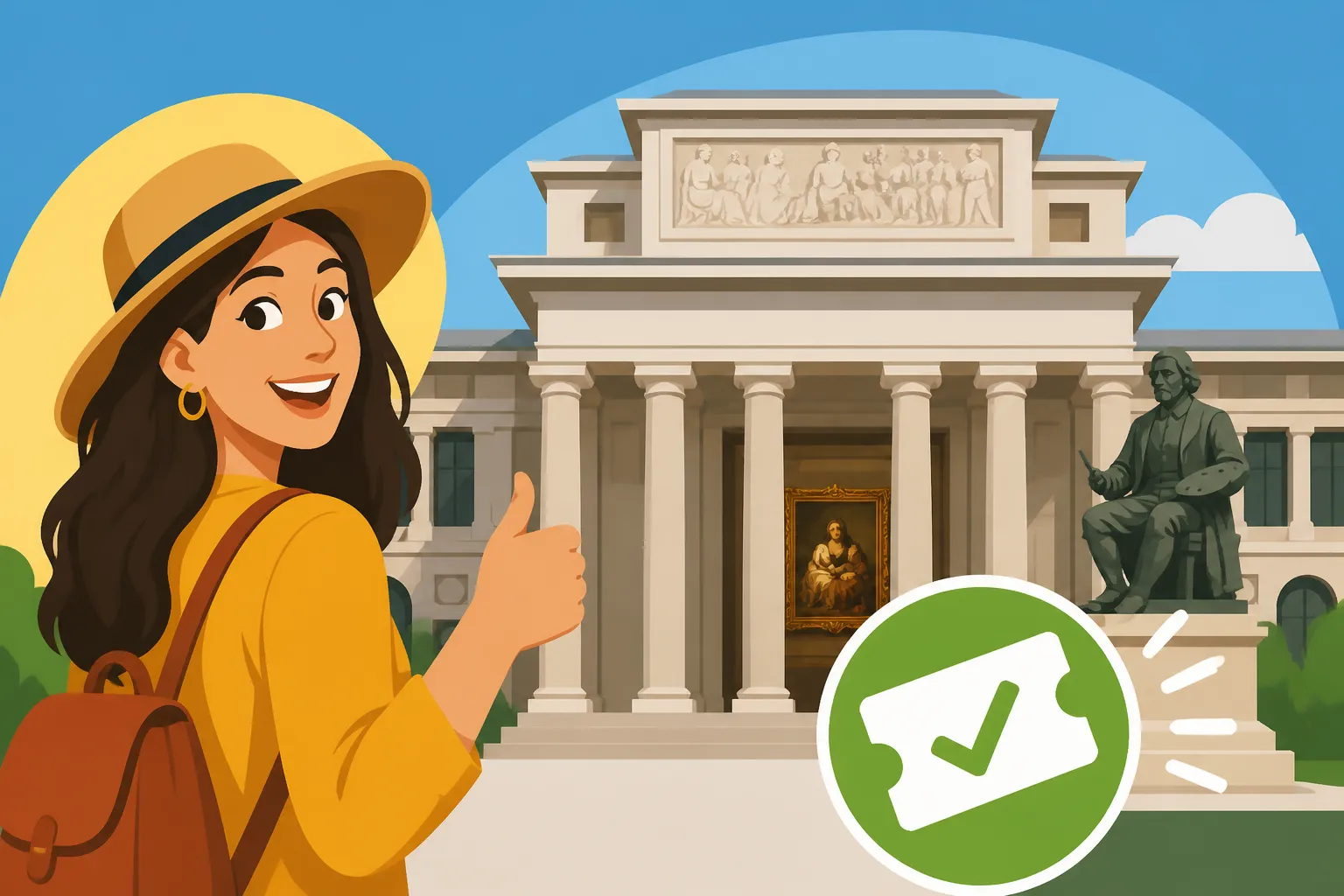
The Museo Nacional del Prado is one of the few top-tier global institutions that still offers a daily free entry window. However, walking up at the wrong time can result in a 15-Euro surprise at the ticket booth. To avoid this, you must internalize the schedule. From Monday to Saturday, the museum opens its doors for free from 18:00 to 20:00. On Sundays and designated public holidays, the hours shift slightly earlier, running from 17:00 to 19:00. It sounds straightforward, but there is a catch: they stop allowing people into the queue about 30 minutes before the free period ends, and the galleries begin to clear 15 minutes before the actual closing time.
When you are planning your itinerary, consider that these two hours go by exceptionally fast. If you are using Madrid for First-Time Visitors: Neighborhoods and Highlights to plan your stay, you will notice the Prado is centrally located, making it easy to drop by. Many people try to "double dip" by visiting the nearby Reina Sofía during its own free hours on different days. This is a great way to save money, but it requires a lot of standing. If you are coming into the city from elsewhere in Spain, using a platform like Omio can help you find affordable train or bus tickets so you can put that saved cash toward a nice dinner after your free art session.
Beyond the daily windows, there are specific days throughout the year when the Prado is free all day long. These typically include May 18th (International Museum Day), October 12th (Spain's National Day), and November 19th (the Prado's Anniversary). Be warned, however, that these days are magnets for both locals and tourists. The crowds can be overwhelming, and the wait times often exceed two or three hours. If you happen to be in town during these dates, it is a fantastic opportunity, but you must arrive very early to make it worthwhile.
Permanent Free Entry: Who Qualifies at All Times
If you don't want to deal with the evening rush, you might actually qualify for free entry at any time of the day. The Spanish government is quite generous with its definitions of "vulnerable" or "educational" groups. The most common category is students. If you are under 25 and have a valid International Student Identity Card (ISIC) or a current university ID, you can walk into the Prado for free during any opening hour. This is a lifesaver for exchange students who want to study Velázquez in-depth without the pressure of a two-hour timer.
Another group that often overlooks their eligibility is the unemployed. If you are a resident of Spain or an EU citizen and can provide proof of your "demandante de empleo" status (such as a current DARDE document), you are entitled to free admission. This also applies to people with disabilities (and one companion if their disability requires assistance). Large families (familias numerosas) also get a significant break, though the rules usually require a Spanish-issued large family certificate. Always keep your physical ID and supporting documents ready; a photo on your phone is rarely accepted by the strict "control de accesos" staff.
For those traveling with children, anyone under the age of 18 enters for free regardless of the time or day. This makes the Prado a surprisingly affordable family outing if you plan it right. If you are looking for a place to stay that makes these frequent visits easier, checking the Best Area to Stay in Madrid guide will point you toward the Jerónimos or Retiro neighborhoods. Staying nearby means you can easily check the length of the line from your balcony and head down when the queue looks manageable. Booking.com often has apartments in these historic areas that are perfect for those who want to live like a local and walk to the museum daily.
| Group Category | Free Access Time | Required Documentation |
|---|---|---|
| General Public | Mon-Sat 18:00-20:00 / Sun 17:00-19:00 | None (but must queue for a ticket) |
| Students (Under 25) | Any Time | Valid ISIC or University ID |
| Under 18s | Any Time | Passport or National ID |
| Unemployed (EU) | Any Time | Official unemployment certificate (DARDE) |
| People with Disabilities | Any Time | Disability certificate/card |
| Journalists | Any Time | Official press card |
Strategy for Managing the Queues
Knowing the hours is only half the battle; the real challenge is the physical queue. For the evening free hours, a line begins to form as early as 16:30 or 17:00 at the Puerta de Goya (the entrance with the statue of Goya). As a veteran of many Madrid winters and summers, I can tell you that the weather will be your biggest enemy. In July, you will be baking in the sun on the Paseo del Prado; in January, the wind whipping down from the Guadarrama mountains is brutal. Always bring water and perhaps a small snack, but remember that you will have to pass through security, and large bags will need to be left in the cloakroom (taquilla), which eats into your precious two hours.
The queue for free entry moves surprisingly fast once the clock strikes 18:00, but it is long. It often snakes all the way down the hill toward the Botanical Gardens. If you see the line is past the fountain, you are looking at at least a 45-minute wait. One tip I always give my friends is to check the "Puerta de Goya" first, but be aware that the museum occasionally changes which door handles the free entry tickets. Most of the time, you are standing in line to receive a physical ticket with a €0.00 value printed on it. You cannot simply walk in; every visitor must be accounted for in their system.
If you find the queue is simply too long and you only have one night in Madrid, you might have to pivot. While we are focusing on free entry, sometimes your time is worth more than 15 Euros. If the line is a nightmare, you can look for last-minute skip-the-line options on GetYourGuide, which can sometimes save an afternoon from being wasted on a sidewalk. However, if you are determined to stay on budget, make sure you have your Money for Travel in Spain: Cards, Cash, and ATMs sorted, as you might want to buy a guide or a coffee inside the museum cafe, which is not free.
Making the Most of Your Two-Hour Visit
Once you are through the doors and have cleared security, you are in a race against time. The Prado is massive, housing thousands of works across multiple floors. You cannot see it all in two hours. To maximize your experience, I recommend focusing on the "Artistic Triangle" within the building: Velázquez, Goya, and Hieronymus Bosch. Start on the main floor (Planta 1) in Room 12 to see "Las Meninas." This is the museum’s crown jewel, and getting there early in the free window allows you to see it before the bulk of the queue filters in.
After Velázquez, head to the Goya galleries. His work is split between his early "Cartones para Tapices" (tapestry cartoons) which are bright and cheerful, and his "Black Paintings" (Pinturas Negras). The latter are located in a dimly lit section that perfectly captures the haunting, dark period of his life. Seeing "Saturn Devouring His Son" in person is an experience that stays with you long after you leave. If you are worried about the crowds, try to move against the flow of the "suggested route" maps provided at the entrance.
Navigating the museum can be stressful when you are watching the clock. It is worth noting that Staying Safe in Spain: Practical Safety Tips for New Residents applies inside too—not because of crime, but because of the sheer exhaustion and dehydration that can hit you in these large stone buildings. Keep your belongings close and be mindful of your surroundings. While you are wandering, keep an eye out for the "Garden of Earthly Delights" by Bosch. It is usually crowded, but during the final 30 minutes of the day, the crowds often thin out as people head toward the exits.
Practical Tips for the Budget-Conscious Expat
For those who have recently moved to the city, the Prado shouldn't be a one-time event. Because it is free every night, you can treat it like your own private living room. I used to go once a week just to look at a single room. One week it would be the Italian Renaissance masters, and the next, the Flemish primitives. This "slow art" approach is much more rewarding than trying to cram everything into a single, frantic session. If you are still figuring out the city’s logistics, Public Transport in Spain: Cards, Discounts, and Etiquette will help you get to the museum efficiently using the Metro (Atocha or Banco de España stops).
Don't forget that the museum is strictly "no photos." This is actually a blessing during the free hours. Without thousands of people holding up iPhones to take selfies with "Las Meninas," the crowd moves much more fluidly. If you are caught taking a photo, the "vigilantes" (security guards) will be on you in seconds with a very firm "no fotos, por favor." It is better to just enjoy the art with your own eyes. Also, be aware of your dining schedule. If you enter at 18:00 and leave at 20:00, you are perfectly timed for the Spanish dinner hour. Check out What Time Do Spaniards Eat Lunch and Dinner? to understand why the city suddenly comes alive right as the museum closes.
If you are coming from the suburbs or a different neighborhood, How to Use the Madrid Metro as a First-Time Visitor is essential reading. The Blue Line (Line 1) takes you directly to Atocha, which is a short, uphill walk to the museum. Finally, remember that while the museum is free, the surrounding area is a prime spot for tourists, which unfortunately means pickpockets can be active in the queues outside. Read up on Avoiding Pickpockets in Spain's Tourist Areas to ensure your free evening doesn't end up costing you a phone or a wallet.
Beyond the Prado: Expanding Your Cultural Horizon
While the Prado is the big name, the "Paseo del Arte" has more to offer. Once you have mastered the Prado's free entry, you can apply similar tactics to the Thyssen-Bornemisza and the Reina Sofía. The Thyssen usually has free entry on Mondays, though this often requires a pre-booked ticket online due to limited capacity. The Reina Sofía has free hours on Monday, Wednesday, Thursday, Friday, and Saturday evenings, as well as Sunday afternoons. By rotating through these, you can have a world-class art education for the price of a few Metro rides.
After a long session of art appreciation, you will likely be hungry. The area around the Prado, especially the Huertas neighborhood (also known as the Barrio de las Letras), is famous for its tapas. Understanding Spanish Tapas Culture: How to Order and Where to Go will help you find the authentic spots tucked away from the main tourist drags. A "caña" and a plate of "patatas bravas" is the traditional way to end a successful budget-friendly cultural afternoon in Madrid.
Disclaimer
This guide provides information based on the current operating procedures of the Museo del Prado and Spanish law. Entry requirements, free access hours, and documentation rules are subject to change by the museum administration or local authorities without notice. Always verify the latest schedules on the official museum website before planning your visit. The author and publisher are not responsible for any changes in fees, denied entry, or changes in government policy regarding museum access.