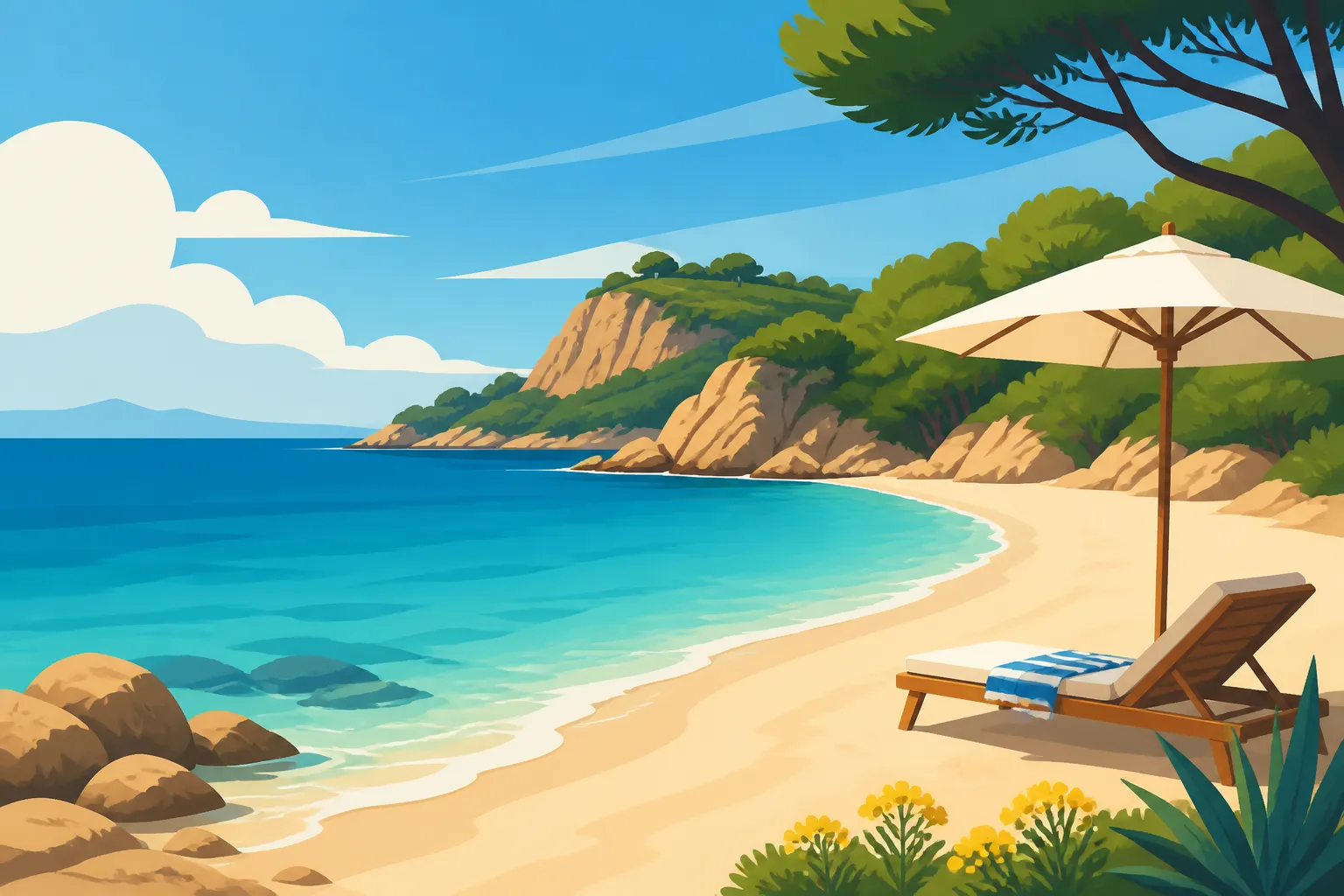
Quiet Beaches in Spain: Where to Escape the Crowds
You drive two hours to a beach that looked empty on Instagram, and by eleven there is no space left on the sand. You can hear three speakers playing different songs, and the nearest parking is a kilometre up a hill. This guide shows where Spain’s quieter beaches are, when to go, and how to reach them without joining everyone else.
Disclosure: This post may contain affiliate links. We may earn a commission at no extra cost to you if you make a purchase through these links. Read full disclosure.
Why Spanish Beaches Feel So Crowded and How Quiet Ones Survive
The Summer Rush Is Real, But Narrow
My first August on the Costa del Sol was a hard lesson. Every town between Málaga and Marbella felt like one continuous beach towel. I assumed that was just how Spain worked. It took me a few years to see that the crowds are concentrated in three ways: in a small number of places, at certain times of day, and in a short window of the year. Spanish families take their holidays mostly in July and August. Many still head to the same coastal towns their parents went to, often to an apartment the family has owned for decades.
That concentration is good news for you. Crowds gather near easy parking, beach bars and promenades. Walk twenty minutes past the last chiringuito and the density often falls sharply. The same beach can be packed at noon and almost empty by eight in the evening, when locals go home to shower before dinner.
What Makes a Beach Stay Quiet
Quiet beaches in Spain usually share at least one obstacle. It might be a steep path, a dirt road, no lifeguard station, no bar, or protected status that limits parking or visitor numbers. Protected areas such as Cabo de Gata-Níjar in Almería, Calblanque in Murcia and the Islas Atlánticas in Galicia restrict development. That is exactly why they still feel wild.
It helps to be honest about the trade-off. A quiet cove often means carrying your own water, shade and snacks. There may be no toilets and no one watching the water. If you have small children or limited mobility, the most remote beaches might not be the right choice. A calmer stretch of a larger beach could suit you better. For sheltered options that are gentler for swimmers, see How to Find Beaches With Calm Water in Spain.
The Best Regions for Quiet Beaches in Spain
Galicia and the Cantabrian Coast
If crowd-free sand is your top priority, head north. The water in Galicia, Asturias and Cantabria is cooler and the weather is less predictable. Those two facts alone keep many sun-seekers on the Mediterranean. The beaches themselves are some of the most dramatic in Europe. You will find long golden arcs backed by dunes and pine, and tiny coves tucked between cliffs.
In Galicia, the Islas Cíes off Vigo have the white sand and clear water of somewhere far further south. Access is managed. You need an authorisation from the regional government before you board a ferry, and daily visitor numbers are capped. That cap is what keeps Playa de Rodas peaceful even in summer. On the mainland, the Costa da Morte around Camariñas and Muxía is wind-battered and gloriously empty. Praia das Catedrais near Ribadeo is famous, so it is not quiet. In peak periods you need a free reservation to walk the sand, and the tide tables decide when you can see the arches.
Asturias has Playa de Torimbia near Llanes, a shell-shaped bay reached by a steep walk. There is also the tiny inland Playa de Gulpiyuri, fed by the sea through underground channels, and the grey-pebbled Playa del Silencio near Cudillero. In Cantabria, Playa de Oyambre has space to spare once you walk away from the car park. For a wider picture of the north, see Galicia and Green Spain: A Traveler’s Introduction. If you want to string several of these together, How to Plan a Road Trip Through Northern Spain covers routes and stops.
Andalusia’s Atlantic and Almería Coasts
The south has two very different quiet-beach worlds. On the Costa de la Luz, between Cádiz and Tarifa, the Atlantic beaches are long, wide and backed by dunes and pine forest. Bolonia, with its giant dune and the Roman ruins of Baelo Claudia, still feels uncrowded outside high summer. Zahara de los Atunes and the stretch around Los Caños de Meca are low-rise and relaxed. The wind is the catch. The levante can blow sand into your face for days at a time. Kitesurfers love it, but it sends sunbathers home.
Almería’s Cabo de Gata-Níjar Natural Park is my personal favourite. It is volcanic, dry and almost lunar. Playa de los Genoveses and Playa de Mónsul are reached by a dirt road from San José. In peak summer, car access is often restricted and a shuttle bus runs instead, so check with the park before you set off. Cala de San Pedro, a hippie-ish cove with a ruined castle, can only be reached on foot from Las Negras or by boat. That alone filters out most visitors.
The Balearic and Canary Islands
The islands come with a reputation for crowds. They also hide some of Spain’s emptiest sand if you know where to look. In Menorca, the southern calas such as Macarella and Turqueta are stunning but busy in summer. Their limited car parks fill early, and seasonal buses help. The north coast is rougher and redder. Cala Pregonda, reached on foot, is much calmer. In Mallorca, the Llevant natural park around Artà has coves you can only reach by walking. On Formentera, which is small enough to cycle, the quiet comes back once the day-trip ferries leave in the evening.
In the Canaries, Fuerteventura’s Cofete beach on the Jandía peninsula is the classic escape. It is a vast, wild stretch at the end of a long unpaved road, with strong currents that make swimming risky. Many of La Gomera’s black-sand beaches and El Hierro’s natural pools see very few foreign visitors at all. If you are weighing up the Balearics, Which Balearic Island Is Best for a Quiet Holiday? compares the islands in detail.
Comparing Quiet Beach Regions at a Glance
Regional Comparison Table
This table sums up the main trade-offs. Crowd levels assume you avoid the busiest single beach in each area and arrive outside midday in high season.
| Region | Typical crowd level in summer | Water and weather | Access style | Best for |
|---|---|---|---|---|
| Galicia and Rías Baixas | Low away from town beaches | Cool water, changeable skies | Car or ferry, some permits | Wild scenery, seafood towns |
| Asturias and Cantabria | Low to moderate | Cool water, green and misty | Car essential for small coves | Cliff coves, hiking combos |
| Costa de la Luz | Moderate in August, low otherwise | Atlantic, often windy | Car or regional bus | Long walks, dunes, kitesurfing |
| Cabo de Gata-Níjar | Moderate at famous spots, low at walk-in coves | Warm, clear, very sunny | Dirt roads, shuttles, footpaths | Snorkelling, desert landscapes |
| Calblanque, Murcia | Low to moderate | Warm Mediterranean | Restricted car access in summer, shuttle | Undeveloped dunes near Cartagena |
| Menorca | High at famous calas, low on north coast | Warm, calm in sheltered coves | Walking paths, seasonal buses | Turquoise coves, coastal trail |
| Fuerteventura | Low at remote beaches | Warm air, strong currents | 4×4-friendly tracks | Huge empty sand, winter sun |
Reading the Trade-Offs Honestly
Look at the table and you will notice a pattern. The quietest places tend to need more effort or carry more weather risk. The north rarely feels crowded, but a week of drizzle is possible even in July. Cabo de Gata is reliably sunny, but its best coves have no shade at all. You will be very glad of a parasol and plenty of water.
Choose based on what you will happily put up with. If cold water does not bother you, Galicia is unbeatable. If you need guaranteed sunshine and warm swimming, pick the Almería or Murcia parks and plan around access rules. For a broader overview of coastal options, Spain’s Best Mainland Beaches by Region goes region by region.
Timing Your Escape: Seasons, Days and Hours
Shoulder Season Changes Everything
The single biggest lever you have is the calendar. Late May, June and September give you warm sea temperatures along most of the Mediterranean. Prices are calmer and beaches are a fraction as busy. In September the sea is often at its warmest after a summer of heat, while the Spanish school year has already pulled families back inland. Some chiringuitos and seasonal buses shut down, so check what will still be running.
One September I spent a week in San José, in Cabo de Gata. I had Playa de Mónsul almost to myself on a weekday morning, and that same cove had been wall-to-wall a month earlier. For a month-by-month comparison, see Shoulder Season on the Spanish Coast: May, June, and September Compared. To weigh weather against crowds across the whole year, see When Is the Best Time for a Beach Holiday in Spain?.
Weekdays, Mornings and the Spanish Clock
Spanish beach rhythms follow the national timetable. Local families often arrive late morning, leave for a long lunch at home or at a beach bar, and come back in the late afternoon. Early mornings are wonderfully empty. You get calm water, soft light and space to yourself. Early evening also thins out as people head off to get ready for dinner.
Weekends tell a different story, especially near cities. A beach an hour from Madrid-bound highways or near Valencia, Barcelona or Seville can be quiet on a Tuesday and packed on a Sunday. Puentes, the long weekends created when a public holiday falls next to a weekend, cause sudden surges. Look at the regional holiday calendar before you commit to a “secret” spot that is actually a local favourite.
Getting There Without Joining the Herd
Public Transport, Shuttles and Walking Trails
Many quiet beaches are surprisingly reachable without a car, as long as you are willing to walk the last part. The Camí de Ronda along the Costa Brava links coves such as Cala Estreta near Palamós and the beaches around Begur. It is an old coastal footpath, and the further you walk from the nearest car park, the quieter the sand gets. In Menorca, the Camí de Cavalls circles the whole island and connects calas that cars cannot reach. For more on the Costa Brava specifically, see How to Find Uncrowded Beaches on the Costa Brava.
To reach the coast in the first place, comparison platforms help a lot. I use Omio to check train and bus combinations side by side, for example a Renfe service to Cádiz followed by a regional coach to Zahara or Bolonia. It saves me juggling several operators’ websites. In summer, protected parks such as Calblanque and parts of Cabo de Gata run seasonal shuttle buses from car parks outside the park. Using them is often easier than hunting for a space, and it is sometimes the only way in.
Driving, Parking and Boats
For the north and for remote spots like Cofete, a car makes life far easier. Coves in Asturias and Cantabria are scattered along small roads with little public transport. Before you hire, check your rental agreement for unpaved road exclusions. Some contracts do not cover damage on dirt tracks, which is exactly the kind of road that leads to the best beaches. Renting a Car in Spain: Requirements, Insurance, and Driving Tips explains what to look for.
Parking is the hidden bottleneck. Popular calas in Menorca and Cabo de Gata have small car parks that fill early. When they are full, access is closed, and you will be turned around. Arrive early, or have a backup beach in mind. Another option is the water itself. A guided kayak or boat trip, which you can browse and compare on GetYourGuide, can drop you at coves near Nerja’s Maro cliffs or along Cabo de Gata that are awkward or impossible to reach on foot.
Where to Stay and How to Behave at Quiet Beaches
Basing Yourself Smartly
Where you sleep shapes how quiet your days feel. Staying in a big resort town means you share its beaches with everyone else in the hotel blocks. Choosing a small village a few kilometres inland, or a hamlet near a natural park, puts you closer to the calmer stretches. It also tends to cost less. Think of Níjar or Rodalquilar for Cabo de Gata, Vejer de la Frontera for the Costa de la Luz, or Llanes’ surrounding villages in Asturias. For the cost side of that choice, see Beachfront vs Inland in Spanish Resort Towns: The Real Price Difference.
When I book, I use Booking.com’s map view to find stays near the park entrance rather than on the main promenade. I also filter for parking and free cancellation, because coastal weather in the north can change your plans quickly. Check the cancellation terms on each listing itself, since they vary from property to property.
Respecting Rules, Nature and Locals
Quiet beaches stay quiet because people treat them well. In Spain, beaches are public property up to a protected shoreline zone, so no private owner can stop you walking onto the sand. Natural parks can still limit vehicles, camping, fires and anchoring. For the legal side of beach access, see Are Spain’s Beaches Free to Use?. Wild camping and overnight vans are widely prohibited in protected areas. Rangers do patrol, especially in Cabo de Gata and Doñana’s surroundings.
Take all your rubbish with you. Do not stack stones into towers in dune or cliff areas, and keep to marked paths across fragile dunes. Many remote beaches have strong currents and no lifeguards, and Cofete and stretches of the Galician coast are notorious for this. Swim only where you feel confident, never alone, and watch the flags where they exist. Some quiet coves are traditionally clothing-optional. Follow the local custom where you are, and do not photograph other beachgoers.
Packing for a Beach With No Services
A remote cove has no shop, no shade rental and often no phone signal. That changes what you bring. Pack plenty of water, a parasol or beach tent, food, a first-aid basics pouch, sturdy footwear for rocky paths and a bag for your rubbish. Snorkel gear pays off in the clear waters of Almería and Menorca. A windbreak is invaluable on the Atlantic side. For a detailed list, see What to Pack for a Beach Trip in Southern Spain.
Here is my own routine before heading to a hard-to-reach beach:
- Check the weather and wind forecast, especially for levante on the Costa de la Luz and for swell in the north.
- Confirm access rules for the park, including shuttles, permits or road closures.
- Download offline maps, since coverage drops in coves and canyons.
- Leave early enough to beat the car park filling up.
- Tell someone where you are going if you are walking a long coastal path alone.
- Pick a backup beach nearby in case your first choice is closed or full.
Follow those steps and Spain’s quiet beaches stop being a lucky find and become something you can plan for, year after year.
Disclaimer
This article is for general informational purposes only and does not constitute professional advice. Laws, prices and regulations vary by location and change over time. Consult a qualified professional for guidance on your specific situation.