Travel Insurance for Trips to and Within Spain
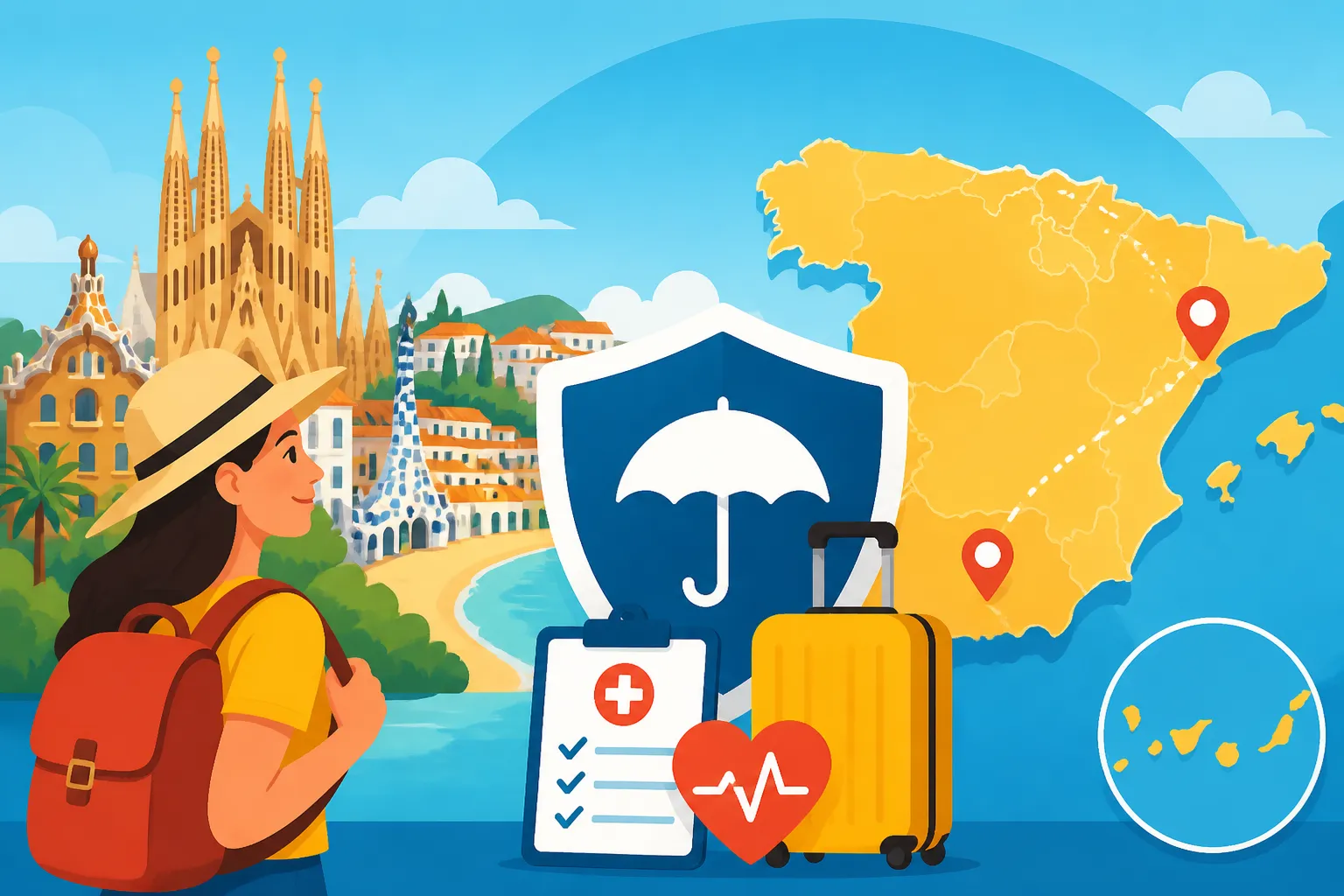
You are standing in the middle of a bustling plaza in Seville, the sun is shining, and suddenly you realize your bag, containing your passport and phone, is gone. I remember my first month in Madrid when a simple twisted ankle turned into a four-hour ordeal because I didn't have the right paperwork ready. This guide breaks down exactly why travel insurance is non-negotiable in Spain and how to choose a policy that actually works when the "siesta" ends and reality hits.
Disclosure: This post may contain affiliate links. We may earn a commission at no extra cost to you if you make a purchase through these links. Read full disclosure.
Why Travel Insurance in Spain is Not Just Another Extra
Many travelers arrive in Spain under the impression that because the country has a world-class healthcare system, they are automatically covered. While it is true that Spain offers some of the best medical care in Europe, the distinction between the public and private sectors is where most foreigners get caught. If you are a non-EU citizen, or even an EU citizen without your European Health Insurance Card (EHIC), a simple visit to the hospital can result in a bill that costs more than your return flight.
The reality is that Spanish bureaucracy moves at its own pace. When you are in a crisis, you do not want to be the one trying to figure out which office handles billing for international patients. Many newcomers spend hundreds of euros on "minor" issues simply because they walked into a private clinic by mistake. Understanding the Spain Healthcare System for Expats: Public vs Private is the first step in realizing that a safety net is essential for navigating these two parallel worlds.
Beyond health, Spain has a unique set of logistical challenges. From the high-speed trains that crisscross the peninsula to the small-town festivals where things can get a bit chaotic, the potential for travel disruptions is real. Whether it is a strike affecting your transit or a sudden bout of food poisoning from a late-night tapas run, insurance acts as the buffer between a stressful story and a financial disaster.
The Hidden Costs of Minor Accidents
It is rarely the life-threatening emergencies that drain a traveler's bank account; it is the "nuisance" incidents. A dental infection while hiking in the Picos de Europa or a bad reaction to a jellyfish sting on the Costa del Sol can require immediate attention. Without insurance, you are often required to pay upfront at private facilities, which are frequently the only ones with English-speaking staff available on short notice.
When you look at Public vs Private Dental Care in Spain: What Expats Usually Choose, you will see that even residents often opt for private cover to avoid long wait times. As a traveler, you do not have the luxury of waiting. A solid travel policy ensures that if you need a quick fix for a broken tooth or a prescription for an ear infection, you aren't paying a premium just for being a "visitante."
Bureaucracy and the Healthcare Split
If you find yourself needing Emergency Healthcare in Spain: 112, Urgent Care, and What to Expect, the experience can be jarring. In the public system, the care is exceptional but the administrative requirements are strict. They will ask for your health card or proof of insurance immediately. If you cannot provide it, the hospital may still treat you—especially in life-threatening cases—but the subsequent invoice will follow you across borders.
Insurance providers often have direct-billing agreements with specific private hospitals in major cities like Barcelona, Madrid, and Valencia. This means you don't have to touch your wallet. You simply show your policy details, and the coordinators handle the rest. This is a lifesaver when you are already dealing with the stress of an injury and the struggle of Spanish Medical Terminology: Common Words Expats Should Know.
Choosing the Right Policy for Different Types of Travelers
Not all travel insurance is created equal, and your needs will shift significantly depending on whether you are here for a week-long city break or a six-month digital nomad stint. Spain has specific legal requirements for certain visa types, making the "cheapest option" a potential liability if it doesn't meet government standards.
For instance, if you are booking your accommodation through platforms like Booking.com, you might see an option to add basic trip protection. While this is great for hotel cancellations, it rarely covers the depth of medical needs or civil liability required for longer stays. You need to look at the fine print to ensure the "Travel" part of the insurance covers your actual "Living" reality in Spain.
Short-Term Tourists and Schengen Requirements
If you require a Schengen visa to enter Spain, travel insurance isn't just a recommendation—it is a legal requirement. Your policy must cover at least 30,000 EUR for medical expenses and include repatriation of remains. Consulates are very strict about this; if your policy doesn't explicitly state "Schengen Area" or "Worldwide including Spain," your visa application will be rejected before it even hits the desk.
Even for those who don't need a visa, such as US, UK, or Canadian citizens, the 30,000 EUR threshold is a good benchmark. Medical repatriations (getting you home on a specialized flight) can easily exceed 50,000 EUR. When planning trips for visiting family, it is wise to look for policies that include a "zero deductible" or "zero excess" option. Paying an extra 20 EUR for the policy is much better than having to pay the first 100 EUR of every single claim.
Digital Nomads and Long-Term Residents
For those taking advantage of the new residency pathways, the insurance requirements become even more stringent. Often, you need a policy that has "no copayments" (sin copagos) and no waiting periods (sin carencias). Standard travel insurance usually doesn't cut it for these applications because it is designed for temporary stays, not as a replacement for full-scale health coverage.
If you are in the process of moving, you might find yourself in a "gray zone" where your travel insurance has expired, but your local health card hasn't arrived. During this time, having an extended travel policy can prevent a total lapse in coverage. It is also worth considering how your insurance interacts with your lifestyle. Are you planning to drive? Are you bringing expensive camera gear for your remote work? These details require a "premium" travel tier rather than a basic medical-only plan.
What a Solid Policy Should Actually Cover in Spain
When you are comparing plans on sites or through travel aggregators like Omio, don't just look at the price tag. Look at the specific categories of coverage. Spain is generally very safe, but it has its own set of "specialties" when it comes to travel mishaps.
| Coverage Category | Why It Matters in Spain | Recommended Limit |
|---|---|---|
| Emergency Medical | Covers hospital stays and specialist visits | Min. 100,000 EUR |
| Theft & Loss | High rates of pickpocketing in tourist hubs | 1,500 – 3,000 EUR |
| Trip Cancellation | Useful for non-refundable train/flight tickets | Cost of the trip |
| Repatriation | Vital for serious illness or accidents | Unlimited / Full Cost |
| Adventure Sports | Essential if you plan to hike or surf | Must be an "add-on" |
Medical Emergencies and Repatriation
Most people assume "emergency" means a heart attack or a car crash. In reality, a medical emergency in Spain is often a severe case of dehydration during a July heatwave or a complicated fracture from a fall on a cobblestone street. You want a policy that covers What to Expect at a Spanish Emergency Room (Urgencias) Visit, including any follow-up care or medication.
Repatriation is the "dark" side of insurance that no one likes to talk about, but it is the most expensive part. If you are seriously injured in a remote part of Andalusia, getting you back to your home country with medical supervision is a logistical nightmare. A good policy will have a 24/7 assistance line where they coordinate with local doctors to determine if you are fit to fly and arrange the necessary transport.
Theft, Pickpockets, and Property Loss
Let's be honest: Spain has a reputation for world-class pickpockets, especially in areas like Las Ramblas in Barcelona or the Puerta del Sol in Madrid. While violent crime is very low, "hurto" (theft without violence) is common. I’ve lived here for years and I still keep my backpack on my front in the Metro.
Your insurance should cover the replacement of "essential items." This includes your phone, camera, and even the cost of replacing your documents. If you lose your TIE, you'll need to follow the Lost or Stolen TIE/NIE Documents: Replacement Steps in Spain, which involves police reports and administrative fees. Insurance can often reimburse these costs and even cover a few nights of extra accommodation while you wait for emergency travel documents. Referencing Avoiding Pickpockets in Spain's Tourist Areas can help you prevent the claim, but insurance is there for when the "pros" outsmart you.
Trip Cancellations and Logistics
Spain’s transport network is fantastic, but it isn’t immune to delays. If you’ve booked a series of tours through GetYourGuide and your train is canceled due to a strike, you may lose the money for those activities. A comprehensive travel policy includes "trip interruption" coverage. This means if a strike, weather event, or personal illness stops you from making it to your destination, you can claim back the non-refundable costs.
Practical Scenarios: When Insurance Saves the Day
To understand the value of travel insurance, you have to look at the day-to-day reality of being a foreigner in Spain. It is rarely the "big" things that get you; it is the series of unfortunate events that compound.
Lost Passports and Paperwork Nightmares
Losing your passport is more than just an expensive replacement; it’s a total halt to your travel plans. You cannot check into a new hotel (they are legally required to scan your ID), you cannot board a flight, and you cannot even pick up certain packages at the post office. Insurance often covers the "emergency travel document" fee and the transport to the nearest embassy or consulate.
If you find yourself in this situation, knowing How to Call 112 in Spain: What to Say and What Happens Next is vital. The police will need to issue a "denuncia" (report), which your insurance company will demand before they pay out a cent. Without the insurance company’s guidance, you might spend two days wandering between police stations because you went to the wrong "Comisaría."
Adventure Sports and Risky Activities
Spain is an outdoor playground. Between the kite-surfing in Tarifa and the skiing in the Sierra Nevada, there is no shortage of adrenaline. However, standard travel insurance almost always excludes these activities. If you break your leg on a ski slope and don't have the "winter sports" add-on, the search and rescue costs alone could bankrupt you.
Always check if your policy covers "active tourism." Even something as seemingly benign as a guided bike tour in Valencia might be classified as a "risky activity" depending on the provider. When I moved here, I learned the hard way that Staying Safe in Spain: Practical Safety Tips for New Residents includes checking your insurance coverage before heading out on a "simple" hike in the heat, as dehydration-related rescues are common and costly.
How to Make a Claim Without Losing Your Mind
The biggest complaint people have about travel insurance is that they "don't pay out." In 90% of cases, this is because the traveler didn't follow the correct procedure in Spain. Spanish authorities and medical facilities have a specific way of doing things, and if you don't have the right paper with the right stamp, the insurance company will reject the claim.
Documentation You Must Keep
The "golden rule" of Spanish claims is to get everything in writing immediately. If you are at a hospital, ask for a "reclamación" or a "parte médico." If you are at a police station, you need the "denuncia." Do not leave the building without a physical or digital copy of these documents.
You should also keep:
- All original receipts (facturas) for any out-of-pocket expenses.
- Boarding passes or tickets to prove you were actually on the trip.
- Photos of any damage (if claiming for baggage).
- The "Aviso de llegada" if your luggage was delayed by an airline.
Dealing with Spanish Police and Hospitals
When you go to a police station to report a theft, be prepared for a wait. In high-tourist areas, they often have a "SATE" (Servicio de Atención al Turista Extranjero) office where they speak English. This is where you want to go. If you go to a regular local station, you might struggle with the language barrier, making it harder to get an accurate report.
In hospitals, the administration staff are usually separate from the medical staff. Even if a doctor tells you "don't worry about it," check with the front desk. You want to make sure they have your insurance details on file from minute one. If you have to pay for something like a locksmith because you are locked out (see What to Do If You Lose Your House Keys in Spain), make sure the invoice clearly states the reason for the emergency.
Comparing Coverage and Booking Your Trip
When you are in the planning stages, it is easy to get overwhelmed. I usually suggest a three-step approach:
- Check your existing coverage: Does your credit card offer travel insurance? Often these are very basic and have low limits for medical, but they might be enough for a three-day trip.
- Look for "Primary" vs. "Secondary" coverage: Primary insurance pays out first. Secondary insurance requires you to try and claim from your home insurance or airline first, which is a massive headache.
- Read the "General Exclusions": In Spain, a common exclusion is "incidents involving alcohol." If you have a fall after three glasses of sangria, the insurance company might use that as a reason to deny your claim. Be aware of the "lifestyle" clauses.
As you book your logistics via Omio or secure your tickets for the Alhambra through GetYourGuide, take five minutes to purchase your policy simultaneously. Having it all sorted before you land in Malaga or Madrid means you can actually enjoy the tapas and the sunsets without that tiny voice in the back of your head worrying about "what if."
Disclaimer
This guide provides a general overview of travel insurance in Spain based on common expat and traveler experiences. Insurance regulations and policy terms change frequently. Always read your specific policy wording in full and consult with a licensed insurance professional or your provider to ensure the coverage meets your personal needs and legal requirements for your stay in Spain.