How to Use the Madrid Metro as a First-Time Visitor
Arriving in Madrid, you're immediately hit with the vibrant energy of a bustling European capital, and navigating a new city's public transport system can feel like deciphering an ancient scroll. Forget the stress and confusion, because this guide is your personal key to mastering the Madrid Metro, ensuring your first visit is smooth, efficient, and wonderfully free of transit woes.
Disclosure: This post may contain affiliate links. We may earn a commission at no extra cost to you if you make a purchase through these links. Read full disclosure.
Why the Madrid Metro is Your Best Friend in Madrid
The Madrid Metro isn't just a way to get from A to B; it's the beating heart of the city's urban mobility, a truly impressive network that makes exploring the Spanish capital a breeze. For first-time visitors, understanding its efficiency is paramount. You'll quickly discover why it's the preferred mode of transport for locals and savvy travelers alike. The sheer scale and modern design mean less time waiting and more time experiencing Madrid.
Speed and Reliability Across the City
One of the most appealing aspects of the Madrid Metro is its remarkable speed and reliability. Unlike dealing with unpredictable street traffic, the metro runs on a precise schedule, with trains arriving frequently, especially during peak hours. You can almost set your watch by it. This consistent service means you can plan your day with confidence, knowing you won't be stuck in a taxi or a bus caught in a traffic jam when you're trying to make that flamenco show or get to your important appointment. From the moment you step onto a platform, you'll feel the city's pulse, a constant, rhythmic movement that carries you effortlessly across vast distances. It truly connects every corner of this sprawling metropolis, making even distant neighborhoods feel accessible.
Cost-Effective Exploration
Let's be honest, travel budgets can get tight, and transportation costs can quickly add up. This is where the Madrid Metro truly shines for the budget-conscious traveler. Compared to taxis or ride-sharing services, metro fares are incredibly affordable, especially if you opt for multi-trip passes or a tourist card. Imagine exploring numerous historical sites, world-class museums, and diverse culinary neighborhoods all for a fraction of what car services would cost. This cost-effectiveness allows you to reallocate funds to other exciting aspects of your trip, like enjoying more delicious tapas or snagging that special souvenir. Plus, the ease of purchasing tickets and understanding the fare structure means no complicated calculations or unexpected charges, just straightforward travel. For a comprehensive look at public transport options, you might want to check out our guide on Public Transport in Spain: Cards, Discounts, and Etiquette.
Getting Started: Buying Your Tickets and Cards
Before you can hop on a train, you'll need to sort out your ticket. The Madrid Metro operates on a reloadable card system, which can be a bit different if you're used to single-use paper tickets. Don't worry, it's designed for convenience, and once you get the hang of it, you'll appreciate its simplicity.
The Essential Multi Card (Tarjeta Multi)
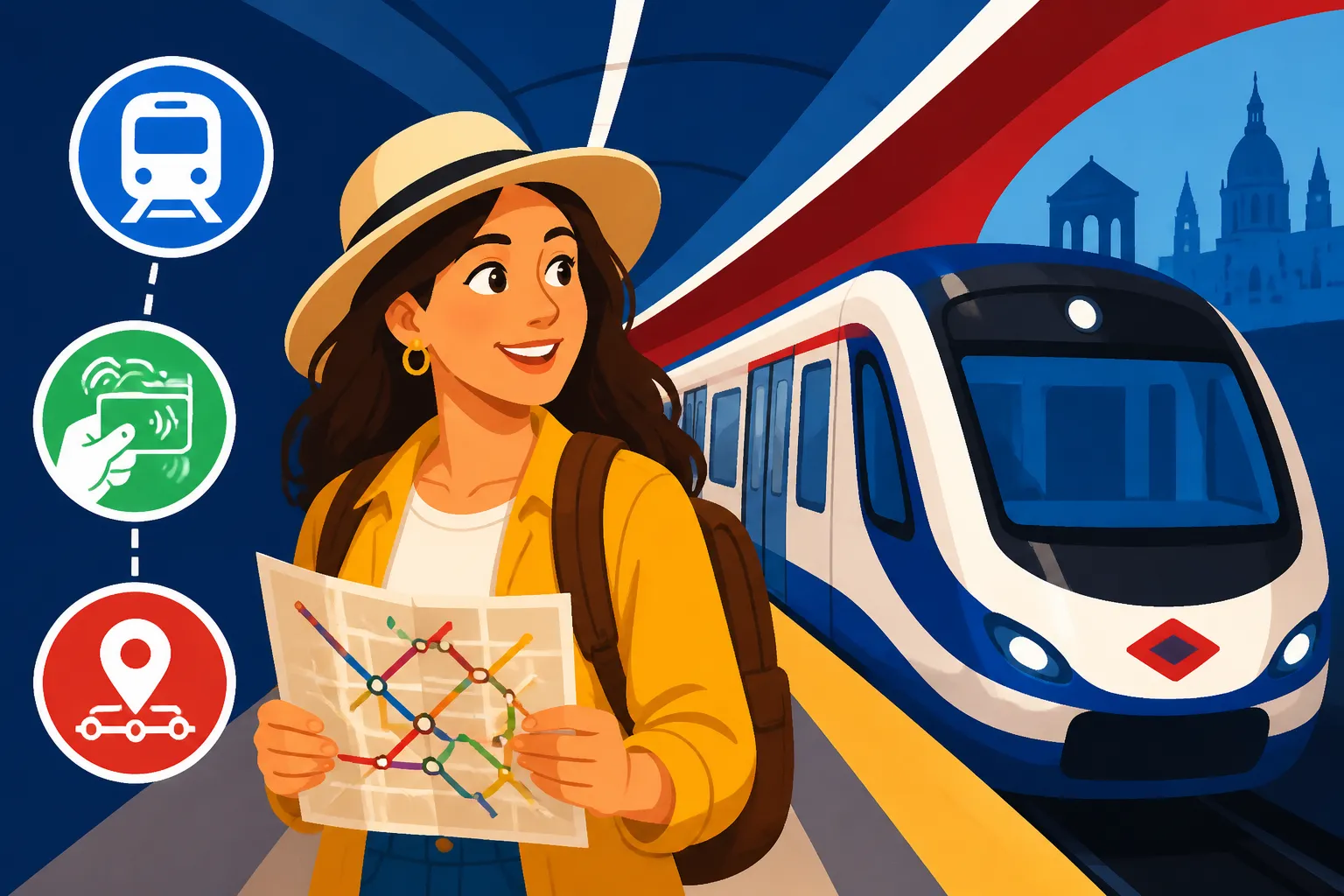
The most crucial item you'll need to begin your metro adventures is the Tarjeta Multi. This is a non-personal, contactless, reloadable public transport card that you can use to load various tickets. Think of it as your passport to Madrid's entire public transport network, not just the metro. You can load single tickets, 10-trip tickets (known as a "Metrobús"), and even tourist passes onto it. The card itself costs a small fee, typically €2.50, and you purchase it at any metro station's ticket machines. You don't need a passport or any personal details to buy it, making it super accessible for tourists. It's valid for 10 years, so if you plan on returning to Madrid (and trust me, you will!), keep it safe.
When you buy your Tarjeta Multi at the machine, you'll be prompted to immediately load it with a ticket type. For most first-time visitors staying a few days, a 10-trip ticket (Abono de 10 viajes) is often the most economical choice. It's cheaper per ride than buying single tickets and can be shared among multiple people, which is a fantastic perk for families or groups traveling together. Simply tap the card when entering and exiting the station (for certain journeys, usually longer ones or those involving regional trains, you'll tap out as well; for standard metro journeys within Zone A, you usually only tap in).
Single Tickets, 10-Trip Passes, and Tourist Options
Madrid offers several ticket options to suit different travel styles and durations:
- Single Ticket (Billete Sencillo): This is for a one-off journey. The price varies depending on the number of stops, but it typically ranges from €1.50 to €2.00 for journeys up to 5 stops, with additional costs for more stops. It's loaded onto your Tarjeta Multi.
- 10-Trip Ticket (Abono de 10 viajes / Metrobús): As mentioned, this is often the best value for many tourists. It covers 10 journeys within Zone A (the central area where most tourist attractions are located) and costs around €12.20. It can be shared! This is a fantastic option if you're traveling with friends or family and sharing the card.
- Tourist Pass (Abono Turístico): If you plan to use public transport extensively every day for a specific period, a tourist pass might be worth considering. These passes offer unlimited travel within chosen zones (Zone A or Zone T for all zones) for 1, 2, 3, 4, 5, or 7 consecutive days. They also include the airport supplement. Prices vary depending on the duration and zone; for example, a 3-day Zone A pass costs around €18. If you're staying centrally and only using the metro for a few rides each day, the 10-trip ticket is usually more economical. However, if you plan multiple daily trips, venturing to different zones, the tourist pass provides peace of mind. You can compare the cost breakdown in the table below.
| Ticket Type | Cost (approx.) | Validity | Shareable? | Includes Airport Supplement? | Best For… |
|---|---|---|---|---|---|
| Tarjeta Multi (Card Base) | €2.50 | 10 years | N/A | No | Essential for loading all other tickets |
| Single Ticket | €1.50 – €2.00 | 1 journey | No | No | Occasional, short trips, or last-minute needs |
| 10-Trip Ticket (Zone A) | €12.20 | 10 journeys within Zone A | Yes | No | Most tourists, good value, flexible usage |
| Tourist Pass (3-day, Zone A) | €18.00 | Unlimited for 3 days | No | Yes | Heavy users, multiple daily trips, includes airport |
| Tourist Pass (5-day, Zone A) | €26.80 | Unlimited for 5 days | No | Yes | Extended stays, extensive exploration |
The Dreaded Airport Supplement
Ah, the airport supplement! This is a common point of confusion for new arrivals. Whenever you start or end your journey at Aeropuerto T1-T2-T3 or Aeropuerto T4 metro stations, you need to pay an additional supplement. This supplement costs €3. If you have a single ticket or a 10-trip ticket, you must ensure you add this supplement to your Tarjeta Multi before you exit the airport station or before you enter if you're heading to the airport. Ticket machines will offer the option. If you don't, the turnstiles simply won't open, and you'll have to go back to a machine to buy it. Tourist passes, thankfully, already include this supplement, making them a hassle-free option for airport transfers. For detailed instructions on getting to and from the airport, check out How to Get From Madrid Airport to the City Center.
Navigating the System: Understanding Lines and Zones
Once you have your Tarjeta Multi loaded, it’s time to understand the layout of the metro. Madrid’s Metro system is one of the largest and most efficient in Europe, with numerous lines that crisscross the city and beyond. It can look daunting at first glance, but with a few pointers, you'll be zipping around like a local.
Madrid's Zone System
The Madrid Metro, and indeed the entire Consorcio Regional de Transportes de Madrid (CRTM) network, operates on a zonal system. For most tourists, however, things are quite simple as the vast majority of attractions fall within Zone A. This zone covers the entire core of Madrid, including all the major sights, museums, shopping districts, and popular neighborhoods.
Beyond Zone A, you have B1, B2, and B3, which extend into the metropolitan area and surrounding towns. If you're planning a day trip to somewhere like Getafe or Leganés, you'll need a ticket that covers the B zones. However, for a typical tourist itinerary, sticking to Zone A tickets (like the 10-trip Metrobús) will be perfectly adequate. The metro maps clearly delineate these zones, so always double-check if you're venturing further afield. Using a multi-zone ticket or a tourist pass that covers Zone T (all zones) ensures you don't have to worry about this.
Line Colors, Numbers, and Interchanges
The Madrid Metro system uses a straightforward color-coded and numbered system for its lines, making navigation intuitive even if you don't speak Spanish. There are currently 12 metro lines (L1 to L12) and a few light rail (Metro Ligero) lines.
- Line Identification: Each line has a distinct color and number. For example, Line 1 (L1) is light blue, Line 2 (L2) is red, Line 3 (L3) is yellow, and so on. When you look at a map, you'll see the line number and its color clearly marked.
- Direction: When on the platform, signs will indicate the direction by showing the name of the last station on that particular line. For instance, if you're on L1 and want to go towards Sol, you might look for signs saying "Pinar de Chamartín" or "Valdecarros" depending on your current location and desired direction. Always double-check the final destination of your desired line to ensure you're heading in the right direction.
- Interchanges (Trasbordos): Changing lines is often necessary, and the system is designed for smooth interchanges. Stations where multiple lines intersect are clearly marked on the map with circles showing all the line colors. When you exit a train to change lines, simply follow the signs for your desired line, indicated by its color and number. Sometimes, these connections can involve a bit of a walk, but they are always well signposted. You typically don't need a new ticket for an interchange as long as you remain within the system.
Reading the metro map might seem like a puzzle at first, but with a few minutes of study, it becomes second nature. Key stations like Sol, Nuevos Ministerios, Atocha, and Avenida de América are major hubs where many lines converge, making them excellent points for transfers.
Navigating the Metro Map and Station Signage
The Madrid Metro maps are truly works of art in their clarity and user-friendliness. You'll find large, easy-to-read maps at every station entrance, on platforms, and inside the metro cars themselves.
- Map Features: The maps display all metro lines, stations, interchange points, and the zonal boundaries. Look for the "Puntos de Interés" (Points of Interest) symbols, which mark major tourist attractions, helping you visualize your journey.
- Station Signage: Inside the stations, you'll be guided by abundant signs. These signs clearly indicate the line numbers and colors, the direction (by the last station on the line), and exits (Salida). Pay attention to the "Salida" signs to ensure you're taking the most convenient exit for your destination, as some stations have multiple exits leading to different streets. Some large stations like Sol or Nuevos Ministerios have numerous exits, so knowing your street beforehand can save you some circling!
- Platform Displays: On the platforms, electronic displays show the estimated waiting time until the next two trains, along with their final destinations. This helps you confirm you're on the right platform and manage your wait.
Don't be afraid to take a moment to orient yourself with the map each time you enter a new station. You can even download official Madrid Metro apps to have a digital map and route planner right in your pocket. This really helps with overall Getting Around Spanish Cities: Metro, Bus, Tram, and Bikes.
Practical Tips for First-Timers
Moving beyond tickets and maps, there are some cultural nuances and practicalities that will make your Madrid Metro experience even better. Long-term expats often pick up a few tricks.
Understanding Rush Hour Etiquette
Just like any major city, Madrid has its rush hours. Typically, these are from 7:30 AM to 9:30 AM and 5:30 PM to 7:30 PM on weekdays. During these times, trains can get very crowded, especially on popular lines like L1, L2, L3, L6, and L10.
- Be Prepared for Crowds: Expect to stand, and be ready for some close contact with fellow passengers. Spaniards are generally polite, but personal space can become a luxury during rush hour.
- Mind Your Belongings: Crowded trains are prime targets for pickpockets. Keep your bags close, ideally in front of you, and be aware of your surroundings. Our guide on Staying Safe in Spain: Common-Sense Tips for Travelers has more on this.
- Allow Extra Time: If you have an important appointment, factor in extra travel time during these periods. Sometimes, waiting for the next train might be a more comfortable option if the first one is too packed.
- Respect the Flow: When boarding, let passengers exit before you try to get on. Stand to the side of the doors, not directly in front of them. When riding, if you're standing near the doors and not getting off soon, move further inside the carriage to allow others easier access.
Safety and Accessibility Features
The Madrid Metro is generally very safe, but common sense precautions are always advisable.
- Awareness: Be aware of your belongings, especially in crowded areas like Sol or Gran Vía stations, or on trains heading to tourist hotspots. It's not common, but opportunistic petty theft can happen. Keep your valuables out of sight.
- Emergency Buttons and Intercoms: Inside the trains and on platforms, you'll find emergency buttons and intercom systems. Use them if you witness an incident or need immediate assistance.
- Accessibility: Madrid Metro has made significant strides in accessibility. Many stations, especially newer ones and those that have been renovated, are equipped with lifts and escalators, making them accessible for wheelchair users or those with strollers. Look for the international accessibility symbol (a wheelchair icon) on maps and at station entrances. However, some older, smaller stations might still lack full accessibility, so it's always good to check the official Metro de Madrid website or app for specific station information if accessibility is a concern.
Dealing with Language Barriers and Using Apps
While many metro staff might speak some English, especially in central stations, it's always helpful to know a few basic Spanish phrases.
- Key Phrases: "Un billete, por favor" (One ticket, please), "Tarjeta Multi" (for the card itself), "Diez viajes" (ten trips). Don't be shy; most Spaniards appreciate the effort! For more help, see our guide on Spanish Language and Everyday Communication for Visitors.
- Ticket Machines: The ticket machines at metro stations are multilingual, offering instructions in Spanish, English, and other languages. This greatly simplifies the purchase process, so don't be intimidated.
- Official Apps: Download the official Metro de Madrid app (available for both iOS and Android). It's incredibly useful, offering real-time train schedules, route planners, station information (including accessibility), and interactive maps. This app can be a lifesaver when you're navigating on the go. Additionally, popular travel apps like Google Maps also integrate Madrid Metro information, allowing you to plan routes directly from your current location to your destination. Brands like Omio or Booking.com might not be directly related to metro use, but they can help with planning your overall trip logistics, from booking flights or trains into Madrid to securing accommodation near a convenient metro station.
Common Routes and Destinations by Metro
The beauty of the Madrid Metro is how seamlessly it connects you to almost every major attraction and district. Knowing a few key routes can make your initial days in the city much smoother.
From the Airport to the City Center
For many first-time visitors, the journey from Madrid-Barajas Adolfo Suárez Airport (MAD) into the city center is their very first metro experience. Both Terminal 2 (T2) and Terminal 4 (T4) have dedicated metro stations.
- Aeropuerto T1-T2-T3 (L8 Pink Line): This station serves Terminals 1, 2, and 3.
- Aeropuerto T4 (L8 Pink Line): This station serves Terminal 4.
From either airport station, you take Line 8 (Pink Line) to Nuevos Ministerios. This is a major interchange station. From Nuevos Ministerios, you can easily transfer to:
- Line 6 (Grey Circle Line): To reach areas like Moncloa, Cuatro Caminos, or Avenida de América.
- Line 10 (Dark Blue Line): To get to central areas like Plaza de España, Tribunal, or Alonso Martínez.
- You can also transfer to the Cercanías (commuter train) network at Nuevos Ministerios, which connects to Atocha (for high-speed trains) or Sol (the very heart of the city).
Remember to account for the €3 airport supplement on your Tarjeta Multi if you're not using a Tourist Pass! The entire journey from the airport to a central location like Sol usually takes around 30-45 minutes, depending on your transfers.
Major Tourist Hotspots and Their Metro Stations
The Madrid Metro is your best friend for hitting all the must-see spots. Here's a quick cheat sheet for some popular destinations:
- Puerta del Sol: The absolute center of Madrid. Served by Sol station (L1, L2, L3) and also a Cercanías train stop. From here, you can walk to Plaza Mayor, Royal Palace, and Gran Vía.
- Gran Vía: Madrid's iconic shopping street and theater district. Served by Gran Vía station (L1, L5). It's bustling and full of energy, a great place to absorb the city vibe.
- Retiro Park: A beautiful urban oasis. The main entrance is easily accessible from Retiro station (L2). You can also get off at Banco de España (L2) for the western edge or Atocha (L1, Cercanías) for the southern entrance.
- Prado Museum / Thyssen-Bornemisza Museum / Reina Sofía Museum: The "Golden Triangle of Art."
- For the Prado and Thyssen, Banco de España (L2) or Atocha (L1) are good options.
- For the Reina Sofía, Atocha (L1) is directly opposite.
- Royal Palace & Almudena Cathedral: These majestic landmarks are a short walk from Ópera station (L2, L5, R – Ramal).
- Plaza Mayor: A historic central square, just a stone's throw from Sol station (L1, L2, L3) or Ópera station.
- El Rastro Market: Madrid's famous Sunday flea market. Get off at La Latina (L5) or Puerta de Toledo (L5) for easy access. Remember to plan your visit on a Sunday morning!
Remember, many of these central stations are incredibly well-connected, often serving multiple lines. This means you have flexibility in planning your routes and can usually find a direct line or a single, easy transfer to get where you want to go. For more ideas on what to see, check out Madrid for First-Time Visitors: Neighborhoods and Highlights.
Disclaimer
Please note that while this guide provides up-to-date general information, ticket prices, schedules, and specific station accessibility can change. It's always a good idea to check the official Metro de Madrid website or app for the most current information before and during your visit. This content is for informational purposes only and does not constitute professional advice.