How to Spend a Weekend in Seville
You land at Santa Justa on a Friday evening with two days, a long list of sights, and a city that eats dinner at ten and closes its shops mid-afternoon. Queues at the Alcázar, summer heat, and confusing tapas bars can eat into a short trip. This guide gives you a realistic, hour-by-hour plan for a Seville weekend, with the logistics I learned the hard way.
Disclosure: This post may contain affiliate links. We may earn a commission at no extra cost to you if you make a purchase through these links. Read full disclosure.
I have spent a lot of weekends in Seville, some as a visitor and many with friends flying in from abroad. The first one went badly. I tried to see everything on Saturday morning, melted in a queue outside the Alcázar at noon, ate a sad paella in a plastic-menu restaurant opposite the Cathedral, and fell asleep before the city came alive at night. Seville rewards people who move with its rhythm. The plan below is built around that rhythm.
Planning Your Seville Weekend Before You Arrive
A good Seville weekend gets decided before you arrive. You need three things settled: how you get into the city, where you sleep, and which sights you have booked. If you leave all three to Friday night, you will spend Saturday morning on your phone instead of in the Patio de las Doncellas.
Getting to Seville and Into the Centre
Most visitors arrive one of two ways: by high-speed train into Santa Justa station or by plane into San Pablo Airport. From Madrid, the AVE is usually the more relaxing option. You go from city centre to city centre, there is no security queue to speak of, and you watch the plains of La Mancha give way to olive groves. For a full breakdown of fares and booking windows, see Madrid to Seville by AVE: Tickets, Timings, and Cheapest Booking Window. Several operators now run high-speed services on the route. A comparison platform such as Omio lets you see Renfe and its competitors side by side, which helps if your dates are fixed and you just want the most convenient departure. Compare the total price on the operator’s own site before you pay, because fees and fare rules differ.
Santa Justa sits a little east of the historic centre. It is walkable if you pack light, but with a suitcase on cobbles and a summer evening still in the thirties, a taxi or a city bus is kinder. Taxis queue directly outside the station, and the ride into Santa Cruz or the Arenal is short. Keep in mind that the narrow streets of the old quarter are partly closed to traffic, so your driver may drop you a few minutes’ walk from your door. Ask your accommodation in advance where the nearest drop-off point is.
If you fly in, the dedicated airport bus runs into the centre with stops near Santa Justa, the Prado de San Sebastián, and the Plaza de Armas area. Taxis from the airport charge a fixed fare to the city, which varies by time of day. If you land late, have a friend arriving, or travel with kids, you can sort it in advance. Seville and Bilbao Airport Connections: What’s Worth Pre-Booking explains when pre-booking a transfer is worth it and when the bus is fine.
Where to Base Yourself for Two Nights
On a weekend trip, location saves you more time than anything else. Seville’s historic centre is compact, and nearly everything on this itinerary is within a thirty-minute walk of everything else. A wrong base still costs you, though. If you stay out by the ring road, every lunch break turns into a commute.
For a first weekend, I suggest one of three areas. Barrio de Santa Cruz puts you next to the Cathedral and Alcázar, among whitewashed lanes and orange trees. It is beautiful, but it gets very busy and is quite touristy in the evenings. El Arenal, between the Cathedral and the river, is a little calmer, close to the Torre del Oro and the bullring, and full of good tapas bars. The Alameda de Hércules area is further north and less polished. It has a younger crowd and more local evenings, but you walk further to the main sights.
Triana, across the river, is my personal favourite for a second or third visit. It has its own identity, ceramics workshops, and some of the best neighbourhood bars in the city. For a first weekend, it adds a bridge crossing to every outing, but plenty of people love that. Where to Stay in Seville: Santa Cruz, Triana, and Alameda Compared goes into the trade-offs street by street.
When you book, filter for air conditioning if you are travelling between May and October. Also check whether the room faces the street or an inner patio. On Booking.com, check the property’s facilities list and read recent reviews for mentions of noise and stairs, because many old Sevillian buildings have no lift. A rooftop terrace, called an azotea, is also worth looking for. Watching the Giralda light up from a roof terrace with a cold drink is one of the city’s great small pleasures.
| Base Area | Best For | Walk to Cathedral | Evening Atmosphere | Watch Out For |
|---|---|---|---|---|
| Santa Cruz | First-timers who want everything on the doorstep | A few minutes | Busy, romantic, touristy | Crowds, tight lanes for luggage |
| El Arenal | Couples and foodies wanting a central but calmer base | Short walk | Lively tapas bars | Some streets noisy late at night |
| Alameda de Hércules | Younger travellers, repeat visitors | Around twenty to twenty-five minutes | Local bars, terraces, nightlife | Further from main sights |
| Triana | People who want a neighbourhood feel | Twenty minutes or so, across the bridge | Authentic, flamenco roots | Extra walking each day |
Booking the Big Sights Ahead
The Real Alcázar uses timed entry, and in spring and autumn the popular slots sell out. Book directly on the official Alcázar website as soon as your dates are firm. Pick a morning slot if you can, because the gardens are far more pleasant before the midday heat. The Cathedral also sells tickets online, and booking ahead lets you skip the ticket queue that winds along the Avenida de la Constitución.
If you would rather have someone explain what you are looking at, a guided tour of the Alcázar or Cathedral can be worth it. Seville’s history is layered: Roman, Visigothic, Almohad, Castilian, colonial. A good guide makes it make sense. GetYourGuide lists a range of small-group and combined tours, and it is a handy way to compare formats and read reviews. Check exactly what each listing includes, because some cover entry tickets and some do not.
Plaza de España, Parque de María Luisa, Barrio Santa Cruz’s lanes, and the Triana riverside are all free to wander. You can book the two headline sights and leave the rest of the weekend loose.
Day One: Cathedral, Alcázar, and the Old Quarter
Your first full day is the monumental one. The idea is to tackle the big indoor sights early and retreat during the hottest hours. Then come back out when the city does.
Morning at the Cathedral and Giralda
Start with breakfast like a local. Order a tostada at a neighbourhood café: toasted bread with olive oil and crushed tomato, or with jamón. Have it with a café con leche, standing at the bar or at a little pavement table. It costs very little, takes fifteen minutes, and sets you up properly.
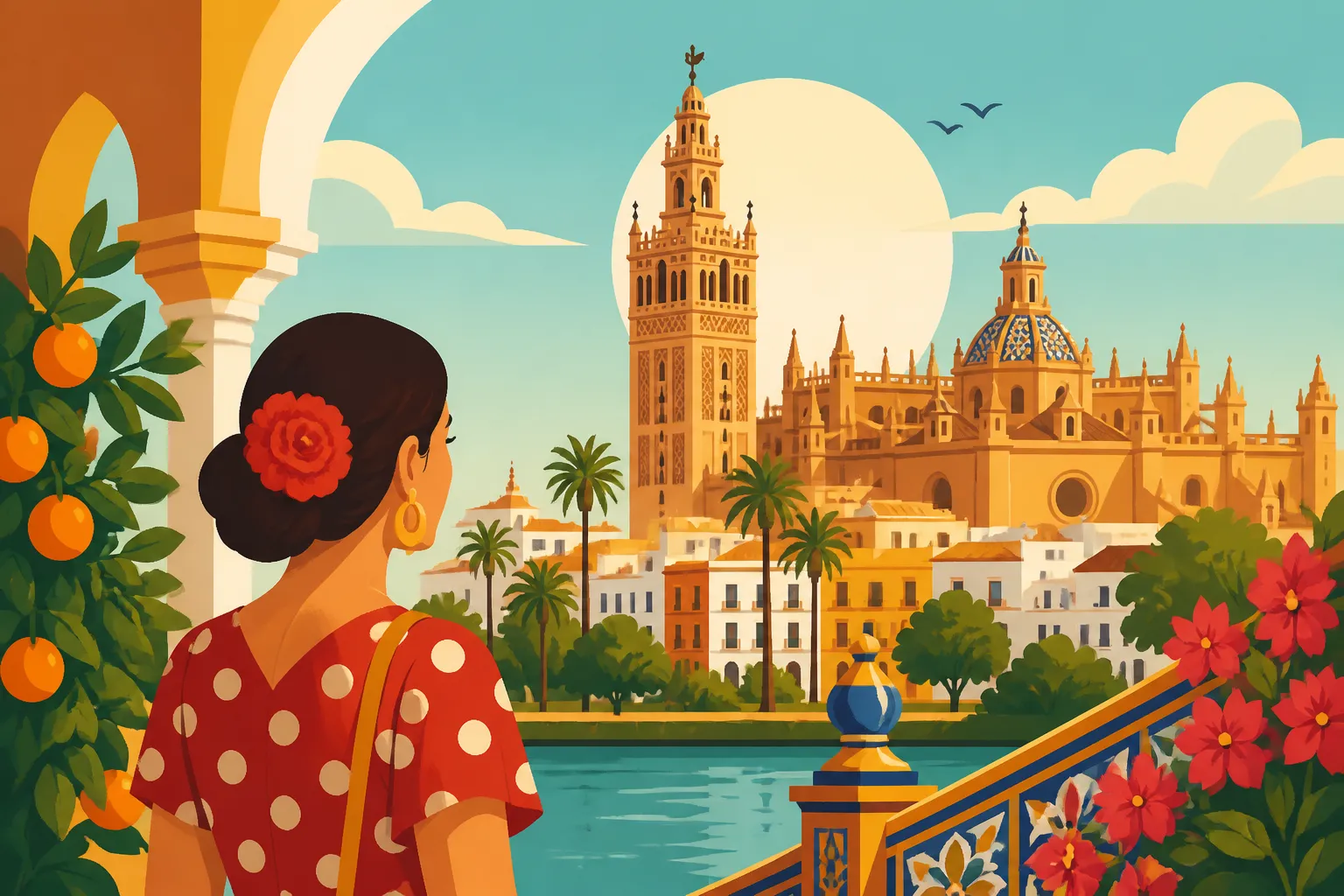
Seville Cathedral is one of the largest Gothic cathedrals in the world, and the scale really does stop you in your tracks. Inside, look for the enormous gilded main altarpiece, the tomb associated with Christopher Columbus, carried aloft by four figures representing the old kingdoms of Spain, and the treasury rooms. Your ticket includes the climb up the Giralda, the bell tower that started life as the minaret of the city’s great mosque. Instead of stairs, the tower has a series of gentle ramps, built so that a person on horseback could ride to the top. That makes the climb much easier than it sounds. The view over the rooftops, the river, and the bullring is the best orientation you will get to the city.
This is a working place of worship, so keep shoulders and knees covered. Some visitors are turned away for dress, especially in summer when everyone is in vest tops. How to Dress for Churches and Religious Sites in Spain explains what is generally expected and how to pack for it without carrying a whole extra outfit. A light scarf or shirt in your day bag solves most problems.
After the Cathedral, step into the Patio de los Naranjos, the courtyard of orange trees that survives from the mosque. Then walk round to the Plaza Virgen de los Reyes, where the horse-drawn carriages wait. Take a moment there to get your bearings before you head to the Alcázar.
Late Morning Inside the Real Alcázar
If you booked a late-morning slot, you can go straight from the Cathedral to the Alcázar, which is only a couple of minutes away across the square. The Alcázar is a royal palace still used by the Spanish royal family. It is a mix of styles built over centuries, and the highlight is the Palacio de Pedro I. A Christian king built it using Mudéjar craftsmen, so you get carved stucco, geometric tiles, and horseshoe arches that feel like a cousin of the Alhambra. The Patio de las Doncellas, with its long reflecting pool, and the Salón de Embajadores, with its golden domed ceiling, are the rooms people remember.
Leave real time for the gardens. They are huge, full of fountains, peacocks, and hidden corners. The Baños de Doña María de Padilla, a vaulted rainwater cistern beneath the palace, is cool and atmospheric even in summer. Game of Thrones fans will recognise parts of the palace as Dorne. I would plan on at least two to three hours. Rushing the Alcázar is the most common way to spoil it.
By the time you come out, it will be lunchtime by Spanish standards, which means two o’clock or later. Lunch is the main meal of the day here, and many restaurants offer a set menu on weekdays. To understand the local clock and avoid arriving at an empty restaurant at noon, read What Time Do Spaniards Eat Lunch and Dinner?. After lunch, do what Sevillanos do in summer: go indoors. Rest at your hotel, read, nap. The streets between three and six on a July afternoon are not where you want to be.
Evening in Santa Cruz and a Flamenco Night
When the heat eases, wander the Barrio de Santa Cruz. This former Jewish quarter is a tangle of narrow lanes, tiny squares, and patios glimpsed through iron gates. Look for the Plaza de Santa Cruz, the Callejón del Agua running along the Alcázar’s walls, and the Plaza de Doña Elvira with its tiled benches. Getting lost is the point. Your phone’s map will struggle in these lanes anyway.
Then it is time for flamenco. Seville is one of the heartlands of the art form, and you have plenty of options. There are intimate venues in old courtyards, the Museo del Baile Flamenco with its evening performances, and the less formal peñas and bars where flamenco happens closer to how it always has. Quality varies enormously between a heartfelt performance in a small room and a tired dinner show aimed at coach tours. How to See a Real Flamenco Show (Not a Tourist One) is the guide to read before you choose. Book a seat in advance for the smaller venues, because they hold very few people.
After the show, dinner. In Seville that can easily start at half past nine or ten, and nobody will blink. Head to the Arenal or back towards the Alfalfa area for tapas.
Day Two: Plaza de España, Triana, and the River
Your second day is more relaxed and more local. It mixes grand open spaces with neighbourhood life. If you are leaving on Sunday evening, this route also ends conveniently close to the centre.
Morning at Plaza de España and Parque de María Luisa
Walk south from the centre, past the Fábrica de Tabacos, the old tobacco factory that now houses part of the university and inspired the setting of Carmen. Continue into the Parque de María Luisa. This shady park was landscaped for the Ibero-American Exposition, and on a hot morning its tiled benches, ponds, and palm-lined paths are a gift.
At the park’s edge sits the Plaza de España, a vast semicircle of brick, marble, and painted tiles. It is one of the most photographed places in Spain, and it lives up to the hype. Along the curved wall, each Spanish province has its own tiled alcove with a map and a historical scene, so look for the one connected to you or your hometown. You can rent a small rowing boat on the canal that runs around the plaza. It is silly, slightly chaotic, and great fun. Arrive early in the morning and you will have long stretches of the colonnade almost to yourself.
If you have the energy, the Museo de Artes y Costumbres Populares and the Archaeological Museum sit at the far end of the park, both in pavilions from the same exposition. Otherwise, sit on a bench, listen to the fountains, and let the morning go slowly.
Midday in Triana
Walk north along the river, past the Torre del Oro, a thirteenth-century watchtower that now holds a small naval museum. Then cross the Puente de Isabel II, known to everyone as the Puente de Triana. On the other side, the Mercado de Triana sits on the site of an old castle that once housed the Inquisition. A small museum underground explains that darker history. Upstairs, the market is full of fish, vegetables, jamón, and small bars where you can eat fresh seafood or a plate of cheese at a counter.
Triana is the historic home of the city’s potters and of many of its great flamenco families. Wander down Calle Alfarería and the nearby streets to see ceramics workshops and shops. The tiles and painted plates here are made locally, which is more than you can say for many souvenirs near the Cathedral. Pop into the Capilla de los Marineros, home to the Esperanza de Triana, one of the most revered images carried through the streets during Holy Week. Even if you are not religious, the devotion people show it tells you a lot about the city.
Lunch in Triana is a pleasure. Calle Betis, the riverside street, has terraces looking back across the water at the Torre del Oro and the Giralda. The best food is often a street or two inland, in places full of local families on a Sunday. If you are new to the tapas system, How to Order Tapas in Spain Without Overdoing It helps you pace yourself. Two or three dishes per person at a few bars beats one huge sitting.
Late Afternoon at Las Setas and a Final Evening
After a rest, head back across the river to the Metropol Parasol, which locals call Las Setas, the Mushrooms. This huge wooden canopy hovers over the Plaza de la Encarnación. Underneath, there is a Roman archaeological site you can visit. On top, a walkway winds across the roof with views over the old town, and sunset is the magic hour. The structure divides opinion among Sevillanos, but the panorama is hard to argue with.
From here you are close to two good final-evening options. You can walk north to the Alameda de Hércules, where long terraces fill with locals of every age as the night cools. Or stay around the Alfalfa and San Lorenzo areas for one last round of tapas. If you have time for a final sight before dinner, the Casa de Pilatos and the Palacio de las Dueñas are both stunning noble houses with tiled courtyards and gardens. They are often quieter than the big monuments and give you a feel for how aristocratic Seville lived.
If you have a train on Sunday evening, leave a comfortable margin to get back to Santa Justa. Traffic around the old town can be slow, and the security check for high-speed trains is quick but not instant.
Making the Weekend Work in Real Life
The itinerary is the easy part. What makes or breaks a Seville weekend is timing, heat, and knowing how the city actually works day to day.
Heat, Seasons, and Timing
Seville is one of the hottest cities in Europe in summer. That is not a figure of speech; it shapes daily life. In July and August, plan sightseeing for early morning and evening, carry water everywhere, and treat the afternoon as rest time. If you are weighing up a summer trip, Is It Too Hot to Visit Southern Spain in August? covers what to expect honestly. Spring and autumn are the sweet spots. The orange blossom, the azahar, perfumes the whole city in spring, and October and November evenings are mild and golden. Winter is cool, quiet, and underrated. You will get the Alcázar gardens with fewer people and comfortable walking temperatures.
Two events change Seville completely. During Holy Week, brotherhoods carry enormous floats through the streets day and night. It is unforgettable, but it also means closed routes, packed lanes, and higher accommodation prices. How to Experience Semana Santa Without the Biggest Crowds has practical tactics for seeing processions without being crushed. A couple of weeks later comes the April Fair. A whole district of striped casetas fills with sevillanas dancing, horses, flamenco dresses, and fino sherry until dawn. Many casetas are private, and rooms book up early, so read Feria de Abril in Seville: Booking Windows and Realistic Budgets if your dates overlap.
Also remember Sunday. Many shops close, some restaurants take a day off, and certain monuments run shorter hours. Check the opening times of anything you particularly want to see on your second day.
Eating Like a Sevillano
Seville is a tapas city above all. Bars here still serve small plates at the counter, and a good evening means moving between two or three of them. Classic dishes to look for are these:
- Espinacas con garbanzos, spinach stewed with chickpeas, cumin, and paprika, a dish with roots in the city’s Moorish past.
- Salmorejo, a thick, cold tomato and bread soup topped with egg and jamón, perfect on hot evenings.
- Montaditos de pringá, small toasted rolls filled with slow-cooked meats from a traditional stew.
- Solomillo al whisky, pork tenderloin in a garlicky sauce, a local favourite despite the name.
- Cola de toro, oxtail stew, rich and dark.
- Pescaíto frito, mixed fried fish, best eaten near the river or in Triana.
Some of the city’s most loved institutions are worth seeking out. El Rinconcillo near the Plaza de los Terceros is one of the oldest bars in the city, and the staff still chalk your bill on the wooden counter. Bodega Santa Cruz, known as Las Columnas, is a standing-room favourite at the edge of the Barrio de Santa Cruz. Casa Morales near the Cathedral has huge old wine jars and a timeless feel. Expect them to be busy and loud. That is part of the charm.
Here is a simple way to tell a local bar from a tourist trap. Walk a few streets away from the Cathedral, look for handwritten menus or chalkboards, and listen for Spanish being spoken at the bar. Places with photo menus in six languages and staff waving you in from the street are rarely the best meals in town. A glass of chilled manzanilla or fino from nearby Sanlúcar and Jerez, or a tinto de verano on a hot night, completes the picture.
A Sample Seville Weekend at a Glance
Use this as a template, then shuffle it around your train or flight times and your booked Alcázar slot.
| Time | Saturday | Sunday |
|---|---|---|
| Early morning | Tostada and coffee at a local café | Walk through Parque de María Luisa |
| Mid-morning | Cathedral and climb the Giralda | Plaza de España, rowing boat on the canal |
| Late morning | Real Alcázar palace and gardens | Walk along the river past the Torre del Oro |
| Lunch | Long lunch in El Arenal | Mercado de Triana and lunch near Calle Betis |
| Afternoon | Rest during the hottest hours | Ceramics workshops and Capilla de los Marineros, then rest |
| Early evening | Wander Barrio de Santa Cruz | Sunset on top of Las Setas |
| Night | Flamenco show, late tapas | Final tapas at the Alameda de Hércules or Alfalfa |
If you only have one full day, combine Saturday morning with Sunday’s late-afternoon section. That means Cathedral, Alcázar, a rest, Las Setas at sunset, and dinner in the old town. You will miss Triana and Plaza de España, but you will have seen the essentials.
Here is a quick pre-trip checklist so nothing catches you out on the day:
- Book your Alcázar time slot and Cathedral ticket online as soon as your dates are set.
- Confirm how you are getting from Santa Justa or the airport to your accommodation, including the nearest car drop-off point.
- Reserve a seat for flamenco if you want a small, intimate venue.
- Pack covered clothing for the Cathedral, comfortable walking shoes for cobbles, a refillable water bottle, and sun protection.
- Check Sunday opening hours for any monument or restaurant you particularly want to visit.
- Save offline maps of the old town, because the narrow lanes confuse phone navigation.
Extending Beyond the Weekend
If you fall for the city, and most people do, it is easy to add a day. Córdoba, with its Mezquita, is a short high-speed train ride away. The white town of Carmona sits on a hill east of the city. Jerez and Cádiz make a lovely sherry-and-sea combination to the south. What Are the Best Day Trips From Seville? lays out the options by travel time and interest. If you are linking Seville into a longer Andalusian route, Seville, Granada, and Córdoba: Andalusia’s Great Cities helps you decide how many nights each city deserves and in which order to see them.
A weekend in Seville will not show you everything. It can show you the city’s best side if you start early, rest when the sun is at its strongest, and stay out late.
Disclaimer
This article is for general informational purposes only and does not constitute professional advice. Laws, prices and regulations vary by location and change over time. Consult a qualified professional for guidance on your specific situation.