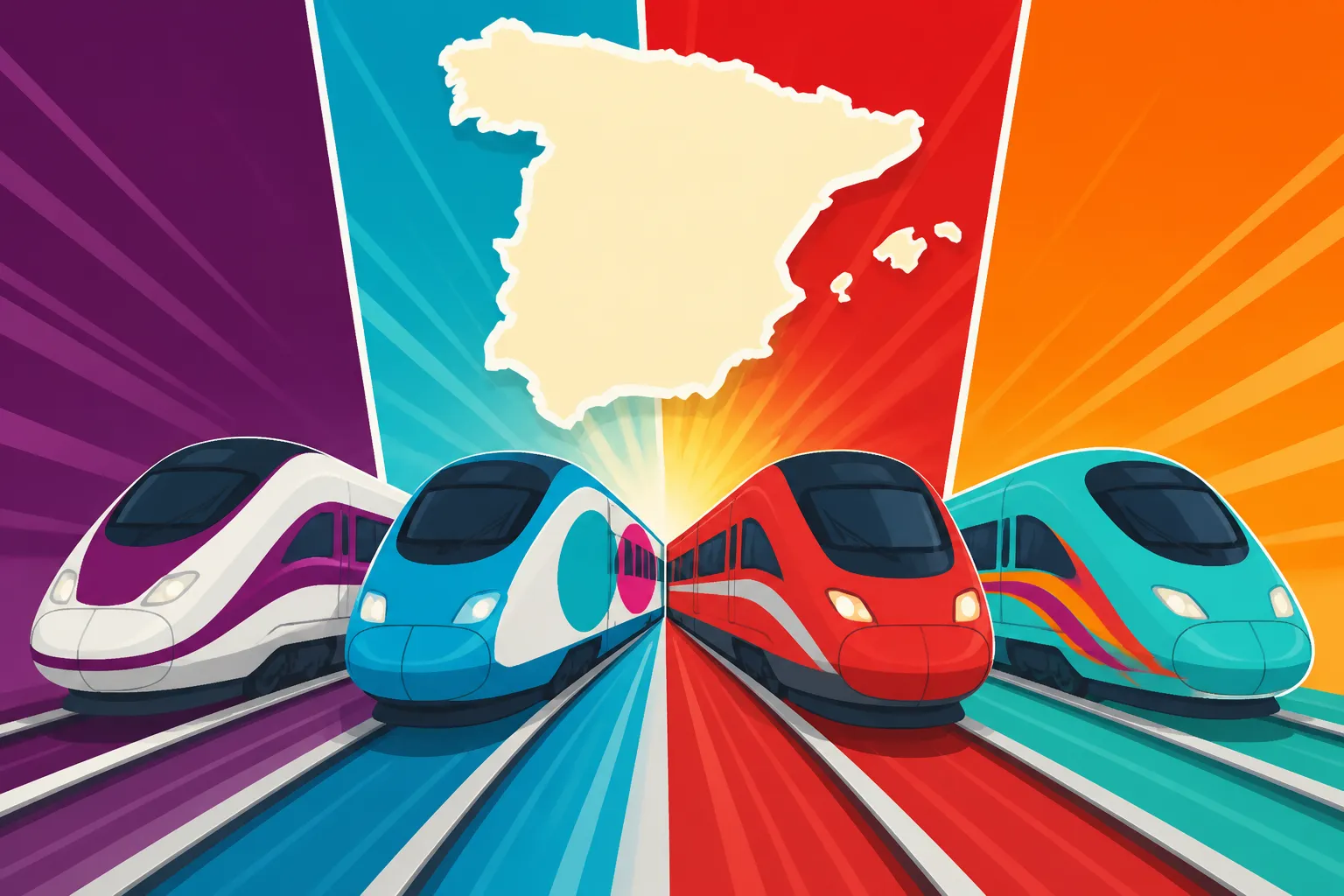
Renfe vs Ouigo vs Iryo vs Avlo: Spain’s High-Speed Competition Compared
When you first land in Spain, the thought of zipping across the country on a high-speed train might sound wonderfully simple. Then reality hits: a flurry of company names, different websites, varying fare structures, and a whole lot of Spanish to navigate. It can be truly bewildering trying to figure out if Renfe, Ouigo, Iryo, or Avlo is the best choice for your journey. This guide is here to untangle that knot for you, cutting through the confusion so you can pick the perfect high-speed train, often with the help of user-friendly platforms like Omio, which takes all the guesswork out of comparing these competing services.
Disclosure: This post may contain affiliate links. We may earn a commission at no extra cost to you if you make a purchase through these links. Read full disclosure.
The High-Speed Landscape: A New Era of Rail Travel in Spain
For decades, Renfe was the undisputed king of the tracks in Spain. A state-owned company, it held a monopoly on high-speed rail, offering the comfortable and (usually) reliable AVE service. But like many other European countries, Spain decided to open its railways to competition, and boy, has it spiced things up! Now, we have a vibrant mix of providers, each bringing their own flavor to the high-speed experience. For those of us living here or just visiting, this competition means more choices, often lower prices, but also, let's be honest, a bit more homework if you want to get the best deal.
Renfe: The Traditional Giant and Its Offerings (AVE and Avlo)
Renfe is the grand dame of Spanish railways. Its flagship AVE (Alta Velocidad Española) service has been whisking passengers between major cities for over 30 years. When you think high-speed rail in Spain, AVE is probably what comes to mind. It's known for its punctuality, comfort, and extensive network. For years, if you wanted to get from Madrid to Barcelona in less than three hours, AVE was your only real option.
The AVE experience tends to be a bit more premium. You'll often find more spacious seating, dedicated quiet carriages, and a buffet car. While prices can be higher, Renfe frequently offers promotions, and booking well in advance is almost always the key to snagging a good deal. Many expats, especially those a bit older or with specific needs, often gravitate towards Renfe's AVE for its reliability and what feels like a more traditional, perhaps less "budget" travel experience. It’s also the service many of us old-timers are most familiar with, and sometimes, familiarity just makes things easier.
Then there's Avlo, Renfe's answer to the new low-cost competition. Launched to specifically compete with Ouigo and Iryo, Avlo is Renfe's budget-friendly high-speed option. Think of it as the no-frills version of AVE. While it uses the same modern tracks and trains, the interior is typically a single class, often with less legroom and fewer amenities. Baggage allowances are usually stricter, and any extras like choosing your seat or bringing a large suitcase will cost you more. It's a fantastic option if you're pinching pennies and just want to get from A to B quickly and affordably. It still maintains Renfe’s reliability, which is a huge plus, but just be prepared for a slightly more utilitarian journey.
The New Kids on the Block: Ouigo and Iryo
The introduction of Ouigo and Iryo has been a game-changer, shattering Renfe’s monopoly and bringing down prices across the board. If you're looking for cheap train tickets, these are often where you'll start your search, and using a platform like Omio is incredibly helpful for seeing their prices alongside Renfe's.
Ouigo España is a French-owned company, a subsidiary of SNCF, France's national railway. It burst onto the scene in Spain with its distinctive pink and blue double-decker trains, offering incredibly competitive prices. Ouigo is a quintessential low-cost carrier, mirroring the airline model: a basic ticket gets you a seat and limited baggage, and everything else is an add-on. This means you might pay extra for things like choosing a seat, additional luggage, or even taking your pet. The double-decker trains offer a unique experience, allowing more passengers per journey, which helps keep costs down. While the "Ouibar" is a nice touch, don't expect the same level of luxury as AVE. It's fast, efficient, and often significantly cheaper, especially if you're a savvy packer and don't need many extras.
Iryo is the newest player, an Italian-Spanish consortium featuring Trenitalia. Their trains, known for their sleek, red "Frecciarossa" design, also offer high-speed connections with a focus on value and connectivity. Iryo positions itself as a slightly more premium budget option than Ouigo, often offering a bit more comfort and flexibility in its standard fares, but still aiming to be more affordable than traditional AVE. They emphasize their onboard Wi-Fi and power outlets, catering to business travelers and digital nomads. Similar to Ouigo, Iryo operates on a tiered fare system, where the base price is very attractive, but you'll pay more for added services like specific seat choices, extra baggage, or more flexible cancellation policies. Comparing these options side-by-side on Omio is truly the easiest way to see which one fits your needs and budget for any given trip.
Navigating the Routes: Where Can Each Train Take You?
When you’re planning your Spanish adventures, knowing which train goes where is half the battle. While all high-speed operators focus on the most popular intercity routes, their networks aren't identical. This is another area where Omio becomes an invaluable tool, showing you all available options for your specific departure and arrival points, regardless of the operator.
Core Connections: Madrid-Barcelona, Madrid-Valencia, Madrid-Seville
The busiest and most lucrative high-speed corridors in Spain are naturally where Renfe (AVE & Avlo), Ouigo, and Iryo compete fiercely, though not every operator runs every route.
- Madrid-Barcelona: This is the golden route, connecting Spain's two largest cities. You'll find all four services running multiple times a day. The journey is incredibly fast, often just 2.5 to 3 hours, making it a viable alternative to flying, especially when you factor in airport commute times. Because of the intense competition, this route frequently sees the best deals.
- Madrid-Valencia: Another incredibly popular route, whisking you from the capital to the vibrant Mediterranean coast in under two hours. Again, all operators serve this connection, offering plenty of choices throughout the day.
- Madrid-Seville: This route plunges into the heart of Andalusia. The journey is typically around 2.5 to 3 hours. Renfe's AVE has historically dominated this route, and while Iryo has joined in, Ouigo currently does not serve Seville directly. So, if you're heading south, your options might be slightly more limited but still highly competitive.
Expanding Networks and Future Plans
While the core routes are well-covered, the newer operators are still expanding their reach.
- Ouigo has traditionally focused on Madrid, Barcelona, and Valencia. They recently expanded to Alicante and are looking at eventually reaching other destinations like Seville and Malaga.
- Iryo launched with connections to Madrid, Barcelona, Valencia, Seville, and Malaga, essentially covering many of the main AVE routes. They also serve smaller cities along these corridors, like Zaragoza and Córdoba.
- Renfe's AVE network remains the most extensive, reaching places like Malaga, Granada, Valladolid, Leon, A Coruña, and even international connections to France. Avlo, their low-cost arm, primarily focuses on the main routes where competition is highest, like Madrid-Barcelona and Madrid-Valencia, with plans to expand to Seville and Malaga as well.
The takeaway here for us expats is that while competition is growing, Renfe still offers the widest reach, especially if you're traveling off the most beaten path. But always check what the others offer for your specific trip; you might be surprised to find a new option. A quick search on Omio for your desired destination will immediately show you all the companies that serve that route, saving you the hassle of checking multiple individual websites. It's a lifesaver, especially when you're also trying to plan your Traveling Around Spain: Trains, Buses, Flights, and Car Hire logistics for other legs of your trip.
Cracking the Code: Understanding Fares and Ticket Tiers
The biggest perk of this railway competition? The price wars! Gone are the days when a high-speed train ticket felt like a luxury item. Now, with a bit of planning (and the right tools), you can snag some incredible deals. However, it also means understanding the different fare structures, which can be a bit of a maze on each operator's site.
The Price Wars: How Competition Benefits Your Wallet
The arrival of Ouigo and Iryo has forced Renfe to respond, primarily through its budget Avlo service, but also by offering more competitive fares on AVE itself. This fierce competition means that for popular routes, you can often find tickets that are significantly cheaper than they were just a few years ago.
For example, a Madrid-Barcelona ticket that once reliably cost €50-€80 can now be found for as low as €9-€15 on Ouigo or Avlo if you book far enough in advance, especially outside peak times. Iryo often sits in a comfortable middle ground, offering competitive prices with a slightly more inclusive base fare.
The key to unlocking these savings is simple: book early. As with airlines, train ticket prices fluctuate based on demand, how far in advance you book, and the flexibility of the ticket. Weekends, holidays, and popular travel times (like Friday afternoons or Monday mornings) will always be more expensive.
Flexibility, Baggage, and Add-ons: What You're Really Paying For
This is where the "low-cost" model gets tricky, and it's essential to compare apples to apples when looking at prices. The base fare you see advertised might not include everything you need, and this is another excellent reason to use a platform like Omio that helps clarify what's included.
Here’s a general breakdown:
- Renfe (AVE): Typically includes a generous baggage allowance (usually three pieces, up to 25kg total, with dimensions specified). Standard tickets usually offer some flexibility for changes or cancellations, though premium fares offer more. You generally get seat selection included.
- Renfe (Avlo): More restrictive. A basic ticket usually includes one piece of hand luggage and one small bag. Anything larger, or choosing a specific seat, or changing your ticket, will incur an extra fee. If you’re traveling heavy, check the "equipaje extra" costs – they can quickly add up.
- Ouigo: Similar to Avlo, the basic ticket is very bare-bones. You typically get one small piece of cabin luggage and one hand bag. Larger luggage, seat selection, or flexibility options are all paid add-ons. They often have different "packages" (e.g., Ouigo Plus) that bundle some of these extras.
- Iryo: Offers various fare classes (Infinita, Singular, Inicial). The "Inicial" is the most basic, with specific baggage limits. Higher tiers like "Singular" or "Infinita" offer more legroom, more baggage, food options, and greater flexibility. Their base fares often include Wi-Fi and power outlets, which can be a real benefit.
Important Tip: Always, always consider your actual needs. If you’re traveling with a big suitcase, a pet, or need to stay connected for work, a slightly more expensive base fare with inclusions might end up being cheaper than a super-low base fare with a bunch of expensive add-ons. This is where Omio shines, allowing you to filter and see total costs, making the choice for your High-Speed Trains in Spain (AVE): Routes, Booking, and Savings much clearer. And remember, trying to navigate these options in Spanish on each company's website can be a nightmare if your Survival Spanish for Travelers: Key Phrases to Learn First isn't quite up to scratch!
Beyond the Ticket: Onboard Experience and Amenities
Once you’ve wrestled with the booking system and secured your ticket, what’s it actually like on board? This is where the different philosophies of each operator really come into play.
Comfort and Classes: From Basic to Premium
Each train company offers a range of comfort levels, from no-frills to business class.
- Renfe AVE: Traditionally, AVE trains have offered different classes: Estándar (Standard), Confort (Comfort, sometimes with larger seats or more legroom), and Elige (flexible fares with some premium services) or Premium (often with included meals and more amenities). The seating is generally comfortable, with good legroom, and the trains are well-maintained. Many trains have a "coche en silencio" (quiet carriage) for those who want to work or relax undisturbed.
- Renfe Avlo: This is typically a single-class service, designed for maximum capacity. Expect less legroom than AVE and a more functional, rather than luxurious, experience. It's clean and perfectly adequate for shorter journeys, but don't expect plush seating or a quiet carriage as standard.
- Ouigo: With its double-decker setup, Ouigo feels different from the start. Seats are generally a bit narrower, and legroom can be tighter, especially on the upper deck. It's a single class throughout, with an option to pay extra for XL seats for more space. The atmosphere tends to be more lively, sometimes even a bit noisy, making it less ideal if you're hoping for a tranquil ride.
- Iryo: Iryo offers multiple "flexible classes" or "areas," such as Inicial (standard), Singular (comfort), and Infinita (premium/first class). Even their Inicial class often feels a notch above Ouigo or Avlo in terms of seat comfort and aesthetics. Singular offers more spacious seating, and Infinita provides a truly premium experience with larger seats, at-seat service, and more. Their sleek red trains are modern and designed with a comfortable, contemporary feel.
If comfort is paramount, and budget allows, Renfe AVE or Iryo's higher classes are likely your best bet. If you just need a cheap, fast ride, Avlo and Ouigo are perfectly fine.
Food, Wi-Fi, and Entertainment: What to Expect
These amenities can make a big difference on a longer journey.
- Renfe AVE: Most AVE trains have a buffet car (cafetería) selling snacks, sandwiches, drinks, and sometimes simple hot meals. Some premium tickets might include at-seat meal service. Wi-Fi is usually available (sometimes for a fee or only in certain classes), and there might be power outlets. Renfe also has an entertainment platform, PlayRenfe, which you can access via Wi-Fi with movies, news, and games.
- Renfe Avlo: Offers a mobile bar service (carrito de bar) that comes through the carriages, but no dedicated buffet car. Wi-Fi is generally a paid extra, and entertainment options are minimal. Power outlets are usually available at each seat.
- Ouigo: Features the "Ouibar," a designated area with snacks, drinks, and a few hot items. It's usually on the lower deck of one of the carriages. Wi-Fi is a paid add-on, and while they might have some digital entertainment, it's not as comprehensive as PlayRenfe. Power outlets are usually available.
- Iryo: Puts a strong emphasis on onboard service. All classes usually have access to Wi-Fi included in the ticket, and power outlets at every seat. They have a "Bar Móvil" (mobile bar) and a dedicated dining area called "Haizea," offering fresh, local products. Higher-tier tickets often include premium food and beverage service delivered to your seat. They also offer their own entertainment portal.
For those of us who rely on connectivity, Iryo's inclusive Wi-Fi is a big draw. For a quick bite, all services have options, but Renfe AVE's buffet car and Iryo's Haizea offer a slightly more substantial experience. When booking, consider these small details, especially for longer journeys. And remember, you can always pack your own picnic – a classic expat move to save some Money for Travel in Spain: Cards, Cash, and ATMs!
The Booking Maze: Direct vs. Comparison Platforms
So, you've got an idea of which train service might suit you. Now comes the act of booking the ticket. This is where things can get incredibly messy or incredibly simple, depending on your approach. Trust me, after years of trial and error, I've learned that a good comparison platform is your best friend here.
Booking Directly: Pros and Cons of Each Operator's Website
Each high-speed train operator has its own website and, in some cases, a dedicated app.
- Renfe (AVE & Avlo): Renfe's website (renfe.com) has improved over the years, but it can still be a bit clunky, especially for non-Spanish speakers. It offers the full range of Renfe tickets, including AVE and Avlo, and any special promotions. The Renfe app is also quite functional.
- Pros: Access to all Renfe-specific deals, ability to manage your Renfe loyalty points (if you have them), and sometimes exclusive bundles.
- Cons: The interface can be challenging, language barriers can be frustrating, and you only see Renfe's options, not the competition. You'll need to know about How to Use the Renfe App to Plan Train Travel in Spain to get the most out of it.
- Ouigo: Ouigo's website (ouigo.com/es) is generally more user-friendly and designed with a low-cost, direct-to-consumer approach. It’s easier to navigate in English.
- Pros: Simple booking process, clear breakdown of add-on costs.
- Cons: Only shows Ouigo trains, so you miss out on potential better deals from other operators.
- Iryo: Iryo's website (iryo.eu/en) is modern, sleek, and generally intuitive, offering a good user experience in multiple languages.
- Pros: Easy to use, good clarity on different fare types and what they include.
- Cons: Again, it's a siloed experience; you only see Iryo's offerings.
The biggest "con" of booking directly with any one operator is that you're missing out on the full picture. You'd have to open three different tabs, input your dates and destinations into each, and then manually compare prices and services. This is tedious, time-consuming, and frankly, unnecessary.
The Smart Traveler's Choice: Why Omio Simplifies Everything
This is where a multi-modal comparison and booking platform like Omio becomes an absolute game-changer. Imagine having a single place where you can input your desired journey and instantly see all available high-speed train options from Renfe (AVE and Avlo), Ouigo, and Iryo, laid out side-by-side. That's exactly what Omio offers.
Omio aggregates data from all these different operators, presenting it in a clear, easy-to-understand format. You don't have to hop between websites or wrestle with different booking systems. You can literally see a €9 Ouigo ticket next to a €15 Avlo ticket and a €25 AVE ticket, along with their respective journey times, comfort levels, and what's included in the price. It's a lifesaver for navigating the Spanish Language and Everyday Communication for Visitors on various websites.
Here's why Omio is the hero for expats and tourists in Spain:
- Comprehensive Comparison: You see all the options. No more guessing if you've missed a cheaper or faster train on another site.
- Simplified Booking: Once you choose your preferred option, you can often book directly through Omio's platform, streamlining the entire process. This means one consistent interface, one payment process.
- Multilingual Support: Omio operates in many languages, removing the frustration of navigating Spanish-only booking sites or struggling with confusing translations.
- Clarity on Inclusions: While you still need to be mindful of baggage and extras, Omio's interface helps you see the different fare types and their associated benefits more clearly than some individual operator sites.
- Time-Saving: This is huge. Instead of spending an hour researching, you can find and book your ticket in minutes. Time is precious, especially when you're busy with the joys of living abroad.
- Beyond Trains: Omio also compares buses and flights for many routes, giving you a full spectrum of travel choices, which is incredibly useful for planning your overall Public Transport in Spain: Cards, Discounts, and Etiquette strategy.
For anyone traveling in Spain, whether you're a seasoned expat or a fresh-faced tourist, using a platform like Omio is just plain smart. It takes the stress out of comparison shopping and ensures you're getting the best value for your journey.
Making Your Choice: Which High-Speed Train is Right for You?
Ultimately, the "best" high-speed train service in Spain really depends on your individual priorities for each trip. There's no one-size-fits-all answer, but by understanding the nuances, you can make an informed decision. And again, platforms like Omio empower you to do this efficiently.
Budget vs. Comfort: Balancing Your Priorities
This is the eternal travel dilemma, and it applies perfectly to Spain's high-speed trains:
- If budget is your absolute top priority: Ouigo and Avlo are usually your best bets. Book well in advance, travel light, and be flexible with your timings to snag the lowest fares. Just remember to factor in potential add-on costs for larger luggage or specific seat preferences. Don’t forget to check these options on Omio to ensure you’re really seeing the absolute cheapest price after all those little extras are considered.
- If comfort and a more premium experience are key: Renfe AVE or Iryo's higher classes (Singular, Infinita) will likely appeal more. You'll generally get more spacious seating, better onboard amenities, and a quieter journey. These are great for longer trips or if you just want to relax.
- If you want a good balance of value and comfort: Iryo's Inicial class or slightly upgraded Renfe AVE fares (especially with early booking) often strike a fantastic balance. They provide a modern, comfortable ride without breaking the bank. Iryo, in particular, often offers a good experience even at its more basic levels, with Wi-Fi usually included.
Think about the purpose of your trip. Are you backpacking and trying to keep your Cost of Living in Spain: Realistic Budgets and Savings Tips low? Go for Ouigo or Avlo. Are you traveling for a business meeting and need reliable Wi-Fi and a quiet space to work? Iryo or AVE might be worth the extra euro.
Time-Saving Strategies and Practical Tips for Expats
Here are a few extra pointers to make your Spanish train travel as smooth as possible:
- Book Early, Especially for Peak Times: This cannot be stressed enough. High-speed train tickets, especially the cheapest ones, sell out fast. If you know your travel dates, try to book at least 2-4 weeks in advance. For holidays or major events, even earlier. This is also how you get the best deals when you're trying to figure out How Early Should You Book High-Speed Trains in Spain?.
- Be Flexible with Travel Times: Mid-week travel (Tuesday-Thursday) and off-peak hours (early morning or late evening) are almost always cheaper than peak rush hours or weekend trips.
- Factor in Station Location: While all these trains use central stations in major cities (e.g., Madrid Atocha, Barcelona Sants), ensure you know how to get to and from the station. For some, the cost and time of local transport to the airport might make the train a more attractive door-to-door option anyway.
- Arrive Early: Spain’s high-speed trains typically have security checks (like an airport, but much faster). Give yourself at least 20-30 minutes before departure, especially at busy stations like Madrid Atocha or Barcelona Sants. The gates usually close a few minutes before departure, and they will leave without you.
- Keep Documents Handy: You'll need your ticket (digital or printed) and ID (passport or TIE/DNI) ready for checks.
- Stay Hydrated in Summer: Spanish trains are well air-conditioned, but if you're traveling during a Heatwaves in Spain: Health Precautions for Expats, it's always good to have water, especially if you opted for a service without a dedicated buffet car.
The proliferation of high-speed train options in Spain is undeniably a boon for travelers. It means more flexibility, more choice, and often, much more affordable fares. While it might initially seem daunting to navigate the options from Renfe, Ouigo, Iryo, and Avlo, remember that you don't have to do it alone. Utilizing a platform like Omio simplifies the entire process, allowing you to quickly compare, select, and book the perfect train ticket for your Spanish adventure, ensuring you get the best deal without the headache. Happy travels!
Comparative Overview of Spain's High-Speed Train Services
To help you visualize the differences, here's a handy table summarizing the key aspects of Renfe (AVE), Renfe (Avlo), Ouigo, and Iryo:
| Feature | Renfe (AVE) | Renfe (Avlo) | Ouigo | Iryo |
|---|---|---|---|---|
| Operator | State-owned (Spain) | State-owned (Spain) | SNCF (France) | Trenitalia/Air Nostrum (Italy/Spain) |
| Target Market | Standard/Premium | Budget | Budget | Value/Business |
| Train Type | Various (e.g., S-100, S-102) | S-112, S-106 | Double-decker (Alstom Euroduplex) | Frecciarossa 1000 |
| Routes Served | Most extensive high-speed network | Main competitive routes | Madrid-Barcelona, Madrid-Valencia, Madrid-Alicante | Madrid-Barcelona, Madrid-Valencia, Madrid-Seville, Madrid-Malaga |
| Base Fare Baggage | Generous (3 pcs, up to 25kg) | 1 cabin bag, 1 hand bag | 1 cabin bag, 1 hand bag | Specific limits (Inicial) |
| Add-ons for Baggage | Extra for very large/additional | Yes, for larger/additional | Yes, for larger/additional | Yes, for larger/additional |
| Seating Comfort | High, multiple classes | Standard, single class | Standard, compact | High, multiple flexible classes |
| Wi-Fi | Often available (sometimes paid/tiered) | Paid extra | Paid extra | Usually included |
| Onboard Food | Buffet car, sometimes at-seat service | Mobile bar service | Ouibar (dedicated bar car) | Bar Móvil, Haizea (restaurant), at-seat service |
| Punctuality | High reputation | High reputation | Good | Good |
| Flexibility | Depends on fare, usually good | Limited, paid for changes | Limited, paid for changes | Depends on fare, can be good |
| Booking Difficulty | Can be complex for non-Spanish speakers | Can be complex for non-Spanish speakers | Generally straightforward | Generally straightforward |
| Best For | Wide network, comfort, reliability | Budget travel, core routes | Cheapest fares, budget-conscious | Good balance, Wi-Fi, modern comfort |
Remember that prices and specific services can change, so always check the latest information when planning your journey.
Disclaimer
The information provided in this guide is intended for general informational purposes only and may not be exhaustive or entirely up-to-date. Train schedules, prices, policies, and routes are subject to change by the respective operators without prior notice. While platforms like Omio strive for accuracy, it is always advisable to double-check specific details directly with the chosen train operator before making final travel arrangements. This content is not legal, financial, or travel advice.