How to Dress for Churches and Religious Sites in Spain
Ah, navigating the cultural nuances of a new country, especially one as rich in tradition as Spain, can sometimes feel like trying to solve a Rubik's Cube blindfolded! One common head-scratcher for many visitors, and even some new expats, is figuring out what to wear when stepping into Spain's breathtaking churches, cathedrals, and other sacred sites. It’s not just about comfort; it's about showing respect, and this guide is here to walk you through the unspoken rules so you can explore these magnificent places with confidence and cultural sensitivity.
Disclosure: This post may contain affiliate links. We may earn a commission at no extra cost to you if you make a purchase through these links. Read full disclosure.
Understanding the Cultural Significance of Spanish Religious Sites
When you first arrive in Spain, you're immediately struck by the sheer beauty and historical depth of its religious architecture. From the grand Catedral de Sevilla to the humble local ermitas dotting the countryside, these aren't just old buildings; they are living, breathing centers of faith and community.
More Than Just Tourist Attractions
It’s easy to view Spain’s cathedrals and churches as incredible historical monuments or artistic masterpieces – and they absolutely are! But for many Spaniards, especially in smaller towns and villages, these are still active places of worship where daily mass, baptisms, weddings, and funerals take place. They are sacred spaces, imbued with centuries of devotion, and locals treat them with a reverence that might not always be immediately apparent to an outside observer. Walking into a majestic cathedral like the Sagrada Família, it’s easy to get lost in the architecture and forget that people are there to pray, to reflect, or to light a candle for a loved one. Understanding this distinction is the first step in appreciating why dressing appropriately matters so much. It's about respecting not just the building, but the people and the deeply held beliefs that continue to animate these sites. This respect extends to your actions as well; keeping your voice down and refraining from flash photography are other crucial ways to show consideration. For more on navigating Spain's social waters, check out our guide on Spanish Customs, Etiquette, and Social Life.
Regional Nuances and Local Expectations
While there's a general expectation of modesty across Spain, it’s fair to say that the interpretation can vary ever so slightly depending on where you are. In more traditionally conservative regions, particularly parts of Andalusia or rural areas, expectations might lean a bit stricter. For instance, in a small town in Extremadura, you might find locals dressed more formally for Sunday mass than you would in a bustling city like Barcelona or Valencia.
Conversely, in major tourist hubs, cathedral staff might be more accustomed to seeing a wider range of attire. However, this doesn't mean the rules are thrown out the window. They might have a basket of shawls at the entrance, or simply deny entry if someone is deemed inappropriately dressed. It’s always better to err on the side of caution. If you’re planning a trip around different regions, researching When to Visit Each Spanish Region for the Best Weather can also help you pack versatile clothing that meets both climate and cultural expectations.
The Core Principles of Appropriate Attire
When it comes to visiting religious sites in Spain, the key is modesty and respect. Think of it as dressing for a formal event, but with a focus on covering rather than showcasing.
Covering Shoulders and Knees: The Golden Rule
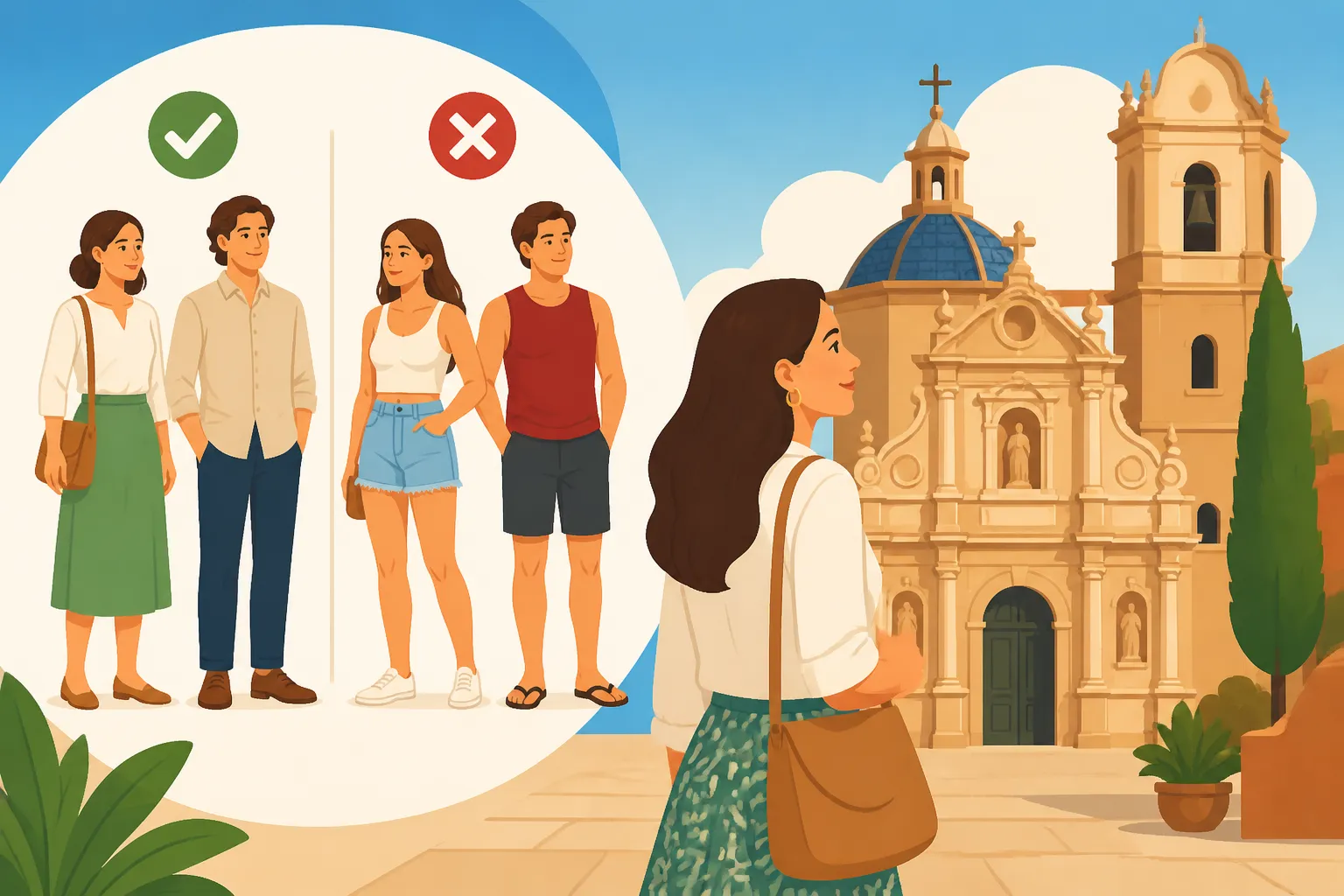
This is, without a doubt, the most important guideline. Both men and women are expected to have their shoulders and knees covered.
For women, this means avoiding:
- Strapless tops, spaghetti straps, or very thin-strapped tank tops. Even a wide-strapped tank top might be pushing it in some places, so if in doubt, cover up.
- Short shorts, mini-skirts, or dresses that fall above the knee. A good rule of thumb is that your skirt or dress should at least reach your knees, ideally below them.
- Deep necklines or overly revealing blouses. Modesty at the top is just as important as covering your limbs.
For men, this means avoiding:
- Sleeveless shirts or tank tops. A short-sleeved t-shirt is generally acceptable, but bare arms are usually not.
- Short shorts. Just like for women, shorts that expose the knee are typically frowned upon. Long shorts (Bermuda shorts) that come to or just below the knee might be acceptable in some very casual, heavily tourist-oriented sites, but full-length trousers are always the safest bet.
Hypothetically, imagine you’re strolling through a sun-drenched city like Seville in July. You’re wearing a lovely sundress with thin straps and a hemline above your knee. You spot the grand Catedral de Sevilla and think, "I must go in!" At the entrance, you might be met with a polite but firm "Lo siento, no es posible" (Sorry, it's not possible) from staff. This isn’t to be rude, but to uphold the sanctity of the space. It's a common scenario, and one you definitely want to avoid after potentially traveling a long way to see such an iconic site. Always carry a lightweight scarf or shawl!
Modesty in Fabric and Fit
Beyond just covering skin, the type of clothing also plays a role. While you don't need to wear formal evening wear, overly casual or revealing clothing in terms of fabric or fit can also be seen as disrespectful.
- Avoid overly sheer or transparent fabrics that, while covering, still reveal too much.
- Opt for clothing that isn't excessively tight or body-hugging, which can also be perceived as immodest. Loose-fitting garments in breathable fabrics like linen or cotton are perfect for warm Spanish weather and respectful for religious sites.
- Keep swimwear completely out of the picture. Even if you’re just coming from the beach, changing into proper street clothes before visiting a church is non-negotiable.
Consider a scenario where you've booked a wonderful walking tour through a city like Toledo via a service like GetYourGuide, and a cathedral visit is on the itinerary. While your guide might remind you, it's ultimately your responsibility to be dressed appropriately. A sheer blouse, even if long-sleeved, might still attract unwanted attention or even prevent entry if deemed too revealing by the staff.
Head Covering? Mostly Not Required, But Respectful in Some Cases
For women, a head covering is generally not a requirement for entry into Catholic churches in Spain, unlike in some other religious traditions or countries. You won’t see most Spanish women covering their heads unless it's for a very specific religious ceremony or personal devotion.
However, carrying a lightweight scarf or shawl, which you can use to cover your shoulders, can also be a sign of extra respect if you choose to drape it over your head briefly upon entering, particularly in very traditional or solemn settings. It's a personal choice, but not an obligation. I've often seen older women in small villages do this, and while not expected of tourists, it's certainly appreciated by some.
Practical Dressing Strategies for Different Seasons and Situations
Spain's climate varies wildly depending on the region and time of year, which can make planning your wardrobe for cultural visits a bit tricky. But with a few smart strategies, you can stay comfortable and respectful.
Dressing for Summer Heat Without Disrespect
Summer in Spain, especially in the south, can be scorching. Temperatures often soar above 30°C (86°F), making the thought of long sleeves and trousers unbearable. However, there are ways to remain cool and appropriate:
- Lightweight, Breathable Fabrics: Linen, cotton, and rayon are your best friends. These fabrics breathe, allowing air circulation and wicking away sweat.
- Loose-Fitting Garments: Maxi dresses, flowing skirts, and wide-leg linen trousers are excellent choices. For men, light linen trousers or chinos are far more comfortable than jeans in the heat.
- The Versatile Scarf/Shawl: This is your secret weapon. For women, carry a large, lightweight scarf. If your top has thin straps, you can drape it over your shoulders. If your skirt is a little short, you can wrap it around your waist to extend the length temporarily. Men, while they can't use a scarf in the same way, should simply ensure they are wearing a t-shirt or collared shirt.
- Long-Sleeved Linen Shirts: These are fantastic for both men and women in the summer heat. They protect you from the sun and meet the "shoulders covered" rule effortlessly. Plus, they look rather chic!
Imagine planning a summer trip and finding affordable train tickets or flights on Omio to explore multiple cities. You’ll be grateful for clothes that transition easily from a sunny plaza to a cool, dark church interior without needing a full wardrobe change.
Layering for Cooler Months and Variable Interiors
During the cooler months (late autumn, winter, early spring), especially in central and northern Spain, temperatures can drop significantly. Even in summer, some large stone cathedrals can be surprisingly cool inside, making a light cover-up a good idea.
- Cardigans, Jackets, and Light Sweaters: These are perfect for layering. You can easily add or remove them as you move between warm outdoor areas and cooler indoor sites.
- Base Layers: If it's truly cold, a long-sleeved thermal top under a regular shirt can keep you warm while still allowing you to adhere to dress codes.
- Closed-Toe Shoes: While not strictly a dress code item, they are more practical and respectful for cooler weather and extensive walking than sandals.
When the weather is unpredictable, like during spring or autumn, having layers ensures you're prepared for anything. You might start your day with a long-sleeved top and a light jacket, then shed the jacket as the sun warms up, only to put it back on when you step into the cool interior of a centuries-old church.
Footwear Considerations
While there usually isn't a strict footwear dress code for religious sites, common sense and respect prevail.
- Comfortable, Closed-Toe Shoes are Best: You'll likely be doing a lot of walking, so comfortable shoes are paramount. Sneakers, loafers, or smart flats are ideal.
- Avoid Beachwear: Flip-flops, while great for the beach or poolside, are generally too casual for a sacred space. Open-toed sandals are usually fine, provided they are clean and in good condition, but again, if you want to err on the side of reverence, closed-toe is better.
- Heels: While perfectly fine, remember you'll be on your feet, often on uneven cobblestones or ancient stone floors. Prioritize comfort over extreme style.
I've learned from personal experience that exploring Spain means lots of walking, sometimes for miles! So, while you want to be respectful, you also don't want to hobble out of the Mezquita-Cathedral de Córdoba with blisters. Practical yet polished footwear is the way to go.
Common Mistakes and How to Avoid Them
Even with the best intentions, it's easy to make a fashion faux pas when traveling. Here are a couple of common pitfalls to watch out for.
The "Beach Attire" Blunder
This is perhaps the most frequent mistake tourists make. You've spent a glorious morning on the beach, perhaps at La Concha in San Sebastián, or on a beautiful cove in the Balearic Islands. The sun is shining, and you're feeling relaxed. You decide to pop into a nearby church or cathedral still dressed in your swimwear covered by a thin sarong, or men in just shorts and no shirt.
This is a definite no-go. Religious sites are not an extension of the beach or pool area. Even with a sarong, swimwear is too casual and often too revealing. Always plan to change into proper street clothes if you intend to visit a religious site after beach time. If you’re staying near a beach, many accommodations found on platforms like Booking.com will allow you to quickly change before heading out to cultural sites.
Forgetting a Cover-Up
You're dressed perfectly for a warm Spanish day: a lovely sleeveless dress or a breezy tank top with flowy trousers. You might think, "Oh, I'll just be in and out." Then you arrive at the cathedral, ready to admire its grandeur, only to find a sign (often in multiple languages) or a staff member politely informing you that your shoulders aren't covered, and therefore, entry is denied.
This is where the versatile scarf or shawl becomes a lifesaver. Keep one folded in your day bag. It takes up minimal space and can be quickly deployed to cover shoulders or even knees in a pinch. It's a small item that can prevent a lot of disappointment and ensure you don't miss out on seeing some of Spain's most iconic treasures. I have a collection of lightweight scarves I rotate, specifically for this purpose. They're also great for a bit of sun protection or as a makeshift picnic blanket!
What to Do If You're Unprepared (and Don't Want to Miss Out!)
Despite your best efforts, sometimes you find yourself in front of a stunning religious site, completely unprepared for the dress code. Don't panic! You might still have options.
Quick Fixes and Improvised Solutions
- Buy a Scarf: Many popular tourist areas around major cathedrals will have street vendors or small shops selling inexpensive scarves or shawls specifically for this purpose. It might not be your ideal fashion statement, but it will get you inside!
- Use a Jacket or Sweater: If you happen to have a jacket or sweater tied around your waist, you can wear it to cover your shoulders. For women, if your skirt is too short, sometimes a jacket tied around your waist can extend the visual length enough to pass muster.
- Ask for a Loan: Some of the larger, more tourist-focused cathedrals (like the Mezquita-Cathedral in Córdoba) may offer paper or fabric shawls for loan at the entrance, though this is not guaranteed everywhere. It’s always worth asking politely, "Disculpe, ¿tienen algo para cubrir los hombros?" (Excuse me, do you have something to cover shoulders?).
- Return Later: If all else fails, and you're truly intent on seeing the site, you might have to adjust your plans, head back to your accommodation, change into appropriate attire, and return. This is where a bit of planning, perhaps looking up public transport options in Spain or mapping out your daily itinerary, really pays off.
Respecting Entry Restrictions
It’s crucial to understand that if a staff member denies you entry due to inappropriate dress, they are simply doing their job. Arguing or becoming defensive will not change the outcome and will only create an unpleasant situation. Respect their decision, apologize if you weren't aware, and either find a quick fix or make plans to return later. Remember, these rules are in place to maintain the dignity and sanctity of the religious space.
Do's and Don'ts for Dressing at Religious Sites
To help you remember, here’s a quick summary table:
| DO | DON'T |
|---|---|
| Cover shoulders and knees. | Wear spaghetti straps, tube tops, or strapless. |
| Opt for modest necklines. | Wear deep V-necks or overly revealing tops. |
| Choose loose-fitting, breathable fabrics. | Wear overly tight or sheer clothing. |
| Wear trousers, long shorts (men), or skirts/dresses to the knee or below. | Wear short shorts, mini-skirts, or high-cut dresses. |
| Carry a versatile scarf/shawl. | Show excessive skin, even if covered by thin fabric. |
| Wear comfortable, clean closed-toe shoes. | Wear beach flip-flops or swimwear (even with a cover-up). |
| Dress as if attending a respectful event. | Treat it like a casual outing or beach day. |
Navigating the cultural expectations of a new country is part of the adventure, and when it comes to Spain's awe-inspiring religious sites, a little preparation goes a long way. By dressing thoughtfully, you not only ensure your entry but also demonstrate respect for the deep-seated traditions and faith that these beautiful places embody. So go forth, explore, and immerse yourself in Spain's incredible heritage with confidence!
Disclaimer
The information provided in this guide is for general informational purposes only and is based on common cultural practices and observations in Spain. While every effort has been made to ensure accuracy, specific rules or interpretations may vary by individual religious sites, local customs, or regional directives. It is always advisable to check the specific requirements of any particular site you plan to visit, especially for special events or ceremonies.