How to See a Real Flamenco Show (Not a Tourist One)
Many travelers arrive in Spain with a romantic vision of flamenco, only to find themselves ushered into a crowded room with a plate of frozen paella and a performance that feels more like a rehearsed theme park attraction than a soul-stirring art form. This guide is designed to help you navigate the crowded landscape of commercial venues and find the raw, authentic flamenco that locals actually respect, ensuring your experience is one of genuine cultural connection.
Disclosure: This post may contain affiliate links. We may earn a commission at no extra cost to you if you make a purchase through these links. Read full disclosure.
Understanding the Difference Between a Tablao and a Peña
When you first start looking for flamenco, you will inevitably run into the word "tablao." A tablao is a professional venue specifically designed for flamenco performances. While some are excellent, many are what we call "tourist traps." They offer dinner and a show, but the prices are often inflated, and the performance can feel mechanical because the artists are doing the same set three times a night for people who might not know the difference. If you have already used Booking.com to secure a hotel in a major city center, you are likely within walking distance of several of these, but I urge you to look a bit further afield.
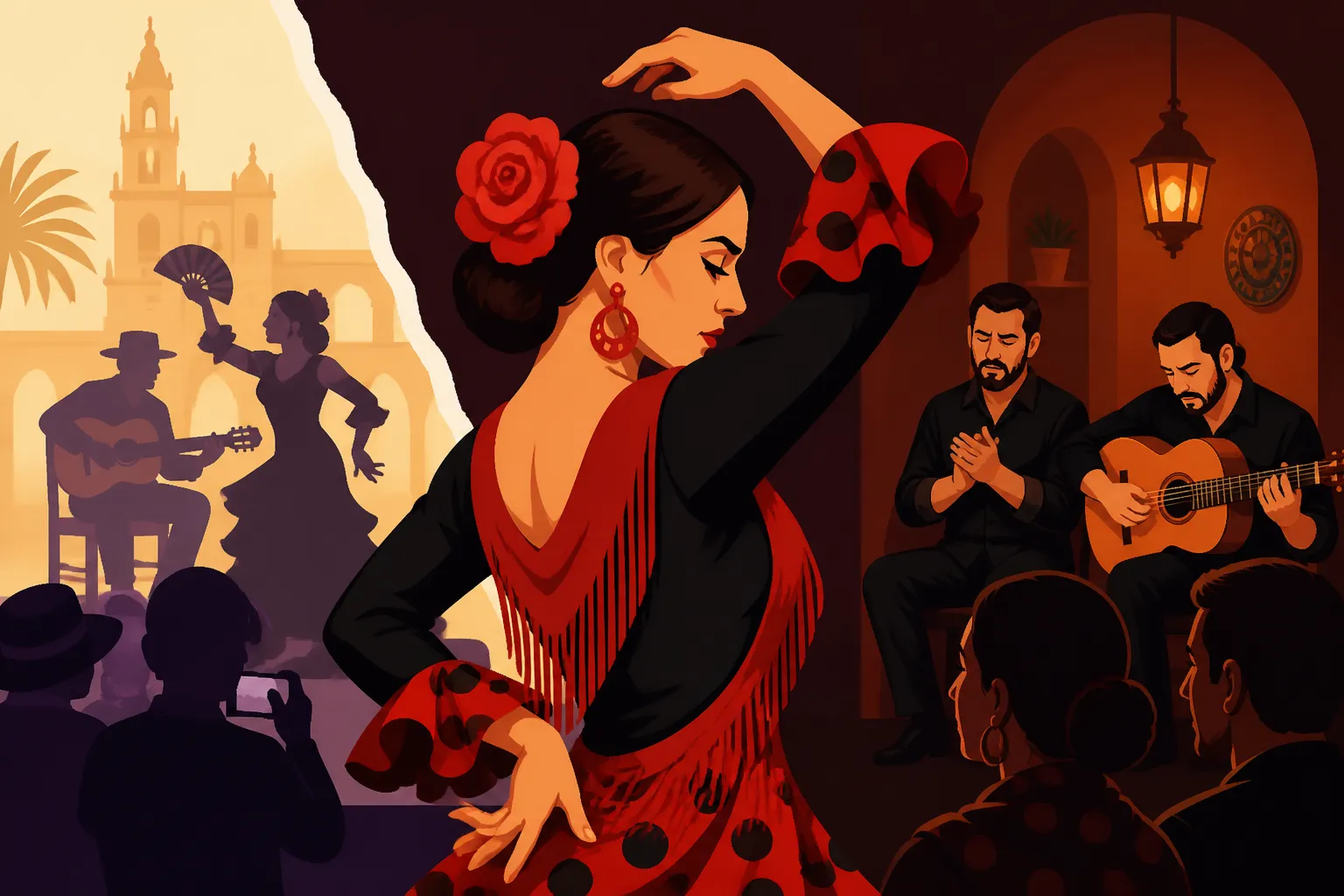
The alternative, and the gold standard for authenticity, is the "peña flamenca." A peña is essentially a private cultural club or association of flamenco aficionados. These are non-profit organizations dedicated to preserving the art form. The atmosphere is vastly different; it is usually a simple room with a small stage, plastic chairs, and a bar serving cheap wine and simple tapas. The audience consists of people who have studied flamenco their entire lives. When you watch a show at a peña, the artists are performing for their peers, which pushes them to a level of intensity and improvisation you simply won’t find in a commercial venue.
Finding a peña can be a bit of a hurdle because they don’t always have a polished web presence. You often have to look for posters in local bars or check specific Facebook groups for the neighborhood you are staying in. However, the effort is worth it. In a peña, you aren't just a customer; you are a guest in a community. The raw emotion, or "duende," is much more likely to manifest when the performer feels a genuine connection with a knowledgeable audience. If you are exploring the deeper aspects of Spanish Food and Drink: A Practical Culture Guide, you will find that the simple, honest offerings at a peña perfectly complement the intensity of the music.
Key Indicators of an Authentic Flamenco Performance
Recognizing an authentic show before you buy a ticket requires a bit of detective work. One of the first things I tell friends is to look at the scheduled time of the performance. If a venue offers "early bird" shows at 6:00 PM or 7:00 PM, it is almost certainly catering exclusively to tourists. Real flamenco in Spain usually starts late. A show beginning at 9:30 PM or 10:00 PM is a much better sign that you are entering the local rhythm of life. For more on how timing affects your trip, check out our guide on Spanish Meal Times and Dining Etiquette Explained.
Another major red flag is the inclusion of a full dinner in the ticket price. In the flamenco world, the music is the main event. If you are being served a three-course meal while the dancers are on stage, the focus is diverted. In a truly authentic setting, the most you will have is a glass of sherry or a small plate of jamón. The "dinner and show" model is a commercial invention. Authenticity thrives on silence and attention. If you want a great meal, I suggest diving into Spanish Tapas Culture: How to Order and Where to Go before or after the performance at a separate, dedicated establishment.
The size of the group on stage is also a giveaway. You don't need a troupe of twenty dancers for a moving performance. In fact, some of the most powerful flamenco involves just three people: a "cantaor" (singer), a "tocaor" (guitarist), and a "bailaor" or "bailaora" (dancer). The intimacy of a small group allows for the improvisation that is the heartbeat of flamenco. If you see advertisements for "Flamenco Ballets" or large-scale productions with elaborate lighting and synchronized choreography, you are moving into the realm of musical theater rather than traditional flamenco.
| Feature | Authentic Peña/Small Venue | Commercial Tablao/Tourist Show |
|---|---|---|
| Audience | Local aficionados and students | Primarily foreign tourists |
| Food/Drink | Simple bar, small tapas | Full multi-course dinner included |
| Start Time | 9:30 PM or later | Multiple slots starting as early as 6:00 PM |
| Atmosphere | Raw, quiet, respectful | Noisy, focus on photography/eating |
| Cost | 10 to 20 Euros (often just a donation) | 40 to 90 Euros |
| Performers | Local talent, often improvising | Professional troupe, choreographed set |
Where to Find Real Flamenco City by City
If you are planning your route through the country, perhaps using Omio to book your train or bus tickets, you’ll notice that flamenco's heart beats strongest in the south. However, Madrid remains a critical hub for the art form because it is where the most successful artists go to make their names.
Seville: The Heart of the Art
Seville is arguably the most famous city for flamenco, particularly the neighborhood of Triana across the river. To avoid the traps, look for venues like Casa de la Memoria. While these are technically for visitors, they maintain a very high standard and do not serve food during the show. For a deeper dive, seek out a peña like Peña Flamenca Niño de la Alfalfa. Be prepared to stand in the back and be very quiet. Seville is also a great place to observe Spanish Customs, Etiquette, and Social Life in action, as the social rules around flamenco are quite strict.
Madrid: The Gateway to Professionalism
Madrid has a high concentration of tablaos, but some have managed to keep their integrity. Corral de la Morería is world-famous and, despite its fame, often hosts top-tier talent. However, for a more "underground" feel, look for Flamenco de Leones or small associations in the Lavapiés district. Madrid is where you see the technical perfection of the art. If you are staying in the capital, you might also find it useful to read Madrid for First-Time Visitors: Neighborhoods and Highlights to understand which areas are more likely to house these hidden gems.
Granada: The Sacred Caves of Sacromonte
Granada offers a unique style called "Zambra," which was traditionally performed in the caves of the Sacromonte district by the Roma community. Many of these caves are now very touristy, but if you go higher up the hill and look for smaller, less-advertised spots like Venta El Gallo (which can be touristy but often has great dancers) or the local peñas in the Albaicín, you can still feel the history. Granada's flamenco is deeply tied to its Moorish and Roma heritage, which we discuss further in Andalusia for Travelers: Cities, Coast, and Culture.
Practical Tips for Planning Your Flamenco Evening
Once you've identified a promising venue, there are several logistical steps to ensure the night goes smoothly. First, don't just show up and expect a seat if it's a well-known peña or a high-quality small venue. Even the non-commercial spots often have a limited capacity. If they don't have an online booking system, try sending a message via WhatsApp—this is the primary mode of communication for small businesses in Spain. You can often find their number on their Google Maps listing or Facebook page.
Transportation and Timing
Because the best shows start late, you need to consider how you will get back to your accommodation. In cities like Madrid and Barcelona, the Metro closes around 1:30 AM or 2:00 AM on weekends, but much earlier on weekdays. If you’ve traveled between cities using Traveling Around Spain: Trains, Buses, Flights, and Car Hire, you’re already familiar with the national transport, but local night buses (Búhos) are your friends after midnight. Alternatively, apps like Cabify or Uber are widely available and safe. Always have your address written down or saved in your phone to avoid confusion with the driver.
Etiquette and Respecting the Duende
This is perhaps the most important part of seeing real flamenco. Flamenco is not a background activity. When the performance begins, silence is mandatory. Unlike a jazz club where people might talk over the music, a flamenco venue should be pin-drop quiet. The only acceptable interruptions are the occasional "¡Olé!" or "¡Eso es!" when a performer does something particularly impressive, but as a visitor, it is usually better to wait for the locals to lead the way.
Do not take photos or videos unless it is explicitly stated that it is allowed. Often, there is a designated "photo minute" at the very end of the show. Constant filming is seen as incredibly disrespectful to the artists, as it breaks the emotional flow and the intimacy of the room. This is a key part of Staying Safe in Spain: Common-Sense Tips for Travelers—respecting local norms prevents friction and ensures you are welcomed back. Finally, if you are wondering about the social etiquette of the bar, our guide on Tipping in Spain: When, Where, and How Much will help you navigate the bill at the end of the night.
How to Support the Artists Beyond the Ticket
If you find a performer whose work truly moves you, check if they have a CD or a social media presence. Many flamenco artists struggle to make a living outside of the commercial circuit, and a direct follow or a small purchase goes a long way. You might even find that some of the venues listed on GetYourGuide are small workshops or classes where you can learn the basics of the rhythm (compás), which will give you a much deeper appreciation the next time you watch a professional.
While it is tempting to take the easy path and book the first "Flamenco and Paella" package you see on a street flyer, the reward for doing your research is a memory that will stay with you long after you leave Spain. Real flamenco is an experience of the gut and the heart, not just the eyes. By seeking out the peñas and the late-night sessions, you are participating in a living tradition that remains one of the most powerful expressions of the human condition.
Disclaimer
The information provided in this guide is for educational and informational purposes only. While every effort has been made to ensure accuracy, venue schedules, pricing, and accessibility can change without notice. We recommend verifying specific details directly with the venues or through local tourist offices before making travel arrangements. Our mentions of third-party services are for contextual convenience and do not constitute a legal endorsement. Always prioritize your personal safety and follow local regulations when exploring nightlife in Spain.