How to Order Tapas in Spain Without Overdoing It
Oh, the glorious, chaotic, and often utterly overwhelming world of Spanish tapas! I've been there, standing in a bustling bar, eyes wide, trying to decipher a chalked menu, wondering if I'm ordering enough, too much, or committing some unspeakable culinary sin. It's a rite of passage for every expat and tourist in Spain, that moment you realize tapas isn't just "small plates" – it's an entire social universe. If you've ever felt like you've ordered enough food to feed a small village, or conversely, left hungry because you were too scared to try, this guide is for you. We're going to break down the art of the tapeo so you can savor every bite without the stress.
Disclosure: This post may contain affiliate links. We may earn a commission at no extra cost to you if you make a purchase through these links. Read full disclosure.
Understanding Tapas Culture: More Than Just Food
When you first arrive in Spain, the concept of "tapas" seems simple enough: small portions of food. But quickly, you realize it's far more nuanced, deeply ingrained in the Spanish way of life. It's a social lubricant, a reason to gather, and a culinary adventure all rolled into one. You see, tapas isn't typically about sitting down for a quiet, formal meal; it's about movement, sharing, and the vibrant hum of conversation.
The Social Ritual of Tapas: Why It's Different
Forget the idea of a starter, main, and dessert. When you go for tapas, or ir de tapas, you're engaging in a dynamic social ritual. It's a chance to meet friends after work, catch up, and enjoy a variety of flavors without committing to a single dish. You’ll notice groups standing around high tables or at the bar, chatting animatedly, with a small plate or two and a drink in hand. The beauty of it is that you rarely stay in one place. The true tapeo involves hopping from one bar to the next, trying a specialty at each. One place might be known for its incredible tortilla de patatas, while the next boasts the best croquetas. This constant movement keeps the experience fresh and allows you to sample a wider array of local delights. It's a fantastic way to experience Spanish culture firsthand, observing the lively banter and the easy flow of interaction.
This social aspect is key to understanding how not to overdo it. Since you're expected to move, you're not meant to fill up completely at the first stop. Each bar is a taste, a snippet, before you move on to the next. It encourages a lighter approach to ordering, making it easier to manage your intake. If you're planning a trip around Spain and want to delve into this local experience, consider how you'll travel between cities to maximize your tapas tours; resources like Omio can help you find efficient train or bus routes that connect different culinary hotspots, ensuring you can hop between regions and their unique tapas styles.
Types of Tapas: A Quick Overview
The word "tapa" literally means "lid" or "cover," stemming from the old practice of covering a glass of wine with a slice of bread or ham to protect it from flies. Over time, these covers evolved into small, savory bites. But the world of Spanish small plates expands beyond just tapas. You'll frequently encounter three main terms on menus, and knowing the difference is crucial to ordering correctly and avoiding that dreaded food coma.
First, there's the tapa itself: the smallest portion, often just a bite or two, usually served with a drink. In some regions, especially in parts of Andalusia, a tapa might even come free with your drink, though this is becoming less common in bigger cities. Then you have media ración, which is a medium-sized portion, roughly half the size of a full plate. This is perfect for sharing between two or three people if you want a bit more of a specific dish without committing to a large quantity. Finally, the ración is a full-sized plate, designed to be shared among a group or as a main course for a very hungry individual. Think of it as a standard restaurant portion. Understanding these distinctions is your first line of defense against over-ordering. Popular tapas often include staples like marinated olives, patatas bravas (fried potatoes with spicy sauce), jamón serrano, or various types of croquetas. Knowing these terms empowers you to tailor your order to your group's appetite and your desire to explore different bars.
Mastering the Art of Ordering: Don't Overwhelm Yourself
So, you're in the bar, the scent of garlic and frying oil fills the air, and the menu is in front of you. This is where many of us, myself included, have made crucial errors. The key to not overdoing it is a combination of strategy, observation, and smart communication.
Starting Small: The "One Tapa, One Drink" Rule
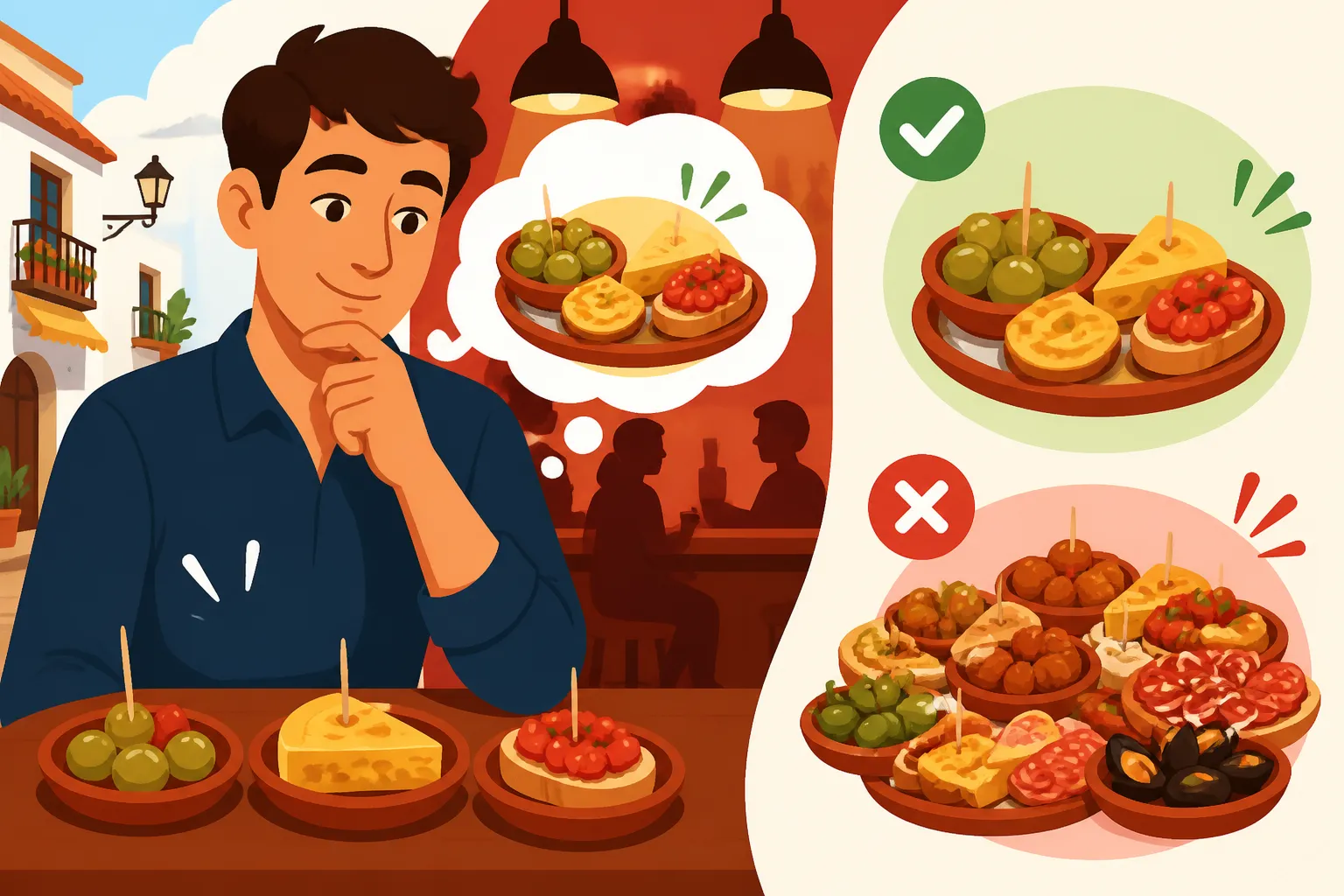
My golden rule, learned through years of trial and error (mostly error, in my early days!), is the "one tapa, one drink" approach per person per bar. This might sound overly cautious, but trust me, it's the safest way to begin your tapas journey, especially if you're exploring multiple places. When you arrive at a bar, order a drink – a caña (small beer), a copa de vino (glass of wine), or a tinto de verano – and then choose just one tapa per person from the menu or the display. For example, if there are two of you, order two drinks and two different tapas.
This strategy allows you to:
- Gauge the portion size: Tapas portions can vary wildly between establishments. What one bar considers a generous tapa, another might serve as a tiny bite.
- Assess the quality: Not every bar will hit it out of the park with every dish. Trying one or two allows you to quickly decide if you want to order more or move on.
- Control your hunger: You get just enough to whet your appetite without filling up, keeping you ready for the next stop.
- Manage your budget: Tapas can add up quickly. Ordering piecemeal helps you stay on top of your spending.
Once you've finished your first round, if you loved what you had and are still a bit peckish, you can always order another tapa or even a media ración of something else. But resist the urge to order three or four tapas at once, especially if you plan to visit multiple bars. This careful pacing is essential to truly enjoy the diverse culinary landscape Spain offers.
Decoding the Menu: Tapa, Ración, Media Ración
As we touched upon, understanding the terminology on the menu is your superpower here. Let's dive a bit deeper into how to apply this knowledge in practice.
- Tapa (Small Portion): This is your best friend when you're exploring. If you see a dish listed with "tapa" next to it (or just "tapa"), go for it. It's meant for one person to have a taste alongside their drink. It's perfect for variety. If you're a couple wanting to try as many different things as possible, ordering two distinct tapas allows you to sample two dishes. Remember, the goal is often to share the experience, not necessarily each plate.
- Media Ración (Medium Portion): This is ideal for sharing between two to three people. If you find a tapa you absolutely adore, but you want a bit more than a single small portion, the media ración is your next step. It's also great when you're with a small group and want to share a few different dishes without committing to full, large plates. For instance, a media ración of gambas al pil-pil (sizzling garlic shrimp) is usually plenty for two to share.
- Ración (Full Portion): This is a larger plate, suitable for a main meal for one hungry person, or for sharing among three to four people, particularly if you're only staying at one bar for an extended period. If you're out with a larger group and decide to settle in one place, ordering several raciones to share among everyone can be a cost-effective way to enjoy a meal. Just be mindful not to order too many, as these can be quite substantial.
The beauty of this system is its flexibility. You can mix and match based on your group size, hunger levels, and how many bars you plan to visit. For instance, you might start with a few tapas at one bar, move to another for a media ración of their specialty, and perhaps finish with a dessert or coffee elsewhere. This approach prevents you from feeling overly full too quickly and allows you to enjoy the full tapeo experience. When visiting different cities across Spain, you'll discover that local specialties vary wildly. For example, in Seville, you might find more fried fish, while in Barcelona, pan con tomate is king. You can explore these regional differences more deeply by checking out guides on Regional Spanish Dishes Every Visitor Should Try.
Communicating Your Order (Even with Limited Spanish)
Don't let a language barrier intimidate you. Spanish bar staff are generally used to non-Spanish speakers, especially in popular tourist areas. A little effort goes a long way, but basic pointing and a smile can get you far.
Here are some phrases that will serve you well:
- "Una caña, por favor." (A small beer, please.)
- "Un vino tinto/blanco, por favor." (A red/white wine, please.)
- "Quiero una tapa de [dish name], por favor." (I want a tapa of [dish name], please.)
- "Quiero una media ración de [dish name], por favor." (I want a medium portion of [dish name], please.)
- "Quiero una ración de [dish name], por favor." (I want a full portion of [dish name], please.)
- "¿Qué me recomienda?" (What do you recommend to me?) – This is a great way to get a local favorite!
- "¿Para compartir?" (To share?) – Ask this if you're unsure about portion size and want to clarify if it's meant for sharing.
- "La cuenta, por favor." (The bill, please.) – Crucial for when you're ready to move on.
Don't be afraid to point at what you want, especially if it's displayed on the counter. Many bars have fantastic visual displays of their fresh offerings. A simple "Esto, por favor" (This, please) while pointing is perfectly acceptable. Remember, the goal is to enjoy yourself, and most Spaniards appreciate any attempt to speak their language. If you want to brush up on more useful phrases for your trip, consider checking out a guide on Survival Spanish for Travelers: Key Phrases to Learn First.
Strategies for a Seamless Tapas Experience
Beyond just ordering, there are broader strategies you can employ to make your tapas adventure genuinely enjoyable and prevent the dreaded "tapas regret" (yes, it's a thing – usually involving too much fried food and a feeling of bloatedness).
The Power of Observation: Look Before You Leap
Before you even step foot into a bar, take a moment to observe. This is one of the most underrated tips for a great tapas experience.
- Look for the crowd: A bustling bar, especially one packed with locals, is almost always a good sign. Spaniards know good food, and they'll flock to the best spots. If a place is empty, there might be a reason.
- Check the display case: Many traditional tapas bars proudly display their offerings behind a glass counter. Look at the freshness of the ingredients, how appealing the dishes look, and if there's a good variety. This gives you a visual cue for what's popular and what looks delicious.
- See what others are ordering: Notice what the locals around you are enjoying. If everyone seems to have the same dish, it's probably a house specialty and worth trying. Don't be shy; a quick glance at their plates can give you excellent ideas.
- Assess the vibe: Some bars are quiet and relaxed, while others are lively and boisterous. Choose a spot that matches the kind of experience you're looking for. This can also indicate the style of tapas – a very modern, quiet spot might have more intricate, gourmet tapas, while a loud, traditional bar will likely serve classic, hearty fare.
Observing helps you filter out less authentic or lower-quality establishments and steer you towards places that genuinely offer a great tapas experience. Trust your instincts and the wisdom of the local crowd. For more tips on how to identify genuine local eateries, you might find How to Find Authentic Restaurants in Spain (Not Tourist Traps) incredibly helpful.
Pacing Yourself: The Art of the Tapeo
The true joy of tapas is the journey, not just the destination. Pacing yourself is about more than just ordering; it's about the flow of your evening.
- Don't Rush: Unlike a sit-down meal, there's no pressure to finish quickly. Linger over your drink and tapa, enjoy the conversation, and soak in the atmosphere.
- Move On: After one or two tapas and a drink, it's time to move to the next bar. This is the essence of the tapeo. Each bar offers a new experience, a new specialty, and a change of scenery. Think of it as a culinary pub crawl.
- Walk Between Bars: Incorporating short walks between bars not only helps you digest but also allows you to explore the neighborhood and stumble upon hidden gems. This movement is part of the charm and helps prevent overeating at a single location.
- Don't Feel Obligated: You don't need to order food at every single stop. Sometimes, a quick drink and a shared plate are enough before you keep moving. The idea is variety and experience.
If you're unsure about navigating the best tapas routes in a new city, consider joining a local food tour. Services like GetYourGuide offer fantastic tapas tours in many Spanish cities, where knowledgeable local guides will lead you to the best spots, explain the dishes, and ensure you get an authentic experience without the worry of over-ordering or translation issues. It's a brilliant way to learn the ropes and discover local favorites you might otherwise miss.
Budgeting Your Tapas Adventure
It's easy to get carried away when everything looks delicious, and small plates feel inexpensive individually. However, those euros can add up quickly.
- Set a Mental Budget: Decide beforehand how much you're willing to spend on your tapas outing. This helps you make conscious choices as you go.
- Keep Track of Orders: If you're hopping between bars, it can be easy to lose track. A mental tally, or even a quick note on your phone, can help you stay within your budget.
- Expect Variation in Price: Tapas prices can vary significantly depending on the city, the type of bar (local vs. touristy), and the ingredients. A simple plate of olives might be €2-3, while a more elaborate tapa with seafood could be €5-7. Drinks are typically €2-4 for a beer or glass of wine.
- Free Tapas (Where Available): In some cities, like Granada, Almería, or León, a small tapa often comes free with your drink. This is a fantastic way to save money and sample local fare without additional cost. In other regions, however, expect to pay for every tapa. Don't assume it's free unless explicitly stated or observed.
- Consider a Menú del Día for Lunch: If you want a more substantial, budget-friendly meal, especially at lunchtime, a What Is a 'Menú del Día' and How Does It Work? is often a better option than trying to piece together a meal from tapas, which can sometimes end up more expensive.
To further plan your expenses, especially if you're traveling, consider booking accommodation strategically. Staying in an area known for its great, affordable tapas bars, which you can easily find on platforms like Booking.com, can not only enhance your culinary experience but also help manage your overall travel budget by reducing transport costs and providing easy access to local eateries.
Remember that Tipping in Spain: When, Where, and How Much can also be a factor in your budget, although it's generally not as customary or expected as in other countries. Small change for excellent service is always appreciated, but large percentages are not the norm.
Here's a quick reference table to help you decide what to order:
| Portion Size | Description | Ideal For | Typical Price Range (approx.) |
|---|---|---|---|
| Tapa | Smallest portion, 1-2 bites. Often served with a drink. | One person for a taste; trying multiple dishes across different bars. | €2 – €7 (can be free) |
| Media Ración | Medium portion, roughly half a full plate. | Sharing between 2-3 people; when you want more of a favorite dish. | €7 – €12 |
| Ración | Full portion, standard plate size. | Sharing among 3-4 people; a main meal for one very hungry individual. | €10 – €20+ |
Navigating the vibrant world of tapas in Spain is one of the most rewarding cultural and culinary experiences you can have. By understanding the social etiquette, knowing your portion sizes, communicating effectively, and practicing smart pacing, you'll be enjoying the best of Spanish gastronomy without feeling like you've eaten for a week! So go forth, explore, and ¡Buen provecho!
Disclaimer
Please note that while I strive to provide accurate and up-to-date information, the world of travel and local customs can change. Prices, specific bar offerings, and regional nuances may vary. Always use your best judgment and be aware of your surroundings. This guide is for informational purposes only and should not be considered professional advice.