Coffee Culture in Spain: How to Order Like a Local
Walking into a crowded Spanish bar for the first time feels like stepping into a high-speed trading floor where the only currency is caffeine. I remember my first week in Madrid, standing paralyzed at a polished zinc counter while a waiter yelled "Dime" at me, only to end up with a glass of scorching milk and a broken spirit. This guide decodes the unwritten rules of Spanish coffee culture so you can order with confidence and avoid the "tourist tax" of confusion.
Disclosure: This post may contain affiliate links. We may earn a commission at no extra cost to you if you make a purchase through these links. Read full disclosure.
Understanding the Spanish Coffee Philosophy
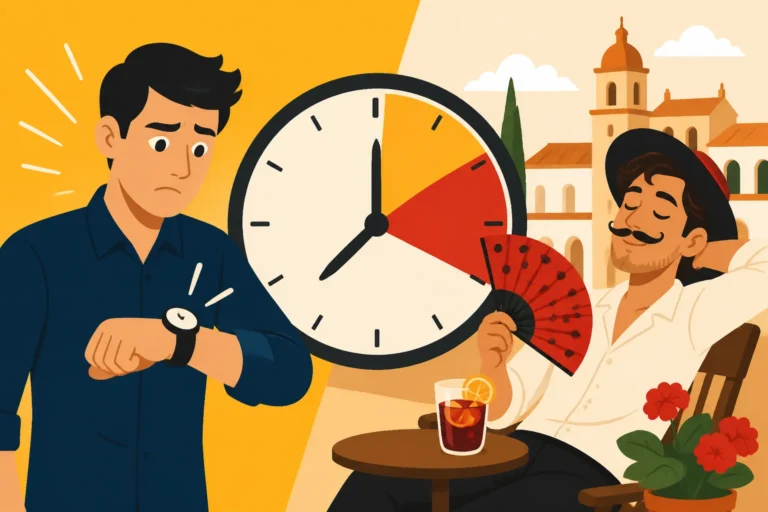
To understand how to order coffee here, you have to realize that in Spain, coffee is not a "to-go" commodity; it is a social anchor. Unlike the culture in the US or UK, where you might grab a massive paper cup of flavored latte to drink while walking, Spaniards view coffee as a reason to stop, sit, and talk. If you ask for a coffee para llevar (to go), you will often get a confused look or a flimsy plastic cup that feels like an afterthought. The coffee break, or la pausa para el café, is a sacred part of the workday, usually occurring around 10:30 AM or 11:00 AM.
The quality of the bean often takes a backseat to the quality of the conversation. While the specialty coffee scene is growing in cities like Barcelona and Madrid, the average neighborhood bar still serves what locals love: strong, dark, and often bitter coffee. This is a culture built on the ritual of the encounter. You are not just buying a drink; you are renting a space in the social fabric of the neighborhood. This is why you will see people of all ages, from construction workers to lawyers, standing shoulder-to-shoulder at the bar.
The Ritual of the Desayuno and Merienda
Coffee in Spain is tied strictly to the time of day. The desayuno (breakfast) is typically light—a coffee and perhaps a tostada con tomate (toast with grated tomato and olive oil). You won’t find people drinking huge mugs of coffee with their dinner. Instead, there is the merienda, the late afternoon snack between 5:00 PM and 7:00 PM. This is a prime time for a café con leche and a small pastry. Understanding these windows is essential for blending in. If you are planning your day, it’s worth checking Spanish Meal Times and Dining Etiquette Explained to see how coffee fits into the broader culinary schedule.
During the merienda, the pace slows down significantly. It is the bridge between the workday and the late Spanish dinner. If you have used Booking.com to find a traditional apartment in a historic center, you will likely have a "downstairs bar" that becomes your living room during these hours. Embracing this rhythm is the fastest way to stop feeling like a visitor and start feeling like a resident.
The Terrace Culture Why You Pay More to Sit Outside
One of the first things foreigners notice is the price difference between standing at the bar (barra), sitting at a table inside (mesa), and sitting on the terrace (terraza). The suplemento de terraza is a real thing, and it can add anywhere from 20 cents to a Euro to your bill. In high-traffic tourist areas, this gap can be even wider. However, for a local, that extra Euro is the price of admission for prime people-watching and soaking in the sun.
When you sit on a terrace, you are essentially "buying" that table for as long as you want. Waiters in Spain will rarely rush you or bring the bill unless you ask for it. This is a stark contrast to the "turn and burn" philosophy of many other Western countries. If you are traveling between cities using Omio, you might find that the station cafes are the only places that rush; everywhere else, the terrace is a sanctuary. For more on how to navigate these social spaces, have a look at Spanish Bar and Café Etiquette for Newcomers.
The Essential Spanish Coffee Menu
The menu in a traditional Spanish bar is rarely written down because everyone is expected to know it. If you ask for a "latte" or a "flat white," you might get a blank stare in a non-specialty shop. The vocabulary is specific and based entirely on the ratio of espresso to milk. Knowing these terms is the difference between getting a drink you enjoy and getting a glass of hot milk with a drop of brown liquid in it.
The containers also matter. Some coffees are served in a small glass (vaso), while others come in a ceramic cup (taza). If you have a preference, you should specify it, though usually, the waiter will choose based on the traditional standard for that specific drink. If you are worried about the language barrier, our Ordering Food and Drinks in Spanish: A Practical Phrasebook can give you the exact phonetic tools you need.
Milk-Based Classics From Café con Leche to Cortado
The most common order in the morning is the café con leche. It is roughly equal parts espresso and steamed milk. It’s larger than a cortado but smaller than a typical French bowl of coffee. It is the fuel of the Spanish morning. If you want it extra hot, ask for it muy caliente. If you prefer the milk to be room temperature so you can drink it immediately, ask for leche del tiempo. This is a pro-level move that marks you as an expat who knows the ropes.
Then there is the cortado. The name comes from the word cortar (to cut), meaning the espresso is "cut" with a small splash of milk. It is usually served in a small glass and is perfect for a mid-afternoon pick-me-up. If you want even less coffee and mostly milk, you order a manchado (stained), which is a glass of milk "stained" with a tiny bit of coffee. This is often what parents order for teenagers or for those who want the flavor of coffee without the caffeine jitters.
Black Coffee and Solo Variations
If you take your coffee black, your go-to is the café solo. This is a single shot of espresso, short and intense. If you want it a bit weaker, you can ask for a café largo, which is an espresso pulled with more water—similar to an Americano but usually smaller and stronger. A café doble is exactly what it sounds like: a double shot of espresso.
In the heat of the summer, particularly in places like Seville or Madrid, you must try the café con hielo. You will be served a hot coffee and a separate glass with one or two large ice cubes. The trick is to add your sugar to the hot coffee first, stir it until it dissolves, and then—with one swift, confident motion—pour the coffee over the ice. It is a refreshing godsend during a July heatwave. For more tips on surviving the temperature, see Understanding Spain's Daily Rhythm: Siesta and Late Nights.
Regional Specialties and Sweet Treats
Spain has fascinating regional variations that are worth seeking out. In Valencia, you might encounter the café del tiempo, which is a coffee with ice served with a slice of lemon and sometimes a cinnamon stick. In Murcia, the café asiático is a legendary local concoction involving condensed milk, brandy, and Licor 43. These regional quirks are what make traveling through Spain so rewarding.
If you are a fan of something sweeter, the café bombón is a treat originally from Valencia but now found nationwide. It consists of a layer of sweetened condensed milk at the bottom of a glass with espresso poured on top. It looks beautiful because of the distinct layers, and you stir it together yourself. It is essentially liquid candy. If you're exploring the culinary scene further, you might want to check out Spanish Food and Drink: A Practical Culture Guide for more local delicacies.
How to Order Like a Local
Ordering like a local isn't just about the words; it’s about the delivery. In a busy bar, the waiters are incredibly efficient but can seem brusque to the uninitiated. They aren't being rude; they are just working at a lightning pace. You don't need to wait for them to come to you with a menu. If you are standing at the bar, make eye contact, wait for a nod, and give your order clearly and concisely.
You should also be aware of the sugar situation. Most coffee in Spain is served unsweetened, but you will be given one or two packets of azúcar (white sugar) or sacarina (sweetener). If you see a packet with red text, it’s usually brown sugar (azúcar moreno). Many locals use a surprising amount of sugar to cut through the bitterness of the traditional roast.
The Lingo Essential Phrases and Vocabulary
When you approach the counter, a simple "Hola, buenos días" goes a long way. The waiter might ask "Dime" (Tell me) or "¿Qué va a ser?" (What’s it going to be?). Your response should be direct: "Un café con leche, por favor." If you want to specify the milk type, be aware that while oat milk (leche de avena) and soy milk (leche de soja) are becoming more common in cities, smaller village bars may only have whole milk (leche entera) or semi-skimmed (semi).
| Coffee Type | Description | Best Time to Drink |
|---|---|---|
| Café Solo | Single espresso shot | Post-meal |
| Café Cortado | Espresso with a splash of milk | Mid-morning / Afternoon |
| Café con Leche | 50/50 espresso and milk | Breakfast |
| Café Manchado | Mostly milk with a drop of coffee | Late afternoon |
| Café Bombón | Espresso with condensed milk | For a sweet treat |
| Café con Hielo | Espresso poured over ice | Summer / Mid-day |
If you are exploring the city and want to find a spot with a specific vibe, you might look at GetYourGuide for a local food tour. They often include stops at historic cafes where the terminology hasn't changed in a hundred years.
Timing Your Order What to Drink When
There is an unspoken timeline for coffee consumption in Spain. Drinking a café con leche after a heavy lunch is considered very "touristy." After a meal, Spaniards almost always order a café solo or a café cortado. The idea is that a big glass of milk after a 3-course What Is a 'Menú del Día' and How Does It Work? is too heavy for digestion.
Similarly, if you are out late at night, you might see people ordering a carajillo. This is a café solo mixed with a splash of brandy, rum, or whisky. It was traditionally a drink for laborers to "get up their courage" (from the Spanish coraje), but now it’s a common after-dinner digestif. If you're interested in the social aspects of late-night drinking, see Spanish Customs, Etiquette, and Social Life.
Handling the Bill Tipping and Payment Etiquette
In a traditional bar, you often don't pay until you are finished. The waiter keeps a mental tally or a small scrap of paper near the till. When you are ready to go, you catch the waiter's eye and say, "La cuenta, por favor," or simply "Me cobras?" (Will you charge me?). In many old-school bars, they might even write your total in chalk on the bar counter in front of you.
Tipping is not mandatory and certainly not the 20% expected in North America. For a coffee, it is perfectly normal to leave the small change. If your coffee costs €1.80, leaving the 20 cents on the bar is a polite gesture. If you are paying by card, check if there is a minimum spend, though this is becoming rarer. For a deeper dive into financial norms, read Tipping in Spain: When, Where, and How Much.
Navigating the Coffee Shop Landscape in Spain
The types of establishments where you can get coffee vary wildly. There is the bar de barrio (neighborhood bar), the cafetería (more focused on food/pastries), and the specialty coffee shop (the modern, minimalist third-wave shops). Each has its own set of expectations. In a neighborhood bar, expect loud TV news, the smell of fried calamari from the kitchen, and very fast service.
If you want a more refined experience, look for a Granja (common in Catalonia) or a historic café. These places often have marble tables and a more formal waitstaff. They are perfect for writing in a journal or planning your next leg of the trip. If you are staying in a new city, Making Friends in Spain as a Foreigner: Social Tips can help you find the right "home base" cafe.
Traditional Bars vs Specialty Coffee Shops
The biggest shock for coffee aficionados moving to Spain is torrefacto. This is a roasting process where sugar is added to the beans at the end of the roast, creating a dark, shiny, and very bitter bean. Historically, this was done to preserve the beans during the Civil War era. Many traditional bars still use a blend that includes torrefacto, which is why Spanish coffee is often described as "strong" or "burnt."
In contrast, the specialty coffee movement is exploding. In cities like Madrid, Barcelona, and Valencia, you can find shops sourcing single-origin beans and using V60 drippers. These shops look like coffee shops anywhere else in the world—lots of plywood, plants, and laptops. However, they are often more expensive and don't offer the same "local" social experience as the corner bar.
Supermarket Coffee and the Torrefacto Mystery
If you are staying in a rental found via Booking.com and want to make coffee at home, be very careful when shopping in the supermarket. Look for labels that say 100% Arábica or Tueste Natural. If the package says Mezcla, it means it is a mix of natural roast and torrefacto. Unless you have a nostalgic love for the taste of charred sugar, you probably want to avoid the mezcla.
Most Spanish homes use a Moka pot (the Italian-style stovetop espresso maker). It is the standard way to make coffee at home. If you buy ground coffee, make sure it is ground for an "espresso" or "Italian" machine. Understanding these small household details is a big part of Living in Spain as a Foreigner: Complete Housing & Daily Life Guide.
Practical Tips for Coffee-Loving Travelers
When traveling, coffee is often your best friend for fighting jet lag or long travel days. If you are taking a high-speed train, you'll find a cafeteria car on the AVE, but the quality is usually mediocre and the prices high. It’s almost always better to get your caffeine fix at a local bar near the station before you board. If you're using Omio to book your tickets, you can usually see how much time you have between transfers—just enough for a quick cortado at the bar.
Packing the Right Expectations
Don't expect a 16-ounce beverage. Spanish coffee is small and concentrated. If you want a "large" coffee, you are essentially asking for a double portion of milk and water, which many bartenders will find strange. Also, decaf (descafeinado) is very common in Spain. You can ask for descafeinado de máquina (decaf espresso from the machine) or descafeinado de sobre (a sachet of instant decaf coffee served with hot milk). Always specify "de máquina" if you want actual coffee.
Finding the Best Spots While On the Move
The best rule of thumb is to look for the bars that are crowded with locals, especially during the 11:00 AM break. If the floor is littered with crumpled paper napkins (a traditional sign of a busy, good bar), you’ve found the right spot. Avoid places with "Coffee & Brunch" signs if you want an authentic experience; those are aimed squarely at tourists and will charge you double for the privilege of sitting in a "grammable" chair.
Finally, remember that coffee is a gateway to the community. Once the waiter recognizes you, your order will be ready before you even sit down. That transition from "the foreigner" to "the guy who drinks a cortado with room-temp milk" is one of the most satisfying milestones of living in Spain.
Disclaimer
This guide provides general information about coffee culture and social customs in Spain for informational purposes only. While every effort is made to ensure accuracy, local customs, prices, and availability of specific products or services may vary by region and establishment. Always check local signs and menus for current pricing and terms.