Spanish Customs, Etiquette, and Social Life
Moving to Spain often feels like stepping into a beautiful, sun-drenched puzzle where the pieces only fit together if you stay up three hours past your usual bedtime. I remember my first week in Madrid, standing outside a locked pharmacy at 3:00 PM, wondering if the entire city had gone out of business. This guide helps you decode those confusing social rhythms and cultural norms so you can stop feeling like an outsider and start living like a local.
Disclosure: This post may contain affiliate links. We may earn a commission at no extra cost to you if you make a purchase through these links. Read full disclosure.
The Daily Rhythm and the Reality of the Siesta
One of the hardest things to adjust to is the Spanish clock, which operates on a timeline that feels almost rebellious to those from Northern Europe or North America. It is not just about the heat; it is a fundamental philosophy regarding how a day should be structured to maximize social connection. You will quickly find that your old schedule of a 6:00 PM dinner and a 10:00 PM bedtime is practically impossible to maintain here if you want any semblance of a social life.
Meal Times: Why Everything Happens Later
The first rule of survival is understanding that "lunch" is the main event of the day, usually occurring between 2:00 PM and 4:00 PM. If you try to find a quality sit-down meal at noon, you will likely find chefs still prepping or be relegated to tourist traps that never close their kitchens. This mid-afternoon feast is when families gather and business deals are solidified over a menú del día. I’ve spent countless afternoons watching my local neighbors linger over coffee for hours while I was still trying to rush back to my laptop—a habit I eventually had to break.
Dinner is a much lighter affair, but it starts incredibly late. Most authentic restaurants do not even open their doors until 8:00 PM or 8:30 PM, and they won't truly get busy until 10:00 PM. If you show up at 7:30 PM, you will likely be dining alone or with other confused tourists. To bridge the gap between that late lunch and the even later dinner, the Spanish invented the merienda, a small late-afternoon snack that is essential for keeping your energy up. You can find more about these culinary nuances in our guide on Spanish Food and Drink: A Practical Culture Guide.
The Afternoon Break vs. the Mythical Siesta
There is a common misconception among foreigners that every Spaniard is tucked into bed between 2:00 PM and 5:00 PM. While the "siesta" exists in spirit, the reality for most working professionals is that they are simply taking a long lunch break. However, in smaller towns and residential neighborhoods of big cities, the horario partido (split schedule) is very real. Small shops, hardware stores, and local boutiques will shutter their windows during these hours, reopening around 5:00 PM and staying open until 8:00 PM or 9:00 PM.
This period is for resting, eating with family, or avoiding the brutal summer sun. It will drive you crazy the first time you need an emergency lightbulb at 3:30 PM, but you eventually learn to plan your errands around this lull. It is a time for the streets to go quiet, providing a necessary breath before the evening’s high energy. If you are planning to visit multiple cities, using Omio to check train schedules can help you time your arrivals so you don't end up stranded in a "sleeping" city with heavy luggage.
Sunday Closures and the Weekly Reset
Sundays in Spain are sacred, but not necessarily in a religious sense for everyone. It is the day for the paseo (the slow walk) and for long lunches with extended family. In almost every region, big supermarkets and shopping malls are closed on Sundays. There are exceptions in designated "tourist zones" in cities like Madrid or Valencia, but generally, you must do your grocery shopping by Saturday night. I once spent a very hungry Sunday morning hunting for an open bakery because I had forgotten this rule.
This forced day of rest is actually one of the most charming aspects of Spanish Customs, Etiquette, and Social Life. It forces the community to slow down. Parks fill up, the terraces of bars are packed with people drinking vermut, and the pressure to be productive vanishes. You should check Spanish Holidays and Public Closures: Planning Errands in 2026 to see how these Sunday rules occasionally extend into long holiday weekends, which can catch the unprepared expat off guard.
Social Greetings and Physical Boundaries
The way Spaniards interact physically can be a major source of Spain Culture Shock: What New Expats Commonly Misunderstand. Coming from a culture where a handshake or a polite nod is the norm, the immediate proximity and tactile nature of Spanish social life can feel overwhelming. However, once you understand the "rules" of engagement, you realize these gestures are rooted in warmth and an absence of pretense.
The Art of the Two Kisses (Dos Besos)
In social settings, the standard greeting between a man and a woman, or two women, is two kisses on the cheeks—starting with the right cheek. To be clear, these are not actual wet kisses; they are "air kisses" where your cheeks touch. If you try to go in for a hug, you might end up in an awkward tangle of limbs, and if you offer a firm handshake in a casual setting, you might come across as cold or overly formal. Men generally shake hands with each other unless they are very close friends or family, in which case a "man-hug" and a few back slaps are common.
Navigating this as a newcomer takes practice. I remember being introduced to a group of ten people at a dinner party and having to go around the entire table performing the dos besos ritual. It felt like an eternity, but it is the primary way trust is established. If you are unsure, wait for the local to lean in first. For a deeper look at these interactions, see our guide on Spanish Social Customs: Greetings, Kisses, and Personal Space.
Physicality in Conversation: Touch and Space
Spaniards have a much smaller "personal bubble" than Americans or Brits. When someone is talking to you, they might stand very close, and it is perfectly normal for them to touch your arm or shoulder to emphasize a point. In a crowded bar, people will push past you without a litany of "excuse me's," and this isn't considered rude—it’s just a byproduct of living in a densely populated, social society.
If you find yourself constantly backing away during a conversation, the other person might think you are being shifty or disinterested. Embracing the closeness is part of the experience. It reflects a culture where people are genuinely engaged with one another. Whether you're at a local festival or just waiting in line at the butcher, expect a level of physical proximity that might feel like an invasion at first but eventually feels like community.
Formality vs. Informality: Usted vs. Tú
The Spanish language has two ways of saying "you": the informal tú and the formal usted. While Spain has become increasingly informal over the last few decades, knowing when to switch is key to showing respect. As a general rule, use tú for everyone your age or younger, and for people you meet in social settings. Use usted for the elderly, for formal business meetings (at first), or when dealing with the police or high-level government officials.
Interestingly, many expats find that even in professional settings, people will quickly say, "Puedes tutearme" (you can use tú with me). This transition signals that the ice has been broken. Even if your grammar isn't perfect, making the effort to use the correct form shows you value their social hierarchy. You can find more tips on this in Spanish Language and Everyday Communication for Visitors.
Dining Out and Tapas Etiquette
Food is the gravity that holds Spanish social life together. It is rarely about the fuel and almost always about the company. Understanding how to behave in a bar or restaurant will save you from "tourist tax" prices and help you earn the respect of the bartenders who run these social hubs.
How to Navigate Tapas Culture
Tapas are not just small plates of food; they are a style of eating. In most of Spain, you don't sit down for "tapas." You stand at the bar, order a drink, and enjoy one or two small bites before moving on to the next bar. This is called a tapeo. If you stay in one place and order ten tapas, you’re doing it wrong. The joy is in the movement—tasting the specialty of one place (maybe croquetas) and then walking to another for their famous tortilla.
In some cities like Granada or León, tapas are still served for free with your drink. In others, like San Sebastián, you pay for pintxos (small snacks on bread with a toothpick). If you want to experience this authentically, booking a walking food tour through GetYourGuide can be a great way to learn the specific "unwritten rules" of a neighborhood's tapas scene. Also, don't be afraid of napkins on the floor in a traditional bar; historically, the more napkins on the floor, the better the bar was considered to be! Read more at Spanish Bar and Café Etiquette for Newcomers.
Paying the Bill: Tipping and Splitting
Tipping in Spain is a subject of constant debate among expats, but the local reality is simple: it is not mandatory, and it is certainly not 20%. In a café, leaving the small change (a few 10 or 20 cent coins) is plenty. In a nice restaurant, leaving a few Euros is a generous gesture of thanks for good service. Workers in Spain are paid a living wage and do not rely on tips to survive, though they always appreciate the gesture. For a full breakdown, check Tipping in Spain: When, Where, and How Much.
When it comes to the bill, the "splitting" culture is different. If you are out with a group of Spaniards, they rarely ask the waiter to split the bill ten ways onto different cards. Usually, one person pays and the others "Bizum" (a popular mobile payment app) their share, or they simply divide the total by the number of people and throw cash on the table. "Going Dutch" in the sense of paying exactly for what you ate is less common; people usually just split the total evenly to save time and avoid looking stingy.
Drinking Culture: From Coffee to Gin Tonics
Drinking in Spain is a marathon, not a sprint. You will rarely see a Spaniard stumbling drunk at 7:00 PM. Alcohol is almost always accompanied by food. The day often starts with a café con leche, moves to a caña (a small beer) or vermut at midday, and ends with a copa (a mixed drink) late at night. The caña is specifically small so that the beer stays cold in the heat—ordering a large "pinta" marks you as a tourist and usually means you'll be drinking warm beer by the halfway point.
The coffee culture is also specific. Don't expect a giant "to-go" cup. Coffee is meant to be sipped while sitting down, often at the bar. If you want a quick espresso, ask for a café solo. If you want a dash of milk, it's a cortado. Understanding these small differences helps you blend into the daily flow of the neighborhood.
| Time of Day | Social Activity | Common Food/Drink |
|---|---|---|
| 08:30 – 10:30 | Desayuno (Breakfast) | Café con leche, Tostada con tomate |
| 11:30 – 12:30 | Almuerzo (Mid-morning snack) | Small sandwich (bocadillo) |
| 14:00 – 16:00 | La Comida (Lunch) | Menú del día (3 courses) |
| 17:30 – 19:30 | Merienda (Afternoon snack) | Pastries, fruit, or coffee |
| 20:30 – 22:30 | La Cena (Dinner) | Tapas, raciones, or light salad |
| 23:00 – Late | Copas (Nightlife) | Gin Tonic, Combinados |
Festivals, Fiestas, and Neighborhood Pride
In Spain, a festival is not just a party; it is a vital expression of local identity. Every town, no matter how tiny, has its own Fiesta Mayor, usually dedicated to a patron saint. During these times, the normal rules of the city go out the window. Streets are blocked off, stages are erected, and the noise levels can reach astronomical heights until 4:00 AM.
The Role of Local Patron Saint Festivals
Participating in your local neighborhood’s festival is the fastest way to feel like a resident. Whether it is the Fallas in Valencia, San Isidro in Madrid, or the Feria de Abril in Seville, these events are multi-generational. You will see toddlers and great-grandmothers dancing together in the streets at midnight. If you have moved into a new neighborhood, don't complain about the noise; join the party. It is a sign of respect for the local culture.
These festivals often involve communal meals, traditional costumes, and specific rituals. For instance, in Catalonia, you might see castellers (human towers), while in Andalusia, the focus might be on horseback processions. To get the most out of these experiences, check Festivals, Fiestas, and Public Holidays in Spain for a calendar of when the big ones happen. If you're traveling specifically for a festival, using Booking.com well in advance is essential, as entire cities can sell out months ahead of time.
Navigating Public Holidays and Long Weekends
Spain has a generous number of public holidays, and they have a habit of creating "puentes" (bridges). If a holiday falls on a Thursday, many people will take the Friday off too, creating a four-day weekend. During a puente, the cities often empty out as locals head to the coast or the mountains. If you need to get paperwork done at a government office during a week with a holiday, forget it. Everything will be slowed down or closed.
It is important to keep a local calendar handy. Some holidays are national, while others are specific to the Comunidad Autónoma (Region) or even just the city. Being aware of Spanish Holidays and Public Closures: Planning Errands in 2026 will save you from showing up to a closed supermarket with an empty fridge.
Cultural Sensitivity During Religious Processions
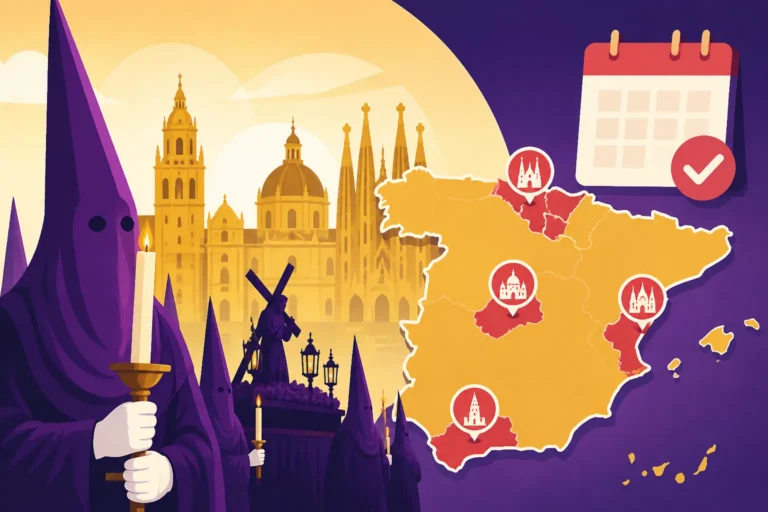
Even if you are not religious, it is important to treat religious processions—especially during Semana Santa (Holy Week)—with respect. These events are deeply solemn and culturally significant. Crowds will line the streets in silence as massive pasos (floats) are carried by. Avoid trying to cut through the procession, talking loudly, or wearing overly casual beachwear if you are in the thick of the event. It is a time when the "fiesta" spirit takes a backseat to tradition and reflection.
Home Life and Private vs. Public Socializing
In many cultures, the home is the center of social life. In Spain, the center of social life is the street, the plaza, and the bar. Houses are often smaller and used primarily for sleeping and family time, while the "living room" of the community is the local terrace.
The Importance of the Terrace and the Bar
The terraza is a quintessential part of Spanish Customs, Etiquette, and Social Life. Even in winter, you will see people huddled under heat lamps at outdoor tables. This is where friends meet, where gossip is exchanged, and where the "vibe" of a neighborhood is felt. When you find a "local" bar near your apartment, make an effort to become a regular. Say hola to the bartender, learn their name, and you will find that the city suddenly feels much smaller and friendlier.
This public socializing makes Spanish cities feel very safe. There are always eyes on the street, and it is common to see children playing in plazas while their parents have a drink nearby at 11:00 PM. It is a collective way of living that emphasizes the group over the individual. For those struggling to break in, check out Making Friends in Spain as a Foreigner: Social Tips.
Being a Guest in a Spanish Home
While Spaniards are incredibly outgoing in public, being invited into a private home is a sign of a deeper friendship. If you are invited for a meal, never show up empty-handed. A bottle of good wine, some high-quality pastries from a pastelería, or flowers are standard. And a warning: "lunch at 2:00 PM" at a home usually means the food won't be served until 3:00 PM, and you won't be leaving until 6:00 PM.
The concept of the sobremesa is crucial here. It refers to the time spent talking around the table after the meal has finished. It is considered rude to "eat and run." The conversation after the coffee is served is often the most important part of the gathering. If you have plans immediately after a Spanish lunch, cancel them. You’re going to be there a while.
Building Community in Your Neighborhood
To truly settle in, you need to participate in the micro-customs of your barrio. This means shopping at the local mercado rather than just the big supermarket chain. It means greeting the people in your building with a "buenos días" or "buenas tardes" every single time you see them in the elevator. In Spain, ignoring a neighbor in the hallway is considered quite rude.
Small gestures, like asking the vegetable seller which tomatoes are best today, go a long way. This is how you move from being "the foreigner" to "the neighbor from 3B." If you are looking for more structured ways to meet people, you might explore Making Friends in Spain: Clubs, Meetups, and Language Exchanges.
Workplace Etiquette and Professional Life
Working in Spain requires a different set of social tools than socializing in a bar. While the culture is generally more relaxed, there are specific hierarchies and expectations that can be tricky for expats to navigate.
Meetings, Punctuality, and Small Talk
The stereotype that Spaniards are always late is an exaggeration, especially in business. For a formal meeting, you should be on time. However, don't expect to dive straight into the agenda. The first 10-15 minutes are usually reserved for charla (small talk) about family, the weekend, or the weather. Rushing straight into business is seen as aggressive and impersonal.
Building a personal rapport is essential for professional success here. People want to know who you are before they decide if they want to do business with you. This can be frustrating if you are used to high-efficiency meetings, but in Spain, the relationship is the business.
Networking and the "Cafecito" Culture
A significant amount of work in Spain happens outside the office. The mid-morning coffee break is where alliances are formed and information is exchanged. If your colleagues ask you to go for a coffee at 11:00 AM, go. Even if you have a mountain of work, the social capital you gain in those twenty minutes is worth more than the emails you would have sent.
This informal networking is also how many people find jobs or "gestores" (administrative helpers). The "friend of a friend" system is still very much alive. If you are trying to establish yourself professionally, read our guide on Making Friends in Spain as a Foreigner: Social Tips to understand the crossover between social and professional networks.
Dress Codes Across Regions
Dress codes in Spanish offices vary wildly by region and industry. In Madrid's financial district, suits are still the norm. In Barcelona's tech hubs, it is much more casual. However, as a general rule, Spaniards tend to dress more formally than their North American counterparts. Even "casual" dress is usually well-tailored and polished. Showing up to a professional setting in flip-flops or gym wear—unless you are literally at a gym—is a major faux pas.
Language and Regional Nuances
Finally, it is vital to remember that Spain is not a monolith. It is a collection of regions with distinct identities, and sometimes, distinct languages.
Castilian vs. Regional Languages
While "Spanish" (Castellano) is spoken everywhere, regions like Catalonia, the Basque Country, and Galicia have their own co-official languages. If you move to Barcelona, learning a few words of Catalan will earn you massive amounts of respect. Even if you aren't fluent, showing that you recognize the local language as a core part of the culture is important. You can learn more about this in our Spanish Slang and Everyday Expressions for Visitors.
Directness and the Lack of "Please" and "Thank You"
One thing that often shocks English speakers is how "direct" Spanish can sound. In English, we use a lot of "Would you mind…" or "Could I please have…". In a Spanish bar, it is perfectly normal to say "Dame un café" (Give me a coffee). To an English ear, it sounds like a command, but in Spanish, it’s just the standard way of ordering. The politeness is conveyed through tone and eye contact rather than extra words. Don't take it personally if a waiter doesn't say "please" five times; it's not rudeness, it's efficiency.
Common Slang and Social Fillers
To sound like a local, you'll need to master the social fillers. The word vale (okay) is used constantly—sometimes five times in a single sentence. Venga is another one, used to mean "come on," "let's go," or "goodbye." Learning these small linguistic cues helps you follow the rapid-fire pace of a Spanish conversation. If you want to dive deeper into the local lingo, check out Spanish Language and Everyday Communication for Visitors.
Disclaimer
The information provided in this guide is for general informational purposes only and is based on personal experiences and cultural observations. Cultural norms and social etiquette can vary significantly by region, city, and individual social circles in Spain. While we strive to provide accurate and up-to-date advice, readers should remain observant and adaptable to their specific local environment. This guide does not constitute legal or professional advice.