How to Shop at a Spanish Outdoor Market
Navigating a Spanish outdoor market can feel like stepping into a chaotic whirlwind of shouting vendors, localized slang, and invisible queues that baffle even the most seasoned travelers. If you have ever stood awkwardly at a fruit stall while five people seemingly cut in front of you, this guide is your solution. We will break down the unwritten social codes, the specific timing required to snag the best produce, and the essential vocabulary you need to shop like a true local rather than a confused tourist.
Disclosure: This post may contain affiliate links. We may earn a commission at no extra cost to you if you make a purchase through these links. Read full disclosure.
Understanding the Different Types of Markets in Spain
To the untrained eye, any collection of stalls might look the same, but Spain actually has a very specific hierarchy of markets. The first thing you need to identify is whether you are at a permanent Mercado de Abastos, a weekly Mercadillo, or a sprawling Rastro. The permanent markets are usually housed in beautiful, historic iron-and-glass buildings and are the daily heartbeat of the neighborhood. This is where you go for high-quality meats, fresh fish that was in the Mediterranean only hours ago, and specialized cheeses. Understanding the nuances of these venues is a core part of mastering Spanish Food and Drink: A Practical Culture Guide.
The Mercadillo, on the other hand, is an itinerant street market that usually happens once or twice a week in a specific plaza or closed-off street. These are less about gourmet food and more about everything else—clothing, shoes, household basics, and bulk produce at lower prices. If you are looking for affordable kitchenware or a pair of leather sandals, the mercadillo is your best bet. You will find these listed often when searching for Shopping, Markets, and Souvenirs in Spain, as they offer a glimpse into the everyday economy of Spanish families.
Finally, there are the Rastros or flea markets. These are typically Sunday affairs, with the most famous being in Madrid. Here, the focus shifts to antiques, second-hand goods, and hidden treasures. It is a completely different vibe where haggling is more common than at a vegetable stall. If you are planning a trip specifically to see these cultural landmarks, using Omio can help you coordinate your travel between cities like Madrid, Valencia, and Seville to ensure you hit the right market on the right day of the week.
The Daily Mercado de Abastos Experience
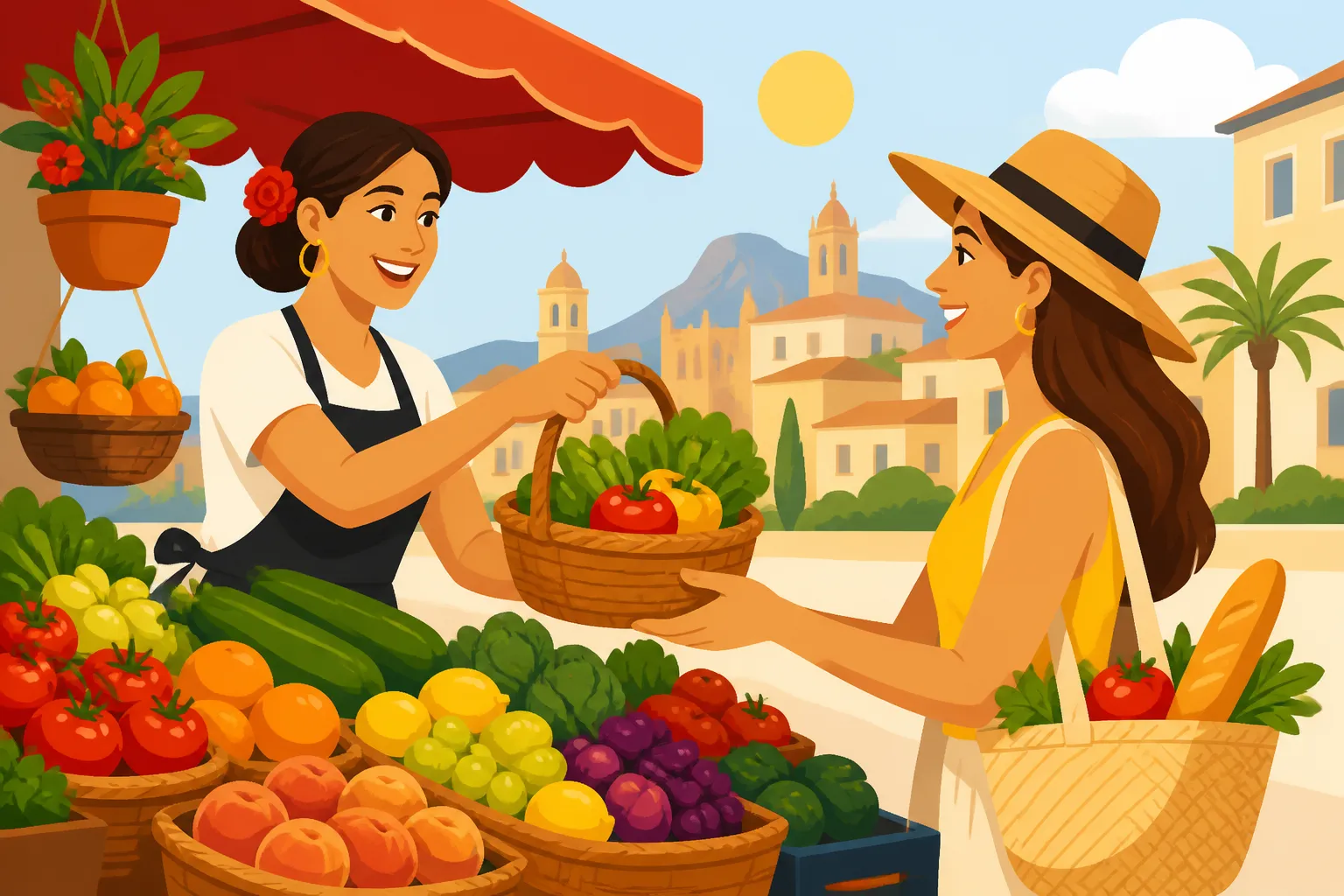
The Mercado de Abastos is where the "real" Spain lives. When you walk into a place like the Mercado Central in Valencia or the Mercado de Atarazanas in Málaga, the sensory overload is immediate. Each stall is typically family-owned, often passed down through generations. The vendors, known as vendedores or tenderos, take immense pride in their "puesto." You aren't just buying a tomato; you are participating in a relationship. This is the place to find the seasonal items that supermarkets often lack, such as wild mushrooms in the autumn or the specific bitter oranges used for marmalade in the winter.
Shopping here requires a bit of strategy. Most regulars have a "favorite" butcher or fishmonger. As an expat, building this rapport is the fastest way to get the best cuts of meat or the "under the counter" produce that they save for their vecinos (neighbors). If you are staying in a vacation rental booked through Booking.com, having a kitchen nearby makes these markets a godsend, as the quality of the raw ingredients will make your home-cooked meals taste significantly better than anything you could buy in a pre-packaged grocery store.
For those who feel a bit intimidated by the fast-paced environment of these historic halls, booking a guided food tour through GetYourGuide can be a fantastic "soft entry." A local guide can introduce you to the vendors, explain the different types of cured hams, and show you exactly how to navigate the crowds without feeling like you are in the way. It is a great way to build your confidence before you head out on a solo market run the following morning.
Mercadillos and Weekly Street Markets
The weekly mercadillo is a different beast entirely. In almost every Spanish town, there is a designated day—Tuesday in one village, Saturday in the next—where the streets transform into a labyrinth of white-tended stalls. These markets are loud. You will hear vendors shouting their prices, often using rhyming slang or humorous calls to attract attention. This is the place to buy "ropa interior," "calzado," and "fruta al kilo." The prices are usually significantly lower than in shops, but you have to be prepared to dig through piles of items to find the gems.
One of the most important things to know about the mercadillo is that it follows the sun. Stalls usually start setting up at the crack of dawn and begin packing away by 1:30 PM or 2:00 PM to prepare for the afternoon siesta. If you arrive at noon, you might find the best bargains as vendors try to offload their remaining perishable stock, but the selection will be picked over. It is a delicate balance between variety and price. Learning How to Find the Best Local Market in a Spanish City will help you map out which day of the week corresponds to which neighborhood, ensuring you never miss a local haul.
Safety at the mercadillo is generally high, but like any crowded space, it is wise to be mindful. Keep your wallet in a front pocket or a cross-body bag. The atmosphere is festive and communal, but it is also a place of business. You will see grandmothers with their wheeled shopping trolleys (carros de la compra) navigating the aisles with the precision of a Formula 1 driver. Do not stand in the middle of the aisle to check your phone; the flow of traffic in a mercadillo is sacred, and a shopping trolley to the ankles is a common "correction" for oblivious tourists.
The Unwritten Rules of Social Etiquette
The most common mistake foreigners make in a Spanish market is not understanding the "invisible queue." In Spain, people don't stand in a straight line. Instead, they use a system called la vez. When you arrive at a busy stall, you don't look for the end of a line; you ask the crowd, "¿Quién es el último?" (Who is the last?). Someone will raise their hand or nod, indicating they are the current last person. Now, you are "the last." Your only job is to watch for the next person who arrives and identify yourself when they ask the same question.
This system allows people to lean against a wall, sit on a nearby bench, or even browse a neighboring stall while maintaining their place in the hierarchy. It is a brilliant bit of social engineering that relies on collective memory. If you ignore this and simply step up to the counter when you think it’s your turn, you will be met with a chorus of "¡Oiga!" and a stern lesson in manners. Mastering this is the ultimate sign that you understand Spanish Customs, Etiquette, and Social Life.
Another crucial rule: Never, ever touch the produce unless there are clear signs or plastic gloves provided. In many Spanish stalls, the vendor is the only one allowed to handle the fruit and vegetables. You tell them what you want, and they select it for you. This is a point of hygiene and respect for the product. If you start squeezing the peaches to check for ripeness, you will likely receive a sharp reprimand. Instead, tell the vendor when you plan to eat the item (e.g., "para hoy" for today, or "para el viernes" for Friday), and they will pick the perfect ones for you.
Communication and Essential Phrases
You do not need to be fluent in Spanish to shop at a market, but a few key phrases will change the way vendors treat you. Moving beyond a simple "hola" shows that you respect the local culture. When you are finally at the front of the "invisible line" and the vendor looks at you, they will often say "¿Dime?" (Tell me?) or "Siguiente" (Next). This is your cue. If you are unsure of the names of items, pointing is fine, but try to use "un cuarto de kilo" (a quarter kilo) or "medio kilo" (half a kilo) as your standard units of measurement.
| English Phrase | Spanish Equivalent | When to Use It |
|---|---|---|
| Who is the last? | ¿Quién es el último / la última? | Upon arriving at a stall to find your place in line. |
| Give me a quarter kilo of… | Póngame un cuarto de kilo de… | Ordering smaller amounts of cheese, ham, or expensive items. |
| That is all, thank you. | Nada más, gracias. | When you have finished your order at a specific stall. |
| How much do I owe you? | ¿Cuánto le debo? | Asking for the total price before paying. |
| I'll take this one. | Me llevo este / esta. | Pointing to a specific item you want the vendor to bag. |
If you are buying meat or fish, the vendor will often ask how you want it prepared. They will offer to "limpiar" (clean) the fish or "trocear" (cut into pieces) the meat. This service is included in the price and is part of the charm of the market. If you are nervous about these interactions, reading up on Spanish Language and Everyday Communication for Visitors can provide a great foundation. Remember that a "gracias" and a "buenos días" go a long way in making the transaction go smoothly.
Payment and the Power of Small Change
While many stalls in the larger Mercados de Abastos now accept credit cards or contactless payments, the smaller mercadillos are still very much a cash-driven world. If you try to pay for a 1.50€ bag of oranges with a 50€ note, you are going to cause a problem. Vendors often start the day with limited change, and breaking a large bill for a small purchase is considered poor form. Always try to carry a pocketful of coins (1€ and 2€ pieces are gold) and small bills (5€ and 10€).
Understanding the local currency and denominations is part of the broader Money in Spain for Expats: Banking, Taxes, and Everyday Payments knowledge base. In the market, the price you see on the sign is what you pay—IVA (tax) is already included. Haggling is generally not done for food items in the daily markets. The price is the price. However, at a Rastro or for non-perishable goods at a mercadillo, you might have a little wiggle room if you are buying multiple items, but keep it respectful.
If you are shopping in a very touristy area, like near How to Visit La Boquería and Other Famous Food Markets, be extra careful with your change. While most vendors are honest, the fast-paced nature of the market means mistakes can happen. Quickly double-check your change before walking away. Also, remember that while tipping is common in restaurants, it is not expected at market stalls. If you want to show appreciation, becoming a "regular" and greeting the vendor by name is the best tip you can give.
Practical Tips for a Successful Market Run
Preparation is key to a stress-free market experience. The first thing you need is a proper shopping bag. Plastic bags are increasingly discouraged in Spain, and many vendors will charge you for them or use flimsy ones that will break under the weight of a few kilos of potatoes. A sturdy, reusable tote bag is essential. Better yet, if you are living in Spain, invest in a "carro de la compra." It might feel like something only elderly people use, but after five minutes of carrying heavy bags in the Spanish heat, you will understand why they are so popular.
Timing is your next major consideration. Most markets open around 8:00 AM or 9:00 AM and close by 2:00 PM. The "sweet spot" is usually around 10:30 AM. By this time, the initial rush of restaurant buyers and early-morning grandmothers has subsided, but the stalls are still fully stocked. If you go too late, the fishmongers will have already sold the best sea bass and hake, and the vegetable stalls might be looking a bit depleted. Also, keep in mind that many markets are closed on Sundays and Mondays (since fish markets don't receive fresh stock on Mondays).
If you are traveling from another city to visit a specific market—perhaps taking the high-speed train booked via Omio to see the Mercado de Abastos in Santiago de Compostela—try to stay in an area within walking distance. Using Booking.com to find an apartment in the "Casco Antiguo" (Old Town) of most Spanish cities will usually put you within a five-minute walk of the central market, allowing you to drop off your heavy bags easily before heading back out for a tapas lunch.
Navigating the Crowds and Physical Space
Spanish markets are high-energy environments. People will bump into you, and there is a lot of shouting. This isn't aggression; it's just the way business is done. To navigate the space successfully, keep your "carro" or bags close to your body. If you see a group of people gathered around a stall, don't assume there is a line. Remember to ask for "la vez" immediately. If you need to get past someone in a tight aisle, a simple "perdón" or "con permiso" will open doors.
It is also helpful to have a "route" in mind. Usually, it is best to buy your heavy, non-perishable items first (like potatoes, onions, or canned goods) and save the delicate items (like eggs, soft fruits, or fresh fish) for last. This prevents your strawberries from being crushed under a kilo of lentils. If you are buying a lot of different things, don't be afraid to ask for a "ticket" (receipt) at each stall so you can keep track of your spending, especially if you are practicing How to Order at a Bar in Spanish Without Stress later and want to know how much of your daily budget is left.
Regional Market Highlights You Shouldn't Miss
Every region in Spain has its own market culture. In the north, you will find a heavy emphasis on Atlantic seafood and artisanal cheeses like Cabrales. In the south, the markets are an explosion of colorful Mediterranean vegetables, olives, and citrus fruits. If you are staying in Madrid, How to Visit El Rastro Market in Madrid is a mandatory Sunday ritual, even if you don't plan on buying anything. The atmosphere alone, with the smell of frying calamari and the sound of street performers, is worth the trip.
In Barcelona, while La Boquería is the most famous, it is often overcrowded with tourists. For a more authentic experience, try the Mercat de Sant Antoni or the Mercat de la Llibertat in Gràcia. These markets offer the same high-quality produce but without the "selfie-stick" crowds. If you want to dive deep into these local secrets, GetYourGuide often has tours led by chefs who can show you the hidden corners of these lesser-known markets, explaining the history of Catalan cuisine along the way.
| City | Iconic Market | Best Known For |
|---|---|---|
| Madrid | El Rastro | Antiques, clothes, and Sunday atmosphere. |
| Valencia | Mercado Central | Art Nouveau architecture and incredible citrus. |
| Barcelona | Mercat de Sant Antoni | Books, stamps, and local food without the crowds. |
| Seville | Mercado de Triana | Traditional ceramics and fresh Andalusian produce. |
| Santiago | Mercado de Abastos | Incredible seafood and Galician salt beef. |
Disclaimer
The information provided in this guide is for informational purposes only. Market schedules, locations, and local regulations in Spain are subject to change based on municipal decisions, seasonal holidays, and regional variations. While every effort has been made to ensure accuracy, readers are encouraged to verify specific market days and opening hours with local tourism offices or official municipal websites. The author is not responsible for any inconveniences or financial losses incurred while following the advice in this article. In case of emergencies, always dial 112 in Spain.