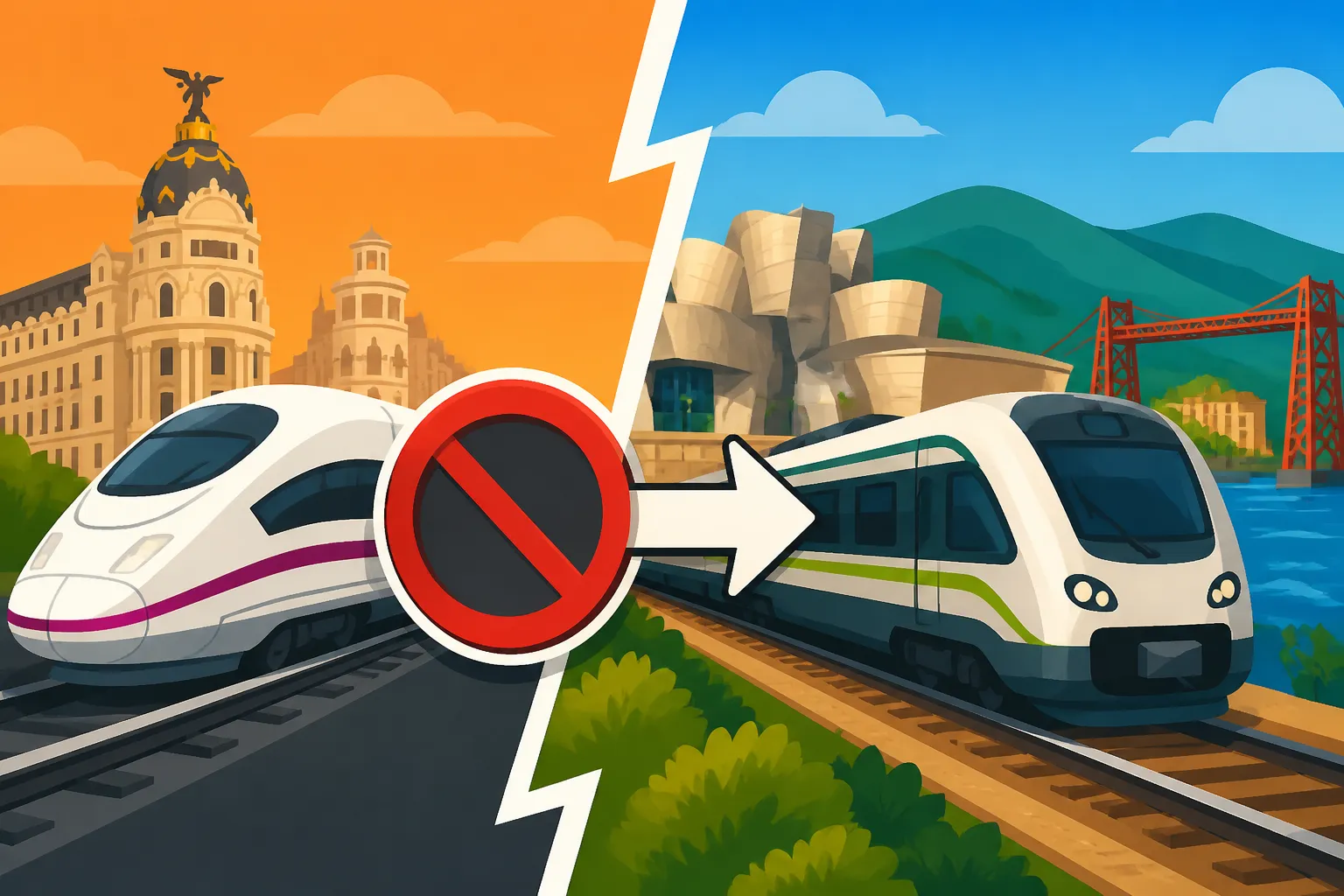
Madrid to Bilbao: Why There’s No AVE Yet and What to Book Instead
Ah, the age-old question for anyone looking to bridge the heart of Spain with its vibrant northern gem: "Can I take the AVE from Madrid to Bilbao?" It's a question that often comes with a sigh of longing, a wistful glance at the high-speed rail map, only to find a frustrating blank. You're not alone in feeling that little pang of disappointment; it’s a common frustration for us expats and even Spanish locals who rely on fast connections across this incredible country. This guide is here to shed light on why that high-speed connection isn't a reality yet and, more importantly, to walk you through the very best ways to travel between Madrid and Bilbao right now, making your journey as smooth and stress-free as possible.
Disclosure: This post may contain affiliate links. We may earn a commission at no extra cost to you if you make a purchase through these links. Read full disclosure.
The High-Speed Dream: Why No AVE Madrid to Bilbao (Yet!)
It seems counterintuitive, doesn't it? Spain boasts one of the most extensive high-speed rail networks in Europe, connecting major cities like Madrid, Barcelona, Seville, and Valencia with impressive efficiency. You can zip from Madrid to Seville in under three hours, or to Barcelona in just over two and a half. So, why does the journey to Bilbao feel like a step back in time? It’s not for lack of trying or investment; it’s a classic case of geographical challenges and the sheer scale of engineering required.
The Geographical Challenge: Mountains, Tunnels, and Terrain
If you've ever driven through the northern parts of Spain, you'll know exactly what I'm talking about. The landscape north of Madrid quickly gives way to the formidable Cantabrian Mountains, a rugged spine of peaks and valleys that stretch across northern Spain. This isn't flat, easy-to-build terrain; it's a topographical nightmare for high-speed rail engineers.
Imagine trying to lay perfectly straight, level tracks that allow trains to hit speeds of 300 km/h through a region characterised by steep inclines, deep ravines, and ancient rock formations. It requires an extraordinary amount of tunnelling and bridge-building, far more complex and costly than laying tracks across the relatively flatter plains of Andalusia or the central meseta. The existing conventional rail lines, while charmingly scenic, wind their way through these natural obstacles, taking their time and often relying on older infrastructure that simply isn't designed for the speeds of modern AVE trains. This means existing routes are slower, more winding, and offer a completely different travel experience. It’s a bit like trying to run a sprint race up a mountain path – you’ll get there, but it won’t be fast!
Construction Progress and Future Hopes: The 'Y Vasca'
The good news is that the Spanish government and regional authorities are very much aware of this missing link. The project to connect the Basque Country to the national high-speed network is known as the "Y Vasca" (Basque Y), a massive undertaking designed to link Bilbao, Vitoria-Gasteiz, and San Sebastián with high-speed rail. This "Y" shape will eventually connect to the existing high-speed line from Madrid, allowing seamless travel.
However, "eventually" is the key word here, and it's a timeline that has frustrated many over the years. Building through the Cantabrian Mountains means constructing dozens of tunnels and viaducts, some of which are among the most ambitious engineering projects in Europe. Environmental impact assessments, land acquisitions, and, let's be honest, the perennial Spanish administrative hurdles have all contributed to significant delays. Progress has been made, with sections of the Y Vasca nearing completion, but integrating it fully with the existing Madrid network is still a work in progress. While segments like the one between Vitoria-Gasteiz and Bilbao are advancing, a direct, seamless high-speed connection from Madrid to Bilbao that reduces travel time to anything comparable to other AVE routes is still likely years away. Early estimates talked about 2023 or 2024, but current projections realistically push that well into the latter half of the decade, perhaps even 2027 or beyond, before a full high-speed service is operational. For now, we remain patiently (or impatiently!) waiting.
Your Best Bets Now: Reliable Alternatives for Madrid to Bilbao Travel
Since the high-speed dream is still under construction, let's talk about the practical realities of getting from Madrid to Bilbao. Thankfully, you have several excellent options, each with its own set of pros and cons. The key is finding the balance between speed, comfort, and cost that suits your travel style. And when it comes to finding that perfect balance and booking your tickets, a platform like Omio can be an absolute lifesaver, allowing you to compare and book all these options in one place.
The Train Journey: A Scenic (But Slower) Route
Even without the AVE, train travel in Spain is generally a very pleasant experience. For the Madrid to Bilbao route, you'll be taking an Alvia train, which is a comfortable, medium-to-long-distance service operated by Renfe, Spain's national railway company.
These trains depart from Madrid Chamartín Clara Campoamor station and arrive at Bilbao Abando Indalecio Prieto station. The journey typically takes around 4.5 to 5 hours, which is quite a chunk of time, but it’s a journey where you can truly relax. You’ll have spacious seats, often a café car, and the ability to get up and stretch your legs. The scenery, particularly as you approach the Basque Country, can be quite beautiful, offering glimpses of rugged landscapes and quaint towns that you wouldn't see from the motorway or from a plane.
Booking your train tickets is incredibly straightforward, especially if you use a platform like Omio. What I love about Omio is how it aggregates all the train options, showing you different departure times, prices, and even seat classes. It takes the guesswork out of navigating Renfe's sometimes-tricky website, especially if your Spanish isn't quite fluent. You can easily compare prices across different dates and times, ensuring you get the best deal. For those who prefer the comfort and environmental benefits of rail travel, the Alvia is a solid choice. You can learn more about High-Speed Trains in Spain (AVE): Routes, Booking, and Savings and other rail options on our site.
Taking the Bus: The Most Economical Option
For many expats and budget-conscious travellers, the bus is often the unsung hero of Spanish travel. When it comes to Madrid to Bilbao, the bus service is incredibly frequent, reliable, and generally the most economical choice. The main operator on this route is Alsa, which runs numerous services throughout the day, including some night buses.
The journey by bus from Madrid to Bilbao typically takes around 4.5 to 5 hours, similar to the Alvia train. While the comfort level might not quite match the train's spaciousness, modern long-distance buses in Spain are surprisingly comfortable. Many now offer reclining seats, individual entertainment screens, Wi-Fi (though sometimes spotty in mountainous areas), and even USB charging ports. You'll depart from Madrid's Estación Sur (Méndez Álvaro) or sometimes from Madrid Barajas Airport and arrive at Bilbao's Termibus station.
The biggest advantages of taking the bus are its flexibility and price. You can often find tickets for significantly less than train fares, especially if you book in advance. The sheer number of departures also means you're more likely to find a time that fits your schedule. Again, this is where Omio shines. It's fantastic for comparing all the different bus times and prices from Alsa and any other operators on the route. It streamlines the booking process, allowing you to secure your seat without fuss. If you’re interested in exploring more about Intercity Buses in Spain: Networks, Booking, and Tips, we have a comprehensive guide for you.
Flying: Fastest, But Not Always Easiest
If time is your absolute top priority and you're willing to pay a premium, flying is, technically, the fastest way to get from Madrid to Bilbao. Several airlines, including Iberia and Vueling, offer direct flights between Madrid-Barajas Airport (MAD) and Bilbao Airport (BIO). The flight itself is a quick hop, usually lasting about an hour.
However, the "total travel time" for flying can often negate the speed of the flight itself. You need to factor in:
- Getting to Madrid-Barajas Airport: This can take anywhere from 30 minutes to an hour from central Madrid, depending on traffic and your chosen transport (metro, express bus, taxi). We have a guide on How to Get From Madrid Airport to the City Center that might help.
- Airport Check-in and Security: Arrive at least 1.5 to 2 hours before your flight for domestic travel.
- Waiting for Baggage Claim (if applicable): Another 15-30 minutes.
- Getting from Bilbao Airport to the City Center: Bilbao Airport is about 12 km from the city, requiring an additional bus or taxi ride.
When you add all this up, a door-to-door journey by plane can easily take 3.5 to 4 hours, which is not drastically faster than the train or bus, especially if you're not checking luggage. Furthermore, flights often cost more, and they come with the environmental impact of air travel.
But for those who truly value the airborne experience or have tight connections, flying can be the right choice. My recommendation? Always check Omio to see flight prices and schedules alongside train and bus options. It gives you a realistic comparison of total journey time and cost, helping you decide if flying really is the most efficient option for your specific trip. You might be surprised by how competitive the other modes can be! For more details on when flying makes sense, check out our piece on Domestic Flights in Spain: When They Beat the Train.
Making Your Choice: Comparing Travel Options (and Using Omio)
Deciding how to travel from Madrid to Bilbao can feel like a mini-project in itself, especially when you're weighing up different factors. But don't worry, once you get the hang of it, Spain's transport system becomes quite intuitive. The trick is understanding what truly matters for your journey, and using a smart tool like Omio can make all the difference in simplifying that decision.
Factors to Consider: Time, Cost, and Comfort
When you're planning your trip, consider these key elements:
- Time: How quickly do you absolutely need to be there? Is saving an hour worth extra hassle or cost?
- Cost: What's your budget? Are you looking for the cheapest option, or are you willing to pay a bit more for comfort or convenience?
- Comfort: Do you prefer spacious seating, the ability to walk around, or minimal transfers? Or are you okay with a more compact journey if it means saving money?
- Departure/Arrival Points: Are the train stations, bus terminals, or airports conveniently located for your starting point in Madrid and your final destination in Bilbao? Remember, Getting Around Spanish Cities: Metro, Bus, Tram, and Bikes is generally excellent, but transfers add time.
- Environmental Impact: For many, the carbon footprint of their travel is a significant consideration. Trains and buses are generally more eco-friendly than flying.
Here's a quick comparison table to help you visualise the trade-offs:
| Mode of Transport | Typical Journey Time (City Centre to City Centre) | Typical Cost Range (€) | Comfort Level | Key Pros | Key Cons |
|---|---|---|---|---|---|
| Train (Alvia) | 4.5 – 5 hours | 30 – 70 | High | Spacious, relaxing, scenic, city-centre stations | Slower than perceived flight time, no AVE speed |
| Bus (Alsa) | 4.5 – 5 hours | 20 – 50 | Medium | Most economical, very frequent departures, city-centre stations | Less legroom than train, can feel longer |
| Flight | 3.5 – 4 hours (door-to-door) | 40 – 150+ | Medium | Fastest actual travel time | Airport transfers add significant time/cost, security hassle, less direct city connection |
Note: Prices are approximate and fluctuate based on booking time, demand, and promotions.
Booking Smart with Omio: Your Expat Travel Companion
This is where Omio truly becomes your hero for navigating travel in Spain. Instead of opening multiple browser tabs for Renfe, Alsa, Iberia, and Vueling, Omio brings all these options together on one clean, easy-to-use platform. Foreign booking sites can be hard to navigate, and it is worth noting that having everything in English, with clear pricing and easy comparison, is invaluable.
Here’s why Omio is fantastic for this route:
- Multi-Modal Comparison: It immediately shows you all available trains, buses, and flights for your chosen dates, laid out side-by-side. You can instantly see which is fastest, cheapest, or most convenient.
- User-Friendly Interface: The website and app are intuitive, making the booking process smooth and understandable, even if you’re new to Spain’s transport system. No more struggling with translation tools or confusing payment pages!
- Real-Time Data: Omio pulls live availability and pricing, so you know you're always seeing the most up-to-date information. This is crucial for snagging those good deals.
- Mobile Tickets: Once booked, your tickets are usually available directly in the Omio app, often meaning you don't need to print anything – just show your phone. This is a huge convenience, especially when you're rushing.
- Currency Flexibility: You can view prices and pay in your preferred currency, which is a nice touch for international travelers keeping an eye on their budget.
Whether you decide the leisurely comfort of the Alvia train is for you, the budget-friendly practicality of an Alsa bus, or the rapid (but complex) nature of a flight, Omio makes the decision and booking process a breeze. It's truly a one-stop shop for comparing and securing your travel, saving you time and stress, which, let's face it, is what we all want when navigating a new country. It simplifies the often-daunting task of Travel Logistics in Spain: Money, Safety, and Connectivity.
Practical Tips for Your Bilbao Trip
Once you've made your booking and are ready to embark on your journey, a few practical tips can help ensure a smooth experience. Getting to and from the main transport hubs in Madrid and Bilbao can sometimes be as challenging as the intercity travel itself, so a little preparation goes a long way.
Getting to Your Departure Point in Madrid
Madrid is a well-connected city, but its sheer size means you need to plan your local transport carefully, especially during peak hours.
- For Train (Madrid Chamartín Clara Campoamor): Chamartín is a major hub in the north of Madrid. It's easily accessible by metro (lines 1, 10), Cercanías (commuter trains), and numerous bus lines. If you're staying in the city center, a metro ride will usually get you there in 15-25 minutes. Taxis and ride-sharing services are also readily available, though more expensive. Always factor in potential traffic if you choose a car service.
- For Bus (Madrid Estación Sur – Méndez Álvaro): This bus station is also very well connected by metro (line 6, Méndez Álvaro stop) and Cercanías (Méndez Álvaro station). It's a bustling terminal, so give yourself plenty of time to find your gate.
- For Flight (Madrid-Barajas Airport – MAD): Madrid-Barajas is quite large, with four terminals. You can reach it via the Metro (line 8), the Airport Express Bus from Atocha and Cibeles, or Cercanías train from Chamartín. A taxi or ride-share will drop you directly at your terminal. Always double-check which terminal your flight departs from! Knowing your way around Madrid is key for a seamless start; you might find our Madrid for First-Time Visitors: Neighborhoods and Highlights guide helpful.
Arriving in Bilbao: Navigating the City
Bilbao is a very walkable city with an excellent public transport system, making it easy to get from your arrival point to your accommodation or the city center.
- Bilbao Abando Indalecio Prieto (Train Station): This station is centrally located, right in the heart of Bilbao. As you step out, you're practically on the Gran Vía, and it's a short walk to many hotels, shops, and attractions. The Bilbao Metro also has a stop right at Abando, making onward travel simple.
- Bilbao Termibus (Bus Station): Termibus is the main bus station and is located a bit further out from the absolute center, near the San Mamés stadium. However, it's directly connected to the Bilbao Metro (San Mamés stop), tram, and local bus services, so reaching your final destination is effortless.
- Bilbao Airport (BIO): Bilbao Airport is about 12 km north of the city. The most common and convenient way to get to the city center is via the Bizkaibus A3247 express bus service, which departs frequently from outside the terminal and stops at key points in Bilbao, including Moyúa Plaza, Gran Vía, and Termibus. Taxis are also available. Once you're in the city, the metro and tram are excellent for getting around. Bilbao is a joy to explore; for more on the region, check out our guide on The Basque Country: Food, Coast, and Culture.
The journey from Madrid to Bilbao, while lacking the ultra-fast AVE connection, is still an integral part of experiencing Spain's diverse regions. By understanding your options and utilising efficient tools like Omio, you can choose the journey that best fits your needs, ensuring your travel is just as enjoyable as your destination.
Disclaimer
Please note that travel information, including schedules, prices, and infrastructure projects, is subject to change. While we strive to provide the most accurate and up-to-date information, it is always recommended to check official sources and booking platforms like Omio directly before making your travel plans. This guide offers general advice for expats and tourists in Spain and should not be taken as legal or definitive travel counsel.