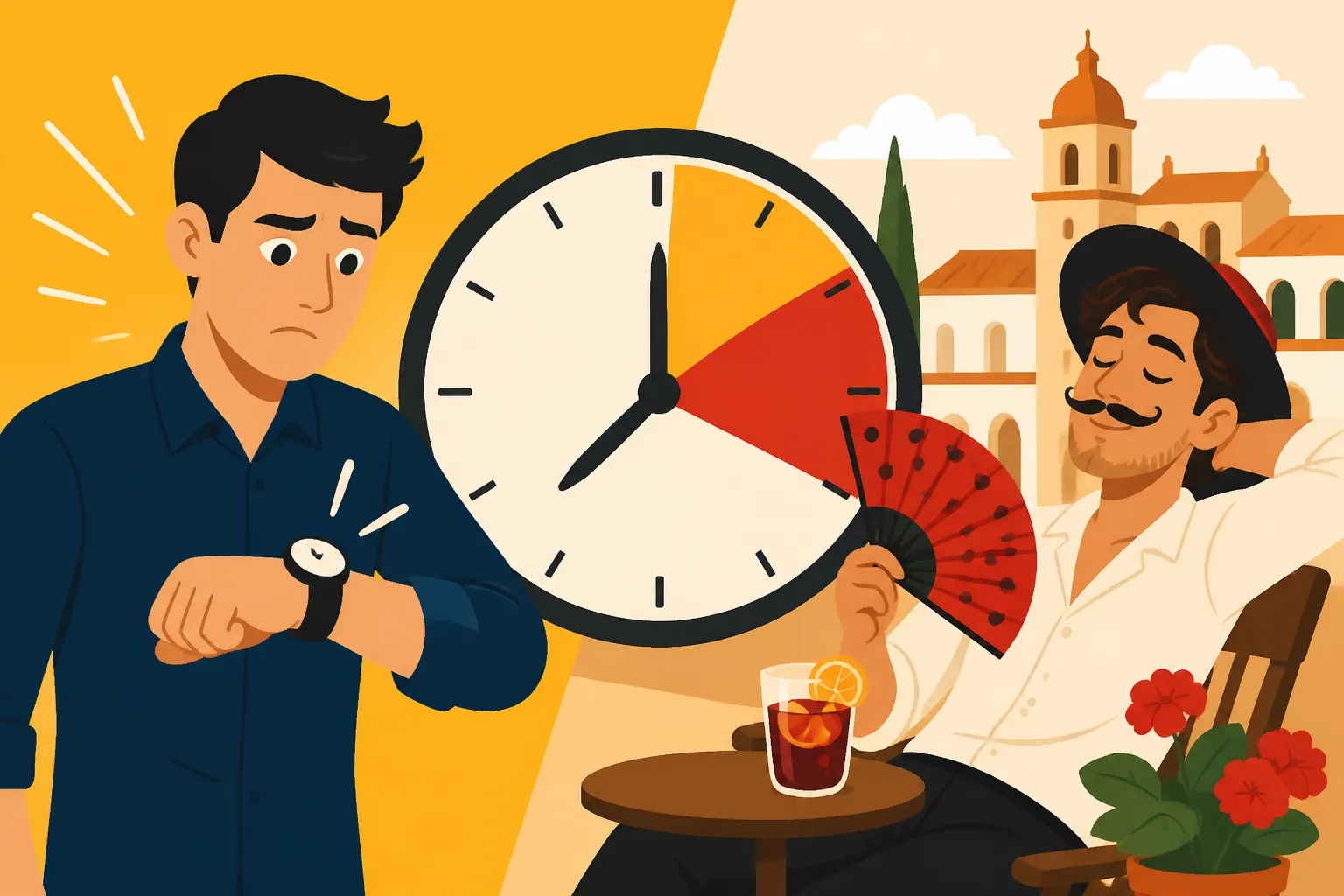
How Punctual Are Spaniards, Really?
Ah, the age-old question that every expat or frequent visitor to Spain grapples with at some point: "Are Spaniards truly punctual?" It's a question often asked with a mix of exasperation and genuine curiosity, especially when you find yourself waiting for a friend who's "just five minutes away" for the past half hour. Navigating time expectations here can feel like trying to catch smoke, but don't worry, this guide will unpack the realities of Spanish punctuality across social, professional, and public spheres, helping you adjust your watch and your mindset.
Disclosure: This post may contain affiliate links. We may earn a commission at no extra cost to you if you make a purchase through these links. Read full disclosure.
Understanding "Spanish Time" – A Cultural Deep Dive
When you first arrive in Spain, you might notice a distinct rhythm to life that doesn't always align with the clock you're used to. It's not a disregard for time, but rather a different cultural interpretation of its strictures. For many, this can be incredibly frustrating, especially for those of us coming from cultures where "on time" means "five minutes early." Here, it's often more about the human connection and the flow of the moment than the rigid adherence to a schedule.
The Fluidity of Social Engagements
In Spain, social punctuality operates on a spectrum, and understanding where a particular event falls on that scale is key. If you're invited to a friend's house for dinner at 9 PM, arriving exactly at 9 PM might actually catch your host off guard – they might still be in the shower or just starting to prep the appetizers! A casual dinner or party often has a grace period of 15 to 30 minutes, sometimes even more. It’s seen as polite to allow the host a little extra time for last-minute preparations, rather than standing awkwardly on their doorstep precisely on the dot.
However, this isn't a license to be excessively late. Showing up an hour late without prior communication would still be considered rude. It's more about a gentle flexibility, a subtle understanding that time is a suggestion, especially when good company is involved. Think of it as a warm-up period. This relaxed approach extends to meeting friends for coffee or drinks; it's less about clock-watching and more about enjoying the interaction once it begins. If you want to dive deeper into these social nuances, our guide on Spanish Customs, Etiquette, and Social Life can offer even more insights.
The Role of 'Mañana' and 'Ahora'
You've probably heard the term "mañana," often translated as "tomorrow," but in Spain, it carries a much broader, more philosophical meaning than a simple 24-hour cycle. It can signify "later," "eventually," or "when it gets done." Similarly, "ahora" (now) can mean anything from "right this second" to "in a bit" or "sometime soon." This linguistic flexibility reflects a cultural comfort with an open-ended timeline. It doesn't mean things won't get done; it just means they'll get done in their own time, often without the same sense of urgency you might be accustomed to.
This concept can be particularly challenging when you're waiting for repairs, deliveries, or even follow-ups on administrative tasks. You might be given a window of time for a service appointment, say between 10 AM and 2 PM, and find the technician arrives closer to 2 PM, or sometimes even after. It's not personal; it's just the way the clock ticks here. It demands a level of patience and adaptability that many newcomers initially struggle with, but ultimately learn to appreciate for its less stressful pace.
The Rhythmic Flow of Daily Life
Spanish daily life follows a unique rhythm that impacts punctuality. The traditional long lunch breaks, known as siestas (though less common for a full nap these days, more for a long meal and rest), and late dinner times push the entire schedule back. Shops often close in the early afternoon, reopening later, and dinner rarely starts before 9 PM, with social gatherings extending well into the night. Our article on Spanish Meal Times and Dining Etiquette Explained offers a fantastic breakdown of these schedules.
This means that what might be considered "late" in other cultures is perfectly normal here. If you're meeting someone after work, say at 7 PM, it's still relatively early in the Spanish evening. This later schedule affects everything, from television programming to public events. Embracing this rhythm, rather than fighting it, is essential for truly settling into Spanish life. It allows for more spontaneous evening plans and a generally more relaxed approach to the day's end.
Punctuality in Professional and Official Contexts
While social life enjoys a healthy dose of flexibility, professional and official settings in Spain generally operate with a higher, though still distinct, expectation of punctuality. This is where the stereotype often clashes with reality, and understanding the nuances can save you a lot of grief.
Work Meetings and Appointments
In the Spanish workplace, arriving on time for meetings and professional appointments is generally expected and respected. While a five-minute grace period might be informally accepted in some less formal settings or within established teams, consistently showing up late will not be looked upon favorably. This is especially true when dealing with external clients, senior management, or formal presentations. The professional world understands the value of time and efficient scheduling, even if the general cultural flow outside the office is different.
However, the start of the meeting might still be a bit more fluid than you'd expect in some northern European or North American contexts. There might be a few minutes for greetings, coffee, and informal chat before the agenda truly kicks off. This is part of building rapport and maintaining good interpersonal relationships, which are highly valued in Spanish business culture. It's not just about getting straight to business; it's about building trust and connection first. For more on this, you might find our guide on Spanish Workplace Communication: Meetings, Feedback, and Tone particularly helpful.
Public Services and Bureaucracy
Ah, bureaucracy in Spain – a realm where patience isn't just a virtue, it's a superpower. When dealing with administración pública (public administration) or extranjería (foreigner's office), punctuality takes on a different meaning. You might have a cita previa (pre-booked appointment) for a specific time, and it's absolutely crucial that you arrive on time. Being late for these appointments often means losing your slot and having to reschedule, which can be a nightmare. Our comprehensive guide on Spain Immigration Appointments & Paperwork: How to Avoid Delays explains just how vital this is.
However, their punctuality is often another story. It's not uncommon to arrive precisely on time for your appointment only to wait 30 minutes, an hour, or even longer past your scheduled slot. This can be incredibly frustrating, particularly when you've taken time off work or planned your day meticulously. There's little to be done but wait patiently. Bring a book, make sure your phone is charged, and prepare for a potential marathon. It's simply the nature of the beast, often due to understaffing or complex processes, rather than a deliberate slight.
Transportation Schedules
When it comes to public transportation, Spain is surprisingly reliable. High-speed trains (AVE) are renowned for their punctuality, often arriving and departing precisely on schedule. If you're planning a trip, booking through services like Omio or checking Renfe directly will give you accurate departure times, and you should aim to be at the station with plenty of time to spare, especially for longer journeys. For local and regional trains, like Cercanías, they generally stick to their schedules, though minor delays can occur, particularly during peak hours or due to unforeseen circumstances.
Buses, whether intercity or urban, also tend to run quite punctually, although city traffic can obviously cause delays. Planning your journey using apps or checking local transport websites will usually provide fairly accurate real-time information. When renting a car, services like Booking.com often allow you to compare various providers, and picking up your vehicle should generally follow the scheduled time, though paperwork can sometimes take longer than anticipated. Our article on Public Transport in Spain: Cards, Discounts, and Etiquette can help you navigate the system effectively, and if you're thinking of Renting a Car in Spain: Requirements, Insurance, and Driving Tips, make sure to account for potential delays at the counter.
Practical Strategies for Expats and Tourists
After living here for years, I've learned a few tricks to keep my sanity and make sure I'm not perpetually agitated by the clock. It's less about changing Spain, and more about adapting yourself.
Adjusting Your Own Expectations
The single most important strategy is to recalibrate your internal clock. If you arrive with the expectation that everything will run like clockwork, you're setting yourself up for disappointment and stress. Instead, cultivate a mindset of flexibility. For social engagements, consider adding a mental "Spanish buffer" of 15-20 minutes to the stated time. If a friend says 8 PM, aim to arrive between 8:15 PM and 8:30 PM. This way, you're not waiting, and they aren't rushed.
For professional or official appointments where your punctuality is paramount, aim to arrive 5-10 minutes early. This gives you time to find parking, locate the correct office, or simply take a breath before you need to be "on." For anything else, like a delivery or a repair, give yourself a generous time window and plan other activities around it that don't depend on the exact arrival time. It's liberating once you get used to it!
Communication is Key
When in doubt, communicate. If you're meeting Spanish friends or colleagues for the first time, don't be afraid to subtly clarify expectations. You might ask, "So, if we're meeting at 8 PM, should I plan to be there exactly then, or is it more flexible?" Most Spaniards will appreciate the directness and give you an honest answer, helping you gauge the situation.
For informal gatherings, if you know you'll be significantly late, a quick message to your host or friends is always polite. "Llego un poco tarde, en 20 minutos estoy allí" (I'll be a bit late, I'll be there in 20 minutes) is perfectly acceptable. This shows respect for their time while acknowledging the cultural fluidity.
Planning and Patience
For administrative tasks, doctor's appointments, or anything involving official paperwork, planning ahead is non-negotiable. Always factor in potential waiting times. If you have a critical appointment, avoid scheduling anything immediately after it. Give yourself a buffer of an hour or two, just in case. Our guide on Finding Doctors in Spain: Appointments, Referrals, and Language Tips highlights the importance of being on time for your own medical appointments.
Additionally, carrying a book, downloading podcasts, or having some work you can do on your phone can make waiting times much more tolerable. Think of it as forced downtime, a chance to relax or catch up on other tasks. Patience truly is a virtue here, and cultivating it will significantly reduce your stress levels. Booking tours or activities through platforms like GetYourGuide often provides clear start times, and they generally adhere to them, so for planned leisure, you can expect a more rigid schedule.
When Punctuality Truly Matters (and When it Doesn't)
Distinguishing between situations where being on time is critical and where a more relaxed approach is acceptable is the ultimate mastery of Spanish time.
Critical Appointments
There are indeed instances where being punctual in Spain is absolutely non-negotiable. These typically include:
- Flights, Trains, and Buses: Public transport, especially long-distance services like AVE high-speed trains or flights, operate on strict schedules. Missing your departure time means missing your journey. Be at the station or airport well in advance. Our guide on High-Speed Trains in Spain (AVE): Routes, Booking, and Savings emphasizes the need to be punctual for these services.
- Doctor's Appointments: While you might wait, you are expected to be on time. Arriving late could mean your appointment is canceled or significantly delayed, impacting others.
- Official & Bureaucratic Appointments: As mentioned, your cita previa at the police station (for your NIE/TIE), extranjería, or ayuntamiento (city hall) is sacred. Miss it, and you're back to square one, potentially waiting weeks or months for a new one.
- Job Interviews & Professional Meetings: First impressions matter, and showing respect for a potential employer's or client's time is universal. Aim to be 5-10 minutes early.
- Theater, Concerts, and Scheduled Performances: These start at the advertised time, and you may be denied entry if you arrive late.
Social Gatherings vs. Formal Events
For casual social gatherings like meeting friends for a drink, a coffee, or a home-cooked meal, the 15-30 minute grace period is generally accepted. It's part of the relaxed social fabric. However, for more formal social events, like a wedding, a religious ceremony, or a formal dinner invitation at a restaurant, you should aim to be on time or only a few minutes late. The more formal the occasion, the higher the expectation of punctuality.
If you are unsure about the nature of an invitation, it's always safer to err on the side of being a little bit early rather than significantly late. You can always grab a coffee nearby if you find yourself too ahead of schedule.
The Art of the Spanish 'Wait'
One of the beautiful things about Spain, once you truly embrace it, is the art of the espera – the wait. Instead of seeing waiting as wasted time, many Spaniards see it as an opportunity for conversation, people-watching, or simply enjoying a moment of stillness. You'll often see people chatting animatedly in queues at the bakery, or patiently enduring administrative delays with a calm demeanor.
Learning to relax into this rhythm can be incredibly freeing. It encourages you to slow down, to be present, and to appreciate that not everything needs to happen at lightning speed. It's a reminder that sometimes, the journey, or even the waiting for the journey, is as much a part of the experience as the destination itself.
Here’s a quick overview of punctuality expectations in various Spanish situations:
| Situation | Punctuality Expectation | Grace Period (Approx.) | Notes |
|---|---|---|---|
| Social Gatherings (Friends/Family) | Flexible | 15-30 minutes | Common for dinners, parties, casual meet-ups. Host might still be preparing. |
| Professional Meetings (Internal) | Punctual | 5-10 minutes | Expected to be on time, though initial chat before agenda is normal. |
| Professional Meetings (External/Clients) | Strict Punctuality | 0-5 minutes | High expectation for being on time. First impressions matter. |
| Official Bureaucratic Appointments | Strict Punctuality (for you) | 0 minutes (for you) | Arrive on time or early. They may make you wait, but you must be there. Crucial for NIE, TIE, etc. |
| Doctor's Appointments | Strict Punctuality (for you) | 0-5 minutes | Be on time. Waiting is common, but your lateness can cancel your slot. |
| Public Transport (Trains/Flights) | Strict Punctuality | N/A | Depart on time. Arrive well in advance (15-30 min for trains, 1-2 hours for flights). |
| Public Transport (Buses – Local) | Generally Punctual | 5-10 minutes | Mostly on schedule, but traffic can cause minor delays. Check apps for real-time info. |
| Restaurant Reservations | Punctual | 5-10 minutes | Polite to be on time or just a few minutes late. Call if you expect to be later. |
| Service Appointments (Repairs/Deliveries) | Flexible | 30 min – 2+ hours | Often given a wide time window. Plan other activities around it; expect potential delays. |
| Formal Social Events (Weddings, etc.) | Punctual | 0-10 minutes | Higher expectation for being on time compared to casual gatherings. |
Ultimately, understanding punctuality in Spain is less about a universal rule and more about a nuanced cultural interpretation. It's a blend of respect for individual time, the importance of social connection, and a slightly different pace of life. As an expat or visitor, embracing this flexibility will not only make your life easier but also help you appreciate the laid-back charm that makes Spain so captivating.
Disclaimer
Please remember that while this guide provides general advice based on common experiences in Spain, individual situations can vary. Laws, regulations, and local customs can change, so it's always a good idea to seek up-to-date information from official sources or local experts for your specific circumstances.