What Souvenirs Are Actually Made in Spain?
You are standing in a souvenir shop off Las Ramblas, holding a painted fan and a little flamenco doll, and you flip them over to find a sticker saying they were made on the other side of the world. It is a deflating moment. Spain produces some of the most beautiful crafts and foods in Europe, but the tourist strips are full of imported trinkets. This guide shows you which souvenirs are genuinely made in Spain, where they come from, and how to tell the real thing from the copy.
Disclosure: This post may contain affiliate links. We may earn a commission at no extra cost to you if you make a purchase through these links. Read full disclosure.
I spent my first year here buying things I later realised were mass-produced elsewhere. These days, my rule is simple: buy where it is made, from the people who make it, and look for the labels that guarantee origin. Here is what that looks like in practice.
Crafts That Are Genuinely Made in Spain
Spain’s craft traditions are intensely regional. A ceramic plate from Talavera looks nothing like one from Galicia, and the best souvenirs are the ones tied to a specific place.
Ceramics and Pottery
Ceramics are probably the most rewarding Spanish souvenir, because almost every region has its own style and many workshops still make pieces by hand.
- Talavera de la Reina and Puente del Arzobispo, in Castilla-La Mancha, produce the blue, yellow and green painted ware that many people picture when they think of Spanish pottery. The tradition is recognised by UNESCO as part of the intangible heritage it shares with Mexico.
- Seville’s Triana district has a long history of tile-making, and you can still buy hand-painted azulejos there.
- Granada is known for fajalauza pottery, with its distinctive blue and green glazes on a white base.
- Manises, near Valencia, has made lustreware for centuries.
- Galicia is home to a distinctive style of blue-and-white porcelain and ceramic made in Sargadelos and the surrounding area.
Genuine pieces usually carry the workshop’s mark on the base. Cheap mass-produced “Spanish” ceramics often have a printed rather than painted pattern; look closely at the brushstrokes, which should be visible and slightly uneven.
Leather, Espadrilles and Shoes
Spain has a serious leather industry, and some of it is still small-scale and artisanal.
- Ubrique, a white village in the hills of Cádiz province, is famous for fine leather goods. Many international luxury houses have had their leather goods made there.
- Menorca makes avarcas, simple leather sandals with a rubber sole originally cut from tyres. Look for ones made on the island.
- Espadrilles, or alpargatas, with jute soles, are made in La Rioja, around Cervera del Río Alhama, and in parts of Catalonia. Real ones have a hand-stitched canvas upper and a firmly braided sole.
- Elche and Elda in Alicante province are centres of Spanish shoe manufacturing more broadly.
Metalwork, Fans and Textiles
- Toledo damascene, or damasquinado, is gold and silver thread hammered into blackened steel, a technique with roots in the Islamic period. Toledo is also famous for swords. Real damascene is heavier than imitations and the gold is set into the steel rather than painted on. If you are heading there, see How to Visit Toledo From Madrid in a Day.
- Fans, or abanicos, have a long tradition in the Valencia area, especially in Aldaia. Hand-painted fans with wooden ribs cost far more than printed plastic ones and are worth it.
- Mantones de Manila, the fringed embroidered silk shawls worn with flamenco dresses, are hand-embroidered in Andalusia, despite the name.
- Basque berets, or txapelas, are still made in the Basque Country, with Tolosa a historic centre.
- Lace and embroidery from Lagartera in Toledo province and the openwork embroidery of the Canary Islands, known as calado, are traditional crafts.
Jewellery and Musical Instruments
Galicia, and Santiago de Compostela in particular, has a long tradition of carving azabache, or jet, into small amulets and jewellery associated with the pilgrimage. Mallorca has a pearl industry, mostly manufactured rather than natural pearls, based around Manacor, and is also known for glass-making.
For something really special, Spanish guitars are handmade in workshops in Granada, Madrid and Valencia. A handmade instrument is a significant purchase, but many workshops welcome visitors even if you are only browsing.
Food and Drink Souvenirs With a Guarantee of Origin
Food is the easiest way to bring home something authentically Spanish, and the labelling system makes it easier to verify than crafts.
How to Read the Origin Labels
Spain uses the EU’s protected origin labels, and they are your best friend:
| Label | Meaning | What it tells you |
|---|---|---|
| DOP (Denominación de Origen Protegida) | Protected Designation of Origin | Produced, processed and prepared in a specific region using recognised methods |
| IGP (Indicación Geográfica Protegida) | Protected Geographical Indication | At least one stage of production takes place in the named region |
| DO and DOCa for wine | Denominación de Origen and Denominación de Origen Calificada | Wine from a recognised wine region; DOCa is a higher category held by Rioja and Priorat |
| Hecho en España | Made in Spain | A general origin claim, less specific than DOP or IGP |
A product with a DOP or IGP seal has passed checks by a regulatory council. A bottle of olive oil saying “packaged in Spain” may contain oil from several countries.
Food Souvenirs Worth Buying
- Saffron from La Mancha: look for the DOP Azafrán de La Mancha label. Cheap saffron in tourist shops is often of lower grade or not Spanish at all.
- Pimentón de la Vera: smoked paprika from Extremadura, with its own DOP. The tins are pretty and light to carry.
- Olive oil: extra virgin oil with a DOP, such as those from Jaén, Priego de Córdoba or Les Garrigues, is a great gift. Buy in tins to avoid breakage.
- Turrón: the almond nougat from Jijona and Alicante, made in the Alicante province with IGP protection.
- Cheese: Manchego, Idiazabal from the Basque Country and Navarre, and Torta del Casar from Extremadura all have DOP status. Vacuum-packed cheeses travel well.
- Wine and sherry: Rioja, Ribera del Duero, Priorat and the sherries of Jerez are all classics. If you are new to Spanish wine, see Spanish Wine Regions: A Beginner’s Guide.
- Ibérico ham: genuine Ibérico products carry a coloured label, with the black label for 100 percent Ibérico acorn-fed ham. Note that some countries outside the EU restrict or ban imports of cured pork, so check before you pack it.
Where to Buy Food Souvenirs
Markets are ideal, because many stalls sell regional products and let you taste before buying. In Madrid, Barcelona and Valencia, the central markets have specialist shops, and smaller towns often have a weekly market where producers sell directly. How to Find the Best Local Market in a Spanish City will help you track them down. For the big city food halls, see Spanish Markets and Food Halls: Where to Eat and Shop.
Delicatessens, known as tiendas de ultramarinos or charcuterías, are also excellent, and their staff will usually vacuum-pack cheese and ham for travel if you ask.
How to Avoid Fake “Spanish” Souvenirs
A little scepticism goes a long way. Here is the checklist I use.
Warning Signs of an Imported Souvenir
- Very low prices for things that should be handmade, such as hand-painted ceramics, damascene or fans.
- Identical items stacked by the dozen in every shop on the same street.
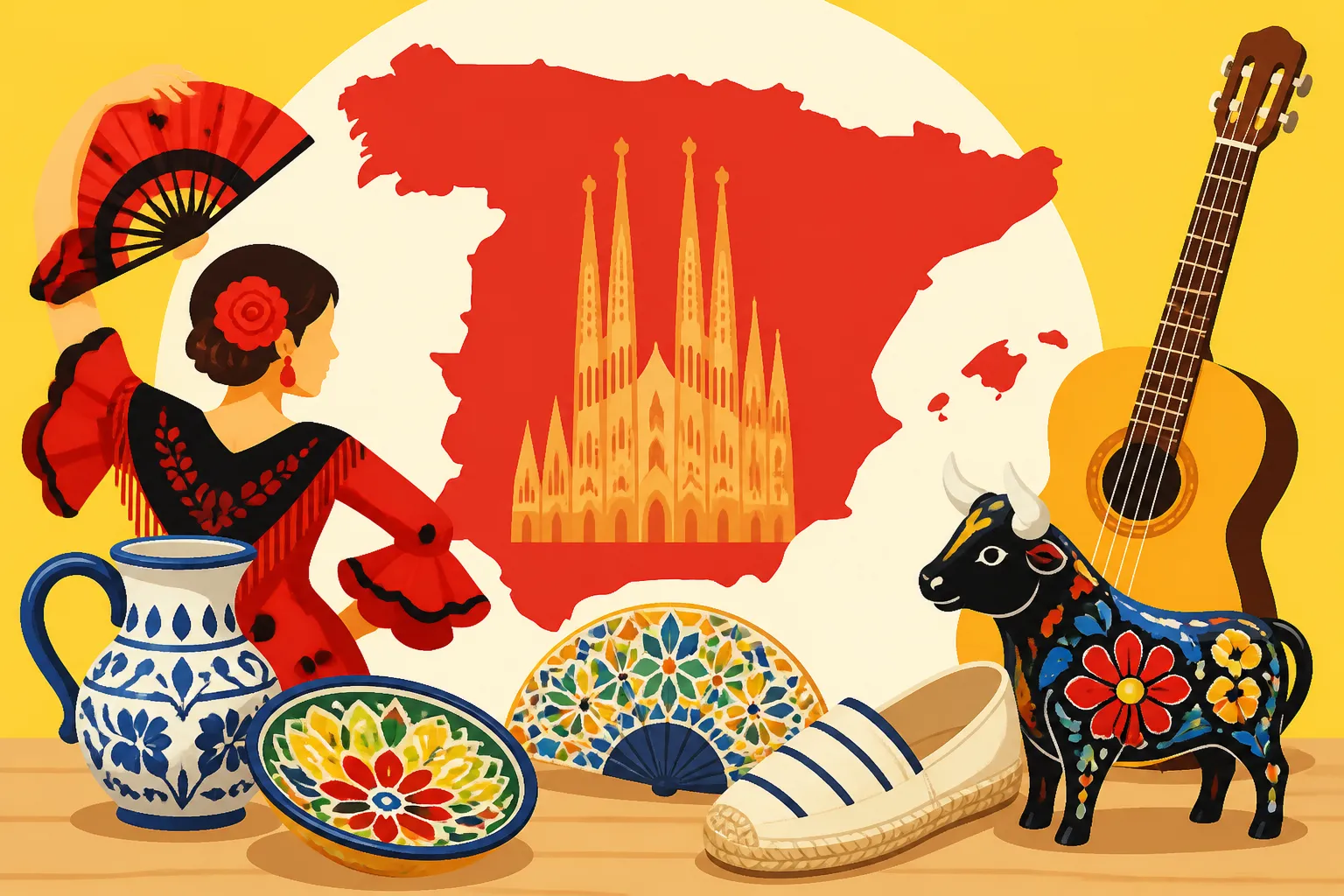
- Generic “España” designs with bulls, flamenco dancers and the flag on items such as magnets, shot glasses and keyrings.
- No maker’s mark on ceramics or leather.
- Labels on the bottom or inside naming another country of manufacture.
- Shop staff who cannot say where an item was made or who made it.
Buy Where It Is Made
The surest way to get authentic souvenirs is to go to the source. A day trip to Ubrique for leather, Talavera for ceramics or Toledo for damascene is as much an experience as a shopping trip, and you meet the makers. Workshops often sell seconds at lower prices, too.
For getting around, I usually check train and bus options on Omio, which compares Spanish rail and coach operators side by side, especially useful for towns such as Talavera that are easy to reach from Madrid but have limited direct services. For craft and food experiences, guided workshops and tasting tours, such as ceramics classes in Seville or wine tours in La Rioja, are bookable on platforms like GetYourGuide, which can be a good way to see artisans at work.
If you want to stay in a craft town overnight to explore properly, Booking.com lists small guesthouses in places like Ubrique, Talavera and Toledo, where the atmosphere after the day trippers leave is completely different.
Practical Tips for Taking Souvenirs Home
- Ceramics: ask the shop to wrap pieces in bubble wrap, and pack them in the middle of your suitcase, surrounded by clothes. Many workshops ship internationally.
- Liquids: olive oil, wine and sherry must go in checked luggage on most flights. Wrap bottles in plastic bags and clothes.
- Knives and swords: decorative swords and knives cannot go in hand luggage, and some countries restrict their import. Check before you buy.
- Food: some countries restrict imports of meat and dairy products. Check the rules of your destination before you pack ham or cheese.
- Tax-free shopping: non-EU visitors can often reclaim IVA on larger purchases in participating shops. Ask for the tax-free form at the time of purchase, and see Tax-Free Shopping in Spain for Non-EU Visitors for how the process works.
Shops and Markets Worth Knowing
| Place | What to look for |
|---|---|
| El Rastro, Madrid | Antiques, vintage items and some crafts on Sunday mornings |
| Triana, Seville | Hand-painted tiles and ceramics |
| Albaicín, Granada | Fajalauza pottery and inlaid wood, known as taracea |
| Toledo old town | Damascene, swords and marzipan |
| La Boqueria and Santa Caterina, Barcelona | Food products, saffron, olive oil, cheese |
| Mercado Central, Valencia | Saffron, turrón, paella rice and olive oil |
| Santiago de Compostela old town | Azabache jewellery and Galician ceramics |
For more ideas on markets, Flea Markets and Antiques in Spain (El Rastro and More) and Spanish Souvenirs Worth Buying (and What to Skip) are good companions to this guide.
My Favourite Souvenir
The best thing I have ever brought home from Spain is a simple, slightly lopsided bowl from a workshop in a village near Talavera. The potter’s grandson painted the rim while I watched. It cost more than a magnet and less than a dinner out, and every time I use it I remember the dusty road, the smell of the kiln and the old man’s laugh. That, in the end, is what a souvenir is for.
Disclaimer
This article is for general informational purposes only and does not constitute professional advice. Laws, prices and regulations vary by location and change over time. Consult a qualified professional for guidance on your specific situation.