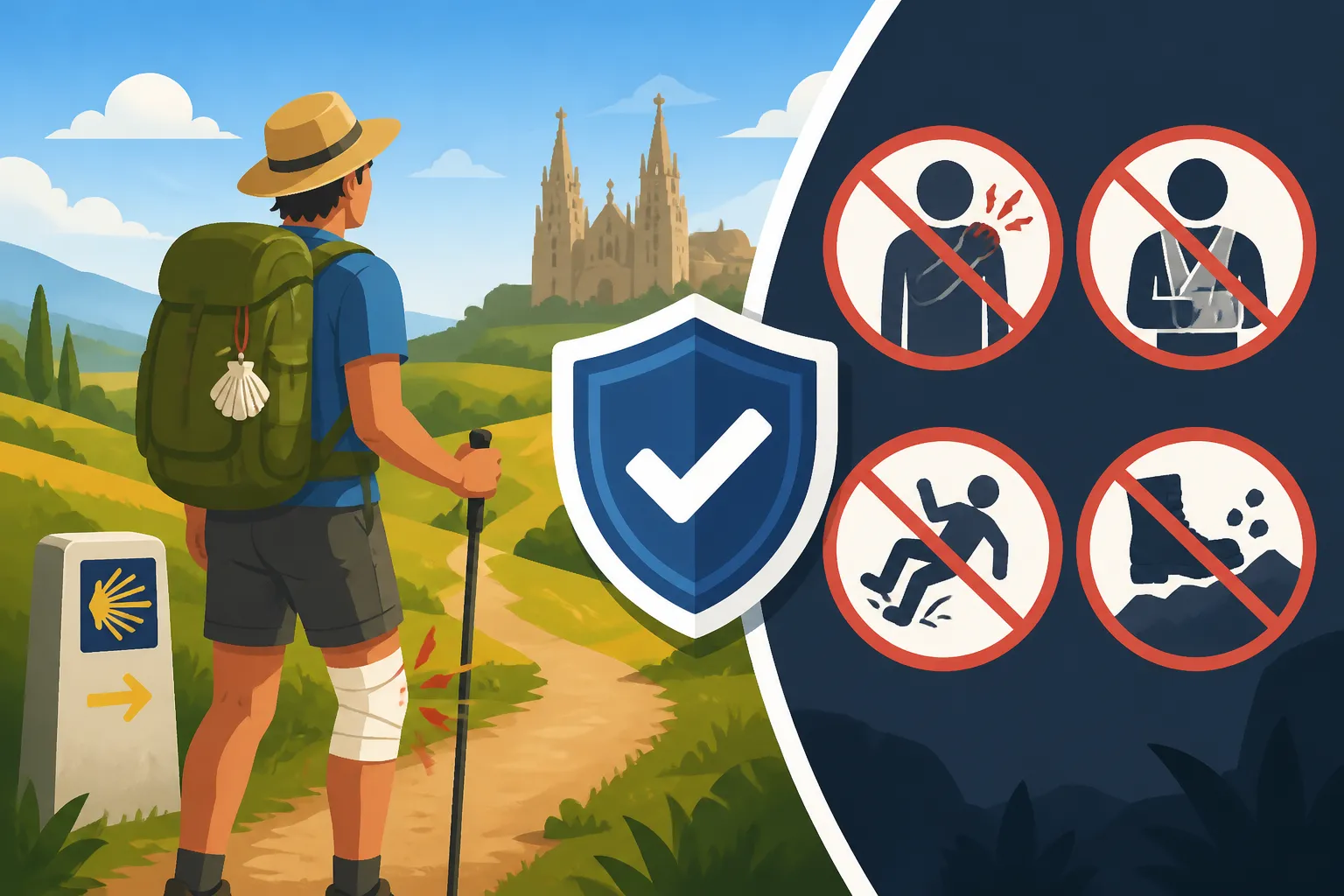
Walking the Camino de Santiago: Injury Cover and What Policies Exclude
Ah, the Camino de Santiago! It’s a dream for so many, a spiritual journey, a physical challenge, and an incredible way to see the heart of Spain. You spend months, maybe even years, planning, dreaming of those rustic albergues and sweeping Galician landscapes. But let’s be brutally honest, as someone who's lived here for ages and seen it all: what happens when that dream takes an unexpected turn, like a nasty sprain on a remote trail? This guide isn’t here to burst your bubble, but to arm you with the practical know-how to protect your Camino adventure, especially when it comes to injury cover and understanding the fine print of your travel insurance.
Disclosure: This post may contain affiliate links. We may earn a commission at no extra cost to you if you make a purchase through these links. Read full disclosure.
The Allure and Realities of the Camino de Santiago
The Camino de Santiago captures the imagination, doesn't it? Thousands embark on this ancient pilgrimage each year, seeking everything from spiritual enlightenment to a simple physical challenge, or just a unique way to experience Spain. The idea of walking across a country, forging new connections, and pushing your limits is truly captivating. However, while the romantic imagery of sunsets over rolling hills and shared meals with fellow pilgrims is very real, so are the blisters, the aching knees, and the unexpected twists of fate that can derail your journey.
More Than Just a Walk: The Physical and Mental Toll
Walking the Camino is definitely more than just a stroll in the park. Even for seasoned hikers, covering significant distances day after day, often with a packed backpack, takes a serious toll on the body. You might start off feeling invincible, but those long days quickly add up. From the very first steps out of St. Jean Pied de Port or Sarria, your body is adapting, protesting, and eventually strengthening. But this process isn't without its challenges. The relentless rhythm of walking can wear down even the most prepared pilgrim, leading to physical fatigue that can make you more susceptible to injury.
Beyond the physical, there's a significant mental aspect to consider. The Camino can be emotionally intense, bringing moments of profound joy, but also solitude, frustration, and intense self-reflection. When you're physically exhausted, your mental resilience can wane, making small discomforts feel like insurmountable obstacles. This interplay between physical and mental state means that being prepared for both is key, and having robust support, including good insurance, helps alleviate a huge chunk of that potential mental strain.
Common Camino Injuries and Health Issues
Pilgrims, bless their hearts, come prepared with gear, guidebooks, and often, an optimistic spirit. What many don’t fully prepare for are the utterly common, yet debilitating, physical ailments that can strike. The most infamous culprit? Blisters. Oh, the blisters! They start small, innocent enough, but can quickly escalate into painful, journey-halting wounds if not managed meticulously. Then there’s the relentless pounding on your joints: knee pain, shin splints, and Achilles tendonitis are practically rites of passage for many. Ankle sprains are another frequent issue, especially on uneven terrain or after a long, tiring day when your concentration slips. A misstep on a rocky path, and suddenly your pilgrimage is interrupted, or worse, ended.
Beyond musculoskeletal woes, the Camino throws other curveballs. Dehydration and heatstroke are real dangers, particularly during the hot Spanish summers, especially in regions like Castilla y León where shade can be scarce. Gastrointestinal issues – because even the most careful eater can succumb to new foods or water – can quickly drain your energy. Then there are the unexpected infections, insect bites, or even just the common cold that can flourish when you're sharing close quarters in albergues. These aren't just minor inconveniences; they can require medical attention, medication, or even a break from the trail, all of which come with costs and logistical headaches you probably didn't factor into your spiritual awakening.
Understanding Your Existing Health Coverage in Spain
If you’re an expat living in Spain, you probably have some form of health coverage, either through the public system or a private insurer. It’s natural to assume this will cover you on the Camino. While it’s a good starting point, it’s vital to understand the nuances and limitations, because relying solely on your local coverage for an extended trek across different regions might leave you with some gaping holes in your safety net.
Public Healthcare Sistema Nacional de Salud and the Camino
Now, if you're a resident here with your shiny How to Get a Spanish Health Card Tarjeta Sanitaria Step-by-Step card, you might think you're all set. And yes, generally speaking, if you are a legal resident contributing to the Social Security system, you have access to Spain's excellent public healthcare system. This means if you have an emergency – say, you fall and break an arm – you can present your Tarjeta Sanitaria at any Centro de Salud (local health center) or public hospital Urgencias (emergency room) along the Camino and receive necessary treatment. This is a huge relief, especially for those sudden, serious incidents.
However, there are caveats. While public healthcare covers emergencies and necessary medical treatment, navigating the system in an unfamiliar region, potentially with a language barrier, can be incredibly stressful when you’re injured and vulnerable. You'll likely encounter doctors and nurses who primarily speak Spanish, which can be tough when you’re trying to describe symptoms like "my Achilles tendon feels like it's on fire!" Moreover, while you'll get essential care, things like immediate physiotherapy, specialized non-emergency consultations, or even just detailed medical advice in English might be harder to come by in smaller towns along the route. For ongoing issues that aren't quite emergencies but still need attention, you might find yourself waiting longer or struggling to get the specific care you're accustomed to in your home region. Remember, while your eligibility extends nationally, the delivery of non-urgent care can vary.
Private Health Insurance for Camino Walkers
For many expats, especially those on certain visas or who simply prefer the flexibility, private health insurance in Spain is the go-to. Policies from providers like Sanitas, Adeslas, or DKV often offer benefits like faster appointments, a wider choice of specialists, and sometimes, English-speaking services or clinics. If you have a private policy, it certainly adds a layer of comfort to your general health in Spain. For an injury on the Camino, you could potentially access private clinics or hospitals that are within your insurer's network, which might offer a quicker or more comfortable experience than the public system, especially if you're looking for an How to Find an English-Speaking Doctor in Spain Practical Guide.
But here’s the crucial part: while your private Spanish health insurance covers you in Spain, it's designed for your general residency, not specifically for extended travel or adventurous activities. You must check your policy for exclusions related to travel within Spain, especially for things like emergency medical repatriation. If you're seriously injured far from your registered address or preferred medical facilities, would your private policy cover the cost of transferring you closer to home or to a specific private hospital? Often, the answer is no, or only under very limited circumstances. This is where a dedicated travel insurance policy really shines, offering coverage for those specific travel-related emergencies that your day-to-day private health plan in Spain might not. It’s about complementing, not replacing, your existing coverage.
The Critical Role of Travel Insurance for the Camino
This is where the real talk comes in. For all its beauty and profound moments, the Camino is an adventure, and like any adventure, it carries inherent risks. Relying solely on your Spanish public or private health insurance, while better than nothing, often leaves critical gaps when you’re hundreds of kilometers from home, lugging a backpack, and facing uncertain terrain. This is precisely why dedicated travel insurance isn't just a good idea for the Camino; it's practically non-negotiable for true peace of mind.
Why Standard Health Insurance Isn't Enough for the Camino
Imagine this: you've been walking for weeks, you're close to Santiago, and you take a bad fall, fracturing your leg in a somewhat remote section. You get to a local hospital, and yes, your public or private Spanish health insurance will cover the immediate medical care. Great. But what about getting you back home if you need long-term recovery there? Or what if the fracture is so severe that you need specialized medical transport to a bigger city or even back to your home country? This is called emergency medical repatriation or evacuation, and it’s almost universally not covered by your standard public or private Spanish health plan. These costs can easily run into tens of thousands of euros.
Or think about the unexpected: you have to abandon your pilgrimage mid-way due to a family emergency back home, or your luggage gets lost or stolen. Your standard health insurance won't touch these scenarios. What about search and rescue if you get seriously lost or incapacitated in a more isolated area? Many policies also include personal liability coverage, which is invaluable if, say, you accidentally cause damage to an albergue or injure another pilgrim. These are the kinds of specific, travel-related risks that robust travel insurance, like that offered by SafetyWing, is specifically designed to cover. It’s not just about treating the injury; it’s about providing comprehensive support for everything that can go wrong when you're away from your normal routine and resources.
Key Coverage Elements to Look For in a Camino Policy
When you're shopping for travel insurance for your Camino adventure, don't just grab the cheapest option. Read the policy document carefully – I know, it's tedious, but your peace of mind depends on it! Here are the absolute must-haves:
First and foremost, you need robust medical emergency coverage. This should cover doctor's visits, hospital stays, prescription medications, and emergency dental work due to an accident or sudden illness. Make sure the limit is high enough; medical care can be surprisingly expensive even in countries with public healthcare if you're accessing private services or face prolonged treatment. Beyond immediate care, look for emergency evacuation and repatriation benefits. This is HUGE for the Camino. If you get seriously injured on a trail far from adequate medical facilities, this coverage will pay for your transport to a suitable hospital, or even back to your home country if medically necessary.
Next, consider trip interruption or cancellation. What if you twist your ankle badly a week before your flight, and have to cancel? Or what if a family emergency calls you home from Santiago? This coverage can help reimburse non-refundable expenses. Don’t forget lost, stolen, or damaged baggage; while not health-related, it’s a common pilgrim headache. Finally, personal liability is often overlooked but crucial. If you accidentally injure someone else or damage property, this coverage can save you from a financial nightmare. A solid policy from a provider like SafetyWing often bundles these essential protections, giving you a strong safety net.
How SafetyWing Protects Your Camino Adventure
As someone who's spent years navigating life and travel in Spain, I've come to really appreciate providers that truly understand the needs of nomadic travelers, and that's where SafetyWing steps in as a real "hero" for your Camino. Their travel medical insurance is specifically designed for digital nomads and long-term travelers, which means it’s perfect for the extended journey that is the Camino. It covers medical expenses related to unexpected illness or injury, which is your primary concern on the trail. So, if you get those dreaded blisters that turn into an infection, or you suffer a fall, SafetyWing has your back for the doctor visits and prescribed medications.
What truly sets SafetyWing apart for a trek like the Camino, however, is their robust repatriation and emergency evacuation benefits. Let's face it, Spain is beautiful, but some parts of the Camino can be remote. If you're severely injured and need to be airlifted from a difficult-to-reach area, or medically transferred to a specialized hospital, these costs can be astronomical – far beyond what any standard health card or even basic private Spanish health insurance would cover. SafetyWing understands this unique need for travelers, ensuring you get the care you need, wherever you are on your pilgrimage, and the transport required to recover safely. Their policies are also incredibly flexible, allowing you to purchase coverage even after you’ve started your trip, and they're affordable for longer durations, making them an ideal choice for the multi-week commitment of the Camino. Don't risk your adventure; get covered with SafetyWing today.
Understanding Policy Exclusions: What Most Policies Won't Cover
Alright, let's talk about the parts of the insurance policy that no one likes to read: the exclusions. No matter how comprehensive your insurance, there are always things it won't cover. Being aware of these common exclusions is just as important as knowing what is covered, especially when planning an active trip like the Camino de Santiago. It helps you set realistic expectations and avoid nasty surprises if you ever need to make a claim.
Pre-Existing Conditions and Waiting Periods
This is probably one of the most common areas of misunderstanding and disappointment with insurance policies, and travel insurance for the Camino is no different. Most policies, including those from SafetyWing, have specific rules regarding pre-existing conditions. In simple terms, a pre-existing condition is any illness, injury, or medical condition for which you have sought diagnosis, treatment, or medication within a certain look-back period (e.g., 6 months, 1 year) before your policy's start date. If you have a chronic knee issue that's flared up recently, or you're managing diabetes, you need to be very transparent with your insurer.
The typical scenario is that complications or treatment for pre-existing conditions are excluded from coverage. Some policies might offer limited coverage for acute exacerbations of pre-existing conditions, but often with specific stipulations and lower limits. It's crucial to declare any relevant conditions when applying, even if you think they won't be an issue on the Camino. What about Does Spain's Public Healthcare Cover Pre-Existing Conditions?? Yes, the public system will generally treat you regardless, but travel insurance is a different beast designed for the unexpected, not ongoing management of known conditions. Additionally, some benefits, like certain types of dental care or specific illnesses, might have waiting periods before they become active. Always read the fine print about this so you aren’t caught out.
"Hazardous Activities" and Adventure Sports Clauses
While the Camino is primarily walking, some insurance policies can be finicky about what they consider a "hazardous activity" or "adventure sport." Generally, walking or hiking on marked trails, as you would on the Camino, is covered by most standard travel medical policies, especially those geared towards travelers and digital nomads like SafetyWing. You're not typically cliff-diving or mountaineering with ropes! However, if you decide to go off-piste, scramble up a particularly steep and unmarked mountain pass as a "detour," or engage in any activity explicitly listed as excluded in your policy, then any resulting injury would likely not be covered.
It’s always a good idea to quickly scan the "sports and activities" exclusion list in your policy document. Things like professional sports, motor racing, free climbing, or skydiving are almost universally excluded or require special add-ons. For the Camino, as long as you stick to the well-defined routes and don't try any extreme stunts, you should be fine. But if you have plans to combine your pilgrimage with some more intense outdoor pursuits, like serious mountain biking on treacherous trails or paragliding over the coast, make sure your policy explicitly covers these. When in doubt, call your insurer and ask directly; it's better to clarify beforehand than to face a denied claim later.
Self-Inflicted Injuries and Negligence
This exclusion is pretty standard across all insurance types: policies generally will not cover injuries that are self-inflicted or result from extreme negligence on your part. This isn't about blaming the victim if you genuinely have an accident, but rather preventing coverage for deliberate acts or utterly reckless behavior. For instance, if you intentionally harm yourself, any medical costs would typically be excluded. Similarly, injuries sustained while under the influence of illicit drugs or excessive alcohol are almost always excluded from coverage.
The grey area can sometimes be "extreme negligence." If you willfully ignore clear safety warnings, venture into obviously dangerous, closed-off areas, or knowingly put yourself in a situation where injury is highly probable, an insurer might argue negligence. For the Camino, this translates to things like: ignoring warnings about unsafe weather conditions, straying far off the marked path into treacherous terrain, or engaging in obviously risky behavior that directly leads to your injury. While SafetyWing is built for adventurous spirits, it still expects you to exercise reasonable care and judgment. So, stick to the paths, respect local warnings, and enjoy your pilgrimage responsibly!
Practical Steps for a Safer and Insured Camino Journey
Preparing for the Camino is a holistic process. It's not just about packing the right socks or knowing your route; it's about physically preparing your body, mentally bracing yourself, and ensuring all your logistical bases are covered – especially your health and financial security. A little proactive planning goes a long, long way in making your pilgrimage truly memorable for all the right reasons.
Pre-Trip Health Check-ups and Training
Before you even think about lacing up your hiking boots, schedule a thorough pre-trip health check-up with your doctor. This is especially vital if you have any existing medical conditions, or if you haven’t undergone a comprehensive physical in a while. Your doctor can assess your general fitness, identify any potential risks, and advise on how to manage chronic conditions while on the trail. They might also suggest specific exercises to strengthen your knees and ankles, which are notoriously vulnerable on the Camino. This isn't just about getting a clean bill of health; it's about understanding your body's limits and preparing it for the unique demands of a long-distance walk. For general guidance, remember that Routine Health Checkups in Spain: What’s Typical for Adults might differ from what you're used to, so plan accordingly.
Physical preparation is equally crucial. Don't underestimate the Camino; it's not something you can just jump into. Start with gradual training several months in advance. Increase your walking distance steadily, mimic the weight you'll be carrying in your backpack, and most importantly, break in your hiking boots! A brand new pair of boots is a blister factory waiting to happen. Consider adding some cross-training, like cycling or swimming, to build overall endurance without overstressing your walking muscles. Also, ensure you’re up to date on your vaccinations. While no special vaccines are usually required for Spain, checking on tetanus and other routine immunizations with your doctor is a sensible move. You can typically get Vaccines in Spain: How Adult and Child Vaccination Works through your local health center.
Documenting Your Journey and Claims Process
Heaven forbid you need to make a claim, but if you do, good documentation is your best friend. Adopt a "document everything" mindset, even for minor incidents. If you visit a doctor or pharmacy for an injury, keep all receipts, medical reports, and prescriptions. Ask for a written diagnosis or summary of treatment, even if it’s in Spanish. If something is stolen, file a police report immediately and get a copy. These documents are vital evidence for your insurance provider, whether it's for medical expenses, lost luggage, or trip interruption.
When it comes to the claims process, the golden rule is to contact your insurer as soon as reasonably possible after an incident occurs. Many policies, including SafetyWing, have a specific timeframe within which you must report a claim. They’ll guide you on what forms to fill out and what supporting documents they require. With SafetyWing, for example, the process is largely online and straightforward, which is a huge relief when you’re potentially far from home and stressed. Having all your paperwork organised makes the whole experience much smoother, speeding up reimbursement and allowing you to focus on your recovery rather than administrative headaches.
Staying Connected and Prepared on the Trail
Even though the Camino is about disconnecting in many ways, staying connected in case of an emergency is paramount. Carry a fully charged mobile phone and a portable charger at all times. Signal can be spotty in some rural areas, but it’s generally good enough for emergencies. Program essential emergency numbers, including 112 (Spain's universal emergency number) and your insurance provider’s emergency assistance line. It’s also wise to have a small, well-stocked first-aid kit with blister plasters, antiseptic wipes, pain relievers, and any personal medications.
Beyond gadgets, language skills, even basic ones, can make a huge difference. Learning a few Spanish Emergency Phrases: How to Describe Symptoms Quickly could be invaluable if you need to communicate with medical professionals or emergency services. Knowing how to call 112 in Spain and what information to provide (your location, type of emergency, number of people involved) can literally be a lifesaver. Share your itinerary with a trusted friend or family member, and check in regularly. The Camino is a journey of self-reliance, but it’s also a journey where a little external preparation can mean the world if things go awry. And remember, having a flexible and reliable insurance plan like SafetyWing means that no matter where you are on your pilgrimage, you have a financial and logistical safety net.
Camino Insurance Comparison: Public, Private, and Travel Cover
| Feature / Scenario | Public Healthcare (Spain Resident) | Private Health Insurance (Spain Resident) | Dedicated Travel Insurance (e.g., SafetyWing) |
|---|---|---|---|
| Emergency Medical Treatment | Covered (Centros de Salud, Public Hospitals) | Covered (Network Private Clinics/Hospitals) | Covered (Broad network, global assistance) |
| Non-Emergency Care | Covered (May involve waits, language issues) | Covered (Faster access, English possible) | Covered (Doctor visits, Rx, usually with deductible) |
| Emergency Medical Evacuation | Generally NOT covered | Generally NOT covered | Crucially covered (e.g., airlift, transfer to bigger hospital) |
| Medical Repatriation | Generally NOT covered | Generally NOT covered | Crucially covered (transfer to home country) |
| Search & Rescue | Usually covered by local emergency services (no direct cost) | NOT typically covered | Often covered (check policy details) |
| Trip Interruption/Cancellation | NOT covered | NOT covered | Covered (for eligible reasons) |
| Lost/Stolen Baggage | NOT covered | NOT covered | Covered (reimbursement for eligible items) |
| Personal Liability | NOT covered | NOT covered | Covered (if you accidentally cause damage/injury) |
| Pre-existing Conditions | Generally covered (for residents) | Specific exclusions/waiting periods apply | Specific exclusions/waiting periods apply |
| Cost | Free at point of use (tax-funded) | Monthly premiums, potential co-pays | Affordable daily/monthly premiums, deductible |
| Best For Camino | Basic immediate care | Basic immediate care, more comfort | Comprehensive peace of mind for the entire journey |
Walking the Camino de Santiago is a profoundly personal and often transformative experience. It tests your limits, expands your horizons, and creates memories that last a lifetime. While you focus on the path ahead, the new friendships, and the breathtaking scenery, let us, your expat blogging family, urge you to take one significant worry off your plate: your safety net. Don't let the dream be overshadowed by the fear of "what if." By understanding your existing Spanish health coverage and, more importantly, by investing in a comprehensive travel insurance plan like SafetyWing, you ensure that you're prepared for whatever the Camino might throw your way. So, go forth, pilgrim, walk with confidence, and make those memories – we’ve got your back.
Disclaimer
The information provided in this guide is for general informational purposes only and does not constitute medical, legal, or financial advice. While we strive to provide accurate and up-to-date information, regulations and services in Spain can change. Always consult with qualified professionals for advice tailored to your specific situation. Insurance policies are complex; please read your policy document carefully and contact your insurer directly with any questions about coverage, terms, and exclusions before making any decisions.