Vaccines in Spain: How Adult and Child Vaccination Works
Moving to Spain requires understanding the local healthcare system, including immunization protocols. This comprehensive guide explains the national vaccination schedule, child and adult requirements, how to access public health clinics, and the process for tracking immunizations in Spain.
Disclosure: This post may contain affiliate links. We may earn a commission at no extra cost to you if you make a purchase through these links. Read full disclosure.
The Spanish National Vaccination Schedule
Before diving into specific vaccines, it is important to understand how healthcare is governed in Spain. The Spanish national healthcare system is highly decentralized. While the national Ministry of Health sets the overall guidelines, the actual administration and delivery of healthcare services are managed by the seventeen autonomous communities (such as Andalusia, Catalonia, and Madrid).
To ensure consistency across the country, the Interterritorial Council of the National Health System establishes a common vaccination schedule known as the Calendario Común de Vacunación a lo Largo de Toda la Vida (Common Lifelong Vaccination Schedule). This unified schedule dictates which vaccines should be administered at which ages, from birth through senior adulthood.
While the core vaccines are identical nationwide, autonomous communities have the authority to add supplementary vaccines to their regional schedules or adjust the exact month a specific dose is administered. Therefore, a child living in Valencia might receive a specific optional vaccine funded by the regional government, whereas a child in the Balearic Islands might have to pay for that same vaccine out of pocket. Regardless of these minor regional variations, the core protection offered to residents is robust and universally free at the point of care, provided you have properly registered for the system. You can learn more about getting into the system through our guide on Who Can Access Public Healthcare in Spain? Eligibility Basics.
Childhood Immunization in Spain
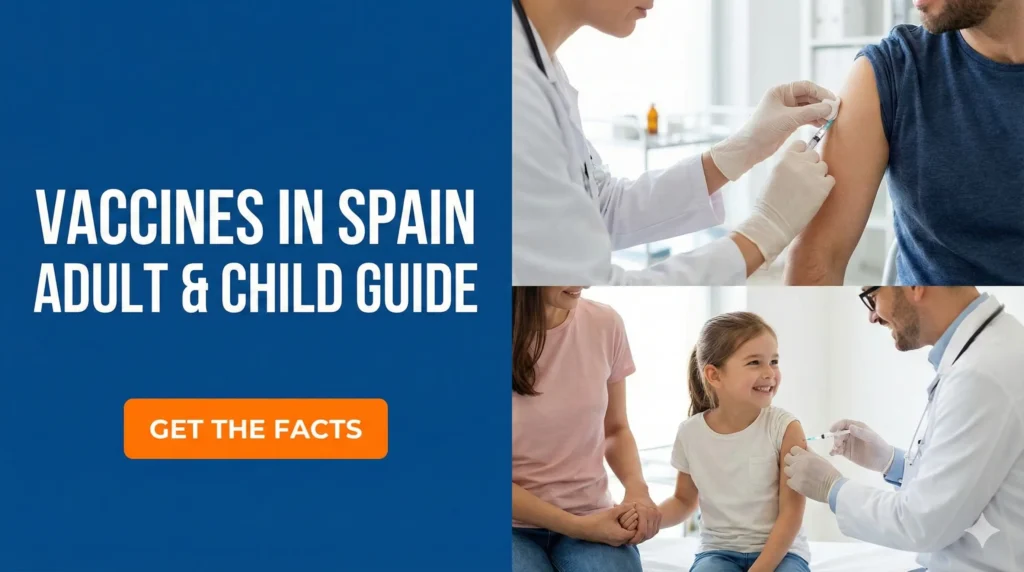
In Spain, the pediatric vaccination schedule is comprehensive and meticulously tracked. When a child is born in Spain, or when a foreign child is registered with the public healthcare system, the parents are issued a health booklet, commonly referred to as the Cartilla de Vacunación or Libro de Salud Infantil.
This booklet is a crucial physical document. Pediatricians and pediatric nurses use it to record weight, height, developmental milestones, and every single vaccine administered. You must bring this booklet to every medical appointment. Today, these records are also stored digitally in the regional health databases, allowing parents to access their children’s vaccination certificates via smartphone applications.
Childhood vaccines in Spain are generally divided into two categories: funded (systematically recommended) and non-funded (optional but recommended by pediatric associations).
Funded and Systematically Recommended Vaccines
These vaccines are completely free of charge and are administered routinely at the local public health center (Centro de Salud). The core childhood schedule protects against a wide array of severe infectious diseases.
The typical schedule begins at two months of age. Infants receive the hexavalent vaccine, a single injection that protects against six diseases: Diphtheria, Tetanus, Pertussis (Whooping Cough), Polio, Haemophilus influenzae type b, and Hepatitis B. They also receive the Pneumococcal vaccine.
At four months, they receive the second dose of the hexavalent and pneumococcal vaccines. At eleven months, the third booster doses are administered.
When the child reaches twelve months of age, they receive the MMR vaccine (known in Spanish as the Triple Vírica), which protects against Measles, Mumps, and Rubella. They also receive the Meningococcal C or ACWY vaccine. At fifteen months, the Varicella (Chickenpox) vaccine is introduced.
Boosters for MMR, Varicella, and DTP (Diphtheria, Tetanus, Pertussis) are given between the ages of three and six years old, with further boosters administered during early adolescence. To understand how to manage your child’s overall health journey, including selecting the right medical professional for these appointments, review our advice on Pediatric Care in Spain: Choosing a Pediatrician.
Standard Child Vaccination Schedule in Spain
The following table outlines the general timeline for the publicly funded childhood vaccination schedule. Please note that exact months can vary slightly depending on your autonomous community.
| Age | Vaccine Administered | Diseases Protected Against |
| 2 Months | Hexavalent (Dose 1), Pneumococcal (Dose 1) | Diphtheria, Tetanus, Pertussis, Polio, Hib, Hep B, Pneumococcus |
| 4 Months | Hexavalent (Dose 2), Pneumococcal (Dose 2) | Diphtheria, Tetanus, Pertussis, Polio, Hib, Hep B, Pneumococcus |
| 11 Months | Hexavalent (Dose 3), Pneumococcal (Dose 3) | Diphtheria, Tetanus, Pertussis, Polio, Hib, Hep B, Pneumococcus |
| 12 Months | Triple Vírica (MMR Dose 1), Meningococcal ACWY | Measles, Mumps, Rubella, Meningitis A, C, W, Y |
| 15 Months | Varicella (Dose 1) | Chickenpox |
| 3 to 4 Years | Triple Vírica (MMR Dose 2), Varicella (Dose 2) | Measles, Mumps, Rubella, Chickenpox |
| 6 Years | DTPa-IPV | Diphtheria, Tetanus, Pertussis, Polio |
| 12 to 14 Years | HPV (2 doses), Meningococcal ACWY, Td | Human Papillomavirus, Meningitis, Tetanus, Diphtheria |
Optional and Non Funded Vaccines
The Spanish Association of Pediatrics often recommends vaccines that are not fully funded by the national health system. The two most common examples are the Rotavirus vaccine (administered orally to infants) and the Meningococcus B vaccine (often sold under the brand name Bexsero).
In recent years, several progressive autonomous communities have begun funding Bexsero and Rotavirus, adding them to the free schedule. However, if you live in a region that does not fund them, you must purchase these vaccines out of pocket if you want your child protected.
The process for obtaining non-funded vaccines is a unique aspect of Spanish healthcare. First, your pediatrician writes a private prescription. You take this prescription to a local pharmacy and purchase the vaccine. Vaccines must be kept strictly refrigerated to maintain the “cold chain.” The pharmacist will usually provide an insulated bag with a small ice pack. You must take the vaccine home, store it immediately in your refrigerator, and then transport it back to the health center in the cold bag on the day of your appointment, where the public nurse will administer it free of charge.
Are Vaccines Mandatory for School in Spain
A frequent question raised by expatriate parents is whether vaccinations are legally required for children to attend school or daycare in Spain.
Strictly speaking, according to the Spanish Constitution, medical treatments, including vaccinations, are not legally mandatory for the general population. The state relies on education, public trust, and high voluntary compliance rather than legal coercion.
However, in practical terms, the situation is different. While the government cannot force you to vaccinate your child, private nurseries, publicly funded preschools (guarderías), and standard primary schools have the right to request the child’s vaccination record during the enrollment process.
Many public and semi-private (concertado) schools strongly enforce vaccination policies to protect the broader student body. If your child is missing core vaccines without a valid medical exemption, you may face significant administrative hurdles or outright denial of enrollment at specific institutions. If you are preparing to navigate the education system, ensure you understand all the bureaucratic requirements by reading our comprehensive guide on School Enrollment in Spain: Registration Steps for Foreign Families.
Validating Foreign Vaccination Records
When you relocate to Spain, your children will likely have received vaccines according to the schedule of your home country. Because international schedules differ—for instance, the UK schedule for Meningitis B or the US schedule for Rotavirus differ from Spain’s timelines—you must synchronize your records.
This process is known as “convalidación de vacunas.” You must bring your child’s original, official vaccination records from your home country to your new primary care center in Spain. If the records are not in English or Spanish, it is highly advisable to have them translated.
You will schedule an appointment with the pediatric nurse (enfermera pediátrica). The nurse will meticulously review your child’s foreign medical history, compare it against the Spanish national schedule, and create a catch-up plan. If your child is missing any vaccines required by the Spanish system, the nurse will schedule appointments to administer the missing doses. Once the records are synchronized, the nurse will issue a Spanish Cartilla de Vacunación, fully integrating your child into the local system.
Adult Vaccination Guidelines
Vaccination in Spain is not exclusively for children. The national health system strongly promotes lifelong immunization, recognizing that immunity to certain diseases wanes over time and that adults become more susceptible to severe complications from common infections as they age.
Routine Adult Boosters
For healthy adults, the most common routine vaccine is the Tetanus and Diphtheria (Td) booster. In Spain, if you received your full primary series of tetanus shots as a child, the protocol dictates that you should receive a single adult booster dose around the age of 65. However, if you suffer a severe, dirty wound or animal bite, the emergency room doctors will review your history and administer an immediate booster if your last dose was more than ten years ago.
The Seasonal Flu Campaign
Every autumn, typically beginning in October, the Spanish Ministry of Health launches a massive seasonal flu (gripe) vaccination campaign. The public health system provides the flu vaccine completely free of charge to specific high-risk demographics.
This includes all residents over the age of 60 or 65 (depending on the region), individuals of any age with chronic medical conditions (such as diabetes, heart disease, or respiratory illnesses), healthcare workers, and pregnant women. To ensure you do not miss the window for this annual protection, check out our detailed overview regarding Seasonal Flu Vaccines in Spain: Who Can Get Them and When. If you do not fall into a high-risk category but still wish to receive the flu shot, you can easily purchase it at a pharmacy for a very nominal fee (usually under 15 euros) and have a nurse administer it.
Senior Citizens and Advanced Protection
As adults transition into their senior years, the immune system naturally weakens, making preventative care even more critical. The Spanish schedule introduces specific vaccines for residents over the age of 65.
The most important of these is the Pneumococcal vaccine, which protects against severe bacterial pneumonia, meningitis, and bloodstream infections. Recently, Spain has also incorporated the Herpes Zoster (Shingles) vaccine into the public schedule for older adults, recognizing the severe debilitating pain caused by this virus.
Immunization During Pregnancy
Spain places a massive emphasis on maternal and fetal health, and vaccines play a critical role in prenatal care. The public healthcare system closely monitors expectant mothers to ensure they receive vital immunizations that protect both the mother and the newborn child during its most vulnerable first months of life.
The two most critical vaccines administered during pregnancy are:
- Whooping Cough (Tdap): Pertussis, or whooping cough, is incredibly dangerous for newborn babies. Because infants cannot receive their first pertussis vaccine until they are two months old, there is a dangerous window of vulnerability. To bridge this gap, pregnant women in Spain are strongly advised to receive the Tdap vaccine (protecting against Tetanus, Diphtheria, and Pertussis) between weeks 27 and 36 of their pregnancy. The maternal antibodies cross the placenta, providing the baby with passive immunity immediately upon birth.
- The Flu Vaccine (Gripe): Pregnant women undergo immune and respiratory changes that make them highly susceptible to severe complications from the influenza virus. If you are pregnant during the autumn or winter months, your public health midwife (matrona) or obstetrician will strongly urge you to get the seasonal flu shot.
These vaccines are universally funded and administered during routine prenatal checkups at the local health center.
Travel Vaccines and International Clinics
Spain is a nation of avid travelers, and expatriates living in Spain frequently travel back to their home countries or explore new international destinations. If you are planning a trip to a region with specific endemic diseases—such as parts of Africa, South America, or Southeast Asia—you cannot simply walk into your local neighborhood health center and ask for a Malaria pill or a Yellow Fever shot.
Spain manages travel medicine through a specialized network of clinics known as Centros de Vacunación Internacional (International Vaccination Centers). These clinics are usually located in major cities, provincial capitals, and near major ports and airports.
You must book an appointment at a CVI well in advance of your trip. During the consultation, a specialized doctor will review your itinerary, the length of your stay, the type of accommodation you will be using, and your personal medical history. Based on this risk assessment, they will administer the necessary vaccines, such as Typhoid, Hepatitis A, Rabies, or Yellow Fever.
It is important to note that while the consultation itself is often free under the public health system, the exotic vaccines themselves usually carry a fee that the traveler must pay out of pocket. Furthermore, the CVI is the only place authorized to issue the official International Certificate of Vaccination or Prophylaxis (the Yellow Card), which is legally required to enter certain countries. For advice on preparing for your consultation and knowing what information to bring, read our guide on Vaccines for Travel From Spain: What to Ask Your Doctor.
How to Access Vaccines Through Public and Private Healthcare
Your experience navigating the vaccination system will differ slightly depending on whether you rely on the state-funded public healthcare system or hold private medical insurance.
The Public Route
If you are registered with the social security system, the process is highly streamlined. You first need to ensure you possess a valid health card. If you are new to the country and need to handle this administrative step, consult our walkthrough on How to Get a Spanish Health Card (Tarjeta Sanitaria): Step-by-Step.
Once you have your card, you simply call your assigned Centro de Salud, use the regional health app, or walk up to the reception desk to book an appointment with the nursing department. The public health system automatically procures, stores, and administers all vaccines listed on the national schedule. You will never see a bill, and you do not need to deal with insurance claims.
The Private Route
Many expatriates live in Spain on Non-Lucrative Visas or Digital Nomad Visas, which legally require them to hold comprehensive private health insurance (such as Sanitas, Adeslas, or DKV).
If you are using private healthcare, you must pay close attention to your policy details. Private insurance companies will absolutely cover the cost of the medical appointment and the administration of the vaccine by a private nurse. However, private policies frequently do not cover the actual pharmaceutical cost of the vaccine serum itself.
In the private system, a pediatrician or general practitioner will write you a prescription. You must take this prescription to a retail pharmacy, purchase the vaccine out of pocket at full retail price, maintain the cold chain in your refrigerator, and bring the vaccine to your private clinic appointment. Because standard childhood vaccines like the hexavalent or MMR can be expensive, many expat families choose to register their children in the public health system specifically for the vaccination program, even if they use private doctors for routine illnesses.
Digital Health Records and Applications
Spain has made massive strides in digitizing its healthcare bureaucracy. In the past, losing your physical vaccination booklet was a major headache. Today, every autonomous community operates a centralized digital health portal.
Applications such as “Mi Carpeta de Salud” (My Health Folder) or regional variants like “La Meva Salut” in Catalonia allow residents to access their complete medical history from their smartphones. By logging in with a secure digital certificate or Cl@ve PIN, you can view a comprehensive list of every vaccine you or your children have received in Spain.
These digital platforms allow you to download and print official vaccination certificates in PDF format. This is incredibly useful when registering your child for a new school, applying for summer camps, or organizing international travel documents. Embracing these digital tools will make managing your family’s preventative healthcare significantly more efficient.
Conclusion
The Spanish approach to vaccination is characterized by its comprehensive scope, strong public funding, and high level of societal trust. By establishing a unified national schedule while allowing regional flexibility, the healthcare system ensures that the population remains protected against preventable infectious diseases.
For expatriates, integrating into this system requires a brief learning curve. By understanding the distinction between funded and non-funded vaccines, synchronizing your foreign medical records upon arrival, and utilizing both the public health centers and specialized international travel clinics, you can seamlessly protect your health. Whether you are welcoming a newborn in Madrid or preparing for a healthy retirement in Alicante, the Spanish healthcare infrastructure is fully equipped to support your lifelong immunization needs.
References
Primary Sources Official
- Ministerio de Sanidad (Ministry of Health): https://www.sanidad.gob.es/
- Consejo Interterritorial del Sistema Nacional de Salud (National Health System Interterritorial Council): https://www.sanidad.gob.es/organizacion/consejoInterterri/
- Asociación Española de Pediatría (Spanish Association of Pediatrics): https://www.aeped.es/
Other Helpful Sources
- Centros de Vacunación Internacional (International Vaccination Centers Spain): https://www.sanidad.gob.es/areas/sanidadExterior/laSaludTambienViaja/centrosVacunacionInternacional/
- European Centre for Disease Prevention and Control (ECDC) – Vaccine Schedules: https://www.ecdc.europa.eu/en/immunisation-vaccines
Disclaimer
The information provided in this article is for general informational and educational purposes only and does not constitute formal medical or legal advice. Vaccination schedules, public funding for specific vaccines, and school enrollment requirements are subject to frequent changes by the Spanish Ministry of Health and individual autonomous communities. Always consult with a licensed pediatrician, primary care physician, or local Spanish health center regarding specific medical treatments, vaccination catch-up schedules, and preventative healthcare decisions.