Booking Spanish Transport With Kids: Child Fares, Seats, and Prams
Disclosure: This article contains affiliate links. If you buy through them, we may earn a commission at no extra cost to you. Read our full disclosure.
Oh, the joys and challenges of exploring Spain with your little ones! As an expat who's navigated countless train stations, bus terminals, and airport check-ins with a gaggle of kids (and a pram that always felt too big), I know the anxiety that can bubble up when trying to figure out tickets, seating, and luggage rules. This guide is here to cut through the confusion, offering practical tips on child fares, reserving suitable seats, and wrangling those ever-present prams, all while showing you how a fantastic tool like Omio can simplify the entire journey for your family.
Deciphering Child Fares and Age Limits on Spanish Transport
One of the first hurdles you’ll encounter when planning family travel in Spain is understanding the labyrinthine world of child fares. It feels like every transport company has its own set of rules, age cut-offs, and discounts, doesn't it? But don't fret, there's a method to the madness, and once you get the hang of it, you'll be booking like a seasoned pro.
Train Travel with Minors: Renfe's Rules
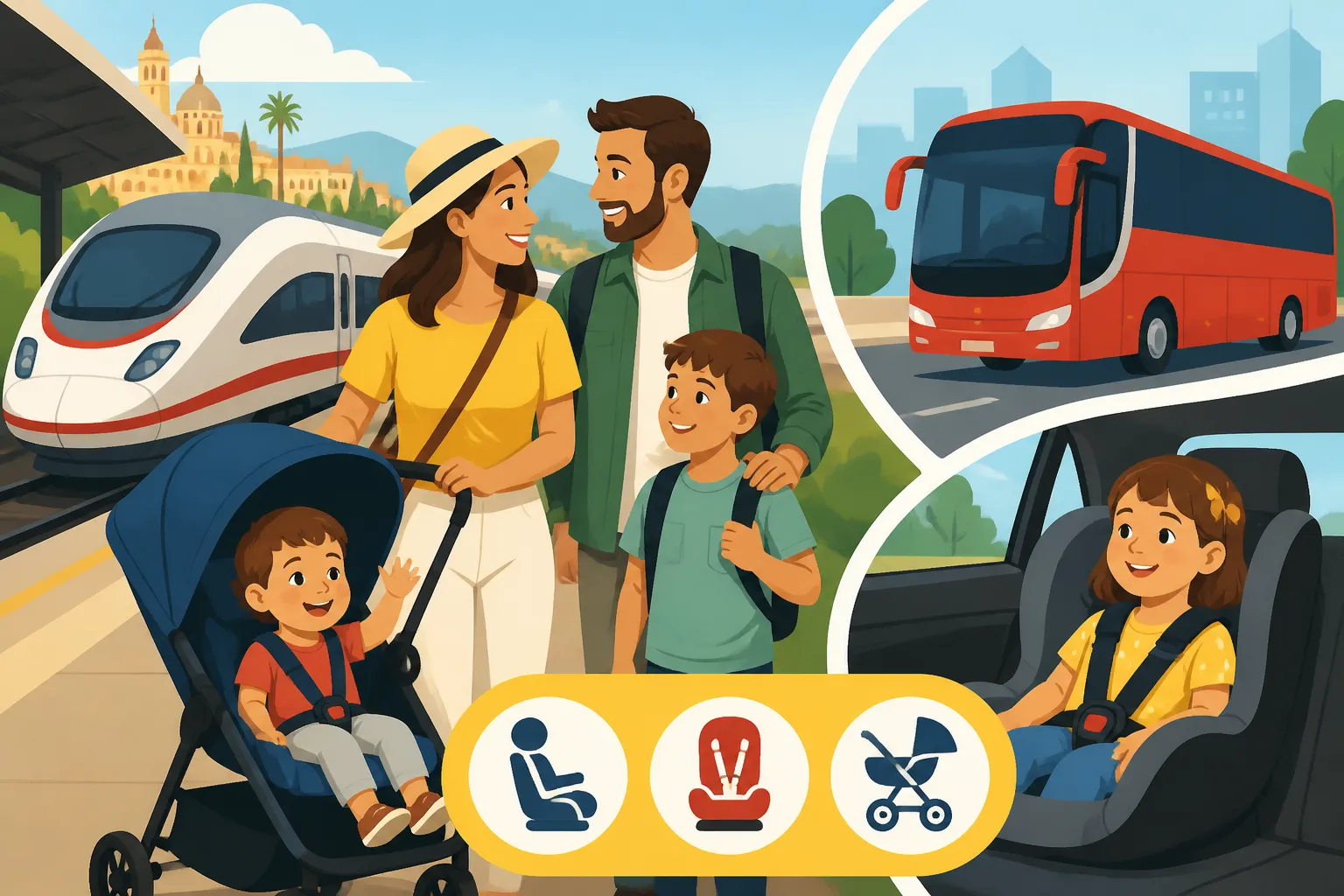
When it comes to trains in Spain, Renfe is your main player. Their rules for kids are generally straightforward, but it's crucial to pay attention to the age brackets. For instance, children under 4 years old can travel for free on most trains, provided they don't occupy a seat. This is often referred to as a "Bebé" ticket. You'll still need to "book" them a zero-cost ticket, especially on high-speed AVE trains, to ensure they are accounted for and for security reasons. Trust me, trying to sneak a kid on without a ticket is just asking for a headache, even if it's free!
Once your little one hits 4, or if you want a dedicated seat for your under-4, they'll typically fall into the "Niño" or child fare category. This usually offers a significant discount, often around 40% off the adult fare, up to a certain age, usually 13 or 14, depending on the service. These child tickets do come with a reserved seat, which, if you've ever tried to hold a wriggling toddler on your lap for a few hours, you'll know is worth every single cent. It’s a lifesaver for everyone’s sanity.
The beauty of using a platform like Omio for this is that it automatically applies these child discounts when you input the ages of your travelers. You don't have to go digging through Renfe's sometimes clunky website trying to find the right fare type. Just pop in your family's details, and Omio handles the heavy lifting, showing you the best available options. This makes comparing routes and prices for High-Speed Trains in Spain AVE: Routes, Booking, and Savings so much simpler.
Bus Journeys for Little Passengers
Bus travel in Spain, particularly with companies like ALSA, also offers child discounts, but again, the specifics can vary. Generally, infants and very young children (often under 2 or 4, depending on the route and company) can travel for free if they sit on an adult’s lap. Beyond that, a child fare, usually a percentage off the adult ticket, will apply for kids up to around 12 years old.
The main difference with buses is that space can feel a bit more confined than on a train. If you have a child who struggles to sit still, a long bus journey might feel a bit more challenging. However, buses often serve routes that trains don't, especially to smaller towns and coastal areas, making them an essential part of Traveling Around Spain: Trains, Buses, Flights, and Car Hire. When booking through Omio, you’ll see the child options clearly presented, allowing you to quickly secure tickets for the whole family across various bus operators.
Air Travel for Families on Domestic Routes
For longer distances within Spain, especially if you’re heading to the islands or want to save time, domestic flights can be a great option. Airlines usually have very strict rules for infants (under 2 years old) and children (2-11 years old). Infants typically fly for a nominal fee or a percentage of the adult fare, usually sitting on an adult's lap, but you'll need to indicate them during booking. For children, you'll generally pay a child fare, which includes their own seat and standard luggage allowance.
Keep in mind that while the flight itself might be quick, the entire airport experience – check-in, security, boarding, disembarking – adds significant time and potential stress when traveling with kids. However, for getting from, say, Madrid to the Canary Islands, flying is undeniably the most practical option. Omio allows you to compare flights alongside trains and buses, giving you a comprehensive view of all family-friendly travel options to help you decide when Domestic Flights in Spain: When They Beat the Train.
Securing Comfortable Seats and Managing Expectations
Finding a comfortable and safe spot for your little ones is paramount, and it often means thinking beyond just the ticket price. Spain's transport options offer various scenarios, and knowing what to expect can save you a lot of hassle.
Seat Reservations on Trains and Buses
For most medium to long-distance train and bus services in Spain, particularly high-speed trains, seat reservations are mandatory and included in the ticket price. This is fantastic for families, as it means you're guaranteed a spot together. When booking, always try to select seats that are next to each other. On Renfe trains, you might even find specific "family" areas or carriages, or seats arranged in a quad around a table, which is perfect for spreading out snacks and coloring books. Omio's booking process usually allows for seat selection or at least ensures adjacent seats for family bookings, taking another layer of complexity off your plate.
For shorter regional trains (like Cercanías) or urban buses, seat reservations aren't a thing. It's more of a first-come, first-served situation. This is where you might need to embrace a bit of Spanish assertiveness – if you see an empty seat, go for it! People are generally understanding when they see parents with young children, and you might even find a friendly local offering up their seat. This can be particularly relevant when you're navigating Getting Around Spanish Cities: Metro, Bus, Tram, and Bikes.
The Car Seat Conundrum
This is a big one for many expat families and tourists. In Spain, children under 135 cm (roughly 4 feet 5 inches) must use an approved child restraint system appropriate for their height and weight. This rule applies to private cars and ride-sharing services, and in principle to taxis.
The rub? Taxis are often exempt from this rule within urban areas, which can be a relief but also a point of concern for safety-conscious parents. For longer taxi journeys, it’s always best to pre-book a taxi that can provide a child seat, though this isn't always easy to guarantee. Companies like Cabify or Free Now sometimes offer options to request child seats, but availability can be hit-or-miss.
For buses and trains, you generally won’t be expected to use a car seat as they have different safety standards, but some parents bring portable booster seats for older kids or car seats that can be secured to a train seat, which isn't always practical or guaranteed to fit perfectly. If you're planning on Renting a Car in Spain: Requirements, Insurance, and Driving Tips, ensure you reserve the appropriate car seats well in advance, as they can run out during peak season.
Keeping Kids Entertained
Ah, the eternal challenge! Regardless of the mode of transport, a prepared parent is a happy parent (and happy kids!). For train and bus journeys, especially those lasting more than an hour, pack a bag of tricks: snacks, water bottles, coloring books, small toys, and fully charged tablets with headphones. Many newer AVE trains offer Wi-Fi, which can be a godsend. Buses, however, are less likely to have reliable Wi-Fi.
For very young children, strategically planning travel during nap times can work wonders. For older kids, encourage them to look out the window and spot landmarks, or even teach them a few basic Spanish phrases. Remember, a little flexibility and a lot of patience go a long way when managing Family Travel in Spain: Kid-Friendly Cities and Activities. And a huge advantage of Omio here is that by comparing journey times for different modes, you can pick the shortest or most convenient for your family's particular attention spans!
The Pram Predicament: Strollers and Luggage Logistics
The humble pram, indispensable for getting your little one around, can become an absolute beast when dealing with Spanish public transport. From navigating crowded stations to figuring out where to stash it, it's a constant consideration.
Navigating Stations and Platforms
Spain has made great strides in accessibility, but older train and metro stations, particularly in historic cities, can still present challenges. Expect to encounter stairs, escalators that are too narrow for your double buggy, and occasionally, out-of-order lifts. On the flip side, major hubs like Madrid's Atocha or Barcelona's Sants stations are generally well-equipped with lifts and ramps.
When you're rushing to catch your connection, the last thing you want is a broken lift. My advice? Always allow extra time. A good rule of thumb for any Spanish administrative or logistical task is to add at least 20-30% more time than you think you need. Consider using a lighter, more collapsible stroller if possible, or a baby carrier for very young children, especially for navigating busy metro systems.
Storing Your Stroller on Board
This is where things can get a bit tricky.
- Trains (Renfe): On high-speed AVE and long-distance trains, you'll generally find dedicated luggage racks at the end of each carriage, and sometimes smaller overhead bins. If your pram folds down compactly, it might fit in an overhead bin. Otherwise, you'll need to collapse it and store it in a luggage rack. If trains are particularly full, this can be a tight squeeze. For smaller regional trains, space is often more limited, and you might end up having to block an aisle temporarily until a suitable spot is found.
- Buses (ALSA, etc.): With intercity buses, prams must be folded and stored in the under-bus luggage compartment. You hand it to the driver, who will usually help you stow it. Make sure any detachable parts (like a rain cover or bag) are secured or removed, as you won't have access to it during the journey.
- Flights: For domestic flights, prams are usually checked at the gate for free, or you can check them with your regular luggage. Airlines vary, so check their specific policy on prams – some allow you to take a compact stroller into the cabin if it fits size limits for Domestic Flights in Spain: When They Beat the Train.
While Omio doesn't manage the physical storage of your pram, it provides direct access to carrier information and luggage allowances, helping you plan ahead for potential issues. Knowing the luggage policy for a particular train or bus company before you arrive at the station can save you from a very stressful moment!
Extra Luggage for Kids
Let's be real, traveling with kids means traveling with stuff. Diaper bags, toys, extra clothes, snacks, medicines – it all adds up. Most train and bus tickets include a standard luggage allowance, but airlines can charge extra for additional bags.
Here's a tip: consolidate where you can. A large backpack for the "kid essentials" (diapers, wipes, a change of clothes, emergency snacks) that stays with you on board is invaluable. For everything else, aim for suitcases that are easy to maneuver, especially if you're wrangling children simultaneously. Remember that Spanish Customs, Etiquette, and Social Life means people generally won't rush to help you carry your bags unless you directly ask, so plan to be self-sufficient.
Smart Booking Strategies for Family Travel in Spain
Making travel arrangements with children can feel like a part-time job. Between comparing prices, checking schedules, and ensuring everyone's needs are met, it’s a lot. This is where having a reliable, comprehensive booking tool becomes your best friend.
Why a Single Platform Makes a Difference
Imagine this: you're trying to figure out the best way to get your family from Barcelona to Seville. Do you take the high-speed train? A domestic flight? Or a long-distance bus that might be cheaper but take significantly longer? Trying to navigate Renfe's website, then checking various airline sites, and then bus operators, just to compare apples to oranges, is exhausting.
This is precisely where Omio shines as your core solution. It aggregates data from multiple transport providers – trains, buses, and flights – all in one user-friendly interface. You input your origin, destination, dates, and, crucially, the ages of your children, and Omio presents you with all the available options, clearly laying out journey times, prices, and even filtering by direct routes. This means less tab-hopping and more time spent planning the fun parts of your trip, like which delicious tapas to try!
With Omio, you can quickly see that a train journey might take 5 hours, cost X amount, and offer spacious seating, while a flight might take 1.5 hours plus airport time, cost Y, and have different luggage rules. It streamlines the decision-making process, allowing you to pick the best balance of speed, cost, and comfort for your family. If you're a parent, this kind of efficiency is pure gold. Head over to Omio now to see how simple it can be to compare and book your Spanish adventures!
Timing Your Bookings for Family Savings
For family travel, especially on popular routes or during peak seasons (like summer holidays, Easter, or Christmas), booking in advance is almost always beneficial. Train and flight tickets, in particular, tend to get more expensive closer to the departure date. By booking ahead, you not only secure better prices but also ensure you get those coveted family seats together.
With Omio, you can easily browse schedules weeks or even months in advance. You'll see how prices fluctuate, allowing you to snatch up a good deal. If you have some flexibility with your travel dates, play around with different days of the week or even times of day, as off-peak travel can often yield significant savings. Remember to check for specific discounts, though Omio often applies them automatically when you input passenger ages. Even if you're not ready to book, using Omio to scout out prices gives you a clear picture of what to budget for your trip, which ties into managing your Cost of Living in Spain: Realistic Budgets and Savings Tips.
Navigating Local Transport with Kids
Once you're in a city, you'll likely use local transport like the metro, urban buses, or trams. The rules here are often simpler:
- Metro/Bus: In most major cities like Madrid and Barcelona, children under a certain age (often 4, but check local rules, e.g., Madrid's metro is free for under 7s) travel for free. They usually don't need a ticket, but they do need to pass through the turnstile with an adult. For older children, you'll buy a standard ticket or use a multi-journey card.
- Prams on Local Transport: This is where that compact, collapsible stroller really earns its keep. On crowded metro trains and buses, space is limited. Be prepared to fold your pram if asked or if it's clear there's no room. During rush hour, it can be a real struggle, so try to travel during off-peak times if possible.
Local transport systems, while not bookable on Omio, are often seamlessly integrated into your overall travel plans found on the platform. After you've used Omio to book your main intercity journey, you can then easily plan your local connections. This combined approach gives you peace of mind that your family's entire journey, from city to city and within, is well-considered.
| Transport Type | Free Child Age (Approx.) | Child Discount Age (Approx.) | Seat Reservation for Child | Pram Storage | Best Booking Tool |
|---|---|---|---|---|---|
| Trains (Renfe) | Under 4 (lap seat) | 4-13 years | Included in child fare | Folded in luggage rack | Omio |
| Buses (ALSA) | Under 2-4 (lap seat) | 2/4-12 years | Usually included | Under-bus compartment | Omio |
| Domestic Flights | Under 2 (lap seat, nominal fee) | 2-11 years | Included in child fare | Checked at gate/hold | Omio |
| Local Buses/Metro | Under 4-7 (varies by city) | N/A (standard adult fare) | Not applicable | Folded (can be tricky) | On-site purchase |
Remember, traveling with children, especially in a new country, is an adventure. There will be bumps in the road, but with a bit of planning and the right tools, you can ensure a much smoother and more enjoyable experience for everyone. So go ahead, get those tickets sorted with Omio and embark on your Spanish family escapade!
Disclaimer
The information provided in this guide is for general informational purposes only and is based on typical rules and practices in Spain. Transport regulations, fare structures, and age limits can change, and specific policies may vary by individual transport provider or regional authority. While we strive to keep information up-to-date, it is always recommended to verify the latest details directly with the respective transport companies or official government sources before making any travel arrangements. This guide does not constitute legal, financial, or professional travel advice.