How to Visit El Rastro Market in Madrid
Most first-time visitors to Madrid head to El Rastro expecting a quaint, organized flea market, only to be met with a swarming sea of people and a confusing labyrinth of streets that can leave even the most seasoned traveler frustrated. This guide solves that overwhelm by providing an insider’s roadmap to navigating the chaos, finding authentic antiques, and avoiding the common pitfalls of this Sunday tradition.
Disclosure: This post may contain affiliate links. We may earn a commission at no extra cost to you if you make a purchase through these links. Read full disclosure.
Planning Your Visit to El Rastro: Timing and Logistics
If there is one thing I have learned after living in the Spanish capital for years, it is that El Rastro is as much a social ritual as it is a shopping destination. Located in the historic neighborhood of La Latina, the market officially runs every Sunday and on public holidays from approximately 9:00 AM to 3:00 PM. However, showing up at high noon is a mistake I see far too many people make. By then, the main artery of the market, Calle de Ribera de Curtidores, is so packed that you will spend more time protecting your wallet than looking at items.
To experience the market like a true Madrileño, you need to arrive no later than 9:30 AM. This is the "golden hour" when the air is still crisp, the stall owners are still friendly, and you can actually see the merchandise. If you are coming from outside the city center, I recommend using Omio to check the quickest train schedules into Atocha or Principe Pio, as navigating Sunday traffic in a rental car is a nightmare you want to avoid. Once you arrive, the most efficient way to reach the market is by taking the Metro (Line 5 to La Latina or Puerta de Toledo, or Line 1 to Tirso de Molina). If you are new to the city, check out this guide on How to Use the Madrid Metro as a First-Time Visitor to ensure you don't get turned around in the tunnels.
When it comes to what to bring, think "low profile." This is not the place for your designer handbag or a bulky backpack. I always tell my friends to bring a crossbody bag that sits in front of their torso and to carry a bit of physical cash. While many larger stalls now accept cards, the real "finds"—those dusty boxes of old postcards or vintage brass hardware—are often cash-only transactions. If you are staying further out and haven't booked your accommodation yet, looking at What's the Best Area to Stay in Madrid can help you find a spot within walking distance so you can beat the crowds entirely.
Navigating the Streets: Where to Find the Best Treasures
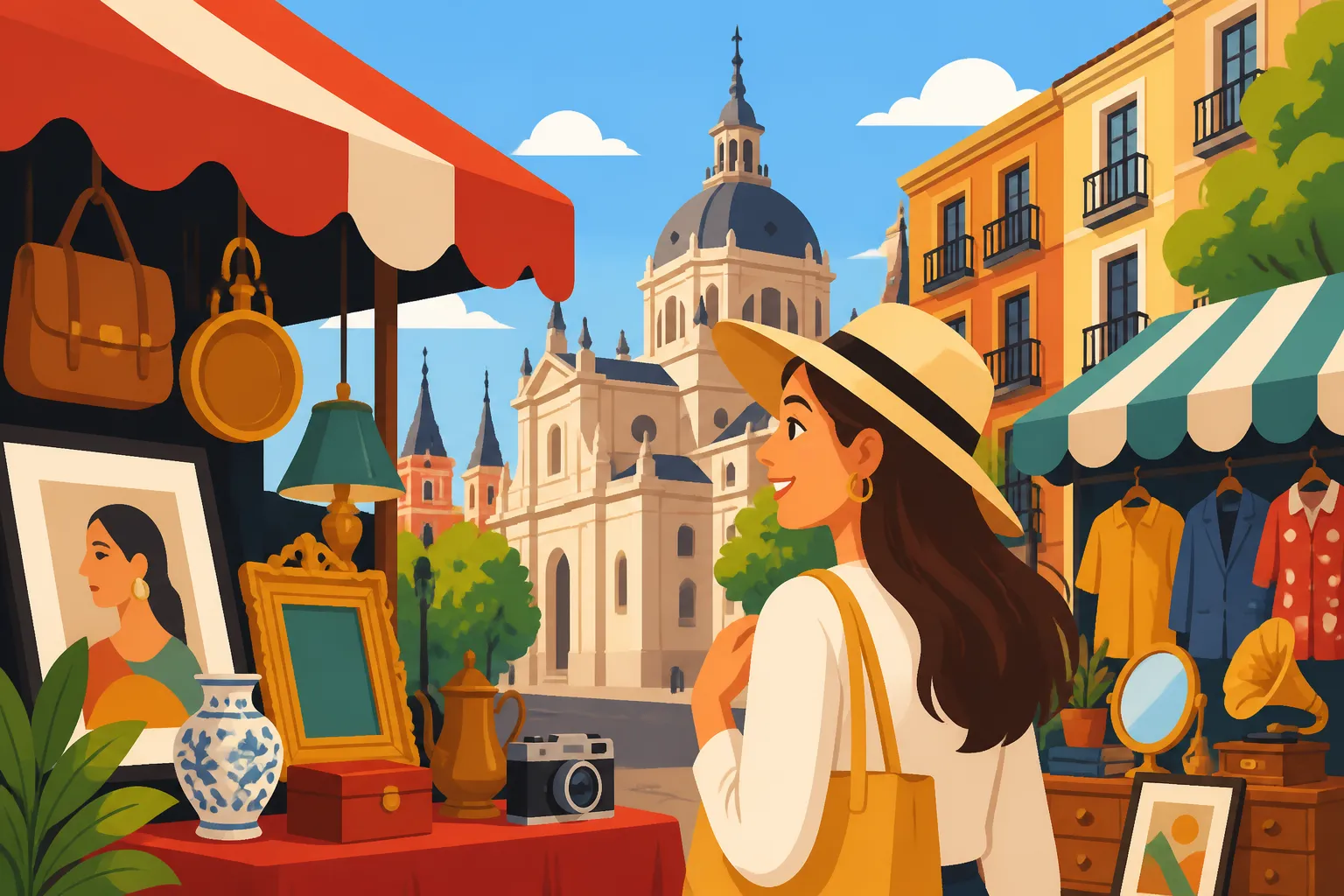
The biggest mistake people make is staying on the main hill of Ribera de Curtidores. This central street is where you will find the generic "tourist" items: mass-produced t-shirts, cheap incense, and faux-leather bags. If you want the authentic flea market experience, you have to peel off into the side streets. Each plaza and alleyway has its own specialty, a tradition that has been preserved for decades. For instance, the Plaza de General Vara del Rey is the epicenter for vintage clothing and second-hand textiles. I’ve spent many mornings here digging through piles of 1970s Spanish leather jackets and retro scarves.
If you are a fan of art, head straight to Calle de San Cayetano, also known as "Painters' Street." Here, you will find local artists selling original canvases alongside stalls overflowing with frames and art supplies. For those more interested in serious antiques or mid-century modern furniture, the "Galerías" (indoor courtyards) located along the main hill are hidden gems. These permanent shops are tucked away behind the temporary stalls and often house high-quality items that are much easier to browse in a quiet environment. If you’re feeling a bit lost, you can always book a guided walking tour through GetYourGuide to have someone point out these specific enclaves.
Avoiding tourist traps in El Rastro requires a bit of a cynical eye. If an item looks too new or is being sold at five different stalls within fifty meters, it isn't an authentic find. The real treasures are usually found in the lower part of the market, near Ronda de Toledo, where things get a bit more "rough around the edges." This is where you’ll find old tools, vinyl records, and strange household relics from the Franco era. For a broader look at the city's layout before you dive in, read Madrid for First-Time Visitors: Neighborhoods and Highlights to understand how La Latina fits into the wider history of the capital.
Staying Safe and Eating Like a Local
I would be doing you a disservice if I didn't mention the "art" of pickpocketing at El Rastro. It is arguably the most famous spot in Spain for light-fingered thieves. They rely on the "tap and bump" method in crowded areas. This isn't meant to scare you, but rather to prepare you. I always keep my phone in an inner zipped pocket and never, ever keep anything in my back pockets. For a deeper dive into staying secure, have a look at Avoiding Pickpockets in Spain's Tourist Areas and Staying Safe in Spain: Practical Safety Tips for New Residents. Usually, if you are aware of your surroundings, you won't have any issues, but the density of the crowd at 1:00 PM is a pickpocket's playground.
The true end to any El Rastro visit isn't a purchase, but the "aperitivo." Around 2:00 PM, the market begins to wind down, and the bars in La Latina start to overflow. This is when you should head to Calle de la Cava Baja or Calle de Toledo for a vermut de grifo (vermouth on tap) and some tapas. It is a standing-room-only affair, and it can be intimidating for newcomers. You’ll need to master the art of catching a waiter’s eye in a crowded room. To prepare for this cultural hurdle, I highly recommend reading up on Spanish Bar and Café Etiquette for Newcomers and Spanish Tapas Culture: How to Order and Where to Go.
If you prefer a sit-down meal, be prepared to wait or book well in advance. Most of the traditional taverns, like Los Caracoles or El Capricho Extremeño (famous for their massive open-faced toasts), will be packed. If you want to stay right in the heart of this vibrant energy for your whole trip, you can find some fantastic boutique apartments on Booking.com that put you right on the doorstep of the Sunday madness. Just remember that the neighborhood stays loud well into the evening, which is part of its charm. To ensure you don't accidentally order something you won't enjoy, check out How to Order Tapas in Spain Without Overdoing It.
Comparison of Madrid Market Experiences
To help you decide how much time to dedicate to El Rastro versus other shopping experiences in the city, I've put together this quick comparison of the most popular markets in Madrid.
| Market Name | Primary Vibe | Best For | Typical Crowd Level |
|---|---|---|---|
| El Rastro | Historic / Gritty / Traditional | Antiques, Vintage, People Watching | Extremely High (Sundays) |
| Mercado de San Miguel | Upscale / Gastronomic | Gourmet Tapas, Wine, Photography | High (Daily) |
| Mercado de Motores | Hipster / Industrial | Handcrafted Goods, Food Trucks | Medium (Monthly) |
| Mercado de la Cebada | Local / Authentic | Fresh Produce, Seafood, Local Life | Low to Medium (Weekdays) |
Final Tips for an Authentic Experience
One final piece of advice from someone who has navigated these streets hundreds of times: don't feel pressured to buy anything. Some of my favorite Sundays at El Rastro involved zero purchases. The real value is in the atmosphere—the shouting of the vendors (the "chulapos"), the smell of frying calamari, and the sound of street musicians playing accordion near Plaza de Cascorro. It is a sensory experience that defines the soul of Madrid.
If you find a piece of furniture you love but can't carry it, many of the permanent antique shops offer shipping services, or you can arrange a local "portador" to move it for you. Also, keep in mind that the market is entirely outdoors. Madrid’s weather can be fickle; it can be freezing in January and sweltering by May. If you're visiting in the warmer months, keep a bottle of water on you, as the narrow streets can trap heat. El Rastro is more than a market; it is a living museum of Madrid's history. Embrace the chaos, keep your bag close, and make sure you have a cold drink waiting for you at the end.
Disclaimer
The information provided in this guide is for informational purposes only. While every effort has been made to ensure the accuracy of the details regarding El Rastro market, schedules, and local regulations, these can change without notice. Always check local municipal announcements or official transport websites before planning your visit. The author and publisher are not responsible for any losses, including theft or injury, that may occur while visiting the locations mentioned.