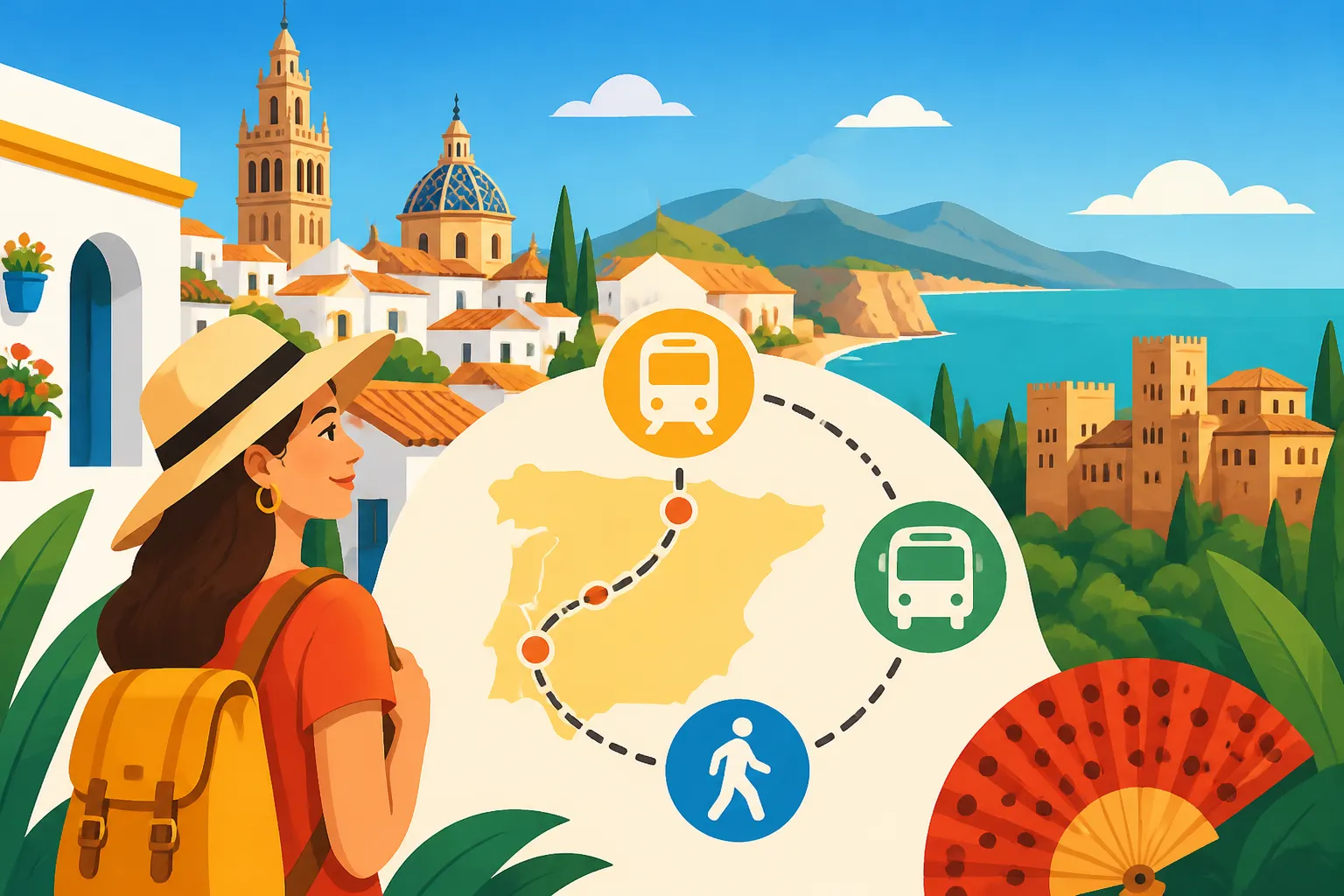
How to Plan a Week in Southern Spain Without a Car
Oh, trying to navigate the beauty of Southern Spain without a car, eh? Believe me, I've been there! The thought of disentangling foreign public transport systems, deciphering schedules, and lugging bags can feel daunting, especially when you just want to soak up the sun and culture. But let me tell you, Andalusia is surprisingly accessible and absolutely glorious to explore car-free. This guide is going to walk you through exactly how to plan an unforgettable week, making those travel jitters disappear faster than a plate of gambas al ajillo.
Disclosure: This post may contain affiliate links. We may earn a commission at no extra cost to you if you make a purchase through these links. Read full disclosure.
Why Southern Spain is Perfect for Car-Free Travel
When you picture sprawling Spanish landscapes, you might assume a car is essential, right? That's a common misconception, especially with the stunning region of Andalusia. In reality, Southern Spain, particularly its major cities, boasts an incredibly efficient and interconnected public transportation network that makes car-free exploration not just possible, but often preferable. Think about it: no hunting for parking in ancient, narrow streets, no navigating unfamiliar traffic laws, and no stress about rental car insurance.
Excellent Public Transport Network
Southern Spain's public transport is a lifeline, offering a fantastic blend of high-speed trains and comfortable long-distance buses that connect all the major hubs you'd want to visit. The Renfe train network, especially its high-speed AVE lines, is a gem for travelers. Imagine zipping between cities like Seville, Córdoba, and Málaga in mere minutes, all while enjoying comfortable seats and often beautiful countryside views. These trains are incredibly punctual and offer different classes of service, catering to various budgets. For routes not covered by high-speed trains or when you're looking for a more budget-friendly option, Spain's bus system is extensive. Companies like ALSA operate modern, air-conditioned coaches that reach virtually every town and city, often with more frequent departures than trains on certain routes.
What's really reassuring is how integrated these services are. Major train stations and bus terminals are typically well-situated, often a short walk or quick local bus ride from city centers. This means you arrive right where the action is, ready to start exploring without the added hassle of car logistics. You'll find it incredibly easy to hop from one historical city to another, making a multi-destination trip seamless and enjoyable. For detailed routes and tickets, platforms like Omio are fantastic for comparing train and bus options side-by-side, letting you choose the best fit for your schedule and wallet.
Walkable Cities and Towns
One of the greatest joys of exploring Southern Spain without a car is discovering just how wonderfully walkable its cities and towns are. From the winding, narrow alleys of Seville's Santa Cruz quarter to Granada's atmospheric Albaicín, these places were built for pedestrian exploration, not vehicles. Most historical centers are either pedestrian-only or have very limited vehicle access, meaning you're encouraged to wander, get a little lost, and stumble upon hidden plazas, charming tapas bars, and ancient architectural marvels.
Even in larger cities like Seville and Málaga, the main attractions are concentrated within comfortable walking distance of each other. You can spend entire days simply strolling through neighborhoods, taking in the sights, sounds, and smells without ever needing to hail a taxi or decipher a bus route. When your feet do need a rest, local public transport—like the efficient tram in Seville or the metro in Málaga—is there to whisk you across town quickly. Many visitors even find that walking allows them to truly connect with the local pace of life, discovering artisan shops, small bodegas, and vibrant street art that you'd likely miss from a car window. It's an immersive experience that really makes you feel like you're living, not just visiting. For deeper insights into the regional delights, check out our guide on Andalusia for Travelers: Cities, Coast, and Culture.
Crafting Your Itinerary: A Sample Week in Andalusia
Okay, so you're convinced that car-free is the way to go! Now for the fun part: planning your adventure. Southern Spain offers an embarrassment of riches, but for a week, it's best to focus on three key cities that form a perfect triangle, easily connected by public transport: Seville, Granada, and Córdoba. This route allows you to experience the diverse historical, cultural, and culinary highlights of Andalusia without feeling rushed or overwhelmed.
Day 1-3: Seville, the Heart of Andalusia
Your Andalusian journey will likely begin in Seville, the vibrant capital. It's a city that effortlessly blends grandeur with intimate charm, and arriving by train or bus is a breeze. Santa Justa train station is well-connected to the city center by local buses and taxis, making your transfer upon arrival simple. If you're looking for accommodation, sites like Booking.com offer a vast array of options, from boutique hotels in historical quarters to modern apartments. It is wise to stay within or very close to the old town (like Santa Cruz or Triana) so you can walk everywhere.
Dedicate your first full day to the city's iconic landmarks. Start with the majestic Seville Cathedral, home to Christopher Columbus's tomb and the breathtaking Giralda tower, which you can climb for panoramic views. Just next door is the stunning Real Alcázar, a royal palace with intricate Mudejar architecture and lush gardens – make sure to book your tickets in advance to avoid long queues! Afterwards, get lost in the winding, flower-lined streets of the Santa Cruz quarter. On your second day, cross the bridge to the Triana neighborhood, famous for its ceramics, flamenco, and lively market. Consider taking a local cooking class or enjoying a flamenco show in the evening. For a comprehensive overview of the city's highlights, a guided tour booked through GetYourGuide can be an excellent way to get your bearings and delve into the history. Seville is incredibly walkable, but it also has an efficient tram system and local buses for longer distances, like visiting the Plaza de España or María Luisa Park.
Day 4-5: Granada, a Moorish Dream
After immersing yourself in Seville's grandeur, it's time to head east to Granada, a city steeped in Moorish history and bohemian charm. The journey from Seville to Granada is easily done by train or bus, with both options offering scenic routes. The AVE train connection is quick, often taking around 2.5-3 hours. Remember, using a platform like Omio lets you compare times and prices to find the most convenient option for your travel style.
Once you arrive, the Alhambra will undoubtedly be your first priority – and for good reason. This magnificent palace and fortress complex is a UNESCO World Heritage site and an absolute must-see. Seriously, book your tickets months in advance, especially for the Nasrid Palaces, which have timed entry slots. You'll need a good half-day, if not more, to explore its palaces, courtyards, and the Generalife gardens. Afterwards, wander through the labyrinthine streets of the Albaicín, the old Moorish quarter, enjoying breathtaking views of the Alhambra from various miradores (viewpoints), especially at sunset. The Sacromonte caves, traditional homes of Granada's Romani community, offer another unique cultural experience, often accompanied by flamenco performances. Granada is also famous for its incredible tapas culture; here, you usually get a free tapa with every drink! Don't forget to review our guide on Spanish Tapas Culture: How to Order and Where to Go to make the most of it.
Day 6-7: Córdoba, the City of Patios
Your final stop on this whirlwind Andalusian tour is Córdoba, a city renowned for its stunning Mezquita-Cathedral and picturesque patios. Getting from Granada to Córdoba is another straightforward journey by either train or bus, typically taking around 1.5 to 2 hours by high-speed train. This efficient connection allows you to maximize your time in each city rather than spending it on travel.
The absolute jewel of Córdoba is the Mezquita-Cathedral, an architectural marvel that seamlessly blends a mosque and a cathedral, reflecting centuries of diverse cultural influences. Allow ample time to explore its forest of striped arches and the ornate Christian cathedral built within. Adjacent to the Mezquita is the Judería, the old Jewish Quarter, a charming maze of whitewashed lanes, flower-filled patios, and artisan shops. Be sure to seek out the famous Calleja de las Flores for that iconic Instagram shot. Depending on the season, you might also be lucky enough to visit during the Patios Festival, when private courtyards are opened to the public, showcasing incredible floral displays. For a more tranquil experience, explore the Alcázar de los Reyes Cristianos, with its beautiful gardens and historical significance. Córdoba is a smaller city than Seville or Granada, making it incredibly easy to navigate on foot, allowing for a relaxed final day of exploration before you head home or to your next Spanish adventure.
Navigating Southern Spain: Your Car-Free Toolkit
Alright, you've got your destinations in mind. Now, let's talk practicalities. Traveling without a car in Southern Spain is a fantastic choice, but like any adventure, it benefits from a bit of savvy planning and smart execution. Having the right tools and mindset will ensure your journey is smooth, enjoyable, and free of unnecessary headaches.
Mastering Trains and Buses
The backbone of your car-free adventure will be Spain's impressive train and bus networks. For trains, Renfe is the national operator, and their high-speed AVE trains are simply excellent. They are fast, comfortable, and generally on schedule. Booking tickets for AVE trains, especially for popular routes like those between Seville, Granada, and Madrid, is highly recommended in advance, particularly during peak seasons or holidays. You can book directly through the Renfe website, but many expats find it much easier to use platforms like Omio. Omio allows you to compare Renfe train schedules and prices with bus options from companies like ALSA, all in one user-friendly interface. This means you can quickly see which mode of transport is faster, cheaper, or more convenient for each leg of your trip.
When considering buses, ALSA is the dominant company in Southern Spain. Their coaches are modern, have onboard Wi-Fi (usually), and often serve routes or smaller towns that trains don't. They can also be a more economical option. For example, while the train from Seville to Granada is fast, the bus might offer more frequent departures and a slightly different price point. Don't underestimate the bus; it's a reliable and comfortable way to travel. Always ensure you arrive at the station with enough time to spare (15-20 minutes before departure is usually plenty) and have your tickets, either printed or on your phone, ready. For more details on train travel, read our guide on How to Buy AVE Train Tickets in Spain and Save Money.
Local Transportation in Cities
Once you arrive in each city, you'll find navigating on foot to be your best friend. Seville, Granada, and Córdoba are all incredibly pedestrian-friendly, with most major sights clustered together. However, for longer distances or when your feet are tired, each city offers efficient local transport options:
- Seville: Features a modern tram line (MetroCentro) that runs through the city center, connecting key areas like Plaza Nueva and San Bernardo train station. A comprehensive bus network covers the entire city.
- Granada: Has a smaller, but effective, bus network, with mini-buses (the "Alhambra bus" being famous) specifically designed to navigate the narrow, hilly streets of the Albaicín and Sacromonte quarters.
- Córdoba: Is compact enough that you'll rarely need public transport within the city center, but local buses are available if you want to venture further out.
For all cities, you can purchase single tickets directly from the driver or at kiosks. Many cities also offer rechargeable transport cards that can save you a bit of money if you plan to use public transport frequently. Ride-sharing apps like Cabify or Bolt, and traditional taxis, are also readily available if you prefer a door-to-door service, especially late at night. These can be easily ordered through their respective apps.
Smart Planning and Packing Tips
To make your car-free week in Southern Spain as smooth as possible, a little foresight goes a long way.
Firstly, book everything in advance! This cannot be stressed enough, especially for popular attractions like the Alhambra in Granada or the Alcázar in Seville. These tickets sell out weeks, sometimes months, ahead of time. Similarly, pre-booking your inter-city train and bus tickets through platforms like Omio or directly with Renfe/ALSA can save you money and ensure you get your preferred times, particularly if you're traveling during peak tourist season. For unique experiences, GetYourGuide is a great resource for booking tours and activities, ensuring you don't miss out.
Secondly, pack light. You'll be moving between cities, often carrying your luggage onto trains and buses, and navigating cobbled streets. A lightweight, easy-to-manage suitcase or backpack will be your best companion. Consider what you truly need versus what's nice to have. Comfort is key, especially for walking around all day under the Spanish sun.
Thirdly, stay connected and informed. Download useful apps: Google Maps for navigation (it works great for public transport options too!), your chosen transport booking apps (Omio, Renfe, ALSA), and perhaps a basic Spanish translation app. Knowing a few basic Spanish phrases, like "Hola," "Gracias," "Por favor," and "Disculpe," will always be appreciated and can smooth over interactions. Our guide on How to Order Food and Drinks in Spanish: A Practical Phrasebook is a good place to start. Finally, remember Spain's rhythm – embrace the later mealtimes and the afternoon siesta, especially if you're visiting in the warmer months. Staying hydrated is crucial, so always carry a water bottle!
Here's a quick comparison of travel options between your core Andalusian cities:
| Route | Mode of Transport | Approximate Duration | Average Cost Range (one-way) | Booking Tip |
|---|---|---|---|---|
| Seville – Granada | AVE Train | 2.5 – 3 hours | €30 – €60+ | Book in advance, look for Promo fares |
| ALSA Bus | 3 – 3.5 hours | €20 – €30 | More frequent, often good value | |
| Granada – Córdoba | AVE Train | 1.5 – 2 hours | €25 – €50+ | Excellent speed, limited departures |
| ALSA Bus | 2.5 – 3 hours | €15 – €25 | Flexible times, comfortable ride | |
| Córdoba – Seville | AVE Train | 45 min – 1 hour | €20 – €45+ | Very fast, perfect for a quick transfer |
| ALSA Bus | 1.5 – 2 hours | €10 – €18 | More relaxed, good for enjoying the scenery |
Note: Prices are approximate and can vary significantly based on how far in advance you book, time of day, and class of service.
This table illustrates just how well-connected these cities are by public transport, offering you flexibility and convenience for your car-free week. Whether you prioritize speed or budget, you'll find viable options for every leg of your journey. Remember, checking platforms like Omio will give you the most up-to-date pricing and schedule information for your specific travel dates. You might also want to explore our advice on Accommodation in Spain: Hotels, Hostels, and Rentals to find the perfect place to stay in each city.
Disclaimer
Please remember that travel information, including transport schedules, prices, and entry requirements for attractions, can change. Always verify the latest details directly with service providers or official websites before making your travel plans. This guide is for informational purposes only and is based on general knowledge and common expat experiences.