How Many Days Do You Need to See the Basque Country?
You land in Bilbao on a Friday and plan to “do” the Basque Country by Sunday. By Saturday lunch you’re stuck in a crowded pintxo bar, behind schedule, with San Sebastián, the coast and the wine country still unseen. This guide tells you how many days you need, what each extra day adds, and how to plan the time.
Disclosure: This post may contain affiliate links. We may earn a commission at no extra cost to you if you make a purchase through these links. Read full disclosure.
The Short Answer and Why the Basque Country Fools First-Time Planners
If you want a single number, here it is: four to five days is right for most first-time visitors. That covers Bilbao, San Sebastián, one good stretch of coastline and a proper food experience without turning your trip into a relay race. Two days works if you only want the two headline cities. A full week lets you add Vitoria-Gasteiz, the Rioja Alavesa wine villages and the small fishing towns you’ll keep thinking about once you’re home.
I’ve lived in northern Spain long enough to watch many friends and family members plan visits here. The same thing nearly always happens. They look at a map, see that Bilbao and San Sebastián are close, and decide two days will do. Then they arrive and realise that being close on a map doesn’t make a short trip.
Small Map, Long Days
The Basque Autonomous Community is one of Spain’s smaller regions. It has three provinces: Bizkaia, with Bilbao as its capital; Gipuzkoa, with San Sebastián, known locally as Donostia; and Álava, with Vitoria-Gasteiz, the regional capital. You can cross the whole region by car in an afternoon. That’s why people underestimate it.
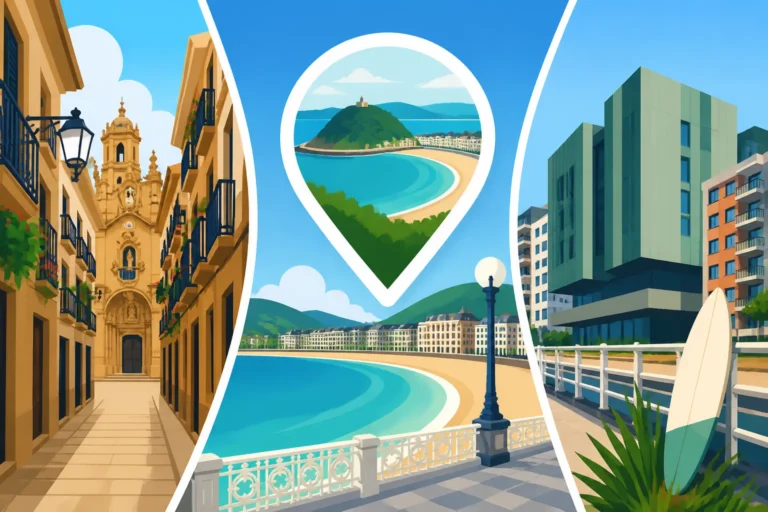
What fills your time is how much there is in each place. A single morning in Bilbao can easily go on the Guggenheim and the walk along the Nervión estuary. The afternoon then disappears in the Casco Viejo, the old town, around the Siete Calles, the original seven streets. San Sebastián is the same. You go for a quick swim at La Concha, take the funicular up Monte Igueldo and stroll through the Parte Vieja. Then it’s evening and you’ve barely eaten. If you want a deeper look at the two cities side by side, see Bilbao and San Sebastián: The Basque City Pair.
The coast between them is the other trap. Places like Getaria, Zumaia, Mundaka and San Juan de Gaztelugatxe sit on roads that wind through green hills. Distances look short, but these are not motorway miles, and parking in small harbour towns on a sunny Saturday can test your patience.
What Really Uses Up Your Time Here
There are three things that eat your schedule here, and none of them show up on an itinerary spreadsheet.
The first is the eating rhythm. Basque food culture is the main reason many people visit, and it runs on its own clock. Lunch starts around two and can stretch for hours. The evening pintxo crawl, called the txikiteo, means one small bite and one small drink per bar, and it rarely starts before eight. If you try to sightsee through these hours, you’ll miss what makes the region special. Plan for them. For background on the cuisine before you go, see The Basque Country: Food, Coast, and Culture.
The second is the weather. The Basque coast is green for a reason. It rains often, and the fine, persistent drizzle locals call sirimiri can roll in on a clear day. A cliff hike or a beach afternoon may need to move to another day. One spare day in a four- or five-day plan acts as your rain insurance.
The third is language and signage. Euskara, the Basque language, appears on road signs, menus and station boards, often next to Spanish but sometimes first. Town names have two versions, such as Donostia and San Sebastián or Gasteiz and Vitoria. This can slow you down for the first day or so. How to Handle Catalan or Basque Signs as a Visitor is worth a quick read before you arrive. If you’re curious about the language itself, see Regional Languages in Spain: Catalan, Basque, and Galician.
Day-by-Day Itineraries From a Weekend to a Full Week
These are the plans I suggest to visitors. They assume you arrive in Bilbao, since that’s where the region’s main airport is. Flip them if you’re coming from France via Hendaye or from San Sebastián’s smaller airport at Hondarribia.
| Trip Length | Best For | What You Can Realistically See | What You Will Miss |
|---|---|---|---|
| 2 days | Weekend breaks, add-ons to a wider Spain trip | Bilbao highlights and one full day in San Sebastián | The coast, wine country, Vitoria-Gasteiz, any slack for bad weather |
| 3 days | First-timers short on time | Both cities at a calmer pace plus a half-day coastal stop | Rioja Alavesa, inland towns, deeper hiking |
| 4 to 5 days | Most first-time visitors | Both cities, Getaria and Zumaia, Gaztelugatxe or Mundaka, a cider house or txakoli winery | Rioja Alavesa unless you rush, the French Basque side |
| 6 to 7 days | Food lovers, slow travellers, road-trippers | Everything above plus Vitoria-Gasteiz and Laguardia | Very little within the region itself |
| 8 to 10 days | Hikers, surfers, repeat visitors | All of the above plus the French Basque Country, Urdaibai trails and surf lessons | Mostly nothing; you’ll start feeling local |
Two or Three Days: The Two-City Sprint
Day one: Bilbao. Start at the Guggenheim when it opens. Walk around the outside first, past Jeff Koons’ flower-covered Puppy at the entrance and Louise Bourgeois’ giant spider Maman by the river. Allow at least two or three hours inside. Then follow the riverside promenade toward the Zubizuri footbridge and on to the Casco Viejo. Have lunch near the Mercado de la Ribera, then spend the afternoon in the old town’s lanes and the arcaded Plaza Nueva. In the late afternoon, ride the Artxanda funicular for a view over the city, then come back down for pintxos in Plaza Nueva.
Day two: San Sebastián. Take the bus or the Euskotren regional train east. The bus is quicker. The train is slower but scenic and stops at small towns along the way. Walk La Concha promenade, climb Monte Urgull for the views and the old fortifications, and save the Parte Vieja for the evening crawl. If you only have one day here, How to Explore San Sebastián in a Day has a tight route that works well.
Day three, if you have it: Pick one coastal detour. Going toward San Sebastián, stop in Getaria for grilled fish and a glass of txakoli, the region’s lightly sparkling white wine. It’s also the birthplace of the couturier Cristóbal Balenciaga, and his museum sits above the harbour. Going toward Bilbao, head to San Juan de Gaztelugatxe, the hermitage on a rocky islet reached by a long stone stairway. Access to the path has been controlled at busy times, so check the official Bizkaia tourism information before you go.
A word of honesty: two days is enough to say you’ve been, not to say you’ve seen it. If this is your only visit, try hard to find a third day.
Four to Five Days: The Sweet Spot
This is the length I’d choose if a friend asked me to plan their trip. It lets you cover the two cities, the coast and a proper food experience.
- Day one in Bilbao. Spend it on the Guggenheim, the riverfront and the Casco Viejo, as described above.
- Day two around Bilbao. In the morning, take the metro to Portugalete or Getxo to see the Vizcaya Bridge, the UNESCO-listed transporter bridge whose gondola carries cars and people across the estuary. In the afternoon, visit Gernika. Its Assembly House and the oak tree symbolising Basque liberties tell a story that adds real depth to the trip.
- Day three along the coast. Drive or take local buses through the Urdaibai Biosphere Reserve to Mundaka, a surf town famous for its left-hand wave, and nearby Bermeo. Fit in Gaztelugatxe if you didn’t on day two.
- Day four on the way to San Sebastián. Stop in Zumaia to walk among the flysch cliffs, the dramatic layered rock strata of the Basque Coast Geopark. Then have lunch in Getaria and arrive in San Sebastián by evening.
- Day five in San Sebastián. Take the beaches and Monte Igueldo in the morning. In the afternoon, walk through Gros toward Zurriola beach. In the evening, either do a final pintxo night or, in season, visit a cider house in Astigarraga or Hernani.
That cider house visit deserves a note. A traditional sagardotegi meal follows a set menu: chorizo cooked in cider, a cod omelette, cod with peppers and a thick grilled txuleta steak. Throughout the meal someone calls “txotx!”. Diners then get up and catch a thin stream of cider poured straight from the huge barrels into their glasses. The traditional cider-house season runs roughly from the new year into spring, and many places open year-round for groups or with adapted menus. Check with the house you have in mind.
Six or Seven Days: Adding the Interior
With a full week, you finally have time for the part of the Basque Country many visitors skip: Álava.
Vitoria-Gasteiz feels completely different from the coastal cities. It’s calmer, greener and less touristy, with a medieval old town built on a hill. The Santa María Cathedral restoration has been run as an “open for works” project, with hard-hat tours through the scaffolding. A day here is restful after the busy coast.
From Vitoria, the Rioja Alavesa is within easy reach. This is the Basque side of the Rioja wine region. The walled hilltop village of Laguardia has underground cellars running beneath its streets. Elciego is home to the Frank Gehry-designed Marqués de Riscal hotel, its colourful titanium roof echoing the Guggenheim. You’ll need a car or an organised tour for this area, since public transport is limited.
On a seven-day trip I’d add a slow day back on the coast. Spend it in Hondarribia, with its walled old town and brightly painted fishermen’s houses in the Marina quarter. Or take the small boat across the bay in Pasaia to Pasai Donibane, a one-street village where Victor Hugo once stayed. If you want to cross into France, Hendaye is right next door. Spain to France: Barcelona-Paris and San Sebastian-Bordeaux Options covers onward connections if your trip continues north.
Getting Around and Where to Base Yourself
How you move around affects how many days you need. With the right base, a four-day trip feels relaxed. With the wrong one, it feels like a commute.
One Base or Two
The most common question I get is whether to stay in one place or split the stay. My answer depends on trip length.
| Approach | Works Best For | Pros | Cons |
|---|---|---|---|
| Single base in San Sebastián | 2 to 4 days, food-focused trips | Best pintxo scene on your doorstep, beaches, easy day trip to Bilbao | Accommodation is usually the priciest in the region, especially in summer |
| Single base in Bilbao | 2 to 4 days, budget-conscious or art-focused trips | Usually more room choice, central airport, good metro and train links | Evenings in San Sebastián mean a late trip back |
| Split stay, Bilbao then San Sebastián | 4 to 7 days | No backtracking, coast covered on the transfer day | One packing day |
| Three bases including Vitoria-Gasteiz | 6 to 10 days | Easy access to Rioja Alavesa and inland towns | More check-ins, best with a car |
For a split stay, two or three nights in each city is ideal. In Bilbao, the Casco Viejo puts you among the bars, Abando is handy for transport, and Indautxu is quieter and residential. Where to Stay in Bilbao: Casco Viejo, Abando, and Indautxu goes into the details. In San Sebastián, the Parte Vieja is lively and can be noisy until late. Gros is a good middle ground near the surf beach, and the area behind La Concha is calmer. See Where to Stay in San Sebastian: Parte Vieja, Gros, and La Concha before you book.
Practical tip: if you’re visiting in July or August, or around San Sebastián’s Semana Grande or Bilbao’s Aste Nagusia festivals in August, book early. Central rooms disappear fast. Visitors are usually advised to filter Booking.com by free cancellation and reserve as soon as their dates are reasonably fixed. That way they hold a room in the Parte Vieja or near La Concha without being locked in if plans change.
Public Transport Versus a Car
You can see a lot of the Basque Country without a car, and in the two big cities a car is more burden than help. Parking in central San Sebastián is scarce, and both cities are compact and walkable.
The main public transport options are:
- Intercity buses between Bilbao and San Sebastián. They’re frequent and usually the fastest public option. Bilbao’s main bus station is at Termibus.
- Euskotren, the regional railway. It runs a slower coastal line between the two cities and a commuter service from San Sebastián toward the French border at Hendaye.
- Bilbao Metro, which is excellent for reaching Getxo and Portugalete for the Vizcaya Bridge.
- Provincial buses, Bizkaibus in Bizkaia and Lurraldebus in Gipuzkoa. These reach coastal towns like Mundaka, Bermeo, Getaria and Zumaia, though weekend services can be less frequent.
When I want to compare routes into the region or between its cities, I check Omio. It puts trains and buses side by side, which helps when you’re working out whether the Bilbao–San Sebastián bus or the coastal train fits your day better. If you’re arriving from the Spanish capital, Madrid to Bilbao: Why There’s No AVE Yet and What to Book Instead explains your options. If you’re continuing west along the coast, see Bilbao to San Sebastian and Santander: Northern Spain Connections.
A car is worth it in two cases: when you want the Rioja Alavesa, or when you want to string several small coastal towns into one day. A good compromise is to go car-free in the cities and then rent a car for one or two days in the middle. If you’re tempted to keep driving after the Basque Country, How to Plan a Road Trip Through Northern Spain shows how the region fits into a longer route through Cantabria and Asturias.
Skipping the car doesn’t mean skipping the wine country. A guided tour fills that gap. Many visitors use GetYourGuide to book a Rioja Alavesa winery day trip or an evening pintxo tour in San Sebastián’s Parte Vieja. On a short trip that’s useful. A local guide steers you to the right bar for each speciality, so you spend less of your one evening guessing.
Matching Your Days to Your Travel Style and Season
The four-to-five-day guideline is a starting point. How you like to travel, and when you come, can move it either way.
Food Lovers, Hikers, Surfers and Families
Food lovers should lean toward five days or more and base themselves in San Sebastián for at least three nights. The city has an unusually high number of acclaimed restaurants for its size. The best tables at the top places book up well in advance, so reserve before you travel. Add a cider house, a txakoli winery near Getaria and a market morning at the Mercado de la Bretxa or San Martín, and you’ll fill five days without visiting a single museum.
Hikers should allow six or seven days. Good walks include:
- the coastal path from Zumaia to Deba through the flysch landscape;
- the stage of the Camino del Norte from San Sebastián to Pasaia over Monte Ulía;
- the trails of the Urdaibai reserve;
- the inland hills around Oñati and the Arantzazu sanctuary.
None of these are walks you rush, and you’ll want weather flexibility.
Surfers usually need more time than they expect, because the right swell doesn’t follow your itinerary. Zarautz and Zurriola are good for beginners, while Mundaka’s famous wave is strictly for experienced surfers. If you’re new to it, How to Try Surfing in Northern Spain as a Beginner explains lessons and the best beginner spots. Surfers also benefit from a car or a flexible base.
Families do best with fewer moves and more beach time. Four or five days with a single base, perhaps in San Sebastián or a beach town like Zarautz, works better than a fast loop. Kids tend to love the Aquarium in San Sebastián, the old-fashioned fairground at the top of Monte Igueldo and the gondola ride across the Vizcaya Bridge.
How the Season Changes the Count
| Season | Weather and Atmosphere | Effect on How Many Days You Need |
|---|---|---|
| Spring | Fresh, green, changeable, cider-house season | Add a buffer day for rain; ideal for food and hiking |
| Summer | Warmest and busiest, beach days, August festivals | Same days, but book everything ahead and expect crowds in the Parte Vieja |
| Autumn | Often settled weather, harvest time in Rioja Alavesa | Good time to add wine country; consider an extra day inland |
| Winter | Quieter, cooler, more rain, cosy pintxo bars | Fewer coastal days, more city time; four days feels unhurried |
Summer is the most popular season, but I prefer late spring and early autumn. The light is beautiful, the sea is still swimmable in September, and the old towns feel like they belong to locals again. Winter is underrated if you mainly come for food and the city sights. Just don’t plan your trip around sunny beach days.
One last tip from experience: whatever number you settle on, leave one afternoon with nothing planned. Some of my best Basque memories happened unplanned. One was a sudden rain shower that pushed me into a tiny bar in Getaria where a fisherman insisted I try his cousin’s txakoli. Another was a long lunch in Vitoria that rolled into an evening stroll. The region rewards people who slow down. If you’re folding the Basque Country into a wider northern trip, Weekend Getaways in Northern Spain has ideas for what to add before or after.
Disclaimer
This article is for general informational purposes only and does not constitute professional advice. Laws, prices and regulations vary by location and change over time. Consult a qualified professional for guidance on your specific situation.