Bilbao and San Sebastián: The Basque City Pair
The eternal dilemma for anyone heading to the north of Spain is deciding whether to plant their flag in Bilbao or San Sebastián. I remember my first trip to the Basque Country; I tried to "do" both in 48 hours and ended up exhausted, soggy from the persistent drizzle, and deeply confused by the train schedules. This guide solves that struggle by showing you how to master this iconic city pair like a local.
Disclosure: This post may contain affiliate links. We may earn a commission at no extra cost to you if you make a purchase through these links. Read full disclosure.
Understanding the Basque Soul: More Than Just a Trip
When you first arrive in the Basque Country (Euskadi), you quickly realize you aren't just in another part of Spain. The air smells different—a mix of salt, mountain pine, and grilling meat—and the language on the signs, Euskera, looks like nothing you've ever seen. Validating the "foreigner's confusion" is step one; it is perfectly normal to feel like you’ve accidentally crossed an international border. The identity here is fierce, and the rivalry between Bilbao and San Sebastián is the stuff of legend, touching everything from football to who has the better fermented cider.
To truly understand this region, you have to acknowledge the Regional Languages in Spain: Catalan, Basque, and Galician which form the backbone of local pride. Bilbao is the gritty, transformed industrial heart that found its soul through modern art, while San Sebastián (Donostia) is the refined, aristocratically beautiful sister that has always known she’s the belle of the ball. Trying to pick one is like trying to pick between a leather jacket and a silk scarf—they serve entirely different moods, and you probably need both in your wardrobe.
Living here as an expat, I’ve learned that the "Basque City Pair" isn't just a travel itinerary; it’s a study in contrasts. You have the "Bilbaíno" attitude—boisterous, proud, and famously "larger than life"—clashing with the "Donostiarra" vibe, which is more reserved, elegant, and perhaps a bit more conscious of appearances. You’ll see this reflected in the architecture, the way people dress for a Sunday stroll, and even the way the bars are organized.
Bilbao: From Industrial Grit to Global Glamour
Bilbao’s transformation is often called the "Guggenheim Effect," but as a veteran of the city's rainy streets, I can tell you it goes much deeper than a titanium museum. I spent my first few months here wandering the Nervión riverbank, watching how a once-polluted waterway became the city's living room. The city has a "can-do" energy that is infectious; it doesn’t care if it’s raining (which it often is, a fine mist called sirimiri), the terraces will still be full of people enjoying a glass of crisp Txakoli wine.
Navigating the Guggenheim and Abandoibarra
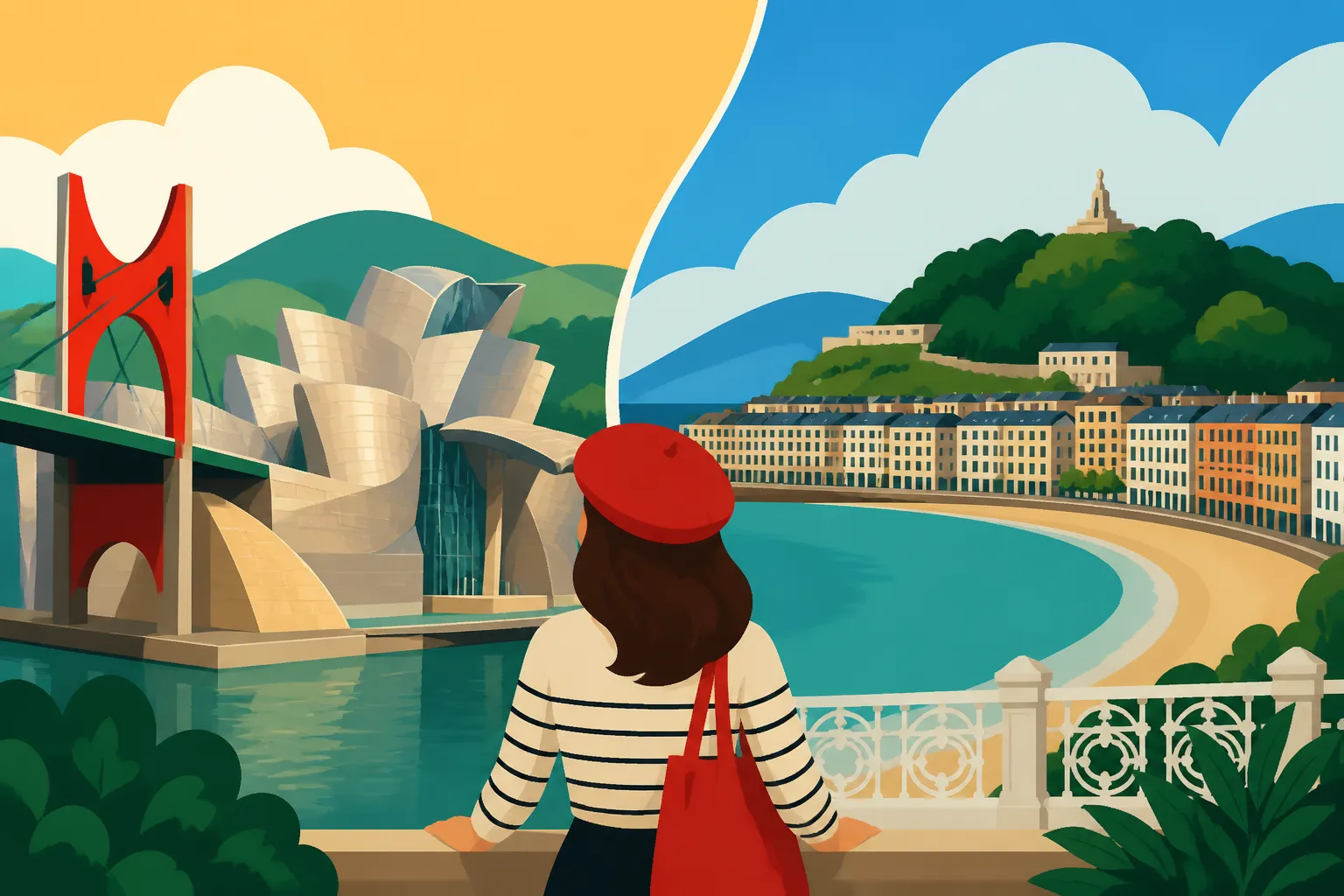
The Guggenheim is the obvious starting point, but don't just look at the building and leave. It is wise to check GetYourGuide for a skip-the-line tour that includes the history of the district, because the story of how this area went from rusty shipyards to world-class art is fascinating. Walking along the Abandoibarra promenade toward the Zubizuri bridge gives you a sense of the architectural playground Bilbao has become. You’ll see works by Frank Gehry, Norman Foster, and Philippe Starck all within a twenty-minute walk.
Beyond the museum, the Abandoibarra area is where you’ll find locals jogging, families pushing strollers, and expats sitting in cafes trying to figure out their residence paperwork. It’s a clean, modern, and highly functional part of the city. If you’re staying in this area, you’ll likely find great options on Booking.com that put you right in the center of the action. Just be prepared for the prices to reflect the proximity to the "Titanium Whale," as some locals affectionately call it.
The Casco Viejo (Old Town) Charm
If the riverfront is the city’s brain, the Casco Viejo is its heart. Known as the "Siete Calles" (Seven Streets), this area is a labyrinth of stone-paved alleys, boutique shops, and some of the best traditional taverns in the world. I’ve lost count of the number of times I’ve gotten turned around in these streets, only to find a hidden square where elderly men are playing cards and drinking small glasses of beer (cañas). This is where you go to practice your Spanish Coffee Culture: How to Order Like a Local before the morning rush begins.
The Plaza Nueva is the crown jewel of the Old Town. On Sundays, it hosts a famous coin and stamp market, but every other day of the week, it is the premier destination for a "pintxo crawl." Unlike the rest of Spain, where you might get a free tapa with a drink, here the pintxo is a culinary masterpiece you pay for. If you are new to the system, it can be intimidating. You see a counter piled high with food and wonder: Do I grab it? Do I wait? Usually, you ask the bartender for a plate and point, but in the more traditional spots, they’ll handle the serving.
Practical Tips for Living and Visiting Bilbao
Bilbao is a very "walkable" city, but its public transport is top-tier. The metro, designed by Norman Foster, is so clean it feels like a movie set. When Getting Around Spanish Cities: Metro, Bus, Tram, and Bikes, the Bilbao Metro is your best friend for reaching the nearby beaches like Sopelana or the hanging bridge in Portugalete. It’s also one of the few places in Spain where the trains actually run on time, which is a relief if you’re coming from a country with more "relaxed" schedules.
One thing to keep in mind is the weather. You cannot come to Bilbao and expect the scorched-earth heat of Seville. It is green here for a reason. Always carry a light raincoat, and don't let the clouds stop you from heading up the Artxanda Funicular. The view from the top gives you the best perspective of how the city is cradled by mountains. It’s a great spot to clear your head after a day of navigating Spanish bureaucracy or intense house hunting.
San Sebastián: The Belle Époque Beauty
Crossing over to San Sebastián feels like stepping into a different era. While Bilbao is energetic and experimental, San Sebastián is statuesque and confident. It was the summer retreat for Spanish royalty, and that sense of "old money" elegance still permeates the air. Expats often find the "Donostia" lifestyle to be slower, focused heavily on the sea, the mountains, and, of course, the most concentrated number of Michelin stars per square meter in the world.
Concha Beach and the Art of the Paseo
La Concha is arguably the most beautiful city beach in Europe, and the locals treat it with religious devotion. Rain or shine, you will see people doing the paseo (the walk) along the ornate white railings that fringe the bay. I personally prefer the Zurriola beach in the Gros neighborhood—it’s the "surfer" beach, and the vibe is much more casual and international. If you're looking for a place to stay that feels less touristy, check Booking.com for apartments in Gros; it’s where the younger expats and locals tend to hang out.
The walk from one end of the bay to the other takes you past the Palacio Miramar and ends at the "Peine del Viento" (Comb of the Wind) sculptures by Eduardo Chillida. On a stormy day, the waves crash through the steel structures and air is forced up through holes in the ground with a haunting whistle. It’s one of those "I’ve-been-there" moments that never gets old, no matter how long you live here. It’s a reminder of the raw power of the Atlantic that defines this coastline.
The Culinary Capital: Pintxo Crawls in the Parte Vieja
San Sebastián's Old Town (Parte Vieja) is a grid of narrow streets packed with bars. This is the frontline of Spanish Tapas Culture: How to Order and Where to Go, though again, we call them pintxos here. The ritual is specific: you go into a bar, have one drink (a zurrito of beer or a txikito of wine) and one specific pintxo that the bar is famous for, then you move to the next. Do not—I repeat, do not—sit down and order a full meal in the first bar you see. You will miss the whole point of the experience.
For the best experience, I recommend booking a food tour through GetYourGuide during your first night. A local guide can show you the secret spots that don't have English menus and explain the "honesty system" for paying. In many bars, you just tell the bartender at the end how many things you ate. It’s a level of trust that often shocks newcomers, but it’s part of what makes the Basque social fabric so tight. Be sure to try the "Gilda"—the original pintxo made of an olive, an anchovy, and a spicy green pepper.
Accommodation and Logistics in Donostia
San Sebastián is expensive. There is no way to sugarcoat it. Whether you are renting an apartment for a year or a hotel for a weekend, you will pay a premium for that sea view. It’s important to have your Money for Travel in Spain: Cards, Cash, and ATMs sorted out, as some of the smaller, high-end boutiques and traditional bars still prefer physical cash for small transactions, though this is changing rapidly.
If you’re visiting during the Film Festival in September or the Jazz Festival in July, you need to book months in advance. The city essentially doubles in population, and the atmosphere is electric but crowded. For those who prefer a quieter life, the "shoulder seasons" of May and October are perfection. The water is still warm enough for a brave swim, and the restaurant reservations aren't a battle of wills.
Logistics: Connecting the Two Cities
Traveling between Bilbao and San Sebastián is something I do frequently, and there are three ways to play it. Each has its pros and cons depending on whether you value time, money, or the view. Many people assume there is a high-speed train, but currently, you won't find the High-Speed Trains in Spain (AVE): Routes, Booking, and Savings connecting these two just yet (the "Basque Y" project is still under construction).
The "Euskotren" vs. The Fast Bus
The "Euskotren" is the narrow-gauge railway that connects the two cities. It is incredibly cheap and passes through some of the most stunning mountain scenery and small coastal villages you’ll ever see. However, it takes nearly three hours. I only recommend this if you have a book, a camera, and no deadline. For everyone else, the bus is king. The "ALSA" or "Pesa" buses run every 30-60 minutes and take about 75 minutes via the highway. You can easily compare times and grab tickets on Omio to avoid the stress of the ticket machines at the station.
The bus stations in both cities are modern and underground. In Bilbao, it’s the "Intermodal" station (near the San Mamés stadium), and in San Sebastián, it’s right next to the train station. Using Omio to book in advance is a pro tip during the summer, as the "direct" buses do sell out, leaving you stuck waiting for the "stopping" service that adds another 45 minutes to your trip.
Car Rentals and the Scenic Coastal Route
If you have the time, Renting a Car in Spain: Requirements, Insurance, and Driving Tips is the absolute best way to see the "City Pair" because the real magic lies in the space between them. If you take the GI-634 coastal road instead of the AP-8 highway, you can stop in towns like Getaria (home of the Balenciaga museum and incredible grilled fish) or Bermeo. You can also visit San Juan de Gaztelugatxe, the "Dragonstone" filming location from Game of Thrones.
Just a warning from someone who has lived through it: parking in San Sebastián is a nightmare and incredibly expensive. If you rent a car, make sure your hotel on Booking.com specifically mentions they have a parking garage, or prepare to park in one of the public underground lots and pay €25+ per day. Bilbao is slightly better for parking, but the city center is mostly pedestrianized or restricted, so a car is really only useful for the "in-between" days.
Comparing the Basque Pair: A Quick Guide
To help you decide where to spend more of your time, I've put together this comparison based on my years of living in and visiting both.
| Feature | Bilbao | San Sebastián |
|---|---|---|
| Main Vibe | Urban, Edgy, Dynamic | Elegant, Resort-like, Classic |
| Primary Attraction | Guggenheim Museum | La Concha Beach |
| Cost of Living | Moderate | High |
| Best For | Art, Architecture, Nightlife | Foodies, Sun-seekers, Romance |
| Landscape | River & Mountains | Bay & Islands |
| Dining Style | Large taverns, modern fusion | Traditional "pintxo" bars, Michelin stars |
| Walkability | Very high (flat river area) | Very high (circular bay) |
| Weather | Slightly more "sirimiri" (rain) | Breezier, coastal humidity |
Essential Tips for the Basque Experience
Whether you are here for a weekend or moving here for a job, there are a few cultural nuances that will make your life easier. First, understand the Spanish Meal Times and Dining Etiquette Explained. In the Basque Country, lunch is the main event, usually served between 1:30 PM and 3:30 PM. If you try to eat dinner at 6:00 PM, you will find yourself alone in a bar with a janitor. The pintxo bars start buzzing around 8:00 PM, but the real sit-down dinners don't happen until 9:00 PM or later.
Safety is rarely an issue here compared to Barcelona or Madrid, but you should still practice Staying Safe in Spain: Common-Sense Tips for Travelers. Pickpockets are rare, but they do exist in the crowded pintxo bars of San Sebastián's Old Town. Keep your bag in front of you and don't hang your purse on the back of your chair while you’re distracted by a delicious piece of foie gras on toast.
Lastly, try to learn a few words of Euskera. You don't need to be fluent—hardly anyone is—but saying "Kaixo" (Hello) instead of "Hola" or "Eskerrik asko" (Thank you) instead of "Gracias" will earn you a genuine smile from the locals. It shows you respect the fact that you are in a very special corner of the world. It’s these small efforts that turn a "tourist trip" into a real connection with the Basque people.
Getting Your Documents in Order
If you’re planning on staying longer than a holiday, the administrative hurdles are real. From getting your NIE to registering on the padrón, the bureaucracy can feel like a full-time job. I remember spending three days just trying to figure out which office handled my specific visa type. My advice? Get your Intercity Buses in Spain: Networks, Booking, and Tips sorted so you can travel between the regional offices in Bilbao and San Sebastián if needed, as sometimes appointments are easier to find in one city over the other.
Always carry a folder with copies of everything: your passport, your rental contract, and your proof of health insurance. The Basque people are very rule-oriented, and if you are missing one "tasa" (fee) payment receipt, they will send you to the back of the line without a second thought. It’s frustrating, but it’s part of the "initiation" into Spanish life. Once the paperwork is done, that first glass of wine by the river will taste much sweeter.
Why You Shouldn't Choose Just One
In the end, the "Bilbao and San Sebastián: The Basque City Pair" works because they balance each other. If you only visit San Sebastián, you might leave thinking the Basque Country is just a wealthy beach resort. If you only visit Bilbao, you might miss the breathtaking natural beauty of the coast. By visiting both, you get the full story of a resilient, creative, and deeply traditional culture that has successfully navigated the move into the 21st century.
Use Omio to bridge the gap, GetYourGuide to dive into the culture, and Booking.com to find your home base. Whether you're standing in the shadow of the Guggenheim or watching the sunset over La Concha, you'll realize that this isn't just a trip—it's an entry into one of the most unique cultures on the planet.
Disclaimer
This guide is for informational purposes only. Local regulations, transportation schedules, and prices in Spain can change frequently. While we strive to provide the most accurate and up-to-date information, readers should verify specific details such as visa requirements and opening hours with official local authorities or service providers before traveling.