Reaching Extremadura and Rural Spain: Where the Rail Network Thins Out
Ah, the romance of exploring Spain's hidden corners! You envision picturesque villages, rolling landscapes, and ancient ruins, far from the bustling tourist hubs. But then, you pull up Renfe's map, and suddenly, that smooth, high-speed rail network you've come to love for getting between Madrid and Seville seems to… evaporate. If your sights are set on places like Extremadura or any of Spain's truly rural gems, you've likely hit a wall trying to figure out transport. This guide is dedicated to untangling that very specific travel headache, helping you navigate the less-beaten paths and discover the actual best ways to reach Spain's enchanting countryside, making travel easier with smart tools like Omio.
Disclosure: This post may contain affiliate links. We may earn a commission at no extra cost to you if you make a purchase through these links. Read full disclosure.
The Unique Challenge of Reaching Rural Spain
Let's be honest, Spain has one of the best high-speed rail networks in Europe, and it's fantastic for zipping between major cities like Madrid, Barcelona, Valencia, and Seville. You can practically set your watch by the AVE trains. But step off the high-speed tracks, and the reality of rural transport can be a stark contrast. The further you venture from the main urban arteries, the more challenging it becomes to rely solely on trains.
Historically, Spain's infrastructure investment has prioritized connecting its largest population centers, linking them with modern, efficient lines. This is brilliant for city breaks, but it leaves many of the country's breathtaking rural areas, smaller towns, and less populated provinces feeling somewhat isolated if you don't have a car. It's a common expat frustration to look at a map, see a destination that's only a few hundred kilometers away, and then find that the public transport options turn it into an epic, multi-leg, and painfully slow journey. While you might be used to a seamless train journey when traveling between major hubs, the moment you decide to explore the likes of the Picos de Europa, the Alpujarras, or the dehesas of Extremadura, you’ll quickly find yourself looking for alternative solutions. This is where you might feel that pang of "Did I make the right choice moving here without a car?" It’s a completely valid feeling, but don’t despair; there are ways to overcome it.
Why the Rail Network Thins Out
The thinning out of the rail network in rural areas isn't just an oversight; it's a reflection of several factors. For one, the cost of maintaining extensive rail lines for sparse populations often doesn't make economic sense. Many regional and local train lines still exist, operated by Renfe as Media Distancia (medium distance) or Cercanías (commuter lines around major cities), but these are often single-track, un-electrified lines with older rolling stock. They are slower, less frequent, and designed more for local commuters than inter-provincial tourism.
Furthermore, the geographical challenges in some regions are significant. Spain is a country of mountains, valleys, and diverse terrains. Building modern rail infrastructure through these areas is incredibly expensive and complex. Instead, in many of these regions, the bus network has become the de facto public transport backbone. While less glamorous than a high-speed train, buses can reach almost any village or town, often navigating winding roads that trains simply can't. Understanding these limitations is the first step to planning effective travel, and it’s why savvy travelers often turn to platforms like Omio to piece together journeys that might involve a mix of transport types.
The Impact on Travel Planning
This limited rail access means that spontaneous trips to rural Spain can be tricky. You can't just show up at the station and expect a train to take you to that quaint little village nestled in the mountains. Instead, you need a more strategic approach, often requiring advance booking and a willingness to embrace different modes of transport. For those of us who have lived here for a while, we know the feeling of spending hours scrolling through various websites, trying to cross-reference train schedules with bus routes. It's time-consuming and frankly, a bit of a pain.
It also means that travel times can be considerably longer than what you might expect for the distance. What might be a 2-hour drive could easily be a 5-hour bus journey or a 7-hour train trip with multiple changes. This is where embracing a flexible mindset and a good planning tool truly comes in handy. Don't let the perceived difficulty deter you from exploring Spain's vast and varied interior, though. The rewards of discovering these unspoiled areas are absolutely worth the extra planning.
Extremadura: A Case Study in Limited Rail Access
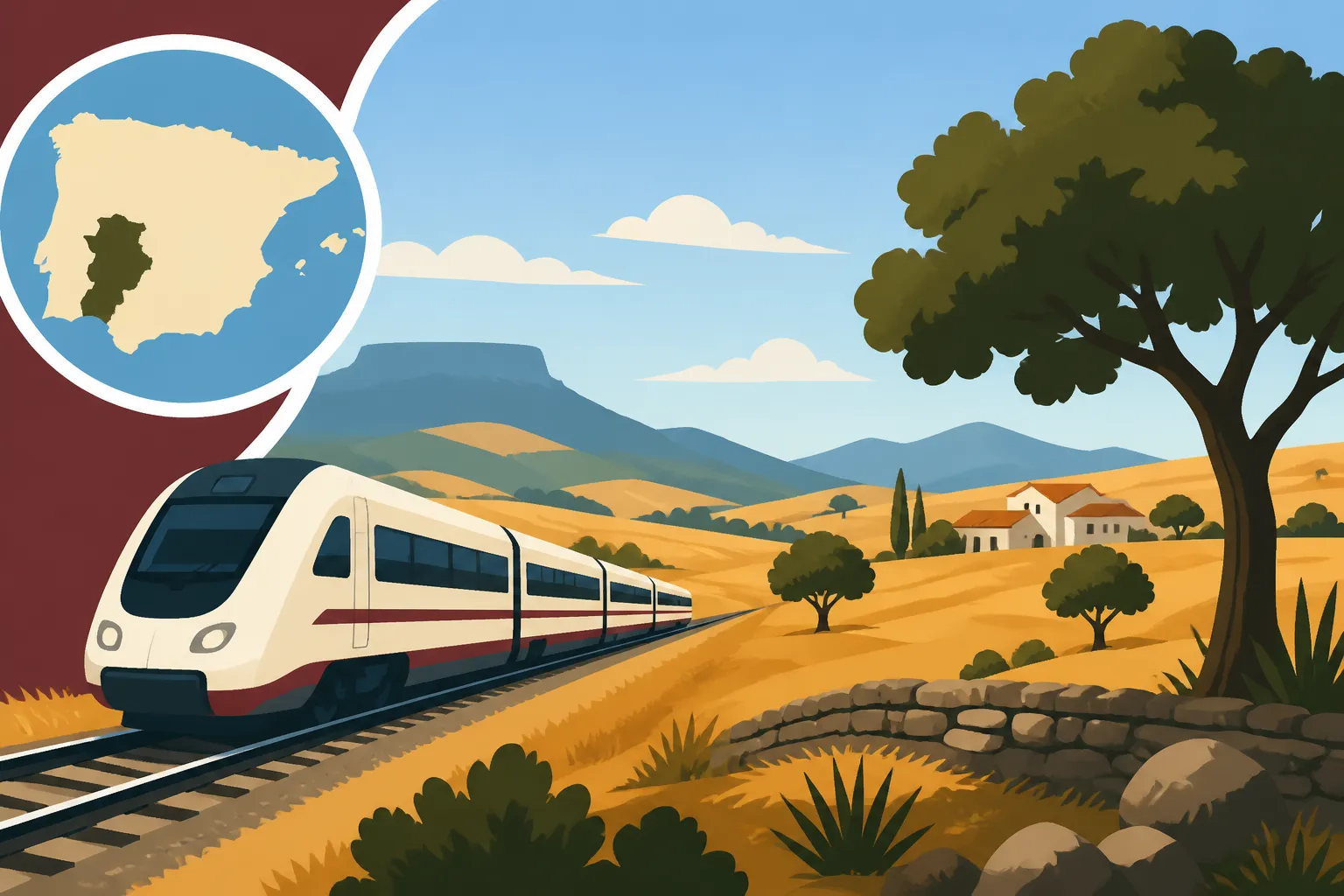
If there’s one region that perfectly illustrates the challenges of Spain’s rural rail network, it’s Extremadura. This beautiful, rugged region, bordering Portugal and home to stunning natural parks, Roman ruins, and some of the best jamón ibérico in the country, often feels like a world away from the high-speed hustle of Madrid or Seville. Comprising the provinces of Cáceres and Badajoz, Extremadura is primarily known for its dehesa landscapes, where Iberian pigs roam freely, and its rich historical towns like Mérida, Trujillo, and Cáceres city, all UNESCO World Heritage sites.
However, the railway lines connecting Extremadura to the rest of Spain are notoriously slow and outdated. The talk of high-speed rail for Extremadura has been ongoing for decades, but progress has been painfully slow. You won't find AVE trains here, or even modern high-speed infrastructure in most places. The existing lines are often single-track and frequently experience delays or interruptions due to their age and the ongoing, gradual upgrades. This means that a train journey from Madrid to Cáceres, for instance, can easily take over 3.5 to 4 hours, which is comparable to or even longer than a bus ride, despite the rail distance.
Current Rail Options for Extremadura
While limited, there are still train services that connect Extremadura, primarily to Madrid and some southern cities. Renfe operates Media Distancia trains that link the region's capital, Mérida, and other key cities like Cáceres and Badajoz, with Madrid's Atocha station. These trains are generally comfortable, but they are not fast. They stop at numerous smaller towns along the way, giving you a glimpse of the changing landscape, but adding considerable time to the journey.
For example, a typical train journey from Madrid to Cáceres involves older train models, and while direct, the journey length often surprises first-time visitors expecting Spanish rail efficiency. Similarly, connections between Extremaduran cities like Cáceres and Badajoz are present but also slow and infrequent. This makes planning multi-city itineraries within Extremadura by train quite arduous, especially if your time is limited. Many locals, and seasoned expats, will tell you that the bus is often the more practical choice for internal travel and even for reaching Extremadura from Madrid. When comparing travel options, especially for a region like Extremadura, a multi-modal platform like Omio really shines, as it lets you see both train and bus times side-by-side to make an informed decision. For more general advice on Traveling Around Spain: Trains, Buses, Flights, and Car Hire, it’s always good to consider all your options.
The Rise of Buses as the Primary Lifeline
Given the rail limitations, the bus network has naturally become the dominant form of public transport for reaching and moving around Extremadura. Companies like ALSA and Avanza offer extensive routes connecting Extremaduran cities and towns to Madrid, Seville, Lisbon, and other major hubs. These buses are often more frequent, can be faster than the regional trains, and crucially, they go to more places.
For instance, if you want to visit Trujillo, a stunning medieval town that's a must-see in Extremadura, you'll likely find that a direct bus from Madrid is your most straightforward option. While Cáceres and Mérida have train stations, many smaller, equally charming towns do not, making the bus invaluable. The main bus stations in cities like Cáceres and Badajoz are well-connected and generally easy to navigate. The comfort level of Spanish intercity buses is quite good, often with air conditioning and sometimes even Wi-Fi, making longer journeys tolerable. Exploring Intercity Buses in Spain: Networks, Booking, and Tips can provide more specific details on what to expect.
Alternative Transport Solutions for Rural Spain
So, if the train network isn't always your friend in rural Spain, what are your other, more reliable options? Don't fret, there are plenty of ways to get to those hidden gems, you just need to think a little differently and perhaps be prepared for a bit more planning. The key is often flexibility and combining different modes of transport.
Embracing the Bus Network
As mentioned, buses are the unsung heroes of Spanish rural travel. Companies like ALSA, Avanza, and numerous smaller regional operators cover virtually every corner of the country. They might not be as fast or spacious as a high-speed train, but they offer unparalleled reach. You can get a bus from Madrid's Estación Sur or Seville's Plaza de Armas to surprisingly remote locations.
Pros of Bus Travel:
- Extensive Coverage: Buses go almost everywhere, including many towns without train stations.
- Affordability: Generally cheaper than trains, especially for longer distances.
- Frequency: Routes to more popular rural destinations often have multiple departures daily.
- Direct Routes: Often provide direct routes to towns that would require multiple train changes.
Cons of Bus Travel:
- Travel Time: Journeys can be significantly longer than driving or even a direct train.
- Comfort: While generally good, it's not the same as a first-class train seat. Space can be limited on full buses.
- Luggage: Restrictions apply, though usually generous enough for typical tourist luggage.
Booking bus tickets in advance, especially for popular routes or during peak season, is always a good idea. Platforms like Omio make this incredibly easy, allowing you to search, compare, and book tickets for multiple bus companies all in one place. It truly simplifies what could otherwise be a fragmented and confusing process of checking different operator websites.
Renting a Car: Freedom on Four Wheels
For ultimate flexibility and access to the most remote corners of Spain, renting a car is often your best bet. Spain's road network is excellent, even in rural areas, and driving gives you the freedom to explore at your own pace, stop at scenic viewpoints, and stumble upon unexpected villages. This is particularly appealing if you're planning a tour of multiple rural locations or exploring a specific natural park.
Pros of Car Hire:
- Flexibility & Freedom: Go where you want, when you want, stop whenever you like.
- Access to Remote Areas: Reach places unreachable by public transport.
- Convenience: Especially good for families or those with lots of luggage.
- Scenic Drives: Discover hidden routes and enjoy the journey itself.
Cons of Car Hire:
- Cost: Rental fees, fuel, and potential tolls can add up.
- Navigation: While Spain has good roads, navigating unfamiliar rural roads can be stressful.
- Parking: Can be a nightmare in popular small towns, especially during peak times.
- Responsibility: You're responsible for the vehicle, and understanding Renting a Car in Spain: Requirements, Insurance, and Driving Tips is crucial.
Major car rental companies like Hertz, Avis, Europcar, and local Spanish firms operate throughout Spain, with pick-up points at airports and major city centers. Always book well in advance for the best prices, and be sure to check the insurance coverage thoroughly. For a wider view on costs, you might want to look into Car Costs in Spain: Insurance, Taxes, Maintenance, and Fuel before committing to a rental.
Ride-Sharing and Local Taxis
For shorter distances or as a last-mile solution, ride-sharing platforms like BlaBlaCar can be an option, connecting drivers with passengers heading in the same direction. It's often cheaper than a bus and can provide a more direct route, plus a chance to practice your Spanish! However, it requires flexibility and isn't always reliable for very remote or specific timings.
Local taxis are, of course, available in most towns, but they can be expensive for longer distances. Consider them for getting from a bus stop to your final accommodation if it’s a bit out of the way, or for short excursions from a base town. Always confirm the fare or agree on a price before starting a journey in rural areas where meters might not be standard for longer trips.
Planning Your Journey to Spain's Hidden Gems
Navigating Spain’s less-connected regions definitely requires a bit more thought than a straightforward Madrid-Barcelona train trip, but with the right approach and tools, it's entirely doable and incredibly rewarding. The beauty of these areas lies precisely in their slightly harder-to-reach nature, preserving their authentic charm.
Combining Modes of Transport Effectively
Often, the most efficient way to reach a rural destination is by combining different transport modes. For example, you might take a high-speed train to the nearest major city, and then switch to a bus or rent a car for the final leg of your journey. This hybrid approach often balances speed, cost, and convenience.
Imagine you want to visit a pueblo in the Sierra de Gredos. You could take a regional train from Madrid to Ávila, and then either catch a local bus (which might be infrequent) or a taxi for the final stretch. Or, you could take a direct bus from Madrid that goes closer to your destination. Planning services like Omio are invaluable here because they allow you to input your origin and destination and instantly compare all available options – trains, buses, and sometimes even flights if applicable – showing you the routes, travel times, and prices across different operators. This eliminates the headache of jumping between multiple websites, making the complex simple. Don't forget to consider Day Trips and Weekend Getaways Across Spain for ideas on what’s achievable.
Essential Planning Tips
- Book in Advance: Especially for buses to popular rural areas or during holidays, booking your tickets online a few days or weeks beforehand is crucial. Seats can fill up, and prices might increase closer to the travel date.
- Be Flexible: If your desired train or bus isn't running at an ideal time, be open to adjusting your schedule or exploring an alternative route. Sometimes, traveling mid-week or off-peak hours can offer more options.
- Check Local Transport: Once you arrive at a larger regional town, research local bus schedules for the absolute final leg. Google Maps can be helpful, but often local town council websites (Ayuntamiento) or even asking at the bus station are the best sources for highly localized routes.
- Embrace Omio: This isn't just a suggestion; it's a game-changer for multi-modal travel in Spain. When you're dealing with a fragmented transport network, Omio acts as your personal travel agent, pulling data from Renfe, ALSA, Avanza, and other operators. It truly simplifies finding the fastest, cheapest, or most convenient route to your rural destination, whether it's by train, bus, or a combination. It helps you quickly compare, for instance, if a direct bus is better than a slow regional train, or if a train-to-car-hire combo makes more sense.
- Consider Your Luggage: If you're traveling with heavy bags, a rental car offers the most ease. On buses and regional trains, you'll need to manage your own luggage, though space is usually adequate.
- Learn Basic Spanish Phrases: While not directly about transport, a few key phrases for asking directions or confirming stops (e.g., "Disculpe, ¿este autobús va a…?"; "Parada, por favor") will make your journey much smoother, especially in areas where English isn't widely spoken.
Exploring Spain's Regions and Where to Go: A Traveler's Overview can give you some fantastic ideas for off-the-beaten-path destinations that are well worth the extra planning effort.
Making Omio Your Go-To Travel Companion
When it comes to tackling the complexities of rural travel in Spain, Omio truly simplifies the process. Instead of opening multiple browser tabs for Renfe, ALSA, Avanza, and various car rental sites, Omio aggregates all this information into one user-friendly interface. You can search for journeys from point A to point B and instantly see all available trains, buses, and even flights.
Let’s say you’re trying to get from Seville to a small town in Huelva province like Aracena, famous for its jamón and grottoes. Omio will show you that while a train might take you part of the way to a larger town, a direct bus is often the more practical and sometimes even faster option. It provides clear departure and arrival times, estimated journey durations, and pricing, allowing you to easily compare and choose the best fit for your itinerary and budget. This kind of comprehensive comparison is crucial when the rail network isn’t cutting it, saving you precious planning time and reducing travel stress. Booking your tickets directly through Omio also streamlines the process, giving you e-tickets that are easy to access on your phone.
In essence, don't let the thought of patchy train lines deter you from experiencing the authentic, breathtaking beauty of rural Spain. With a little research, a dose of flexibility, and a powerful planning tool like Omio, those hidden villages and stunning landscapes are well within your reach.
Disclaimer
Please remember that travel information, schedules, and prices for transportation in Spain can change. While every effort has been made to provide accurate and up-to-date advice, it's always wise to verify current information directly with service providers or through reliable booking platforms before making definitive plans. This guide offers general advice for expats and tourists based on common experiences.