Valencia and the Costa Blanca: Highlights for Visitors
Most visitors arrive in the Valencian Community and immediately feel paralyzed by the sheer variety of white-sand beaches and historic plazas. When I first moved here, I spent weeks just trying to figure out which coastal train went where and why the restaurants were all closed when I was finally hungry. This guide solves the confusion by detailing the must-see highlights of Valencia and the Costa Blanca, ensuring your trip is efficient and authentic.
Disclosure: This post may contain affiliate links. We may earn a commission at no extra cost to you if you make a purchase through these links. Read full disclosure.
Navigating the Capital: Exploring Valencia City
Valencia is a city that refuses to be pigeonholed. It is simultaneously a futuristic hub of science and a crumbling, charming labyrinth of Roman and Moorish history. If you are coming from the high-octane pace of Madrid, Barcelona, and Spain's Great Cities: Explorer's Guide, the first thing you will notice is that Valencia breathes a bit more. There is a sense of space here, largely thanks to the Turia Gardens, a nine-kilometer-long park situated in a diverted riverbed that snakes through the city.
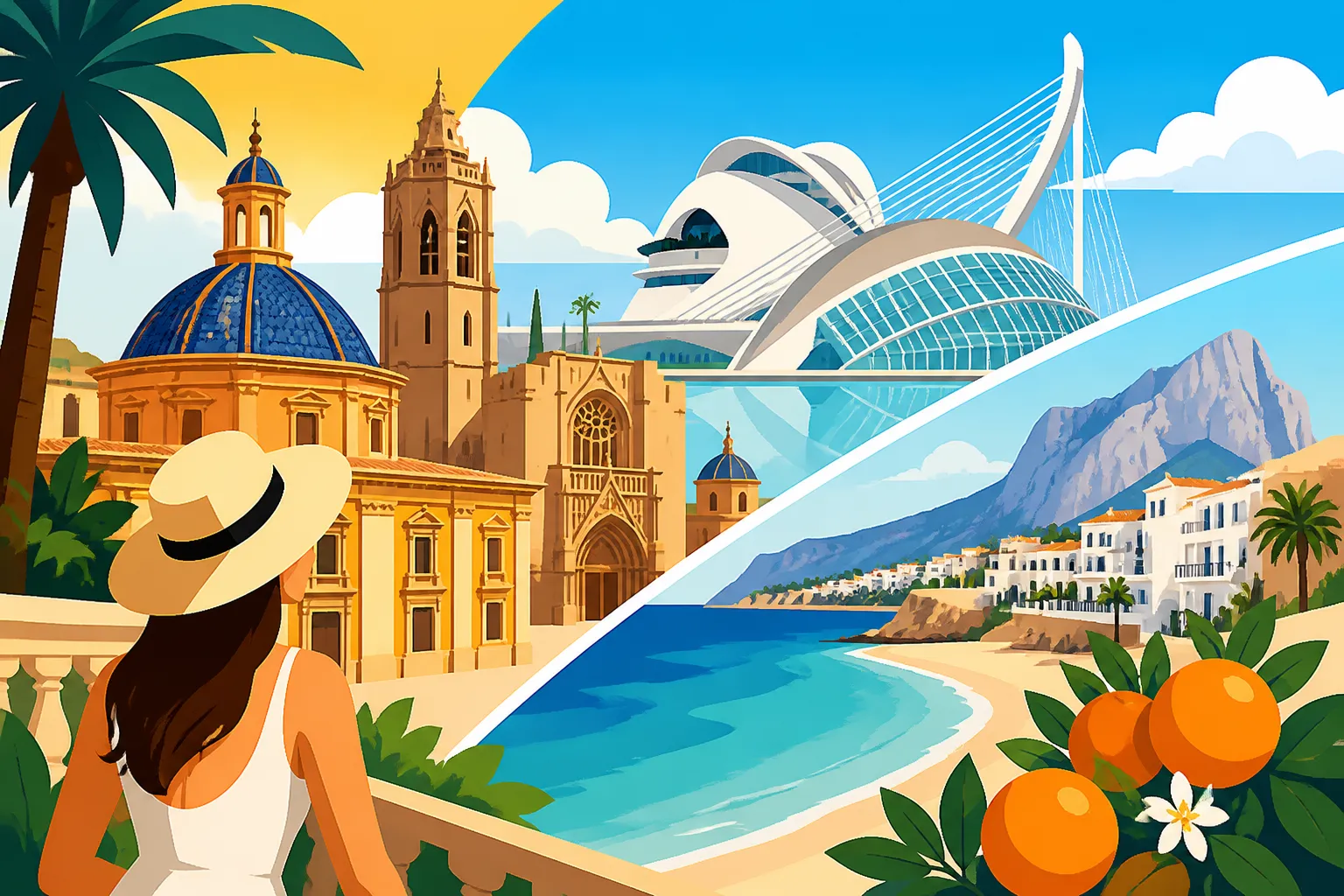
The contrast between the old and new is the city's defining characteristic. You can spend a morning looking at 13th-century frescoes in San Nicolás—often called the "Sistine Chapel of Valencia"—and an afternoon standing in front of the skeletal, white structures of the City of Arts and Sciences. Navigating this can be a logistical headache if you don't plan your transit, but once you understand the rhythm of the city, it becomes one of the most rewarding urban experiences in Spain.
The Future and the Past: City of Arts and Sciences vs. Old Town
The City of Arts and Sciences (Ciudad de las Artes y las Ciencias) is usually what draws people to Valencia first. Designed largely by Santiago Calatrava, these buildings look like they were plucked from a sci-fi film. I remember the first time I walked past the Hemisfèric; the scale of it is genuinely dizzying. To get the most out of this area, I highly recommend using GetYourGuide to book tickets in advance for the Oceanogràfic, the largest aquarium in Europe. Doing this saves you from standing in the brutal Mediterranean sun in a queue that can sometimes stretch for an hour.
In stark contrast lies the Ciutat Vella (Old Town). This is where you will find the Valencia Cathedral, which claims to house the Holy Grail. Whether you believe the legends or not, climbing the Miguelete Tower gives you a 360-degree view of the terracotta rooftops that define the city. The streets here are narrow and cool, a welcome respite during the August heat. You will find that How to Get Around a Spanish City Without Speaking Spanish is a useful skill here, as the winding alleys of the El Carmen neighborhood can confuse even the most sophisticated GPS.
Gastronomy and the Original Paella
If there is one thing Valencians are fiercely protective of, it is their paella. Friendships have been known to nearly end over whether or not one should put peas in a paella (hint: you definitely should not). Authentic Paella Valenciana is made with chicken, rabbit, and local beans like bajoqueta and garrofó. If you see a restaurant serving paella with chorizo or mixed seafood and meat (mar y montaña), you are likely in a tourist trap. For the real deal, you need to head out to the Albufera Natural Park, just south of the city, where the rice is actually grown.
Ordering food here requires an understanding of Spanish Food and Drink: A Practical Culture Guide. Lunch is the main event, usually served between 2:00 PM and 4:00 PM. Many traditional places won't even open their doors before 1:30 PM. If you find yourself hungry at noon, you’ll have to settle for a merienda or a small snack. Don’t forget to try Horchata, a refreshing drink made from tiger nuts, usually served with long, sweet pastries called fartons. It is an acquired taste for some, but on a hot afternoon in the Plaza de la Reina, it is essentially liquid gold.
Local Transport and Connectivity
Valencia is exceptionally well-connected, but the transition from the city metro to the regional trains can be a bit of a shock for newcomers. The Metrovalencia system is clean and efficient, linking the airport directly to the city center in about 20 minutes. However, if you are planning to explore the outskirts or the nearby beaches, you’ll need to familiarize yourself with the EMT bus network. I spent my first three months here constantly getting on the wrong bus because the lines can be a bit cryptic.
For those looking to venture further down the coast to the Costa Blanca, the Estació del Nord is your primary hub. The building itself is a masterpiece of Valencian Art Nouveau, covered in ceramic oranges and flowers. From here, you can catch regional trains that take you toward Gandia and beyond. If you're planning your journey, using a platform like Omio is a lifesaver for comparing the speeds and prices of regional trains versus the long-distance buses like ALSA, which often cover routes the trains don't reach.
The Allure of the Costa Blanca: More Than Just Beaches
The Costa Blanca, or "White Coast," stretches for over 200 kilometers along the province of Alicante. While it has a reputation for mass tourism, particularly in places like Benidorm, there is a hidden, rugged side to this coastline that most tourists miss. From the limestone cliffs of the Peñón de Ifach in Calpe to the turquoise coves of Jávea, the landscape is surprisingly diverse. When I first explored this region, I was struck by how quickly the scenery changes from high-rise apartments to pine-covered mountains.
This area is a magnet for expats, and for good reason. The microclimate here ensures over 300 days of sunshine a year. However, this popularity means that during the high season, the Beaches, Islands, and Coastal Escapes in Spain can become incredibly crowded. Finding your own quiet corner of the Costa Blanca requires a bit of local knowledge and, usually, a rental car, as the best "calas" (coves) are tucked away far from the main train stations.
Alicante: The Gateway to the Coast
Alicante is often unfairly dismissed as just a place with an airport. In reality, it’s a vibrant city with a stunning waterfront and a rich history. The Santa Bárbara Castle, perched on Mount Benacantil, is one of the largest medieval fortresses in Spain. Walking up there at sunset is a rite of passage for any visitor. The view of the Postiguet beach and the shimmering Mediterranean is enough to make anyone consider moving here permanently.
The city's Explanada de España, a promenade made of 6.5 million marble tiles creating a wavy mosaic, is the heart of Alicante’s social life. This is where you go for the evening paseo, a tradition you’ll learn about in Spanish Customs, Etiquette, and Social Life. People of all ages stroll here, stopping for gelato or a glass of local Monastrell wine. It’s an easy city to navigate, but I recommend checking Booking.com for hotels near the Old Quarter (Barrio de Santa Cruz) if you want to be within walking distance of the best tapas bars.
Charming Towns: Altea, Dénia, and Jávea
If you want the "postcard" version of Spain, head to Altea. With its blue-domed church and white-washed houses, it feels more like a Greek island than a Spanish mainland town. The streets are steep and paved with cobblestones, so leave the flip-flops at home. Altea is the artistic heart of the Costa Blanca, filled with small galleries and craft shops that avoid the usual souvenir tat.
Further north, Dénia and Jávea offer a more upscale, relaxed vibe. Dénia is a UNESCO Creative City of Gastronomy, famous for its red prawns. It’s also the main port for ferries to the Balearic Islands. Jávea (or Xàbia in Valencian) is where you’ll find the famous Cala Granadella, often voted the best beach in Spain. Because these towns are popular with international residents, the Cost of Living in Spain: Monthly Budget Guide for Expats can be a bit higher here, especially when it comes to dining out and short-term rentals.
Benidorm and Modern Tourism
We have to talk about Benidorm. It is the Marmite of Spanish travel—you either love the neon-lit energy of it or you avoid it at all costs. Many expats come to appreciate Benidorm for what it is: a masterclass in tourism infrastructure. It has three distinct sections: the Old Town (which is surprisingly traditional), the Levante (the "British" side), and the Poniente (the quieter, more Spanish side).
If you’re looking for family entertainment or a night out that doesn't end until 6:00 AM, Benidorm is unmatched. However, if you're using it as a base, you’ll want to check Traveling Around Spain: Trains, Buses, Flights, and Car Hire to see how to escape to the nearby mountains of Guadalest for a day. The contrast between the skyscrapers of Benidorm and the 11th-century mountain village of Guadalest is one of the most jarringly beautiful experiences in the region.
| Location | Best For | Vibe | Key Landmark |
|---|---|---|---|
| Valencia City | Culture & Food | Urban/Historic | City of Arts and Sciences |
| Alicante | History & Ease | Friendly/Accessible | Santa Bárbara Castle |
| Altea | Romance & Views | Artistic/Quiet | Blue-domed Church |
| Benidorm | Nightlife & Families | High-energy | Levante Beach Skyscrapers |
| Dénia | Seafood & Sailing | Upscale/Maritime | Dénia Castle & Port |
Cultural Immersion: Festivals and Local Life
Living in the Valencian Community means accepting that, at any given moment, something is likely to explode nearby. Fire is a central theme in local culture. Whether it’s the gunpowder-filled mascletàs or the burning of giant statues, the locals have a unique relationship with pyrotechnics. To the uninitiated, it can be terrifying. I remember my first Fallas festival—I thought the city was under siege. But once you understand the artistry and the community spirit behind it, it becomes infectious.
The daily rhythm here is also something you must adapt to if you want to maintain your sanity. The siesta is not just a myth; in smaller towns along the Costa Blanca, shops really do close from 2:00 PM to 5:00 PM. This is the time for a long lunch and a rest. If you try to run errands during this window, you will find yourself standing in front of locked metal shutters. Understanding Spanish Customs, Etiquette, and Social Life is vital for managing your expectations and your schedule.
Las Fallas and Regional Celebrations
Las Fallas is Valencia’s biggest party, held every March. The city is filled with hundreds of "fallas"—massive, intricate statues made of wood and papier-mâché that satirize politicians and celebrities. On the final night, the Nit de la Cremà, they are all set on fire. It is a spectacle of light, heat, and emotion. If you plan to visit during this time, you need to book your accommodation months in advance on Booking.com, as the city’s population triples overnight.
Beyond Fallas, the Costa Blanca is famous for its "Moors and Christians" festivals (Moros y Cristianos). These re-enactments of medieval battles are spectacular, featuring elaborate costumes, horses, and plenty of blunderbuss fire. The festival in Alcoy is the most famous, but almost every town in the Alicante province has its own version. It is a deep dive into Spanish history and identity, and witnessing one is a highlight of any Day Trips and Weekend Getaways Across Spain.
The Daily Rhythm: Siesta and Late Dining
One of the hardest adjustments for me was the dining schedule. Spaniards eat late, but Valencians take it to another level, especially in the summer. Dinner usually starts at 9:30 PM or 10:00 PM. If you show up at a restaurant at 7:00 PM, you will likely be the only person there, and the kitchen might not even be turned on yet. This "late" schedule is a response to the heat; nobody wants to eat a heavy meal when it’s still 35 degrees Celsius outside.
This rhythm extends to the nightlife as well. The "pre-party" doesn't start until midnight, and clubs don't get busy until 2:00 AM. If you are staying in a central area, be prepared for noise. It is wise for new arrivals to read up on Staying Safe in Spain: Common-Sense Tips for Travelers to learn how to navigate the busy nightlife areas without becoming a target for petty theft, which can occasionally happen in crowded festive zones.
Language and Communication in the Valencian Community
In Valencia and the Costa Blanca, you will encounter two official languages: Spanish (Castellano) and Valencian (Valencià). While everyone speaks Spanish, Valencian is widely used in schools, government, and on street signs. Don't be surprised if your GPS says one thing and the sign on the road says another (e.g., Alicante vs. Alacant). Most locals appreciate it if you try a few words in Valencian, like "Bon dia" (Good morning) instead of "Buenos días."
English is widely spoken in the main tourist hubs of the Costa Blanca, but in the heart of Valencia or the mountain villages, it becomes much rarer. Carrying a translation app or a small phrasebook is a good idea. However, the locals are generally incredibly patient and helpful. If you’re struggling to order a coffee, just keep it simple. If you're staying long-term, learning the basics of the language is the best way to move from being a "visitor" to being part of the community.
Practical Logistics for Your Eastern Spain Adventure
Planning a trip to this region requires more than just picking a beach. You need to consider how you will move between the city and the coast. While the High-Speed Trains in Spain (AVE): Routes, Booking, and Savings will get you from Madrid to Valencia in under two hours, the regional connections can be much slower. The "Trenet" (the narrow-gauge railway) that runs from Alicante up the coast to Dénia is beautiful and scenic, but it is not a "fast" way to travel. It’s better suited for a day trip than a time-sensitive transfer.
If you are traveling as a family, you will find that Spain is incredibly accommodating. Children are welcome almost everywhere, including late-night restaurants. However, the logistics of strollers on cobbled streets or finding baby supplies in a small "farmacia" can be tricky. It is wise to have a solid plan for your first few days, especially when it comes to having enough Euros on hand, as some smaller "chiringuitos" (beach bars) still prefer cash over cards.
Getting Around: Trains, Buses, and Car Rentals
For most travelers, a combination of public transport and the occasional car rental is the best way to go. Use Omio to book your Intercity Buses in Spain: Networks, Booking, and Tips if you are moving between Valencia and Alicante, as the bus is often faster and more direct than the train on this specific route. The ALSA bus service is surprisingly comfortable, often featuring Wi-Fi and plenty of legroom.
If you want to explore the hidden coves of the Costa Blanca, like Cala Moraig or the cliffs of Benitachell, you will absolutely need a car. Public transport simply doesn't reach these areas. Be aware that parking in towns like Altea or Jávea during August is a nightmare. I’ve spent more time looking for a parking spot than I did actually swimming on some days. If you do rent a car, make sure your accommodation offers parking, or you'll be spending a significant portion of your budget on public garages.
Accommodation and Where to Stay
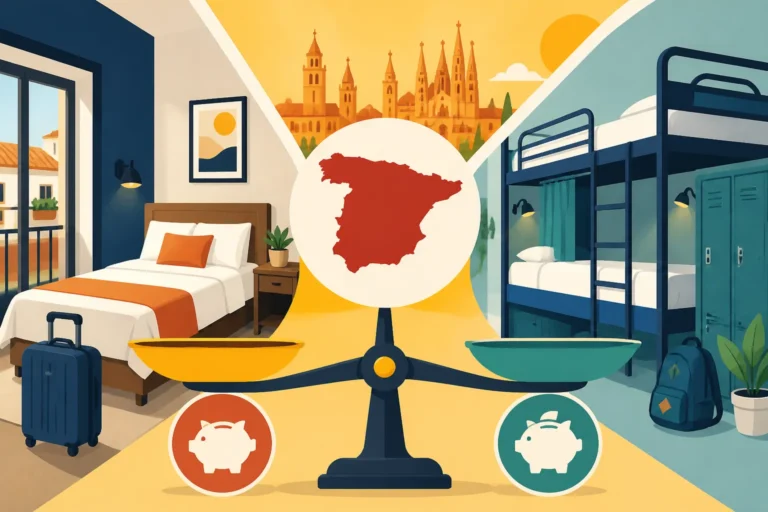
Choosing where to stay depends entirely on your goals. If you want culture and walkable sights, stay in the Ruzafa or El Carmen neighborhoods of Valencia. Ruzafa is the "hipster" district, full of brunch spots and independent boutiques. For a beach-focused holiday, look at the northern end of the Costa Blanca (Dénia, Jávea) for a more relaxed feel, or the southern end (Torrevieja, Orihuela Costa) for more budget-friendly options.
Booking.com is the most reliable tool for finding everything from high-end resorts to quirky "pensiones." I often tell friends to look for "Apart-hotels" if they are staying for more than a few days. Having a small kitchen allows you to shop at the local markets, like the Mercado Central in Valencia, which is an experience in itself. Buying fresh produce and local cheeses to eat on your balcony at sunset is often better than any restaurant meal you’ll find.
Staying Safe and Avoiding Common Tourist Traps
Generally, Valencia and the Costa Blanca are very safe. However, like any popular destination, you should stay alert. Pickpockets operate in the crowded areas around the Valencia Cathedral and on the Benidorm strip. My golden rule is never to leave your bag hanging on the back of your chair at a terrace. Keep it on your lap or loop the strap around your leg.
When it comes to tourist traps, be wary of any restaurant that has pictures of food on a board outside. Authentic places usually have a handwritten "Menú del Día" that changes daily. Also, be cautious of people offering "free" rosemary or flowers in the street; this is a common scam where they will then demand money for a palm reading or a blessing. A polite but firm "No, gracias" and continuing to walk is the best way to handle these situations.
Seasonal Planning and Weather Considerations
The weather in this part of Spain is its greatest asset, but also a potential challenge. The summers are not just hot; they are incredibly humid. In August, the "Leveche" wind can blow in from the Sahara, bringing dust and temperatures that soar above 40 degrees Celsius. If you aren't used to this, it can be physically draining. It is wise for visitors to plan their heavy sightseeing for the early morning and retreat to the AC or a shaded pool between 2:00 PM and 6:00 PM.
The "shoulder seasons" of May-June and September-October are, in my opinion, the best times to visit. The sea is warm enough for swimming, but the air is fresh enough for hiking. Winters are mild, but don't be fooled—homes in Spain are built to stay cool, not warm. A January night in a stone-floored apartment can feel surprisingly chilly, so make sure your accommodation has "aire acondicionado" that also functions as a heater (bomba de calor).
Outdoor Activities: Hiking and Water Sports
The Costa Blanca is a playground for outdoor enthusiasts. The Montgó Natural Park, which sits between Dénia and Jávea, offers incredible hiking trails with views that reach all the way to Ibiza on a clear day. If you’re into water sports, the Bay of Santa Pola is world-renowned for windsurfing and kitesurfing. You can find many guided tours for kayaking through sea caves on GetYourGuide, which is a fantastic way to see the coastline from a different perspective.
Cycling is another huge draw. The mountains behind the Costa Blanca (the Marina Alta and Marina Baixa) are the winter training grounds for many professional Tour de France teams. The roads are well-maintained, and drivers are generally very respectful of cyclists. However, these routes are steep. If you aren't an experienced climber, I recommend renting an e-bike—it makes the trip up to the village of Guadalest or the Coll de Rates much more enjoyable for the average traveler.
Disclaimer
The information provided in this guide is based on personal experience and current travel conditions in Spain as of 2026. While we strive for accuracy, travel logistics, prices, and local regulations can change. Always verify specific details such as opening hours and visa requirements with official sources before your trip.