Avoiding Pickpockets in Spain’s Tourist Areas
You’re standing in front of the Sagrada Família, reaching for your phone to snap a photo, only to realize your pocket is empty and your heart has dropped into your shoes. I’ve felt that sickening lightness myself while navigating a crowded market in Madrid, and it is a violation that can sour even the most beautiful Mediterranean afternoon. This guide provides the battle-tested strategies you need to stay one step ahead of Spain's cleverest petty criminals.
Disclosure: This post may contain affiliate links. We may earn a commission at no extra cost to you if you make a purchase through these links. Read full disclosure.
Understanding the Pickpocket Landscape in Spain
When you first move to Spain or arrive for a long-awaited holiday, the atmosphere feels incredibly safe. Violent crime is rare, and the streets are vibrant until the early hours of the morning. However, this sense of security can be a double-edged sword. Spain, particularly in high-density tourist areas, has a reputation for being the "world capital of pickpockets." This isn't because the country is dangerous, but because petty theft has historically been treated with a "light touch" by the legal system. For years, thefts under 400 euros were often classified as minor infractions, leading to a "revolving door" where professional thieves were back on the street within hours.
Why Tourist Areas are Target Rich Environments
Pickpockets in Spain are not usually desperate individuals acting on a whim; they are often part of highly organized, professional rings. They view the crowded plazas of Seville or the narrow alleys of the Gothic Quarter as their office. Tourists are the preferred target because they are often distracted by the stunning architecture, carrying significant amounts of cash, and—most importantly—they are unlikely to remain in the country long enough to testify in a protracted legal case.
Professional thieves spend their days "scanning" crowds. They look for the tell-tale signs of a person who is mentally elsewhere. This could be someone struggling with a map, a parent distracted by a crying child, or someone using a translation app to figure out a menu. If you are focused on How to Ask for Directions in Spanish (Simple Phrases), you might not notice the gentle bump of a passerby. They also look for expensive gear, such as high-end cameras or the latest smartphones, which are easily fenced in local black markets.
The Psychology of the "Invisible" Thief
One of the biggest mistakes newcomers make is looking for someone who "looks like a criminal." In Spain, the most successful pickpockets are masters of disguise. You might see a group of well-dressed teenage girls carrying shopping bags, a pair of middle-aged men in polo shirts looking like "businessmen" on a lunch break, or an elderly woman offering a sprig of rosemary for "good luck."
They use their appearance to blend in perfectly with the crowd. They know that if they look like another tourist, you won't instinctively clutch your bag when they stand close to you in a queue. This is why it is essential to internalize Staying Safe in Spain: Practical Safety Tips for New Residents. Security isn't about profiling people; it's about maintaining a "bubble" of awareness regardless of who is around you.
The Anatomy of a Distraction: How Pickpockets Operate
Pickpockets rarely work alone. They operate in "crews" where each person has a specific role: the distractor, the lifter, and the mule. The distractor’s job is to break your focus, the lifter takes the item, and the mule immediately walks away with it. This way, if you catch the lifter red-handed and search them, they are "clean," and the mule is already two blocks away.
The Most Common Street Scams
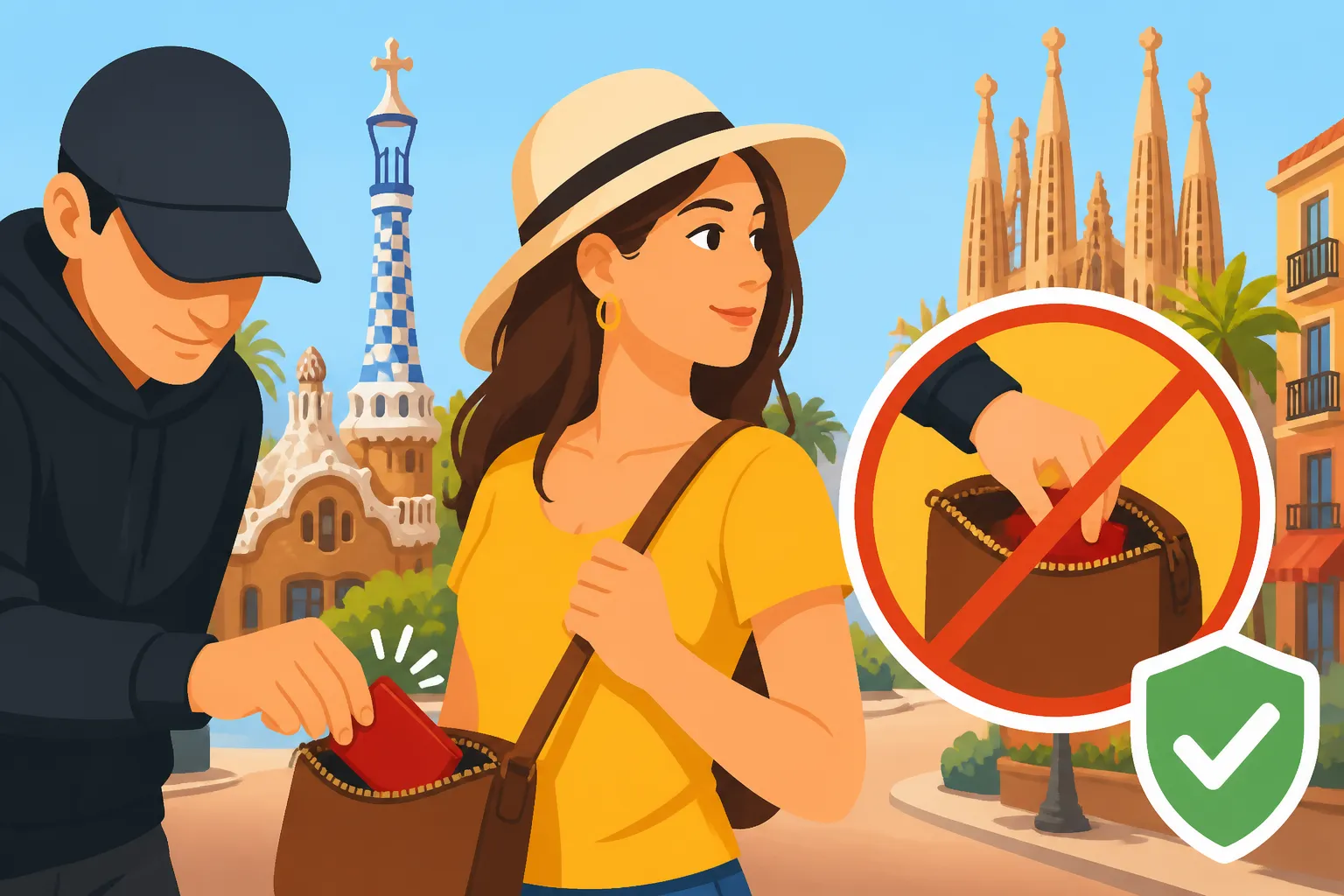
The "Bird Droppings" or "Stain" scam is a classic that still works because it triggers a person's grooming instinct. Someone will squirt a bit of white liquid (like mayonnaise or mustard) onto your shoulder or back. A "helpful" stranger will then point it out, exclaiming that a bird has made a mess on you. They will offer to help clean it with a tissue, and while you are focused on the mess and their frantic dabbing, their accomplice is emptying your pockets. If you find yourself in this situation, do not stop. Keep walking, get to a safe place like a hotel lobby, and clean it yourself.
Another frequent tactic involves the "Petition Signers." Usually, these are young people appearing to represent a charity for the deaf or disabled. They will approach you with a clipboard, asking for a signature and a small donation. The clipboard serves a dual purpose: it blocks your view of your own waistline or bag, and the aggressive nature of their approach makes you want to move away, creating the physical contact they need to reach into your purse.
Metro and Public Transport Tactics
The Spanish metro systems, especially in Madrid and Barcelona, are remarkably efficient. When you book your transit through platforms like Omio, you get the convenience of e-tickets, which reduces the need to pull out your wallet in public. However, the physical environment of the metro is a pickpocket’s paradise.
One common move is the "Sandwich." As you are boarding or exiting a train, the "Blocker" will suddenly stop in front of you, often pretending to be confused by the door or dropping something. You naturally bump into them. Behind you, the "Lifter" bumps into your back, seemingly frustrated by the delay. In that two-second window of physical compression, your phone is gone. By the time the doors close and you realize it, the thieves are back on the platform. Knowing How to Avoid Pickpockets on the Barcelona Metro is perhaps the most important logistical skill you can acquire for city living.
Table Surfing at Outdoor Terraces
Spain’s terrace culture is one of its greatest joys, but it requires a specific type of vigilance. "Table surfing" occurs when you place your phone or wallet on the table while enjoying a coffee. A thief will walk by and place a large map or a flyer over your phone, asking for directions or money. When they lift the paper and walk away, your phone is hidden underneath it. Always keep your valuables off the table and in a secure, internal pocket. If you are looking for a hotel with a secure, private terrace where you can relax without this worry, checking reviews on Booking.com can help you find accommodations with higher security standards.
High-Risk Areas You Should Know
While petty theft can happen anywhere, certain "hotspots" in Spain are legendary among the local police (Policía Nacional). These areas share common traits: high foot traffic, narrow streets, and plenty of "visual noise" to distract victims.
Barcelona: The Epicenter of Petty Theft
Las Ramblas is arguably the most famous street in Spain, and unfortunately, it is also a primary hunting ground for thieves. The combination of street performers, kiosks, and massive crowds makes it incredibly easy for a crew to operate unnoticed. Similarly, the Gothic Quarter (Barrio Gótico) with its labyrinthine alleys provides plenty of quick escape routes.
Beyond the streets, the beaches of Barceloneta are high-risk zones. Thieves often pose as "mojito" sellers or people offering massages. While you are in the water, they simply walk by and pick up your bag. Never leave your belongings unattended on the beach. Even better, use lockers if available or only bring what you can fit in a waterproof pouch that stays with you. If you are exploring the city, consider pre-booking organized tours through GetYourGuide, as these often include guides who are savvy about the local scams and will actively warn the group when they spot known pickpockets in the area.
Madrid: From Puerta del Sol to the Rastro
In the capital, the Puerta del Sol and the Plaza Mayor are the main areas to watch. Because these are transit hubs, the mix of commuters and tourists creates a chaotic environment. When you are learning How to Use the Madrid Metro as a First-Time Visitor, you will likely pass through Sol multiple times. Keep your backpack on your front here—everyone does it, and it's not "looking like a tourist"; it's looking like a local who knows the score.
The Sunday market, El Rastro, is another legendary spot. It is a wonderful experience, but the "shoulder-to-shoulder" nature of the market makes it nearly impossible to tell a "thief's bump" from a "shopper's nudge." If you plan on visiting, read up on How to Visit El Rastro Market in Madrid to ensure you know which stalls are worth your time and which areas require the most bag-clutching.
Regional Hotspots and Seasonal Shifts
Don't let your guard down in smaller cities like Seville, Granada, or Valencia. In Seville, the area around the Cathedral and the Barrio Santa Cruz are prime spots. During major festivals like Las Fallas in Valencia or Feria de Abril in Seville, pickpocketing rates skyrocket as professional crews travel from across Europe to exploit the massive, celebratory crowds.
| Location Type | Primary Risk Factor | Recommended Action |
|---|---|---|
| Metro/Bus | The "Sandwich" bump at doors | Bags on front, hand over the zipper |
| Outdoor Cafes | Table surfing with maps/flyers | Valuables in pockets, never on table |
| Crowded Plazas | Distraction scams (stains, petitions) | Keep walking, do not engage |
| Popular Beaches | Unattended bags while swimming | Use waterproof pouches or rotatable guard |
| Street Markets | Physical crowding and jostling | Use a money belt under clothing |
Practical Prevention Strategies for Every Expat and Tourist
Preventing pickpocketing in Spain is about layers of defense. The goal isn't to be "un-pickable"—if a professional wants your bag, they can be very persistent—but to be the least attractive target in the crowd. Thieves want the easy win. If they see a zipper with a lock or a bag held tightly under an arm, they will move on to the person with an open tote bag.
Tech and Gear to Protect Your Valuables
Investing in anti-theft gear is one of the smartest moves you can make. Brands that offer slash-proof straps and locking zippers are very popular among expats. However, the most effective tool is often the simplest: the "dummy" wallet. I often carry an old wallet with a few expired cards and a couple of small bills in my back pocket, while my actual cash and cards are in a slim pouch tucked into my waistband.
For your smartphone, consider a phone tether or "leash" that attaches to your belt loop or the inside of your bag. This prevents the "snatch and run" move where someone grabs your phone out of your hand while you are using it and disappears into a crowd. Additionally, using apps for navigation and booking, such as Omio for your train journeys, allows you to keep your physical documents hidden and only pull out your phone briefly to show a QR code.
Behavior and Body Language
Your most powerful weapon is your "Street IQ." Pickpockets look for people who look lost or overwhelmed. Even if you are completely turned around in the winding streets of Toledo, walk with purpose. If you need to check your phone or a map, duck into a shop or a cafe. This removes you from the "flow" of the street where predators are watching.
Another tip is to blend in with the local style. Spaniards generally don't wear "adventure gear" (like zip-off cargo pants or heavy hiking boots) in the city. Dressing slightly more "city-casual" helps you disappear into the local population. When you understand the Common Money Mistakes New Expats Make in Spain (and Fixes), you’ll realize that "looking rich" is a major liability.
Managing Cash and Documentation
Never carry all your "eggs in one basket." Spread your cash across different pockets, your bag, and your hotel safe. Only carry the credit cards you need for that specific day. It's also vital to have digital copies of your passport and residency documents. If you have moved here recently, you are likely dealing with the Spain Immigration Glossary: Key Spanish Terms Explained in English and waiting for your TIE. Do not carry your original TIE or passport unless absolutely necessary; a high-quality photocopy or a digital scan is usually sufficient for daily life.
What to Do If You Become a Victim
If the worst happens and you realize you’ve been picked, the first thing to do is take a deep breath. It happens to the best of us, and while it’s a massive headache, it is a solvable problem. Spain has a dedicated foreign tourist police service called SATE (Servicio de Atención al Turista Extranjero) in many major cities. They are designed specifically to help you with the paperwork and often have translators on hand.
Immediate Steps and Filing a Police Report
You must file a "denuncia" (police report) for insurance purposes and to replace any official documents. You can often start this process online or by phone, which saves you hours of waiting at a police station. Knowing Using Spanish ‘Ayuntamiento’ Services: What You Can Do Online can give you a head start on navigating local administration. If your phone was stolen, use a "find my phone" feature from a friend's device immediately to lock it—but never try to "confront" the thief yourself. They are often part of a group and it isn't worth the risk to your safety.
If your passport is gone, your next call must be to your embassy. They can issue an emergency travel document, but you will need that police report first. Refer to What to Do If You Lose Your Passport in Spain for a step-by-step breakdown of the consular process.
Canceling Cards and Securing Your Identity
Cancel your credit and debit cards immediately through your banking app. If you’ve lost your Spanish health card or other local IDs, you'll need to go through the replacement process, which involves paying a small "tasa" (tax). This is a good time to keep the Emergency Numbers in Spain: 112 and When to Use It handy, though 112 is primarily for life-threatening emergencies. For theft, the number is usually 091 (Policía Nacional).
Finally, don't let the experience ruin your view of Spain. The person who stole your wallet is not representative of the warm, generous people you will meet in the "tabernas" and plazas. Once the paperwork is done, go get a "caña" and a tapa, and try to move forward. If you are feeling overwhelmed by the language barrier during this process, our guide on How to Handle Medical Emergencies If You Don’t Speak Spanish offers similar advice on navigating high-stress situations with limited vocabulary.
Disclaimer
The information provided in this guide is for informational purposes only and does not constitute legal or professional security advice. While we strive to provide the most accurate and up-to-date information, crime patterns and local laws can change. Always consult with local authorities or your embassy for the most current safety protocols and legal requirements in Spain.