How to Handle Medical Emergencies If You Don’t Speak Spanish
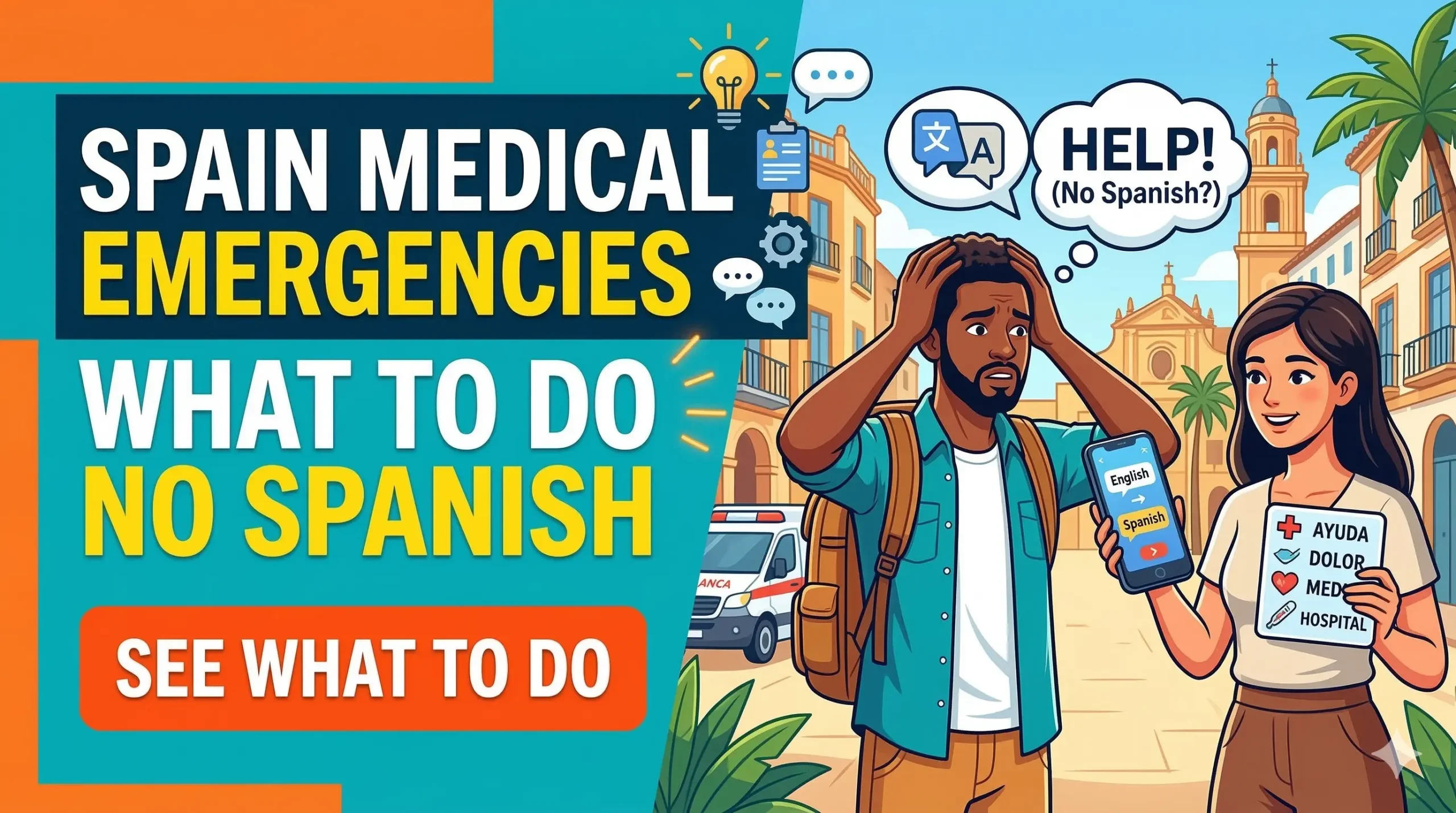
Experiencing a medical crisis is terrifying, but doing it while completely unable to communicate your symptoms is paralyzing. I once sat in a Malaga hospital clutching my chest, desperately trying to mime “heart palpitations” to a confused triage nurse. This guide explains how to request a translator, navigate Spanish emergency rooms, and get immediate help without speaking the language.
Disclosure: This post may contain affiliate links. We may earn a commission at no extra cost to you if you make a purchase through these links. Read full disclosure.
Dialing the Right Number and Requesting Help
When panic sets in and someone is severely injured or ill, your brain often defaults to the emergency numbers from your home country. Dialing 911 or 999 in Spain will not always automatically redirect you. You must know the local infrastructure and how to bypass the initial language barrier to get an ambulance dispatched to your location.
The Emergency System and Telephone Translators
The universal emergency number for all of Spain, and the entire European Union, is 112. This single number dispatches medical ambulances, the national police force, and the fire brigade.
The most common fear expats have is that the person answering the 112 call will only speak rapid-fire Spanish. When you dial 112, the initial operator will almost certainly answer in Spanish, usually saying something like “Emergencias 112, ¿dígame?” Do not panic and do not hang up. Immediately and clearly state: “English, please” or “Inglés” (pronounced een-glace).
The Spanish 112 system is highly advanced and operates a dedicated tele-translation service with over 50 languages available. The dispatcher will put you on a brief hold—which feels like an absolute eternity when someone is bleeding or unconscious—and patch in an English-speaking interpreter. This interpreter will stay on the line to relay your exact location and medical symptoms to the local emergency dispatchers. To understand exactly what questions the dispatcher will ask you while the ambulance is en route, review our comprehensive breakdown in How to Call 112 in Spain: What to Say and What Happens Next.
Alternative Applications and Location Tracking
If you are hiking in a remote area, having a severe allergic reaction that prevents you from speaking clearly, or simply do not know your exact street address in a new Spanish city, relying on a voice call is incredibly risky.
As a non-Spanish speaker, your greatest technological asset is the AlertCops mobile application. This is the official citizen security app developed by the Spanish Ministry of the Interior. You must download this app and register your profile with your passport or residency card before an emergency happens.
AlertCops allows you to request immediate medical or police assistance through a simple, icon-based interface. If you press the medical emergency button, the app instantly transmits your exact GPS coordinates to the nearest regional dispatch center. More importantly, the app features a real-time text chat function that automatically translates your English text into Spanish for the emergency responders. You can type “I am having a heart attack” or “My child is not breathing” in English, and the dispatch center receives it in perfectly translated Spanish alongside your exact location pinpointed on a map.
Navigating the Hospital Triage Desk
If your emergency is severe but does not require an ambulance—for example, a suspected broken arm or severe dehydration—you will likely take a taxi to the nearest hospital. Arriving at a chaotic Spanish emergency room is an overwhelming sensory experience, especially when you cannot understand the overhead announcements or the intake forms.
Essential Documents to Hand Over
When you walk through the sliding glass doors of a Spanish emergency room, known as Urgencias, your first stop is the admission and triage desk (Admisión de Urgencias). The administrative staff working this desk rarely speak English. Do not attempt to explain a complex medical history right away; their primary goal is simply to process your identity and get you into the triage queue.
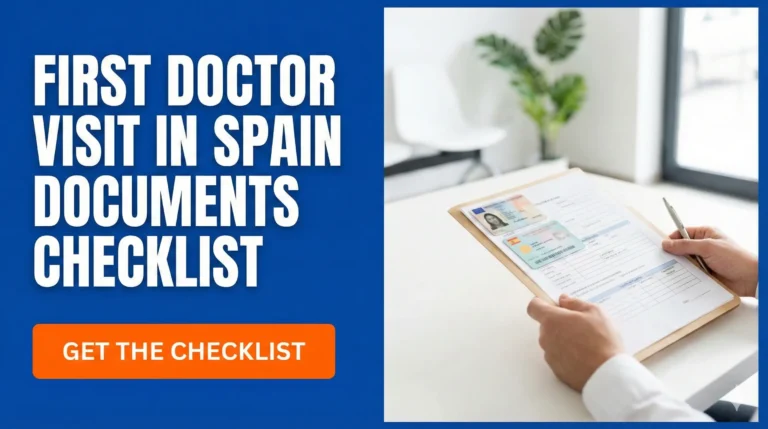
Simply hand the clerk your physical passport or TIE residency card. If you are registered in the public system, hand them your public health card (SIP card). If you are an EU citizen, hand them your European Health Insurance Card (EHIC), and if you are privately insured, hand over your provider’s card. If you are brand new to the country and do not have your health card sorted yet, do not panic; read How to Access Public Healthcare If You’re New and Paperwork Isn’t Done Yet to understand your universal right to emergency care. If you are unsure which specific clinic to go to based on the time of day, read How to Find a 24-Hour Clinic in Spain (Urgencias) before you leave the house.
Once registered, you will be directed to a triage nurse. The nurse determines how quickly you see a doctor based on the internationally recognized Manchester Triage System. You will be assigned a color code: red (immediate life-saving intervention), orange, yellow, green, or blue (non-urgent, expect to wait several hours). Because the nurse is trying to categorize your threat level in seconds, being able to point to where it hurts is vital. Having a pre-translated list of your allergies and chronic conditions physically printed in your wallet is a lifesaver. You should also memorize or screenshot the core vocabulary found in Spanish Emergency Phrases: How to Describe Symptoms Quickly to point to the exact words for your symptoms when speaking fails.
Using Digital Translation Tools Effectively
While you are sitting in the waiting room or an examination bay, your smartphone is your absolute lifeline. Do not assume the attending doctor will speak conversational English. While many Spanish physicians read complex medical journals in English, they are often not confident enough to conduct a high-stakes clinical diagnosis in a second language without fear of a malpractice misunderstanding.
You must download the Google Translate app and ensure the offline Spanish dictionary is fully downloaded. Hospitals often have terrible cell reception, and you cannot rely on a live internet connection in the basement of an emergency ward. Use the “Conversation” or “Speech” feature on the app. It allows the doctor to speak Spanish into your phone, translates it to English text for you to read, and allows you to speak English back to them. Keep your sentences short and literal. Do not use slang like “I’m feeling under the weather”; say “I have a fever and my chest hurts.” If your emergency stems from a minor slip, fall, or traffic incident, knowing how to handle the administrative aftermath is crucial; check out What to Do After a Minor Accident in Spain: Insurance and Care Steps for guidance on collecting the right paperwork before you are discharged.
| Hospital Environment | Language Barrier Severity | Wait Times | Recommended Strategy |
| Public Urgencias | High (Staff rarely speak English) | Long (Triage-based) | Bring a bilingual friend, use translation apps |
| Private Urgencias | Moderate (Some doctors speak English) | Short | Call your insurance first to confirm English staff |
| Local Farmacia | Moderate to High | None | Use written notes for symptoms |
Bridging the Gap with Private Healthcare and Pharmacies
The sheer terror of sitting in a loud, brightly lit public waiting room while shivering with an infection, completely unable to understand the nurses calling your name, is exactly why many expats eventually seek alternative healthcare routes.
Accessing English Speaking Medical Networks
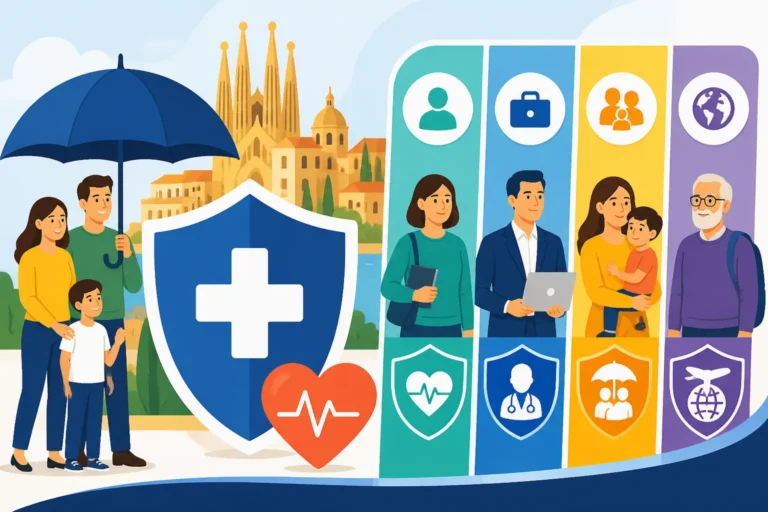
If you want to significantly lower the risk of facing a severe language barrier during a medical emergency, relying solely on the public system is a gamble you will often lose. Securing a robust private health insurance policy is one of the most effective ways to guarantee you can communicate during a crisis.
Private hospitals in major expat hubs (like Madrid, Barcelona, Alicante, and Malaga) frequently staff bilingual doctors and even have dedicated international patient desks with live translators. To navigate the complex market of private health plans, using a specialized broker like Innoinsure can be incredibly helpful. A broker can help you filter policies that specifically partner with these international or bilingual hospital networks. You can deeply explore the systemic differences between these two paths in our overview of the Spain Healthcare System for Expats: Public vs Private.
With a verified private network, you completely bypass the public triage queues. You simply open your provider’s app, locate the nearest private emergency room known for English-speaking staff, and receive care in a language you actually understand. Furthermore, if your emergency is painful but not life-threatening—such as a severe stomach bug or a nasty rash—many modern private policies offer robust 24/7 digital doctor consultations. You can consult a fully qualified, English-speaking doctor via video call from the comfort of your own bed, receiving a digital prescription instantly without ever navigating a waiting room. Discover how to safely leverage this incredible digital perk in Telemedicine in Spain: When It’s Useful and What to Expect.
Post Emergency Recovery and Medications
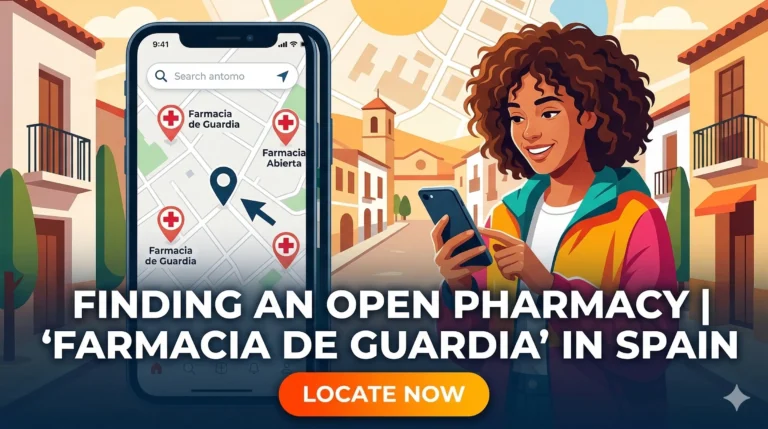
Once you are finally discharged from the hospital, your next hurdle is the pharmacy. You will likely be handed a prescription written in Spanish or a digital QR code. When you take this to the local farmacia, the pharmacist might not speak enough English to explain the side effects or exactly how many times a day to take the medication.
To safely leverage a local chemist’s frontline triage advice despite the language barrier, check out Can a Pharmacist in Spain Help With Minor Illness? What to Expect. The pharmacist will usually write the dosage clearly on the box with a pen (e.g., “1 x 8h” meaning one pill every eight hours).
However, surviving a medical emergency—and the massive spike in cortisol caused by the language barrier—leaves your immune system and your gut entirely devastated. Public Spanish doctors are brilliant at treating acute trauma, but they rarely prescribe holistic aftercare. If you are handed a heavy, 10-day course of Spanish antibiotics, your gut flora will be wiped out. Trying to explain the specific strains of probiotics you need to rebuild your stomach to a local pharmacist who only speaks Spanish is deeply frustrating.
To bypass this frustrating retail and linguistic gap, the international expat community relies heavily on iHerb. By ordering your post-emergency recovery supplements, premium digestive enzymes, and potent antioxidants directly through iHerb, you guarantee access to the exact, trusted wellness brands you successfully used back home. You can read all the ingredient labels, reviews, and dosages in plain English. Having a dedicated holistic recovery stash delivered directly to your Spanish door via iHerb ensures you are actively combating the physiological stress of your hospital visit from the inside out. Recovering from an illness in a foreign country is chaotic and exhausting; utilizing an online platform to effortlessly restock your specific nutritional gaps puts the control firmly back in your hands, allowing you to focus entirely on resting in the comfort of your own home.
References
Primary sources (official)
- Ministerio del Interior – AlertCops Official Portal: https://alertcops.ses.mir.es/mialertcops/
- Protección Civil y Emergencias – 112 Spain: https://www.112.es/
Other helpful sources
- Expatica – Emergency Numbers and Healthcare in Spain: https://www.expatica.com/es/healthcare/healthcare-basics/emergency-numbers-in-spain-101464/
Disclaimer
The information provided in this article is for educational and informational purposes only and does not constitute formal medical or emergency response advice. The availability of English-speaking 112 dispatchers, translation services, and hospital staff varies significantly across Spain’s autonomous communities and rural areas. Always prioritize seeking immediate medical attention in a crisis, regardless of the language barrier. If you experience a severe or life-threatening medical emergency, dial 112 or use the AlertCops application immediately.