Interrail and Eurail in Spain: Reservation Fees and Whether It Works Here
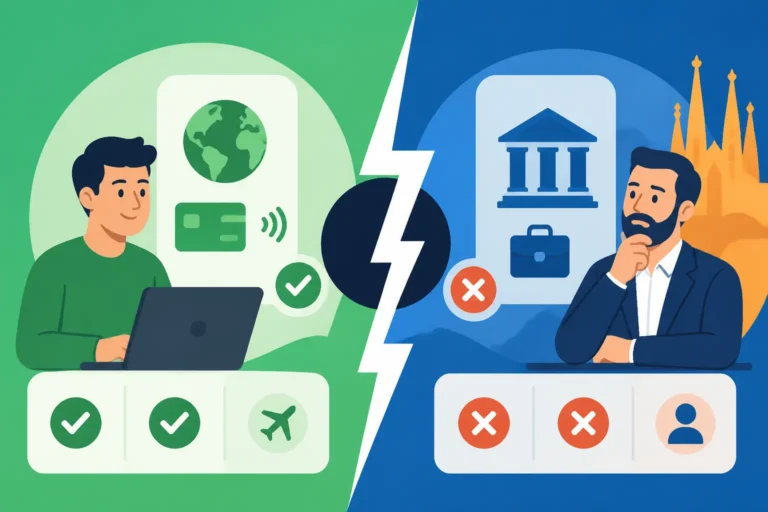
Planning a grand European adventure often includes visions of seamless train travel, passing through picturesque landscapes with nothing but a rail pass in hand. However, when you turn your gaze towards Spain, you might find that the reality of using an Interrail or Eurail pass here comes with a few unexpected twists, particularly around reservation fees and availability. This guide is here to untangle the complexities, validate those budding frustrations, and help you navigate Spain's fantastic rail network, especially with a little help from platforms like Omio.
Disclosure: This post may contain affiliate links. We may earn a commission at no extra cost to you if you make a purchase through these links. Read full disclosure.
The Allure of Interrail/Eurail and the Spanish Reality Check
For decades, Interrail (for European residents) and Eurail (for non-European residents) passes have been the quintessential backpacking companion, promising freedom and flexibility across the continent's extensive rail networks. The idea is simple: buy a pass, hop on a train, and explore. It sounds idyllic, doesn't it? But, like a perfectly brewed café con leche that unexpectedly comes with a hefty suplemento for the terrace, Spain often adds a layer of required reservations and associated fees that can throw a wrench into those spontaneous travel plans.
What Exactly Are These Passes?
At their core, Interrail and Eurail passes are multi-country or single-country train tickets that allow for a certain number of travel days within a set period. You pick a pass that fits your trip length and scope, and theoretically, you're all set to explore. They offer fantastic value in countries where train travel is often a simple matter of showing your pass and hopping aboard, like Germany or Austria, particularly on regional routes. These passes are marketed on the freedom they afford, encouraging explorers to embrace the journey as much as the destination. They can definitely be a romantic way to see Europe, and Spain is undeniably part of that romantic vision for many.
Why Spain Can Be Tricky for Pass Holders
Here's where Spain throws a curveball. Unlike some other European countries, Spain's train network, predominantly operated by Renfe, relies heavily on mandatory seat reservations, especially for its high-speed (AVE) and long-distance services. This isn't just a suggestion; it's a non-negotiable requirement. You simply cannot board many of Spain's most convenient and popular trains with just your pass; you need a specific seat reservation on top of it. This can be a bit of a shock, and honestly, a source of frustration for many pass holders who arrive expecting the same "hop-on, hop-off" ease they've found elsewhere. These reservations come with a fee, which can quickly add up, making you question the overall value of your pass. Furthermore, reservation slots for pass holders are often limited, especially on popular routes during peak seasons or holidays, leading to potential last-minute scramble or even fully booked trains. It's a system designed more around specific ticket sales than the open-ended nature of a rail pass.
Understanding Reservation Fees for Trains in Spain
So, you've got your Interrail or Eurail pass, and you're ready to explore Spain. The first thing you need to wrap your head around is that your pass is essentially your entry ticket to the system, but it doesn't guarantee you a seat on many of the trains you'll actually want to take. Those fantastic high-speed AVE trains that whisk you from Madrid to Barcelona in less than three hours? They all require a reservation. The scenic long-distance Larga Distancia routes? Same story.
The Obligatory Reservation Culture
The prevalence of mandatory reservations in Spain stems from a few factors. Firstly, Spain has invested heavily in its high-speed rail network, making it one of the most extensive in Europe. These services are premium, demand management to ensure capacity, and operate on a strict schedule. Secondly, the Spanish rail operator, Renfe, has a different commercial model than some of its European counterparts. They prioritize specific seat sales and yield management, meaning that every seat is typically tied to a specific booking. This means even if a train appears empty, you won't be able to just sit down without a prior reservation. The system also limits the number of seats available for pass holders on each train, particularly on busy routes. This isn't necessarily to penalize pass holders, but rather to manage overall capacity and prioritize full-fare ticket sales, which are naturally more profitable for the operator. This structure, while efficient for Renfe, does often feel less user-friendly for travelers holding a flexible rail pass.
Specific Costs and Types of Trains
The cost of reservations in Spain can vary significantly depending on the type of train. It's not a flat fee across the board, which adds another layer of complexity to budgeting your trip. Here’s a general breakdown:
- AVE (High-Speed Trains): These are Renfe's flagship services, connecting major cities like Madrid, Barcelona, Seville, and Valencia. They are fast, comfortable, and generally punctual. For an Interrail/Eurail pass holder, a reservation on an AVE train typically costs around €10-€15. While this might not seem like much for a single journey, if you plan to use AVE for multiple legs of your trip, these fees can quickly accumulate. For example, a round trip from Madrid to Seville and back would add €20-€30 to your pass costs, on top of the pass itself.
- Long-Distance (Larga Distancia, e.g., Alvia, Euromed, Intercity): These trains also connect cities, but often at slightly lower speeds or with more stops than AVE. They cover various routes, including some that reach destinations not served by AVE. Reservations for these services are usually in the €6-€10 range. Again, manageable for a single trip, but remember to factor this into your overall travel budget.
- Regional Trains (Media Distancia and Cercanías): For shorter journeys and suburban travel, Spain has Media Distancia (medium-distance regional trains) and Cercanías (commuter trains). Many of these regional trains generally do not require reservations, allowing for true hop-on, hop-off travel with your pass. This is where the pass offers its promised flexibility. However, these trains are slower and may not serve all the routes you're interested in, especially if you're trying to cover significant distances. If you're exploring a specific region, say the small towns around Barcelona or Valencia, your pass will be fantastic here. But trying to get from, say, Seville to Bilbao using only regional trains would be an incredibly long and arduous journey involving many changes.
A Quick Look at Reservation Fees (Approximate)
| Train Type | Reservation Required? | Approximate Fee (EUR) | Notes |
|---|---|---|---|
| AVE (High-Speed) | Yes (Mandatory) | €10 – €15 | Fastest, most direct routes between major cities. Limited pass holder seats. |
| Larga Distancia | Yes (Mandatory) | €6 – €10 | Long-distance routes (e.g., Alvia, Euromed, Intercity). |
| Media Distancia | No (Usually) | €0 | Regional trains for shorter journeys. Slower, more stops. |
| Cercanías (Commuter) | No | €0 | Urban and suburban commuter lines. Ideal for city exploration and nearby towns. |
| Note: Fees are subject to change by Renfe. Always check the latest information. |
How Omio Simplifies the Reservation Process
Navigating these reservation requirements can feel like a bureaucratic maze, especially if your Spanish isn't quite up to snuff for calling Renfe directly or if you're trying to do it at a busy train station. This is where a platform like Omio really shines as your travel hero. Omio allows you to search, compare, and book train tickets and reservations across various European providers, including Renfe. Crucially, it simplifies the process for pass holders.
Instead of hunting down a Renfe ticket office and hoping there's an English-speaking agent, you can use Omio to check availability for pass holder reservations directly. You select your route, indicate that you have a pass, and Omio will show you the available reservation slots and their associated fees. It’s incredibly convenient to see all your options in one place, whether you're trying to book a high-speed connection or compare it with a bus route to the same destination. This takes away a huge amount of stress and guesswork, making your Spanish rail adventures much smoother. Omio essentially acts as your personal travel assistant, cutting through the confusion of multiple booking systems.
Is an Interrail/Eurail Pass Worth It for Travel in Spain?
This is the million-dollar question for many travelers. Given the mandatory reservation fees and limited pass holder quotas, deciding whether a rail pass is a smart investment for your trip to Spain requires a bit of careful consideration and planning. It's not a straightforward "yes" or "no."
When a Pass Makes Sense
Despite the complexities, an Interrail or Eurail pass can still be a good option for certain types of travelers in Spain.
- Extensive European Itineraries: If Spain is just one country within a much larger European adventure, and you're already committed to a multi-country pass, then using it for a portion of your Spanish travels can still be beneficial. The cost is spread across many countries, and you're leveraging the overall value. For instance, if you're heading from France to Spain by train and then onward to Portugal, the pass facilitates these border crossings. You're thinking about a broader journey, and Spain is a piece of that puzzle.
- Slow Travel and Regional Exploration: If your travel style is more relaxed, focusing on specific regions or smaller towns, and you're happy to use slower Regional and Local Trains in Spain Cercanías and Media Distancia that often don't require reservations, then a pass offers excellent value. Imagine spending a week exploring Andalusia, hopping between Málaga, Granada (on a Media Distancia connection from Antequera-Santa Ana), and Seville without constantly buying individual tickets. Or perhaps you're planning on doing some serious Day Trips and Weekend Getaways Across Spain from a base city. In these scenarios, where you're not solely relying on the fastest AVE lines, the pass flexibility truly shines.
- Last-Minute Flexibility (for regional only): If you're someone who likes to decide your next move on a whim, a pass gives you that freedom for regional trains. You can wake up, check the schedule for the next local train, and just go. This is a huge perk if you find rigid itineraries draining. However, this flexibility doesn't apply to high-speed routes due to reservation requirements, so manage your expectations.
When Buying Individual Tickets Is Better
For many, especially those primarily focusing on Spain, buying individual tickets can actually be more economical and less stressful.
- Focus on High-Speed Routes: If your itinerary involves frequent travel between major cities like Madrid, Barcelona, Valencia, and Seville using the high-speed AVE trains, the reservation fees for your pass, when added up, might negate any savings. Spanish train tickets, particularly if booked in advance, can be surprisingly affordable, often costing less than the combined daily cost of your pass plus the reservation fee. For example, a "Promo" or "Promo+" ticket for a Madrid-Barcelona AVE can sometimes be found for €30-€50 if booked months ahead, which could be cheaper than a day on your pass plus the €10 reservation fee. Using Omio to compare costs between individual tickets and pass reservations, factoring in the daily pass cost, is a smart move. You can often snag fantastic deals on How to Buy AVE Train Tickets in Spain and Save Money if you plan ahead.
- Specific Destinations and Limited Travel Days: If you only plan to take 2-3 significant train journeys within Spain, purchasing point-to-point tickets is almost always cheaper than a multi-day pass. The cost-per-day of a pass only becomes truly beneficial with more frequent travel.
- Combining Transport Methods: Spain has an excellent network of intercity buses, which are often significantly cheaper than trains and serve many routes not easily accessible by rail. If you're open to using Intercity Buses in Spain: Networks, Booking, and Tips for some legs of your journey, buying individual train tickets for other legs, and perhaps even looking at Domestic Flights in Spain: When They Beat the Train for very long distances, you'll likely find more budget-friendly and flexible options overall. A pass locks you into rail, which might not always be the optimal choice for cost or convenience.
Beyond the Pass: Smart Alternatives with Omio
So, what’s the takeaway here? Don't be discouraged, but be strategic. While a rail pass might have its niche uses, for most travelers focusing on Spain, a flexible approach to booking individual tickets, especially through a platform like Omio, is often the winning strategy.
Omio allows you to not only compare train tickets but also bus and flight options side-by-side. This means you can truly optimize your travel based on price, speed, and convenience for each specific leg of your journey.
Want to get from Madrid to Seville quickly? Check AVE prices on Omio.
Need to get from Seville to a smaller coastal town? Omio will show you bus options that might be cheaper and more direct.
Contemplating a long haul from Barcelona to Santiago de Compostela? Omio lets you see if a domestic flight is surprisingly competitive.
This integrated approach often saves you money and hassle, as you’re not trying to force a pass onto a system that isn't always designed for its seamless use. Think of Omio as your gateway to truly efficient and cost-effective Traveling Around Spain: Trains, Buses, Flights, and Car Hire without the constraints of a single travel product.
Practical Tips for Navigating Spanish Trains with or Without a Pass
Whether you decide to leverage your rail pass strategically or opt for individual tickets, a little preparation goes a long way when navigating Spain's train system. It can be a fantastic way to see the country, but knowing the ropes will save you headaches.
Booking Reservations Through Omio
Even if you have a pass, Omio simplifies the reservation process immensely. Here's a quick guide:
- Search Your Route: Enter your origin and destination cities and your desired travel date on Omio.
- Indicate Your Pass: Crucially, look for the option to select "I have a Eurail/Interrail pass" (or similar phrasing). This will adjust the search to show pass-holder specific availability.
- Compare Options: Omio will display available trains, including high-speed and long-distance services that require reservations. You'll see the reservation fee clearly listed.
- Book Your Seat: Select your preferred train and proceed to book your reservation. You'll pay the reservation fee directly through Omio. The booking process is usually straightforward, avoiding the need to translate complex booking pages on Renfe's own site.
- Receive Your E-Ticket: Your reservation confirmation, often with a QR code, will be sent to your email. Keep this handy on your phone, along with your physical rail pass, as both will be checked by conductors.
This streamlined process through Omio helps you avoid last-minute queues at train stations, where availability might already be scarce, especially during popular travel times or holidays. It also provides a clear overview of pricing, allowing you to quickly determine if a reservation fee combined with your pass's daily cost makes sense, or if buying a standalone ticket through Omio would be more economical.
Essential Spanish Train Terminology
A few key terms will help you feel more confident at stations and on trains, whether you're asking for help or just trying to understand announcements:
- Estación de tren: Train station
- Billete: Ticket (or reservation, in this context)
- Andén: Platform
- Vía: Track number
- Salida: Departure
- Llegada: Arrival
- Retraso: Delay
- Asiento: Seat
- Vagón: Carriage/coach
- Alta Velocidad (AVE): High-speed train
- Media Distancia: Medium-distance regional train
- Cercanías: Commuter train
- Renfe: The national Spanish rail operator
- ¿Dónde está el andén para el tren a [City]?: "Where is the platform for the train to [City]?"
- ¿El tren está retrasado?: "Is the train delayed?"
Knowing even a few phrases can make a big difference, and learning some Survival Spanish for Travelers: Key Phrases to Learn First is always a good idea when in Spain.
Making the Most of Your Journey
Beyond the booking logistics, here are a few other tips to enhance your train travel experience in Spain:
- Book High-Speed Reservations in Advance: As mentioned, pass holder seats are limited. For AVE or long-distance trains, book your reservations as soon as your travel dates are firm, especially for popular routes like Madrid-Barcelona or Madrid-Seville, or during peak travel seasons and local Spanish Holidays and Public Closures: Planning Errands in 2026. Omio shows you availability in real-time, which is a massive help here.
- Arrive Early for AVE Trains: For AVE trains, Renfe often has security checks at the platform entrance, similar to an airport. Aim to arrive at least 20-30 minutes before your scheduled departure, especially at major stations like Madrid Atocha or Barcelona Sants.
- Pack Snacks and Water: While some long-distance trains have a cafe car, it's always a good idea to bring your own snacks and water. This is especially true for regional trains which might not offer any services. Many stations have small shops or vending machines.
- Enjoy the Scenery: Spanish landscapes are incredibly diverse, from arid plains to stunning coastlines and rolling hills. Put away your phone for a bit and just soak it all in. Train travel offers a unique perspective that you simply don't get from flying. You might even catch a glimpse of a pueblo blanco nestled in the hills.
- Utilize Apps: Beyond Omio for booking, download the official Renfe app for real-time train status updates, though Omio also provides good live information. Google Maps is excellent for navigation to and from stations.
- Consider Luggage Limits: While not as strict as airlines, try to keep your luggage manageable. You'll typically store it in overhead racks or designated areas at the end of the carriage. For very busy trains, large suitcases can be a bit of a challenge.
Ultimately, train travel in Spain, with or without a pass, can be a delightful way to explore this vibrant country. By understanding the reservation system, planning ahead, and leveraging tools like Omio, you can ensure a smooth, enjoyable, and surprisingly affordable journey.
Disclaimer
The information provided in this guide is for general informational purposes only and is subject to change. Train schedules, prices, and reservation policies are determined by Renfe and can be altered without prior notice. Always check the most current information directly with the service provider (Renfe) or a trusted booking platform like Omio before making travel plans. We recommend confirming all details closer to your travel date to avoid any unexpected issues.