Birdwatching and Wildlife in Spain: Where to Go
Most travelers arrive in Spain with visions of sun-drenched plazas and endless tapas crawls, often feeling frustrated when they realize the "nature" near their resort is little more than a manicured park. I remember feeling trapped in the urban sprawl of Madrid during my first year, completely unaware that some of Europe’s most magnificent predators were prowling just a few hours away. This guide solves that disconnect by pinpointing exactly where to find Spain's elusive wildlife and vibrant birdlife, moving far beyond the typical tourist circuits.
Disclosure: This post may contain affiliate links. We may earn a commission at no extra cost to you if you make a purchase through these links. Read full disclosure.
The Geographical Bridge for European Biodiversity
Spain is not just a holiday destination; it is a vital ecological bridge between Europe and Africa. This unique positioning makes the Iberian Peninsula a sanctuary for species that have long since disappeared from the rest of the continent. Because of the diverse topography—ranging from the alpine peaks of the north to the semi-arid deserts of the southeast—the sheer variety of habitats is staggering. When you start exploring, you realize that Spain's Regions and Where to Go: A Traveler's Overview isn't just about cultural differences, but also about radically different ecosystems.
The Strait of Gibraltar Migration Corridor
The narrow stretch of water separating Spain from Morocco is one of the world's most important migratory bottlenecks. Every spring and autumn, hundreds of thousands of soaring birds, including Honey Buzzards, Black Kites, and various species of storks, funnel through this gap. Standing on a windswept cliff near Tarifa, you can watch the sky turn dark with wings. It is an emotional experience that makes you feel the pulse of the planet in a way no museum ever could.
Logistically, getting down to the southern tip of Andalusia can be a bit of a trek if you are based in the north. I usually use Omio to compare the fast train options to Algeciras versus the long-distance buses, as the coastal connections can be surprisingly tricky to navigate during the peak migration seasons. If you are serious about birding here, give yourself at least three days; the "Levante" and "Poniente" winds dictate exactly when the birds will cross, and Mother Nature rarely checks your itinerary.
The High Peaks of the Pyrenees
Moving to the opposite end of the country, the Pyrenees offer a completely different set of inhabitants. This is the realm of the Wallcreeper and the alpine accentor. The high-altitude meadows and rocky crags provide a vertical wilderness that feels worlds away from the Mediterranean coast. For many expats, the Pyrenees represent the ultimate escape from the summer heat, but for wildlife lovers, it is a high-stakes scavenger hunt for rare species.
In these mountains, the weather changes in minutes. I’ve been caught in a hail storm in July while trying to spot a Bearded Vulture, a reminder that Outdoor Adventures and Nature in Spain require more than just a pair of sneakers and a bottle of water. You need layers, topographical maps, and a healthy respect for the terrain. The northern slopes are lush and green, while the southern Spanish side tends to be more rugged and limestone-heavy, creating perfect nesting sites for large raptors.
Iconic National Parks for Wildlife Enthusiasts
Spain’s national park system is the backbone of its conservation efforts, but navigating the rules of these parks can be its own administrative hurdle. Some areas are strictly protected, requiring you to book official 4×4 tours months in advance, while others allow for more independent exploration. Knowing the difference before you set off will save you the "I drove five hours for nothing" heartbreak I experienced at the gates of Doñana years ago.
Doñana National Park and the Marshlands
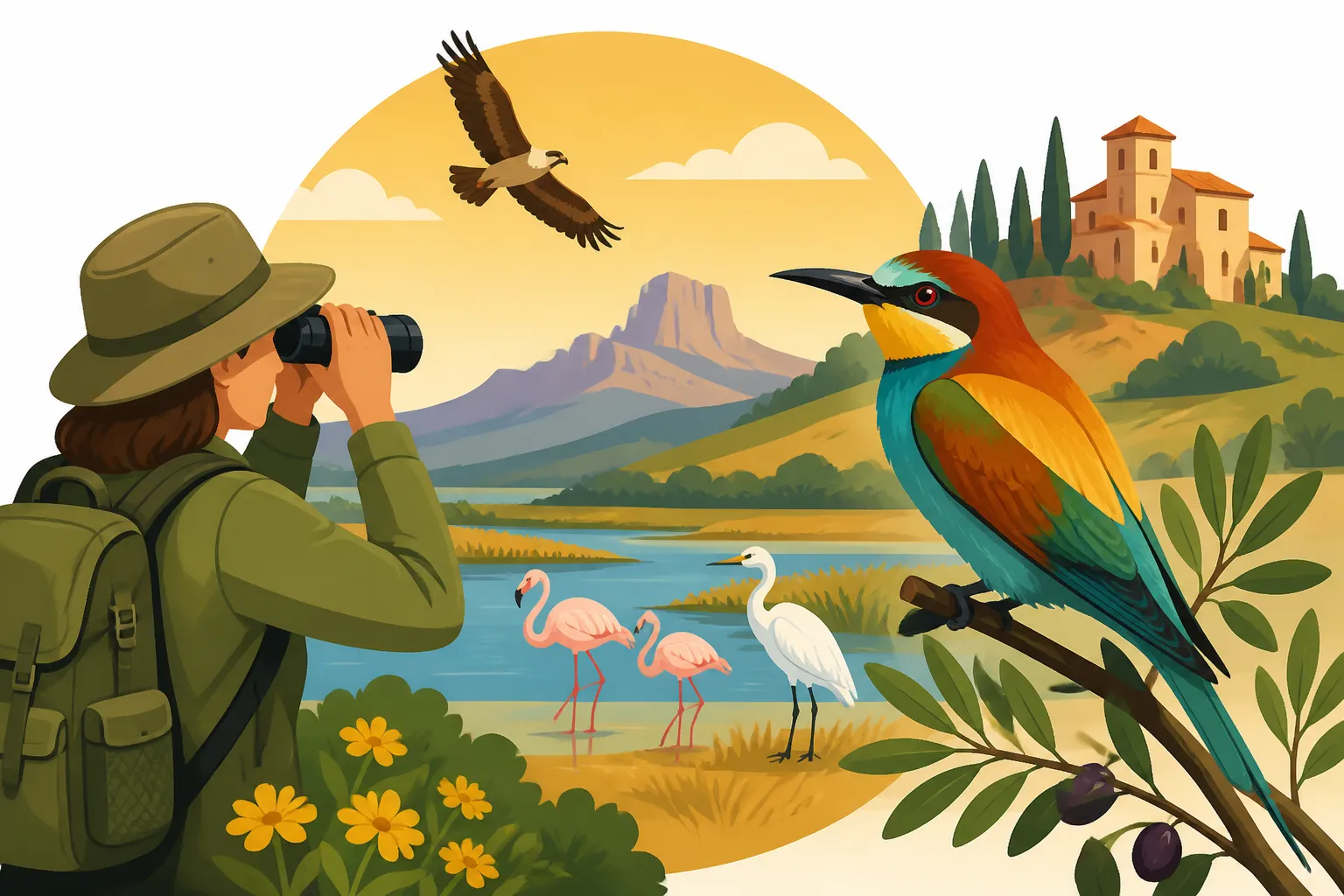
Located in the provinces of Huelva and Seville, Doñana is a mosaic of dunes, marshes, and pine forests. It is perhaps best known as a wintering ground for over half a million waterfowl. The "Marismas" are a sight to behold in the wet season, filled with Greater Flamingos and Spoonbills. However, the park is facing significant challenges due to water mismanagement in the surrounding agricultural areas, which is something a veteran visitor will notice immediately. The water levels aren't what they used to be twenty years ago.
To see the heart of the park, you generally cannot use your own vehicle. You must book a tour through one of the authorized concessionaires. It is worth checking GetYourGuide for specialized birding or photography tours that depart from El Rocío, a dusty, Western-style town that looks like it belongs in a film set. Walking through the sandy streets of El Rocío at dawn, hearing the distant calls of thousands of geese, is one of those quintessentially Spanish experiences that most tourists miss.
Monfragüe National Park Raptor Paradise
If Doñana is the kingdom of the water, Monfragüe in Extremadura is the kingdom of the sky. This park is arguably the best place in Europe to see vultures. The "Salto del Gitano" is a massive rock face overlooking the Tagus River where hundreds of Griffon Vultures nest. You can stand at the viewpoint and watch these massive birds—with wingspans of nearly three meters—glide past at eye level. It is silent, majestic, and slightly intimidating.
Extremadura is often overlooked because it is hot and remote, but for a wildlife lover, it is the holy grail. Beyond the vultures, you have a good chance of seeing the Spanish Imperial Eagle, one of the rarest birds of prey in the world. When planning a trip here, keep in mind that Seasonal Spain: When to Visit and What's On is crucial; visiting Monfragüe in August is an exercise in endurance, with temperatures often soaring past 40 degrees Celsius. Spring, specifically March to May, is when the landscape is green and the bird activity is at its peak.
Tracking the Big Three of the Iberian Peninsula
Spain is home to three "star" mammals that draw enthusiasts from around the globe: the Iberian Lynx, the Cantabrian Brown Bear, and the Iberian Wolf. Seeing these animals in the wild requires patience, local knowledge, and usually a fair amount of luck. It is a slow-burn type of travel that rewards those who are willing to sit in silence for hours at a time.
The Iberian Lynx in Andújar and Doñana
The Iberian Lynx is the world’s most endangered feline species. Not long ago, there were fewer than 100 left in the wild, but thanks to intensive conservation, the population has bounced back significantly. The Sierra de Andújar in Jaén is currently the best place to spot them. Unlike the thick scrub of Doñana, the "dehesa" (cork oak forest) of Andújar offers better visibility.
Spotting a lynx is about scanning the granite boulders at dawn and dusk. I spent four days in a row sitting on a hillside with binoculars before I finally saw a mother and cub crossing a firebreak. It’s an adrenaline rush like no other. For accommodation, I suggest looking on Booking.com for rural guest houses (casas rurales) near the Encinarejo dam. Staying deep in the valley allows you to be on-site before the sun comes up, which is essential because these cats are most active during the crepuscular hours.
The Brown Bears of the Cantabrian Mountains
In the lush, emerald valleys of Asturias and León, a small but growing population of Brown Bears thrives. The Somiedo Natural Park is the epicenter of bear-watching in Spain. This area feels more like Switzerland than the typical image of Spain, with deep valleys and steep, hay-covered slopes. It’s a part of Galicia and Green Spain: A Traveler's Introduction that everyone should experience at least once.
The best way to see the bears is to join a local guide who knows their feeding patterns. In late summer, the bears move to the high slopes to eat blueberries and buckthorn berries, making them easier to spot against the green backdrop. This is not a "safari" where you get close; you will be watching them through a telescope from across a valley. This distance is better for the animals and safer for you. The conservation culture here is very strong, and locals are rightly protective of their "osos."
The Iberian Wolf of the Sierra de la Culebra
The wolf remains a controversial figure in rural Spain, caught between conservationists and livestock farmers. The Sierra de la Culebra in Zamora is the best place to attempt a sighting. This is rugged, wild country where the "Cita Previa" mentality of the cities feels a million miles away. Wolf watching here involves getting up at 4:00 AM to reach a vantage point before first light.
Watching a wolf pack move through the heather is a hauntingly beautiful experience. It’s important to manage expectations, though; wolves are incredibly shy and have a legendary sense of smell. You might see nothing but deer and wild boar for three days, and then, in the final ten minutes of light, a shadow emerges from the trees. If you aren't prepared for the silence and the cold of the Zamora highlands, you might find the experience grueling rather than magical.
Practical Logistics for Nature Travel in Spain
Planning a wildlife trip in Spain requires a different set of skills than planning a city break. You are often heading into regions where English is rarely spoken and public transport is practically non-existent. You have to be comfortable with the "deep Spain" (España profunda) where the pace of life is dictated by the sun and the seasons.
Transport and Reaching Remote Hotspots
While Spain has an incredible high-speed rail network, it won't get you to a wolf hide in Zamora or a bear valley in Asturias. For wildlife trips, a car is an absolute necessity. You will find that Traveling Around Spain: Trains, Buses, Flights, and Car Hire works well for moving between hubs, but for the "last mile," you need your own wheels.
When booking a vehicle, it is advisable to get a crossover or something with a bit of ground clearance. You don't necessarily need a 4×4, but many of the best spotting locations are accessed via unpaved "pistas." Be sure to brush up on Renting a Car in Spain: Requirements, Insurance, and Driving Tips before you sign the contract, especially regarding insurance coverage for driving on non-asphalt roads, as many standard policies will void your coverage the moment your tires hit gravel.
Essential Gear for the Spanish Wilderness
The Spanish sun is a formidable opponent. Even in the northern mountains, the UV index can be punishing. Many expats head out for a day of birding and return with second-degree burns because they underestimated the breeze. Beyond the obvious sunscreen and hat, a high-quality pair of binoculars (8×42 is the gold standard) is your most important tool.
| Species | Primary Location | Best Viewing Month | Difficulty Level |
|---|---|---|---|
| Iberian Lynx | Sierra de Andújar | December – January | High (Patience required) |
| Brown Bear | Somiedo Natural Park | May or September | Medium |
| Bearded Vulture | Ordesa National Park | February – April | Medium |
| Greater Flamingo | Fuente de Piedra | April – June | Easy |
| Iberian Wolf | Sierra de la Culebra | September – October | Very High |
| Great Bustard | Villafáfila Plains | April (Lekking season) | Medium |
Birding Hotspots by Ecosystem
Beyond the headline-grabbing national parks, Spain is dotted with "ZEPAs" (Zonas de Especial Protección para las Aves) that offer incredible birding without the crowds. Each ecosystem provides a different "life list" for the serious birder.
The Steppes and Plains of Castilla y León
The high plains of central Spain are home to the Great Bustard, the heaviest flying bird in the world. Watching these birds perform their "lekking" displays—where the males flip their feathers inside out to look like giant white foam balls—is one of the strangest spectacles in nature. The Villafáfila lagoons and the plains of Segovia are the best spots.
In these open landscapes, you can also find Little Bustards, Pin-tailed Sandgrouse, and various larks. The challenge here is the lack of shade. If you are Hiking in Spain: Popular Trails and How to Prepare in the plains, you need to be finished by 11:00 AM. After that, the heat haze makes it impossible to see anything through binoculars anyway. The light on the "Meseta" at sunset, however, is a photographer's dream, turning the golden wheat fields into a glowing sea.
Coastal Lagoons and the Ebro Delta
The Ebro Delta in Catalonia is a vast wetland of rice paddies and salt pans. It is a vital stopover for migratory birds and a year-round home to thousands of flamingos. It is one of the few places in Spain where you can bird from your car or a bicycle, making it much more accessible for families or those with limited mobility.
The Delta has a very specific "vibe"—flat, windy, and smelling of salt and earth. It’s an essential part of Catalonia Beyond Barcelona: What to See for anyone tired of the Gaudí crowds. You can spend the morning watching Glossy Ibis and Purple Swamphens and the afternoon eating the best arroz a banda of your life in a local shack. Just watch out for the mosquitoes; the Delta "mosquitos" are legendary and will bite through denim.
Ethical Wildlife Viewing and Conservation
As an expat living here, you quickly realize that the influx of nature tourism is a double-edged sword. While it brings money to dying rural villages, it can also stress the very animals we come to see. Ethical viewing isn't just a buzzword; it's the difference between a thriving population and an extinct one.
The Importance of Using Local Guides
Whenever possible, hire a local guide. Not only do they have the "eyes" to spot a lynx hidden in the brush, but they also ensure that the money from your visit stays in the local community. This creates a financial incentive for farmers to protect predators rather than see them as pests. Many guides are former hunters or farmers who have transitioned into eco-tourism, and their stories offer a fascinating insight into the changing face of rural Spain.
I usually book my specialized day trips through GetYourGuide or local cooperatives. When you sit with a guide for six hours, you learn about more than just birds; you learn about the local "pueblo" politics, the history of the land, and the challenges of living in "empty Spain." This deepens the experience from a simple sighting to a true cultural immersion.
Respecting the Rules of the Field
In Spain, it is illegal to use "playback" (playing bird calls to lure them out) in many protected areas, and for good reason. During nesting season, this can cause birds to abandon their eggs. Similarly, staying on marked trails and respecting "No Entry" signs in National Parks is crucial. Spanish forest rangers (Agentes Forestales) are quite active and won't hesitate to fine you if you are caught in a restricted zone without a permit.
Being a "good" expat nature lover means leading by example. Carry out all your trash, keep noise to a minimum, and never feed the wildlife. Whether you are exploring the Beaches, Islands, and Coastal Escapes in Spain or the high peaks of the Picos de Europa, the goal is to leave no trace. If we want our children to see the Iberian Lynx, we have to be responsible observers today.
Birdwatching and Wildlife in Spain Disclaimer
The information provided in this guide is for informational purposes only. Wildlife sightings are never guaranteed, as animals are unpredictable and influenced by weather, seasonal changes, and human activity. Always check the official website of the specific National Park or Natural Space you plan to visit for current regulations, permit requirements, and opening hours. Ensure you have appropriate insurance and gear before embarking on outdoor activities in remote areas. Some regions may have specific Spanish Holidays and Public Closures: Planning Errands in 2026 that could affect access to visitor centers or guided tours.