Seasonal Spain: When to Visit and What’s On
Choosing the wrong month to visit a specific corner of Spain can turn a dream vacation into a logistical nightmare of closed shops or oppressive heat. I learned this the hard way during my first year here when I tried to trek through Seville in August and found a ghost town where the only thing moving was the shimmering heat off the pavement. This guide breaks down the nuances of the Spanish calendar to ensure you land in the right province at the perfect time.
Disclosure: This post may contain affiliate links. We may earn a commission at no extra cost to you if you make a purchase through these links. Read full disclosure.
Understanding Spains Regional Climates
Most people arrive in Spain expecting a monolithic climate of sun and sand, but the reality is much more complex. Spain is essentially a "mini-continent" with radically different weather patterns depending on where you stand. When I lived in the north, I spent more on umbrellas than I ever did on sunscreen, yet a three-hour train ride south would land me in a completely different world. Understanding these zones is the first step in planning your itinerary.
Green Spain The Rainy North
The Atlantic coast, stretching from Galicia through Asturias and Cantabria to the Basque Country, is known as "España Verde." If you are coming from a place like the Pacific Northwest or the UK, you might feel right at home here, but for many, the constant mist—known as calabobos or "fool-soaker"—is a surprise. This region doesn't follow the typical Spanish "fry in the summer" rule. In fact, July and August are the only months where you are statistically likely to have consecutive days of sunshine.
During the winter months, the north is moody, lush, and undeniably beautiful, but it requires a specific mindset. You aren't here for the beach; you are here for the cider houses, the emerald cliffs, and the world-class seafood. If you are planning a trip here, it is wise to check When to Visit Each Spanish Region for the Best Weather to see how the rainfall patterns might impact your specific activities, like hiking the Picos de Europa.
The Continental Center Madrid and Castile
The Spanish interior, dominated by the high plateau known as the Meseta, follows the old saying: "Nine months of winter, three months of hell." Madrid, Salamanca, and Toledo experience extreme temperature swings. In January, the air is crisp, dry, and biting. In July, the heat is "dry," which locals claim is better than humidity, but when it’s 42 degrees Celsius, "dry" just means you feel like you’re walking through a hair dryer.
Living in Madrid taught me that the shoulder seasons are not just a suggestion; they are a survival strategy. May and October are the sweet spots where the city comes alive with outdoor terraces and the light is perfect for photography. If you find yourself here in the peak of summer, you will notice the city empties out as everyone flees to the coast. You can find great deals on accommodation using Booking.com during these "hell" months, but you must ensure your hotel has high-quality air conditioning.
The Mediterranean Coast Sun and Humidity
From Catalonia down through Valencia and into Andalusia, the Mediterranean influence creates a milder winter but a very sticky summer. Unlike the dry heat of the center, the coast suffers from high humidity that makes 30 degrees feel like 38. The seawater stays warm well into October, making the "late summer" one of the best times for expats and savvy travelers to visit.
The humidity also impacts how you experience the famous Spanish nightlife. In cities like Barcelona or Malaga, the air doesn't really cool down at night during August. You’ll find people out at 2:00 AM not just because they like to party, but because it’s finally bearable to sit outside. For a deeper dive into how this affects your daily routine, I highly recommend reading Spanish Meal Times and Dining Etiquette Explained to understand why dinner starts so late in these regions.
Spring in Spain March to May
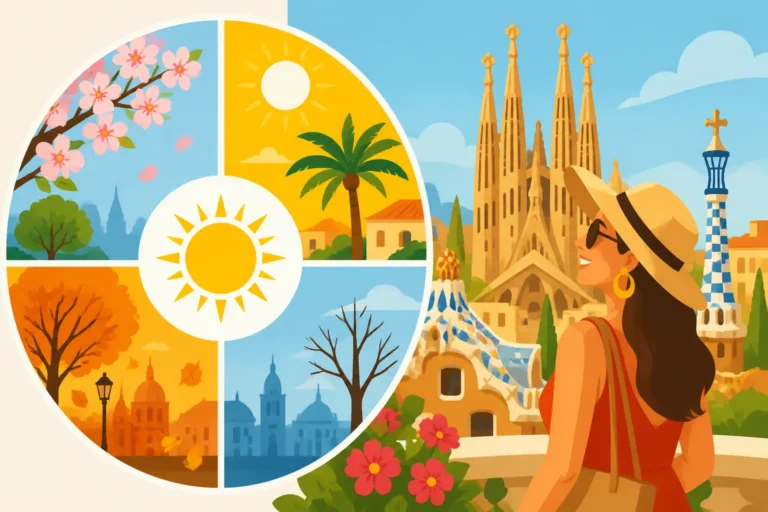
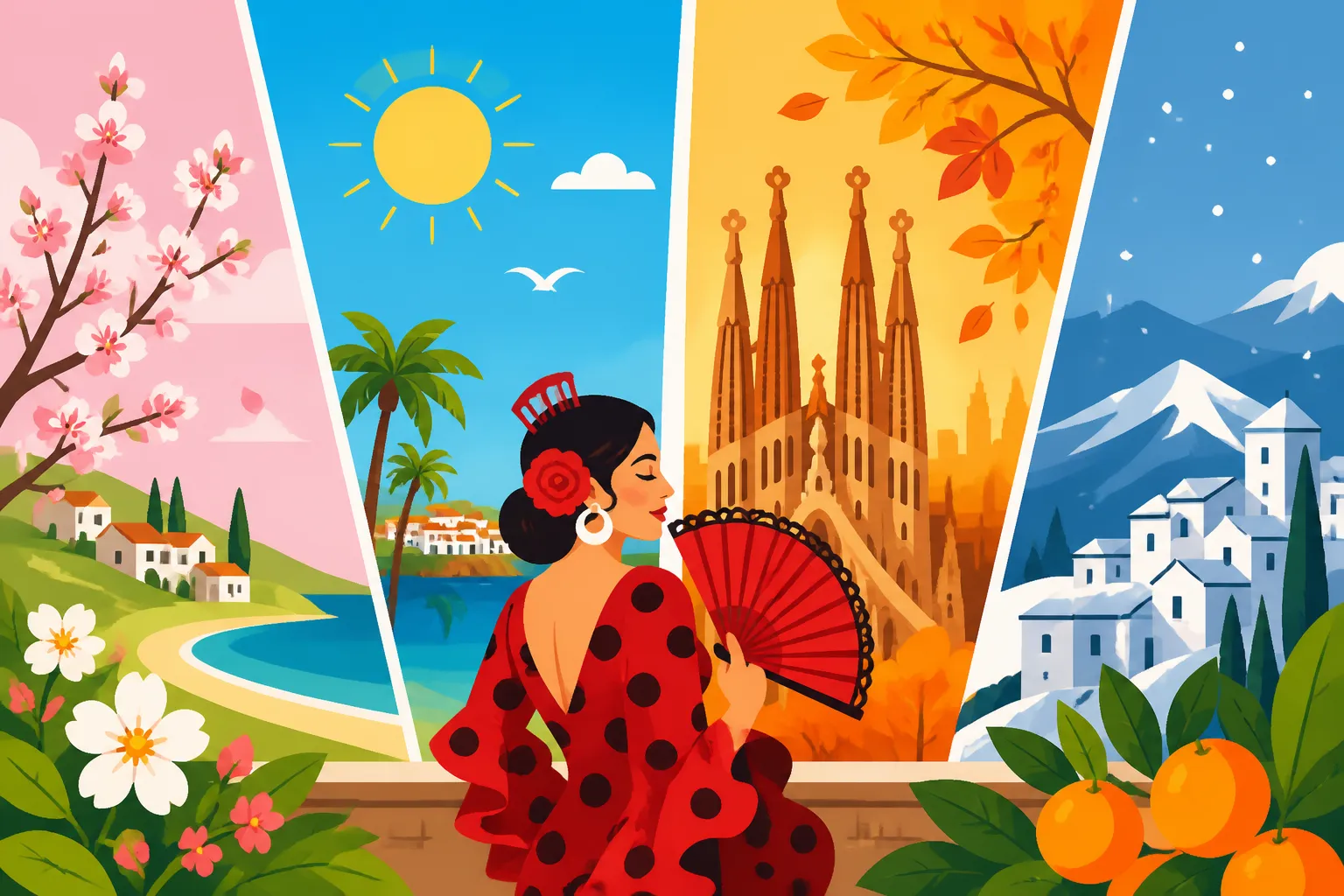
Spring is arguably the most magical time to be in the Iberian Peninsula. The wildflowers are blooming across the Andalusian countryside, and the heavy, humid heat of summer is still months away. It is a season of rebirth, not just for nature, but for the cultural calendar, which kicks off with some of the country’s most iconic events.
Easter Traditions Semana Santa
If you have never experienced Holy Week in Spain, you aren't prepared for the sheer scale of it. It isn't just a religious event; it’s a sensory explosion of incense, drumbeats, and massive wooden floats carried by hundreds of people. Seville, Malaga, and Valladolid host the most famous processions, but every village has its own version. It’s a time of intense emotion and crowded streets.
However, a word of warning from someone who has been caught in the middle of these crowds: you need to book everything months in advance. The prices for hotels on Booking.com skyrocket during this week, and transport becomes a puzzle. For those planning to navigate the crowds, checking Semana Santa in Spain: What to Expect as a Visitor is essential for understanding the etiquette and the schedules of the different brotherhoods.
Flower Festivals and Fairs
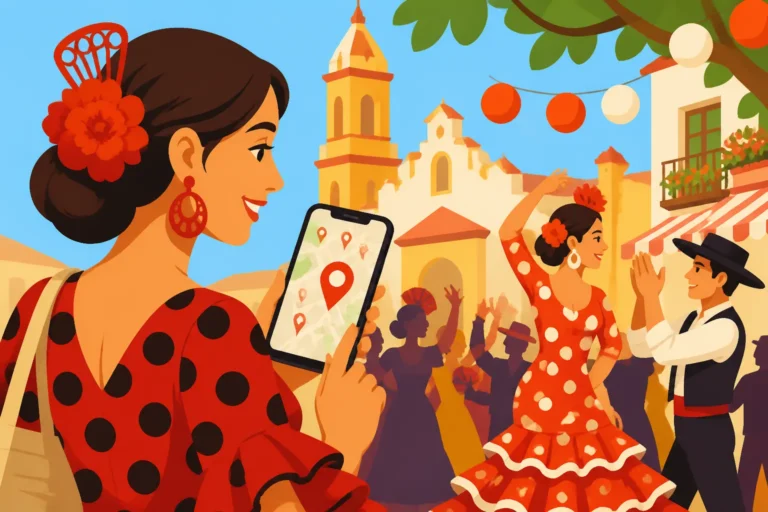
Directly following the solemnity of Easter is the joy of the Spring Fairs, most notably the Feria de Abril in Seville. The city transforms into a private party of "casetas" (tents), where women wear stunning flamenco dresses and the sherry flows like water. It is colorful, loud, and exhausting in the best way possible. If you can't make it to Seville, Cordoba’s Patios Festival in May is a more relaxed but equally beautiful alternative, where residents open their flower-filled courtyards to the public.
To get between these southern cities, I usually rely on Omio to compare the high-speed AVE trains with the regional buses. The trains are faster, but the buses often take you through stunning fields of sunflowers that you’d miss on the rail line. These festivals represent the "soul" of the south, and even if you aren't a fan of crowds, seeing the floral displays in Cordoba is a bucket-list experience.
Spring Travel Logistics
Spring is also the time when the hiking trails become accessible again. The Camino de Santiago begins its peak season in May, as the weather is cool enough for long walks but the mountain passes are finally clear of snow. It is the perfect balance of manageable temperatures and long daylight hours.
Because spring is so popular, I recommend using GetYourGuide to pre-book tickets for major landmarks like the Alhambra in Granada or the Sagrada Familia in Barcelona. You do not want to spend your precious, mild spring afternoon standing in a three-hour ticket line. This is the season where "winging it" starts to become difficult as the tourist volume ramps up.
Summer in Spain June to August
Summer is the season everyone thinks they want, but it requires the most strategic planning. It is the time of the "Great Migration," where northern Europeans head south and Spaniards head to the mountains or the Atlantic. If you are coming in 2026, you need to be prepared for the heat and the crowds.
Beating the Heat in the South
In cities like Seville, Cordoba, and Granada, the afternoon sun is a physical weight. Between 2:00 PM and 6:00 PM, the streets are virtually empty. This is not because people are lazy; it’s because it is genuinely dangerous to be out in the sun. Newcomers often adopt the "double-day" schedule: go out early, retreat to a darkened room with a fan during the afternoon, and emerge again after the sun sets.
If you must visit the interior during summer, focus your activities on the early morning. I’ve used GetYourGuide for sunrise tours of the Alcazar or early morning walking tours to beat the heat. You should also consult Visiting Spain in Summer: Heat, Crowds, and Coastal Escapes for practical tips on staying hydrated and finding the "cool" spots in the city, like ancient cathedrals with thick stone walls that act as natural air conditioners.
Coastal Escapes and Hidden Coves
The Spanish coast is the place to be in July and August, but you won't be alone. The northern Atlantic coast and the Costa de la Luz in the southwest offer the most relief, as they benefit from Atlantic breezes. The Mediterranean islands—Mallorca, Ibiza, and Menorca—are at their peak, with crystal clear waters and a vibrant social scene.
The trick to a successful summer beach trip is to get away from the main urban beaches. I often search for smaller "calas" (coves) that require a bit of a hike to reach. They are less crowded and much more scenic. When booking your stay, check Booking.com for "apart-hotels" with kitchenettes; during the summer, being able to prepare your own cold gazpacho or salads is much more appealing than sitting in a hot restaurant for every meal.
Summer Fiestas and Nightlife
Summer is also the peak season for some of Spain’s wildest festivals. From the San Fermin bull run in Pamplona to the massive Tomatina tomato fight in Buñol, the country is in a state of constant celebration. These events are high-energy and often overwhelming. If you plan to attend one of the big ones, you need to think about your logistics carefully.
Traveling between festival cities is best handled by booking your tickets on Omio well in advance, as the Alsa buses and Renfe trains sell out weeks before the events. For a comprehensive look at what is happening during your specific dates, take a look at Spain's Biggest Festivals: A Year-Round Calendar to ensure you don't accidentally miss a massive local fiesta happening just one town over from where you are staying.
Autumn in Spain September to November
Ask any expat who has lived here for more than a year, and they will tell you that autumn is the best season. The "ferocity" of the summer has faded, but the warmth remains in the ground and the sea. The crowds disappear, prices drop, and the light turns a golden hue that makes the architecture of cities like Salamanca look like it’s glowing.
The Wine Harvest Season
September and October are the months of the vendimia (wine harvest). This is the best time to visit regions like La Rioja, Ribera del Duero, or the Sherry triangle in Jerez. The vineyards are turning shades of red and gold, and the air is thick with the scent of fermenting grapes. Many towns hold harvest festivals where you can participate in traditional grape treading and, of course, plenty of tastings.
I’ve found that taking a guided wine tour during this time is much more rewarding because you get to see the actual production in full swing. Using GetYourGuide to find local bodega tours in Haro or Logroño is a great way to dive into the culture. It is a sophisticated, sensory way to experience the Spanish countryside without the sweat of summer.
Cultural Festivals and Arts
As the weather cools, the cultural scene moves indoors. This is the season for major film festivals, like the San Sebastian International Film Festival in late September. It is also when the "theatre season" kicks off in Madrid and Barcelona. The cities regain their local flavor as residents return from their summer holidays and the universities reopen.
Walking through the Retiro Park in Madrid in late October is one of my favorite things to do. The leaves change, and the "Crystal Palace" looks stunning against the autumn sky. If you’re a fan of city breaks, this is when you get the best value. It is often the case that Booking.com has much more flexible options and lower rates once the "August madness" has passed.
Hiking and Nature Exploration
Autumn is also the second peak for outdoor enthusiasts. The Pyrenees and the Sierra Nevada offer spectacular autumn foliage. Unlike the spring, when the trails can still be muddy from melting snow, the autumn ground is dry and firm. It is the perfect time for long-distance cycling or hiking.
The air is crisp enough that you don't overheat, but you can still often enjoy an outdoor lunch in a village square under the afternoon sun.
Winter in Spain December to February
Winter in Spain is a tale of two worlds: the snowy peaks of the north and the "t-shirt weather" of the Canary Islands. While much of Europe is grey and damp, large parts of Spain remain sunny and bright, even if the temperatures are low. It is the best time for a budget-friendly city break or a specialized sports trip.
Christmas and Three Kings
The holiday season in Spain is long, stretching from the "Lottery Day" on December 22nd to the Epiphany on January 6th. Christmas markets pop up in the plazas, and the "Belén" (nativity scene) tradition is taken to an extreme level, with some towns creating entire miniature cities. The highlight for many is the Three Kings Parade on the evening of January 5th, where "Kings" throw tons of candy into the crowds.
It is a family-oriented time, and the atmosphere is incredibly heartwarming. If you want to see the best light displays, Madrid’s "Naviluz" bus is famous, but you have to book tickets the moment they go on sale. For more on these unique traditions, check out Christmas and Three Kings in Spain: Traditions Explained to help you plan which days to be in which city for the biggest celebrations.
Skiing and Winter Sports
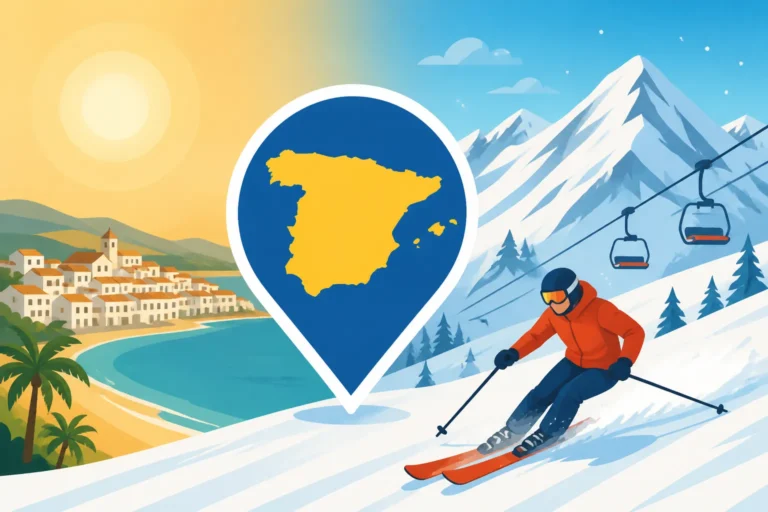
Most people don't associate Spain with skiing, but the country has excellent resorts. The Sierra Nevada near Granada is unique because you can literally ski in the morning and be on the beach in Motril by the afternoon. In the north, the Pyrenees offer world-class facilities in Baqueira-Beret and Formigal.
Winter is also the best time to visit the Canary Islands. Lanzarote, Tenerife, and Fuerteventura offer consistent temperatures in the low 20s (Celsius). I’ve often used Omio to find cheap flights from Madrid or Barcelona to the islands for a "winter sun" reset. It is the only place in Europe where you can reliably work on your tan in February.
Off-Peak City Breaks
If you don't mind wearing a coat, January and February are the best months for visiting the "Big Three": Madrid, Barcelona, and Seville. The lines for the museums are non-existent, and you can get into the best restaurants without a reservation. The air in the interior is incredibly clear, making for some of the best sunset views of the year.
The "rebajas" (winter sales) also start in early January, making it a dream for shoppers. You can find high-end Spanish leather and fashion at a fraction of the price. Use Booking.com to find luxury hotels that often slash their prices by 50% during these quiet months. It’s the best way to experience "high-end" Spain on a "mid-range" budget.
Planning Your Trip Based on the Calendar
When you sit down to plan your trip, you need to look beyond just the weather. The Spanish calendar is punctuated by puentes (long weekends) where a Tuesday holiday leads to everyone taking the Monday off too. On these days, the whole country moves, and if you haven't booked your transport, you will be stranded.
Budgeting and Booking Tips
As a general rule, the most expensive months are July, August, and the week of Easter. If you are on a budget, aim for November or February. It is wise to look at "shoulder-shoulder" months like June or September, where you get 90% of the weather for 70% of the price.
When it comes to transport, the AVE train is incredible, but it uses dynamic pricing similar to airlines. If you book your tickets on Omio three months out, you might pay €30; if you wait until the day of, it could be €120. The same applies to Booking.com; Spain’s tourism industry is booming, and the "good" places sell out faster than you’d think.
Avoiding the Crowds
If your goal is to see the sights without the "human wall," stay away from the coast in August and Seville in April. Instead, head to the mountains in the summer or the cities in the winter. Some of my most memorable trips have been to places like Teruel or Cuenca in the middle of November—wrapped in a scarf, eating thick bean stews, and having the medieval streets all to myself.
Also, be aware of the "cruise ship effect" in cities like Barcelona, Malaga, and Palma de Mallorca. You can check port schedules online to see which days will have 10,000 extra people descending on the city center. On those days, that’s when I book a tour via GetYourGuide to a nearby village or a private vineyard to escape the swell.
Essential Packing Lists
Your packing list will change radically depending on the season and region. For summer, linen is your best friend—don't bother with heavy denim. For spring and autumn, the "layer" is king. I’ve started days in Madrid in a light jacket and ended them in a t-shirt.
In the winter, if you are in the north or the center, you need a proper coat. Many people make the mistake of thinking "Spain is hot" and arrive in Madrid in January with only a cardigan. They usually end up buying a coat at El Corte Inglés within the first hour. For more logistics on getting around and what to carry, Traveling Around Spain: Trains, Buses, Flights, and Car Hire is a great resource for managing your gear while on the move.
| Season | Region | Best For | Typical Weather | Top Event |
|---|---|---|---|---|
| Spring | Andalusia | Flowers & Culture | Mild & Sunny (18-25°C) | Feria de Abril |
| Summer | Costa Brava | Beach & Breeze | Hot but Sea-cooled (25-30°C) | Midsummer (San Juan) |
| Autumn | La Rioja | Wine & Scenery | Golden & Crisp (15-22°C) | Harvest Festivals |
| Winter | Madrid | Museums & Lights | Cold & Bright (2-12°C) | Three Kings Parade |
| Winter | Canary Islands | Sun & Surf | Warm & Spring-like (20-24°C) | Carnival |
Seasonal Spain Disclaimer
The information provided in this guide is based on historical weather patterns, personal expat experience, and the projected 2026 cultural calendar. However, climate change is making weather less predictable, and local governments may change festival dates or access rules at short notice. Always check local municipal websites and official transport providers like Renfe or Alsa before finalizing your travel plans. Prices and availability for services like Booking.com, Omio, and GetYourGuide will fluctuate based on real-time demand.