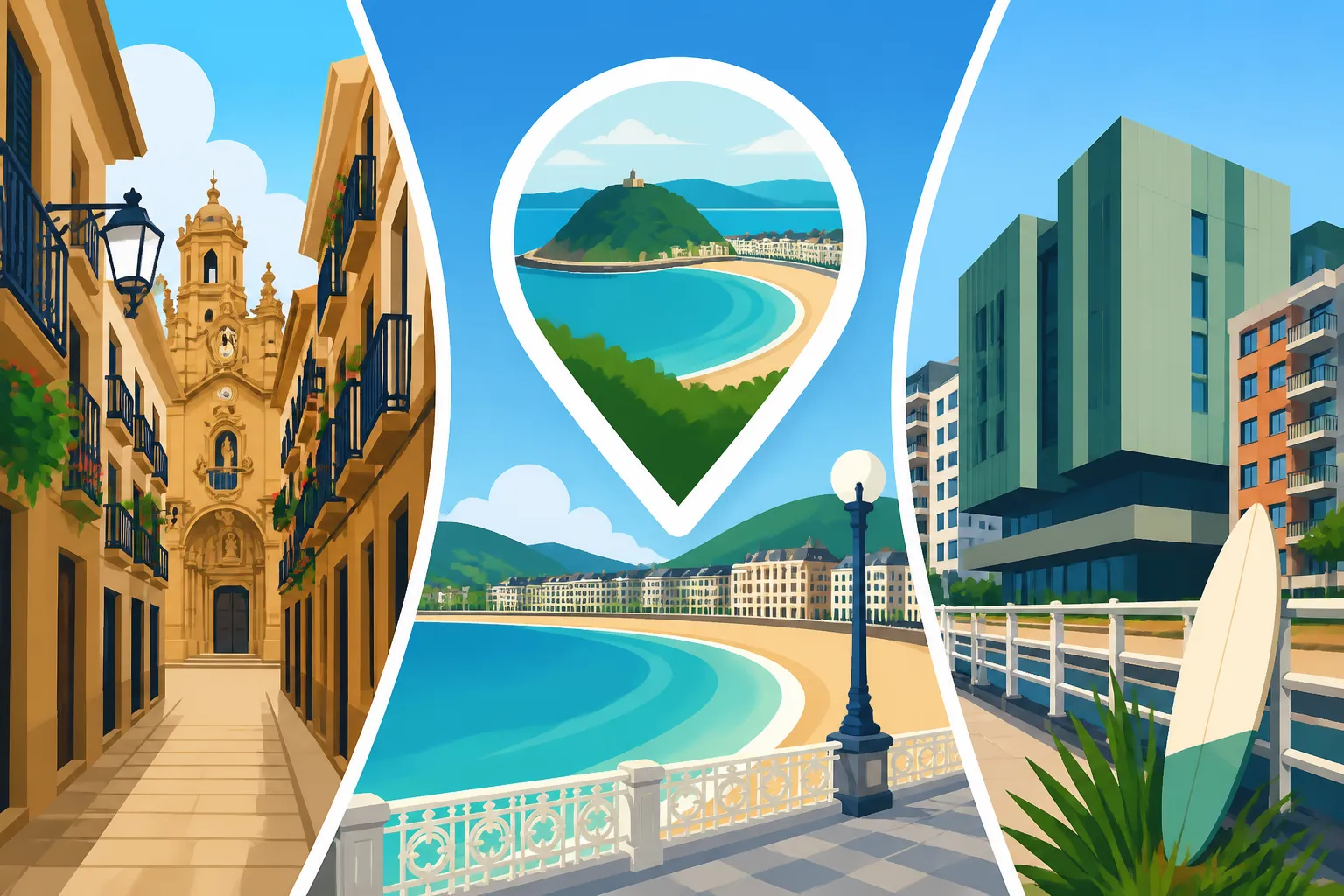
Where to Stay in San Sebastian: Parte Vieja, Gros, and La Concha
You’ve found a cheap-looking flight into the Basque Country, opened a map of San Sebastián, and now you’re stuck. The Old Town looks lively, Gros looks local, and the La Concha seafront looks like a postcard. Book the wrong one and you could spend a week dodging midnight crowds or walking uphill to every dinner. This guide compares all three so you can choose the right base and book it with confidence.
Disclosure: This post may contain affiliate links. We may earn a commission at no extra cost to you if you make a purchase through these links. Read full disclosure.
Choosing Your San Sebastián Base: The Three-Neighbourhood Puzzle
My first trip to San Sebastián, or Donostia as you’ll see it on Basque signs, went wrong in a small way. I booked a lovely apartment that was “central” according to the listing. It was central in the sense that it sat on top of the busiest pintxos street in the Parte Vieja. I had a front-row seat to the city’s food culture, and I also had a front-row seat to it at 1:30 in the morning on a Saturday. Nothing was technically wrong, but if I’d known how each neighbourhood behaves, I’d have chosen differently.
San Sebastián is compact. You can walk from the western end of La Concha to the far side of Gros in about an hour without hurrying. That small size tempts people to think location doesn’t matter. In practice it matters a lot, because each district has its own sound, rhythm and type of visitor. The good news is that once you understand the three main options, the choice is easy, and so is searching for the right place on Booking.com.
Why Location Matters More Here Than in Bigger Cities
In Madrid or Barcelona, a poor choice of neighbourhood usually just means more time on the metro. San Sebastián has no metro system that visitors rely on, so your feet are your main transport. Where you sleep decides whether a pre-dinner swim is a five-minute stroll or a forty-minute round trip. It decides whether you can pop back to drop off shopping before the evening pintxos crawl, and whether a sudden Atlantic rain shower ruins your afternoon or just sends you home for an umbrella.
The city also sits between two hills and two beaches, with a river running through the middle. Monte Urgull rises behind the Old Town, Monte Igueldo closes off the western end of the bay, and the Urumea river separates Gros from the centre. These natural boundaries make each neighbourhood feel like its own small world. Crossing the river to Gros takes only a few minutes over the Zurriola bridge, but the atmosphere on the other side is noticeably different.
There’s a practical side too. Much of the Parte Vieja is pedestrianised, many older buildings have no lift, and parking is a constant headache across the city. If you’re arriving with heavy luggage, small children or mobility needs, the “best” neighbourhood on paper may be the worst one for you. That’s why it is wise to choose by lifestyle first and price second.
Quick Comparison of Parte Vieja, Gros, and La Concha
Here’s the cheat sheet I wish I’d had on that first trip. It’s a starting point; the sections below explain each row in detail.
| Factor | Parte Vieja | Gros | La Concha |
|---|---|---|---|
| Overall vibe | Historic, busy, food-focused | Local, relaxed, surfy | Elegant, scenic, classic seaside |
| Nearest beach | La Concha, a short walk | Zurriola, on your doorstep | La Concha or Ondarreta, right in front |
| Night noise | High, especially at weekends | Moderate on bar streets, quiet elsewhere | Generally low |
| Pintxos access | Outstanding, dozens of bars nearby | Very good, fewer tourists | Fair, more walking needed |
| Best for | First-timers, food lovers, short stays | Surfers, repeat visitors, longer stays | Couples, families, beach lovers |
| Accessibility | Many walk-ups, cobbled lanes | More modern buildings with lifts | Mix of grand hotels and apartment blocks |
| Car friendliness | Poor, pedestrian zones | Better, though parking is still tight | Moderate, mostly paid garages |
If you only remember one thing, remember this: the Parte Vieja is for eating, Gros is for living, and La Concha is for views.
Staying in the Parte Vieja: Pintxos on Your Doorstep
The Parte Vieja is the San Sebastián you’ve seen on food programmes. It’s a tight grid of narrow streets wedged between the river, the harbour and Monte Urgull, packed with bars whose counters are covered in pintxos from late morning onwards. Plaza de la Constitución, with its numbered balconies, sits at its heart, and the Basilica of Santa María closes off the end of Calle Mayor.
What Daily Life Feels Like in the Old Town
Staying here means stepping out of your door straight into the action. In the morning the streets are surprisingly calm: delivery vans, locals heading to the La Bretxa market, and the smell of coffee drifting out of corner cafés. By early afternoon the lunchtime crowd builds, and from around eight in the evening the bars along Calle 31 de Agosto, Calle Fermín Calbetón and the surrounding lanes fill up with people standing elbow to elbow, glass in one hand and a skewered bite in the other.
Picture a typical day. You wake up, buy fruit at the market, wander up the paths of Monte Urgull for views over the bay, and are back for a swim at La Concha before lunch. In the evening you don’t need a plan at all. You just walk ten steps, try a bar, move on to the next, and stumble home whenever you’re ready. For a short trip of two or three nights, that convenience is hard to beat. If pintxos etiquette is new to you, see How to Order Tapas in Spain Without Overdoing It before your first evening out.
The downsides are real, though. Rooms in historic buildings are often small, and some face inward onto narrow light wells. Lifts are far from guaranteed. Streets are cobbled, which makes rolling suitcases noisy and awkward. Because the area is so popular, you’ll also share it with cruise day-trippers, tour groups and weekend visitors from across Spain and France.
The Noise Question and How to Solve It
This is the part nobody wants to hear but everybody needs to know. Bars in the Old Town can be lively late into the night, and sound bounces off the stone facades. In summer, windows are open, people chat in the street, and bin collection and deliveries start early the next morning. Light sleepers can struggle here.
You don’t have to avoid the Parte Vieja to fix this. Here’s the approach I use when searching for Old Town accommodation on Booking.com:
- Search with the map view open and focus on the edges of the district, near the harbour or the streets closest to Alameda del Boulevard, rather than the central bar lanes.
- Open the reviews and search within them for words like “noise”, “quiet”, “street” and “earplugs”. Guests are usually blunt about it.
- Look for listings that mention double glazing, an interior-facing room, or a higher floor.
- Check the property’s photos for window type. Older wooden shutters look romantic but rarely block much sound.
- If a listing mentions a bar on the ground floor, take that seriously, however good the price looks.
Following those steps has turned more than one friend’s potential nightmare into a perfectly pleasant stay. A room two streets back from the main bar strip can feel completely different from one directly above it.
Who the Parte Vieja Suits Best
The Old Town is ideal for first-time visitors on short stays, food-focused travellers, and anyone who wants to step out of the door and be immediately in the heart of things. It works well for solo travellers and groups of friends who plan to be out late anyway.
It’s less suited to families with small children, travellers with mobility issues, or anyone who needs a guaranteed good night’s sleep before a work meeting or a long drive. If that’s you, consider staying in Gros or along La Concha and visiting the Old Town for evenings. It’s never more than a short walk away.
Staying in Gros: Surf, Locals, and Breathing Room
Cross the Urumea river from the Old Town and you’re in Gros. It’s a residential district with wide, flat streets laid out in a tidy grid, a beach that faces the open Atlantic, and a younger, more laid-back crowd. Many people who return to San Sebastián end up here, me included.
Zurriola Beach and the Surf Scene
Zurriola is Gros’s beach, and it couldn’t be more different from La Concha. It sits outside the sheltered bay, so waves roll straight in from the ocean. On a good day you’ll see dozens of surfers bobbing in the water from early morning, and the promenade is lined with surf schools, board rental shops and cafés full of people in wetsuits.
If you’ve ever wanted to try surfing, Gros is the place to stay. You can book a morning lesson, walk down in your wetsuit, and be back for a hot shower and breakfast within minutes. For a full introduction, see How to Try Surfing in Northern Spain as a Beginner. Zurriola’s waves and currents can be stronger than they look, so stick to lifeguarded areas and listen to the instructors.
The Kursaal congress centre, with its glass cubes, marks the western end of Zurriola near the river mouth. It’s a landmark you’ll use for directions, and it hosts concerts and events throughout the year. When something big is on there, Gros fills up, so it’s worth checking the city’s events calendar when you plan your dates.
Eating in Gros Without the Old Town Crush
Gros has its own excellent pintxos scene, and many visitors, and plenty of locals, prefer it. The bars are spread across several streets rather than packed into a few lanes, so you can usually reach the counter without a fight. Prices and portions feel more neighbourhood-oriented, and you’ll hear more Basque and Spanish than English.
A typical Gros evening might look like this: an early drink on a terrace near the beach as the surfers come in, a slow wander along a couple of bar-lined streets, and then a decision about whether to cross the bridge into the Old Town for a late one or call it a night. The flexibility is the point. You get the food culture without living inside it.
Daily life is easier here too. There are ordinary supermarkets, pharmacies, bakeries and laundrettes, which makes Gros very comfortable for stays of a week or longer. If you’re working remotely during your visit, the calmer atmosphere and more modern apartment blocks often mean better Wi-Fi and a proper table to work at.
Who Gros Suits Best
Gros is perfect for surfers and beach lovers, repeat visitors, longer stays, digital nomads, and travellers who want a more local experience. It’s also a good fit for anyone arriving by train, since the main Renfe station sits on the Urumea river within walking distance of Gros.
The trade-off is that La Concha and the Old Town are a short walk away rather than right outside your door. For most people that walk along the river is part of the pleasure, but it’s worth knowing if you plan to go back and forth several times a day. Some bar streets in Gros can be lively on weekend nights, so the same review-checking method used for the Parte Vieja still applies.
Staying Along La Concha: The Postcard Bay
La Concha is the shell-shaped bay that made San Sebastián famous. Its sweeping promenade, with distinctive white railings and old-fashioned lamps, curves from the Old Town towards Monte Igueldo, with the small island of Santa Clara sitting in the middle of the bay. Staying here means waking up to one of the most beautiful urban beaches in Europe.
Centro and the Promenade Hotels
Behind the eastern half of the bay lies the Centro, sometimes called the Área Romántica. This is the elegant nineteenth-century city, with broad streets, grand facades, upmarket shops and the Buen Pastor Cathedral. The San Martín market is here as well, and it’s a good spot for picnic supplies before a beach afternoon.
Along the promenade itself you’ll find some of the city’s classic grand hotels, such as the Hotel de Londres y de Inglaterra, alongside apartment buildings with balconies facing the sea. A room with a bay view is a splurge, but if you’re celebrating something special, it’s the kind of view that makes a trip memorable. Sea-facing rooms are always the first to go, so if that’s your goal, book early.
The Centro offers a great balance. You’re a few minutes from the Old Town’s bars, right next to the beach, and in quieter streets than the Parte Vieja. Many buildings have lifts, and the flat streets are friendlier for buggies and wheelchairs than the cobbles of the historic district.
Ondarreta, Antiguo, and the Western End
Further west, past the Miramar Palace and its gardens, La Concha blends into Ondarreta beach and the residential Antiguo district. This end feels calmer and more family-oriented. Ondarreta’s sand is popular with local families, and at the very end of the beach you’ll find Eduardo Chillida’s Peine del Viento sculptures set into the rocks, where waves crash dramatically on stormy days.
The funicular up Monte Igueldo starts nearby, taking you to a small old-fashioned amusement park and sweeping views over the whole bay. If you’re travelling with children, this end of town is a real gift: a gentle beach, playgrounds, open space and quieter evenings.
The catch is distance. From Ondarreta to the Old Town is a long walk along the promenade, lovely in good weather, less fun in the rain after a big dinner. City buses run frequently along this route, so staying out west is perfectly workable, but it does add a little planning to every evening.
Who La Concha Suits Best
The La Concha area suits couples, families, beach lovers, travellers who prioritise views and calm, and anyone who wants a classic, elegant seaside stay. The Centro end is the best all-rounder in the city: close to everything, quieter than the Old Town, and right on the beach.
It’s less ideal if you’re on a tight budget, since sea views carry a premium, or if you want to be out late every night and walk home in two minutes. In that case, a room in the Centro a few streets back from the promenade often gives you the best of both worlds.
Booking Strategy for San Sebastián on Booking.com
Once you’ve chosen your neighbourhood, the next challenge is actually securing a good room. San Sebastián is a small city with big demand, so the right timing and the right filters make a huge difference. I use Booking.com for most of my Basque trips because the map view makes neighbourhood-based searching easy, the reviews are detailed, and many properties offer flexible cancellation, which matters when you’re booking months ahead.
When to Book Around Festivals and Seasons
San Sebastián’s calendar shapes availability more than almost anything else. The city hosts several major events that fill every bed in town, and the summer beach season is consistently busy. Here’s how the year typically plays out:
| Period | Demand | What to Expect |
|---|---|---|
| July and August | Peak | Beach season, Jazzaldia jazz festival in July, Semana Grande in mid-August; book as early as possible |
| September | Busy | Warm sea, and the film festival in the second half of the month fills the city fast |
| May, June and October | Shoulder | Mild weather, fewer crowds, good availability outside event dates |
| November to March | Quietest | Rainy, atmospheric, best availability, except around Christmas and the Tamborrada on 19 and 20 January |
For peak and festival dates, I start looking several months ahead. For shoulder and winter trips, a few weeks is usually enough, though popular properties in the Parte Vieja and on the promenade can still sell out on weekends.
A trick that has saved me many times: book a room with free cancellation as soon as your dates are firm, then keep checking for better options as your trip approaches. If something better appears, you can switch. Read the cancellation terms carefully, because “free cancellation” always comes with a deadline. For the fine print, see Free Cancellation in Spain: What the Policy Really Allows.
Filters That Matter in This City
Generic filters like star rating and price are useful, but San Sebastián has its own quirks. These are the filters and checks I rely on when searching on Booking.com:
- Lift: essential if you have heavy luggage, children or mobility needs, especially in the Parte Vieja.
- Air conditioning: summer heat waves do happen, and many older apartments rely on open windows, which brings noise.
- Parking: on-site parking is rare and often paid; filter for it if you’re driving, and confirm whether it needs reserving.
- Kitchen: useful for longer stays in Gros or Antiguo, where supermarkets are easy to reach.
- Review score for location and comfort separately: a high location score with a low comfort score often signals a noisy or cramped central room.
- Map view: always cross-check the pin. “Near La Concha” can mean the promenade or several streets uphill.
That last point is important. San Sebastián’s centre is compact, but some listings stretch neighbourhood names generously. A property described as “Old Town” might actually sit in the Centro, which isn’t necessarily bad but changes the experience. The map never lies.
Apartments, Licences, and Check-In Rules
Tourist apartments are a big part of San Sebastián’s accommodation market, especially for families and longer stays. They can offer more space, a kitchen and better value than hotels, but they come with their own rules. Legitimate tourist apartments in Spain need a registration or licence number, and the city has been strict about regulating holiday rentals. Always check that a listing shows one; see Apartamentos Turisticos: Licence Numbers, Check-In, and What Can Go Wrong for what to look for.
If you’re weighing a holiday rental platform against a traditional booking site, Booking.com vs Airbnb in Spain: Registration Numbers, Fees, and Cancellation breaks down the differences in fees, licensing and cancellation for Spanish stays. Personally, I like having hotels, guesthouses and apartments side by side in a single Booking.com search, so I can compare like with like on the same map.
Expect to show your passport or national ID at check-in, whether you’re staying in a hotel or an apartment. Spanish law requires accommodation providers to register guest details, and some apartment hosts ask you to submit information online before you arrive. It can feel intrusive the first time, but it’s standard practice everywhere in the country. See Check-In Documents in Spain: Why Hotels Register Your Passport for what’s required and why.
Apartment check-in is also where things can go sideways. Many self-catering places in the Old Town use key boxes or meet guests in person at a fixed time. If your train is delayed or your flight lands late, you could be standing on a cobbled lane with your bags and no keys. Message your host through the booking platform well before arrival with your expected time, and keep their phone number saved offline.
Finally, check the full price breakdown before you confirm. Cleaning fees, tourist taxes where they apply, and parking charges can all affect the final total. The tax rules differ by region, and Spain’s Tourist Tax by Region: Catalonia, the Balearics, and What You Pay gives a useful overview. Booking.com shows taxes and charges on the final booking screen, so take a moment to read that page instead of clicking straight through.
Getting Around Once You Arrive
Your neighbourhood choice also affects how you arrive, how you move around, and how easily you can head off on day trips. San Sebastián is very walkable, but a little planning around transport makes everything smoother.
Arriving by Train, Bus, or Plane
Most visitors arrive overland. Long-distance Renfe trains pull into the main station on the eastern bank of the Urumea, a short walk from Gros and across the María Cristina bridge from the Centro. The main bus station is right next to it, which is handy if you’re coming from Bilbao or elsewhere in northern Spain. From there, the Centro and La Concha are an easy walk with light luggage, and the Old Town is only a little further.
Regional Euskotren trains run along the Basque coast and towards the French border, arriving at Amara station on the southern side of the centre. If you’re coming from Hendaye or Bilbao on the Euskotren network, Amara puts you within easy reach of the Centro and the bay.
San Sebastián’s own small airport is actually in Hondarribia, east of the city near the French border, with buses into town. Many travellers fly into Bilbao instead, which has more connections, and then take a direct coach to San Sebastián. Biarritz, across the border in France, is another option. For route options and connections across the region, see Bilbao to San Sebastian and Santander: Northern Spain Connections.
Driving and Parking
If you’re road-tripping through the north, you’ll quickly discover that San Sebastián isn’t built for cars. Much of the Old Town is pedestrianised, many central streets have regulated parking, and on-street spaces are hard to find. Underground public garages exist throughout the centre, but they’re not cheap for multi-day stays.
My advice is simple. If you’re arriving by car, either choose a hotel with confirmed parking or pick a base on the edges, such as parts of Gros or Antiguo, and leave the car parked for the duration of your stay. Always confirm whether a property’s parking is on site, nearby or a partner garage, and whether you need to reserve a space in advance. See Parking at Spanish Hotels: Why ‘Parking Available’ Often Means Paid before you assume anything.
Once you’re settled, walking and the city’s frequent buses cover almost everything. The promenade, the river paths and the Old Town are all best explored on foot. Bike lanes run along much of the waterfront too, and cycling is a pleasant way to reach Ondarreta or the far end of Zurriola.
Day Trips and Moving On
San Sebastián is a fantastic base for exploring the wider Basque Country. Coastal towns like Getaria and Zarautz are easy trips west, fishing villages like Pasaia and the medieval walled town of Hondarribia lie to the east, and the French Basque coast is just over the border. If you’re staying in Gros or the Centro, you’re well placed for the stations and bus routes that make these trips easy.
If time is short, see How to Explore San Sebastián in a Day for a tight itinerary. For a broader trip, How Many Days Do You Need to See the Basque Country? helps you work out how long to stay in each place, and Bilbao and San Sebastián: The Basque City Pair explains how to combine the two cities in one journey. When you move on to Bilbao, Where to Stay in Bilbao: Casco Viejo, Abando, and Indautxu uses the same neighbourhood-first approach as this guide.
A last piece of advice from someone who has made every mistake possible here: decide your neighbourhood first, then open Booking.com with the map view and filter for exactly what you need. Read reviews for noise, check for a lift and parking, and lock in a free-cancellation room as early as your dates allow. Do that, and San Sebastián will feel effortless, whether you wake up to surfers at Zurriola, pintxos bars in the Parte Vieja, or the morning light over La Concha.
Disclaimer
This article is for general informational purposes only and does not constitute professional advice. Laws, prices and regulations vary by location and change over time. Consult a qualified professional for guidance on your specific situation.