Nightlife in Spain: Cities That Stay Up Late
Navigating the transition to Spanish hours is the single biggest hurdle for any newcomer. When I first moved to Madrid, I showed up at a club at 11:30 PM thinking I was late, only to find the staff still sweeping the floors and the lights dimmed to a dull hum. This guide solves the mystery of the Spanish clock, ensuring you never stand alone on a dancefloor again.
Disclosure: This post may contain affiliate links. We may earn a commission at no extra cost to you if you make a purchase through these links. Read full disclosure.
Understanding the Spanish Nightlife Clock
The most common mistake tourists and new expats make is trying to apply their home country’s schedule to a night out in Spain. If you head out for a big night at 8:00 PM, you will find yourself eating dinner with families and retirees. In Spain, the night is a marathon, not a sprint, and it is governed by a very specific, unwritten set of rules that dictate when you move from the bar to the club.
The Late-Night Dinner Tradition
In Spain, dinner is the true "pre-game." While many Northern European or American visitors are used to eating at 6:00 PM or 7:00 PM, a proper Spanish dinner rarely starts before 9:30 PM or 10:00 PM. This isn't just about food; it’s the social foundation of the evening. You sit, you share raciones, and you talk for hours. The goal isn't to get full and go home; it’s to build the energy for what comes next.
During this phase, you’ll likely be moving between different tapas bars. If you are in a city like Seville or Granada, this is where you experience the heart of the culture. Understanding Spanish Bar and Café Etiquette for Newcomers is vital here; you don’t wait to be seated in a crowded tapas bar—ones that "stay up late" are usually standing-room only, and the louder the crowd, the better the food usually is. This social lubricant of wine and small plates is what allows Spaniards to stay awake until the sun rises without the "crash" associated with heavy drinking on an empty stomach.
The Transition from Tapas to Copas
Once the clock strikes midnight, the city undergoes a physical shift. This is the hour of the copa. A copa is typically a long drink, most famously the Gin & Tonic, served in a large balloon glass with high-quality ice. This is the bridge between the restaurant and the nightclub. You move to a bar de copas, which has a DJ and a dance floor but isn't quite a full-blown club yet.
This middle ground is where most of the socializing happens. In many cities, these bars stay open until 3:00 AM or 3:30 AM. It’s a common rookie error to think the night ends when these bars close. In reality, the people you see leaving these venues aren't going to bed; they are heading to the discotecas. If you’ve used Booking.com to find a hotel in a central area, you might hear the muffled bass of these transitions through your window. It is a rhythmic, predictable movement of thousands of people across the city pavement.
Madrid: The City That Never Sleeps
There is a saying that in Madrid, nobody goes to bed until they’ve had their morning churros. It is the undisputed capital of late-night revelry. The city doesn't just have nightlife; it has a soul that seems to reject the very concept of sleep. Whether you are in the grimey, rock-and-roll bars of Malasaña or the glamorous rooftops of the Gran Vía, you are participating in a tradition that dates back to the "Movida Madrileña" of the 1980s.
Malasaña and Chueca Vibe
Malasaña is the spiritual home of Madrid’s alternative scene. It feels lived-in, covered in posters, and perpetually energetic. Streets like Calle Velarde are packed with people clutching plastic cups, moving between tiny bars that play everything from 80s synth-pop to modern indie. This is a great place to start your night if you want something less "polished." The neighborhood is famous for its "after-work" that somehow always turns into a 4:00 AM session.
Just a few blocks away, Chueca offers some of the best LGBTQ+ nightlife in the world. The energy here is infectious, with massive street parties during Pride and high-energy dance bars year-round. What I love about Chueca is the inclusivity; it doesn’t matter who you are, as long as you are there to dance. If you are planning a trip from another city, checking Omio for late-night train or bus connections is a smart move, though most people just commit to the 6:00 AM return leg.
The Iconic Macro-Clubs
If you want the quintessential Madrid "big room" experience, you eventually have to end up at a place like Teatro Kapital. This seven-story behemoth is a former theater where each floor plays a different genre of music—house on the main floor, reggaeton on another, and even a top-floor terrace for smokers. It is a rite of passage for any expat.
Navigating entry to these massive venues can be tricky. Often, you need to be on a "lista" (guest list) or buy tickets in advance through platforms like GetYourGuide to avoid the soul-crushing hour-long queues at 2:00 AM. Dress codes are also strictly enforced in the bigger clubs; leave the sneakers at home and opt for something "arreglado" (dressed up). For more on what to wear and how to act, check out our guide on Spanish Customs, Etiquette, and Social Life.
Barcelona: Beach Clubs and Gothic Vibes
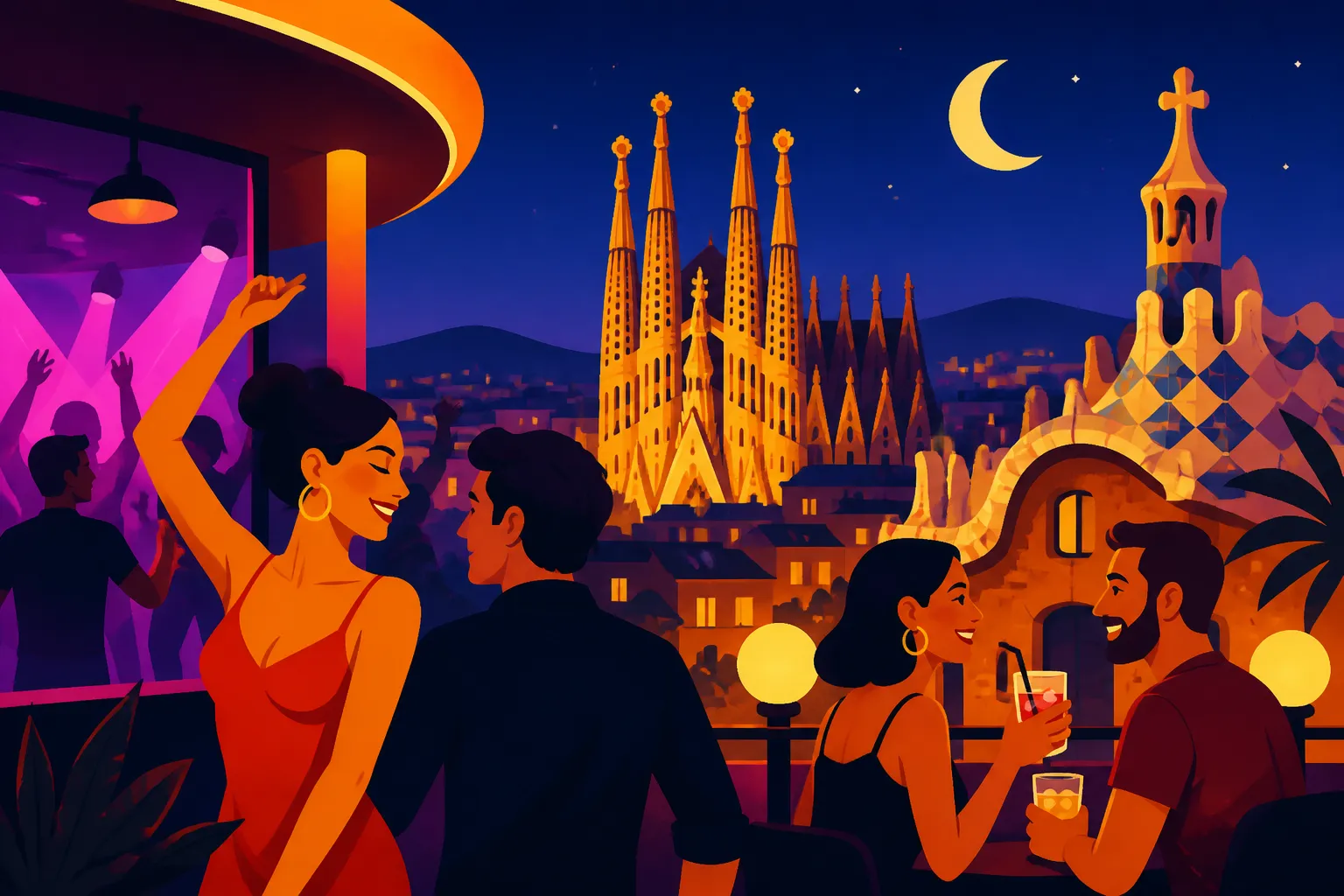
Barcelona offers a completely different flavor of night. While Madrid is about the grit and the urban sprawl, Barcelona leverages its Mediterranean setting and its hauntingly beautiful architecture. The nightlife here feels more international, influenced by the massive influx of students and expats, but it still retains its fiercely Catalan identity.
El Born and the Gothic Quarter
The narrow, winding alleys of the Barri Gòtic (Gothic Quarter) and El Born are home to some of the most atmospheric cocktail bars in Europe. Walking through these streets at 1:00 AM feels like being in a movie. You might stumble upon a hidden "speakeasy" behind a pastrami shop or a cavernous bar serving local vermouth.
The vibe here is sophisticated but relaxed. It’s less about jumping around and more about deep conversations over world-class mixology. However, because these areas are so popular with tourists, you have to be careful about pickpockets. If you’ve read our tips on Staying Safe in Spain: Practical Safety Tips for New Residents, you’ll know that the Gothic Quarter is prime territory for bag snatchers who prey on those who’ve had one too many mojitos.
Port Olímpic and Beachside Beats
For those who want to dance with their toes nearly in the sand, the Port Olímpic area (near the Barceloneta beach) is the place to be. This is where you’ll find high-end clubs like Opium and Shôko. These venues are flashy, expensive, and stay open until the sun comes up over the Mediterranean.
The experience here is very much about "seeing and being seen." It’s a common spot for corporate events and international DJs. If you prefer something a bit more underground, you’ll need to head away from the water to Poblenou, home to the legendary Razzmatazz. This club is an institution, a sprawling warehouse complex that has hosted every major indie and electronic act of the last two decades. Knowing How to Use the Renfe App to Plan Train Travel in Spain can help you get back to your suburb if you decide to skip the expensive beach-front taxis.
Ibiza: The Global Party Mecca
You cannot talk about cities that stay up late without mentioning the entire island of Ibiza. While technically a group of towns, the island operates as one giant nocturnal ecosystem. It is the "Mount Olympus" of electronic dance music. Living there or visiting for a weekend is a lesson in endurance and financial planning.
Sunset Strips and Pre-Party Rituals
In Ibiza, the night begins with the sunset. San Antonio’s Sunset Strip is the most famous location for this, where places like Café Mambo and Café del Mar play chill-out beats as the sun dips below the horizon. It is a communal experience—thousands of people sitting on the rocks, cheering as the light fades. This is the moment when the "energy" of the island shifts from beach relaxation to party preparation.
Many people use the hours between 10:00 PM and midnight to visit the "Hippy Markets" or have a long dinner in Ibiza Town (Dalt Vila). If you are looking for activities during the day to kill time before the clubs open, GetYourGuide offers various boat parties and island tours that essentially act as rolling bars.
The Superclub Experience
The clubs in Ibiza—Amnesia, Pacha, Hï Ibiza, and Ushuaïa—are not just venues; they are immersive theatrical experiences. Ushuaïa is unique because it is an "open-air" club that starts in the afternoon and ends at midnight, which is "early" by Spanish standards. Most people then migrate across the street to Hï or take the "Disco Bus" to Amnesia.
The cost of a night out in Ibiza can be staggering. Water can cost €12, and a single drink can easily reach €20. It is essential to budget accordingly. For those staying longer, understanding Money in Spain for Expats: Banking, Taxes, and Everyday Payments is helpful for managing those mid-summer bank statements. The parties here don't just stay up late; they often run into "after-parties" that continue well into the next afternoon in private villas.
Comparing Spanish Nightlife Styles
To help you decide where to head first, here is a breakdown of the typical nightlife characteristics in Spain's top cities.
| City | Primary Vibe | Peak Hours | Music Focus | Cost Level |
|---|---|---|---|---|
| Madrid | Urban, high-energy, diverse | 2:00 AM – 6:00 AM | Mix of everything | Medium |
| Barcelona | Atmospheric, beachside, trendy | 1:00 AM – 5:00 AM | Electronic, Indie, Pop | High |
| Ibiza | Intense, world-class, seasonal | 12:00 AM – 7:00 AM | EDM, Techno, House | Very High |
| Seville | Social, traditional, outdoor | 11:00 PM – 4:00 AM | Flamenco, Latin, Pop | Low |
| Valencia | Industrial, electronic, beach | 2:00 AM – 6:00 AM | Techno, Commercial | Medium |
Southern Soul: Seville and Málaga
Nightlife in the south of Spain (Andalusia) is less about dark, sweaty boxes and more about the "calle" (the street). Because the weather is so warm for most of the year, people spend their nights outdoors. The air in Seville at 2:00 AM in July is often more pleasant than it is at 2:00 PM, which naturally draws the entire population outside.
Flamenco and Late-Night Squares
In Seville, particularly in the Triana neighborhood, you won't just find clubs; you’ll find tablaos and spontaneous flamenco in tiny bars. This isn't the choreographed show for tourists; it’s local people singing and clapping in a corner while drinking sherry. It’s soulful, loud, and incredibly welcoming.
The squares, like the Alameda de Hércules, act as giant outdoor living rooms. You’ll see toddlers playing on the swings at midnight while their parents have a caña (small beer) at a nearby table. This can be a shock to Northern expats, but it’s part of the beautiful social fabric. For more on how to navigate these local celebrations, see Festivals, Fiestas, and Public Holidays in Spain.
Rooftop Bars and Mediterranean Breezes
Málaga has seen a massive transformation in recent years, becoming a hub for "boutique" nightlife. The city is famous for its rooftop bars (terrazas). Hotels around the Calle Larios often open their top floors to the public, offering views of the illuminated Cathedral and the port. It’s a more "grown-up" way to stay up late.
If you are a student or a younger expat, you’ll likely head to the area around Plaza de la Merced, which is packed with cheaper bars and clubs that play a heavy rotation of reggaeton and international hits. If you are staying in the outskirts, make sure you know What to Do If You Need Care on a Weekend in Spain, just in case that late-night kebab doesn't sit right or you trip on the cobblestones.
Practical Tips for Navigating the Night
Staying up late in Spain requires a bit of tactical planning. You cannot just wing a 6:00 AM finish without a strategy for food, water, and transport.
Transport and Getting Home Safely
Public transport usually stops around 1:30 AM or 2:00 AM on weekdays, but many cities have "Búhos" (night buses) that run all night. In Madrid and Barcelona, the Metro stays open all night on Saturdays. Taxis are plentiful and generally safe, but apps like FreeNow or Uber/Cabify are often easier for expats who aren't confident in their Spanish yet.
Always have your address written down or saved on your phone. If you’ve just arrived and don't have a local SIM yet, check out our guide on How to Get a Spanish SIM Card and Mobile Plan as a New Arrival. Being stranded at 5:00 AM without a way to call a ride is a miserable experience many travelers endure—don't let it happen to you.
Dress Codes and Entry Fees
While the south is more relaxed, cities like Madrid and Barcelona can be surprisingly formal. "No sneakers" is a common rule at the door of mid-to-high-tier clubs. Also, be prepared for "consumición" rules. Often, your entry fee (which might be €15-€25) includes one or two drinks. You’ll be handed a ticket at the door—don't lose it, or you’ll be paying for those drinks twice.
If you are looking to save money, look for "RRPPs" (public relations people) on the street earlier in the evening. They often hand out flyers for free entry or a free drink before a certain time (usually 1:00 AM). It feels a bit touristy, but it can save you a lot of money over a month of weekends. For those on a tight budget, How to Keep Travel Costs Low on a Long Trip in Spain offers more great financial advice.
Staying Healthy While Partying Late
You cannot live the Spanish lifestyle forever without it taking a toll. The key is the siesta. If you know you are going out until 6:00 AM, you must sleep between 4:00 PM and 6:00 PM the day before. It is the only way the locals do it.
Also, keep an eye on your hydration. The Spanish sun is brutal the morning after a night of gin and tonics. If you find yourself struggling with the transition, our guide on Stress and Culture Shock: Self-Care Tips for New Expats in Spain might help you find a better balance between your social life and your well-being. Spain is a marathon; learn to pace yourself, and you’ll find that the best memories usually happen just as the sun is starting to peek over the horizon.
Disclaimer
The information provided in this guide is for general informational purposes only. Local laws regarding alcohol consumption, noise ordinances, and venue licensing can change frequently. Always prioritize your personal safety and follow local regulations when enjoying nightlife in Spain.