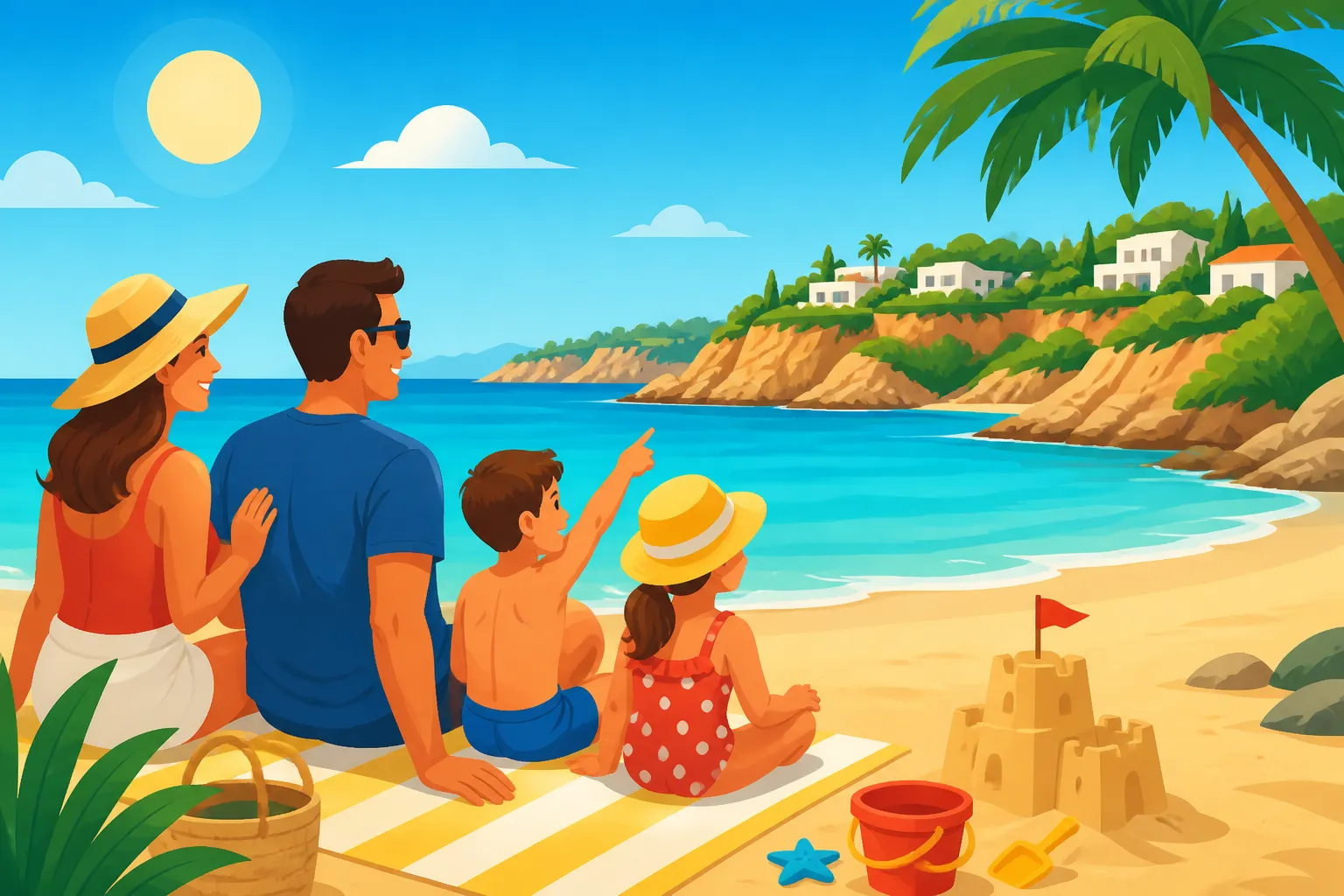
What Are the Best Family Beaches in Spain?
Picture it: you’ve promised the kids a Spanish beach holiday, then arrive to find big surf, no shade, a long scramble down a cliff path and nowhere to buy a bottle of water. This guide covers which Spanish beaches actually work for families, region by region, and how to plan the logistics so the trip feels like a holiday.
Disclosure: This post may contain affiliate links. We may earn a commission at no extra cost to you if you make a purchase through these links. Read full disclosure.
What Makes a Spanish Beach Genuinely Family-Friendly
I’ve lived here long enough to have taken nieces, nephews, friends’ toddlers and visiting grandparents to dozens of beaches. One lesson keeps repeating itself. A beach that looks gorgeous on social media can be a nightmare with small children. The famous wild coves, the surf breaks and the hidden calas reached by goat tracks are wonderful for adults. They are rarely wonderful for a four-year-old who needs the toilet every forty minutes.
Before naming specific beaches, here are the criteria I use. Whenever someone asks me for a recommendation, I run through this list in my head.
Calm Water and a Gradual Slope
This matters more than anything else. Plenty of Spanish beaches drop off quickly, and the Atlantic coasts get real swell. What you want is a wide, sandy beach where the seabed slopes so gently that a child can walk out a long way and stay at knee depth. The Costa Daurada south of Tarragona, much of the Valencian coast and the Mar Menor in Murcia are textbook examples. Parents there can relax a little rather than hovering at the waterline.
Sheltered bays are the other big win. A beach tucked inside a headland or protected by a breakwater or natural reef stays calmer than an open stretch of coast. La Concha in San Sebastián and Las Canteras in Gran Canaria are good examples of geography doing the work for you. For a deeper look at reading the coastline this way, see How to Find Beaches With Calm Water in Spain.
Watch out for pebbles too. Large parts of the Costa del Sol east of Málaga, Altea on the Costa Blanca and many Catalan coves are shingle or coarse gravel. That is hard on little feet and useless for sandcastles. If a beach is pebbly, water shoes help, but I’d still rather pick a sandy one.
Lifeguards, Flags and Facilities
Spain’s urban and resort beaches are generally well served during the summer season. You’ll usually find lifeguard towers, a first-aid post, public showers, foot-washing taps, toilets, accessible walkways and often a chiringuito, the beach bar where you can get lunch, ice creams and cold drinks. Many of the best-equipped beaches fly the Blue Flag, an international award that looks at water quality, safety and services. It isn’t a guarantee of perfection, but it’s a useful shortcut when you don’t know an area.
Learn the flag system before you go:
- Green flag: bathing is permitted and conditions are calm.
- Yellow flag: swim with caution, and keep small children close or out of the water.
- Red flag: swimming is prohibited, and lifeguards will whistle you out.
Some beaches also post signs or an extra flag when jellyfish are around. It’s worth asking the lifeguard, who will usually happily explain in simple Spanish or English.
Remember that lifeguard cover is seasonal. Outside the main summer months, even big resort beaches may have no one on duty. Wild natural beaches often have no services at any time of year.
Access, Shade and Practical Logistics
The beach itself is only half the story. Can you park nearby, or reach it on foot from a bus or train stop? Is there a promenade for pushing a buggy? Are there rentable sunbeds and parasols, or trees behind the sand? Spanish summer sun is serious, especially in the south. A beach with zero shade and a long walk from the car can wear everyone down by midday.
On the question of whether you’ll be charged just to sit on the sand, see Are Spain’s Beaches Free to Use?. The short answer is that the sand is public, and the sunbed concessions are what cost money. For protecting little ones in strong sun, Sun Safety in Spain: UV Index Basics and Habits is worth reading before your first beach day.
The Best Family Beaches on Mainland Spain, Region by Region
Spain’s mainland coast splits into two very different seas. The Mediterranean runs along the east and southeast and is generally calmer and warmer. The Atlantic and Cantabrian coasts in the far south-west and across the north are cooler, greener and tidal, and they can be wild. I’ve grouped the beaches below by coastline so you know what you’re signing up for. For a wider regional tour beyond the family angle, see Spain’s Best Mainland Beaches by Region.
The Mediterranean Coast: Catalonia, Valencia, Murcia
This is the safest bet for families with young children, and the coast I recommend most often.
Costa Daurada, Catalonia. Salou, Cambrils and La Pineda have some of the shallowest, finest-sand beaches in the country. Platja de Llevant in Salou has a long promenade, plenty of services and the kind of slope where toddlers can splash in ankle-deep water far from shore. PortAventura theme park is right next door, which makes this area a family powerhouse. A friend of mine with three kids under eight called it the only holiday where she finished a whole novel.
Costa Brava, Catalonia. The Costa Brava is better known for rocky coves, but some spots suit families well. The long bay at Roses has a wide sandy beach and generally calm water. Platja Gran at Platja d’Aro is a classic resort beach with every facility. Cala Montgó near L’Escala is a sheltered, sandy cove that is easier to manage than the cliff-backed calas further north. Skip the dramatic hidden coves if you’re carrying a cool box, a buggy and a crying baby.
Valencia city and province. Valencia’s city beaches, Las Arenas and La Malvarrosa, are wide, sandy, easy to reach by tram or bus and lined with paella restaurants. South of the city, El Saler is backed by pine woods and dunes within the Albufera natural park. It’s a quieter, more natural option that still has lifeguards in season. Further south, Gandia and Oliva have long golden beaches that fill with Spanish families every summer, which is always a good sign.
Costa Blanca, Alicante. Benidorm divides opinion, but its Levante and Poniente beaches are clean, gently shelving and extremely well equipped. Playa de San Juan, just outside Alicante city, is a long sandy beach with a calmer, more local feel. My personal favourite here is the Arenal in Xàbia, also written Jávea: a horseshoe of soft sand, very calm water and a promenade full of cafés. For getting there without a car, see Reaching the Costa Blanca: Alicante Airport Transfers and Regional Rail.
Mar Menor, Murcia. This saltwater lagoon is separated from the Mediterranean by a thin strip of land called La Manga. The water is shallow, warm and almost always flat, which made it a traditional favourite for Spanish families with babies. The lagoon has had serious environmental problems with water quality, so check local advisories before you plan a holiday around it. If you want open-sea beaches with the same convenience, the Mediterranean side of La Manga is right there.
Andalusia: Costa del Sol and Costa de la Luz
Andalusia has two very different coastlines, and choosing the wrong one for your family is a common holiday frustration.
Costa del Sol. This is the Mediterranean side, around Málaga. Torremolinos, Benalmádena and Fuengirola have long urban beaches with lifeguards, sunbeds, playgrounds and chiringuitos serving grilled sardines on skewers, known as espetos. La Carihuela in Torremolinos is a lovely old fishing-quarter beach with a flat promenade ideal for buggies. Burriana beach in Nerja is another family favourite, with plenty of restaurants and calm water on most days. East of Málaga, beaches tend to get pebblier, so check before you book.
Costa de la Luz. This is the Atlantic side, stretching from Tarifa towards the Portuguese border. Here you get vast, wild beaches of pale sand, dunes and real tides. Families love Conil de la Frontera, Chipiona, Punta Umbría and Islantilla for their space and lower-key atmosphere. Two things to plan around: tides can change the beach dramatically through the day, and the strong easterly wind known as the levante can sandblast you around Tarifa, Bolonia and Zahara. On a windy day, pick a more sheltered beach or head inland for a white village visit.
For what to bring for southern sun, wind and sand, see What to Pack for a Beach Trip in Southern Spain.
Green Spain: Galicia, Asturias, Cantabria and the Basque Country
The north coast is a completely different experience. The water is cooler, the landscape is green, and the summer weather is milder and more changeable. Families who melt in southern heat often love it here. You do need to be more selective, though, because many northern beaches face open ocean swell and are better suited to surfers than toddlers.
San Sebastián, Basque Country. La Concha is one of Europe’s great city beaches, a perfect shell-shaped bay protected by the island of Santa Clara and two headlands. The water is usually calm, the promenade is flat and the old town’s pintxo bars are minutes away. Ondarreta, at the western end of the same bay, is slightly quieter and also very family-friendly.
Santander, Cantabria. Inside the bay of Santander, the small beaches of Los Peligros and La Magdalena are sheltered and calm despite the alarming name of the first one. El Sardinero, facing the open sea, is bigger and livelier but can have more waves. Laredo’s long La Salvé beach is another good Cantabrian choice, with wide sand and gentle conditions inside the bay.
Asturias. San Lorenzo in Gijón is an urban beach with a long promenade. Note that at high tide the sand nearly vanishes, so check tide times. Rodiles, near Villaviciosa, is backed by eucalyptus woods and an estuary and has picnic areas, which makes for a lovely day out. The beaches around Llanes are small and scenic, though some can be rough.
Galicia. Samil, in Vigo, is a very well-equipped city beach with playgrounds, pools and sports areas along its promenade. The jewel, though, is Playa de Rodas on the Cíes Islands, part of a protected national park reached by ferry from Vigo and nearby ports. Visitor numbers are controlled, so you need advance authorisation as well as a boat ticket. There’s a lifeguard in season but very little shade, and you must carry your rubbish back. With older children it’s an unforgettable day. With a baby, I’d think hard about the logistics.
Family Beaches on Spain’s Islands
Spain’s two island groups often make the easiest family beach holidays of all. Transfers are short, resorts are designed around families and, in the Canaries’ case, the beach season runs almost all year.
The Balearic Islands: Mallorca, Menorca, Ibiza and Formentera
Mallorca. The bay of Alcúdia in the north is my top family pick on the island. Alcúdia and Playa de Muro form one long, gently shelving sweep of white sand with shallow, clear water, plenty of services and pine trees behind parts of the beach. Cala Millor on the east coast is similar, a broad sandy beach with a promenade. Es Trenc in the south is stunning and natural, but it has no shade and limited facilities, so bring everything.
Menorca. Menorca is quieter and, for many parents, the ideal Balearic choice. Son Bou on the south coast is the island’s longest beach, sandy and well serviced. Cala Galdana is a horseshoe cove with calm water, cafés and easy access. Son Xoriguer and Cala en Bosc in the southwest are shallow and well protected. Some of Menorca’s most famous virgin coves require a long walk on foot, so save those for days when the kids are up for an adventure.
Ibiza and Formentera. Ibiza has a reputation for nightlife, but the family side of the island is real. Cala Llonga on the east coast is a deep, sheltered bay with very calm, shallow water. Cala Bassa and the beaches around Santa Eulària are also popular with families. Formentera’s Ses Illetes is extraordinarily clear and shallow, reached by a ferry from Ibiza town. Pack shade, because there is very little.
If you’re torn between islands, see The Balearic Islands: Choosing Between Mallorca, Menorca, and Ibiza. For getting across, Balearic Islands: Ferry vs Flight Priced Out for Each Island lays out the trade-offs.
The Canary Islands: Tenerife, Gran Canaria, Lanzarote and Fuerteventura
The Canaries sit off the coast of north-west Africa and are surrounded by open ocean, so many beaches have real swell and strong currents. The best family beaches are the ones protected by breakwaters, reefs or bays, and those are exactly the ones I’d steer you towards.
Tenerife. Las Teresitas, near Santa Cruz in the north-east, is a broad golden beach protected by a long offshore breakwater, so the water is usually calm. In the south, Playa de las Vistas in Los Cristianos and El Duque in Costa Adeje are both sheltered and well equipped, with promenades and plenty of restaurants. The north of Tenerife tends to have dark volcanic sand and rougher water, so families usually base themselves in the south.
Gran Canaria. Las Canteras in Las Palmas is one of my favourite urban beaches anywhere. A natural reef called La Barra runs parallel to the shore and calms the water inside it, creating a natural swimming area. Anfi del Mar and Puerto de Mogán in the south are smaller, man-made-feeling beaches but extremely calm. The famous Maspalomas dunes are spectacular, though the beach itself is more exposed.
Lanzarote. The Flamingo beach in Playa Blanca was designed with breakwaters to create calm water and is a classic family spot. Puerto del Carmen has long sandy beaches and full resort facilities. The Papagayo beaches are gorgeous coves reached by a dirt track, wonderful but with very little in the way of services.
Fuerteventura. The Sotavento area on the south-east coast forms shallow tidal lagoons at low tide, which children adore. Corralejo in the north has dunes and beaches, though the wind can be strong. Costa Calma, as the name suggests, is often calmer.
For help picking between the two biggest islands, see How to Choose Between Tenerife and Gran Canaria.
Family Beaches at a Glance
The table below sums up my shortlist. It is a starting point for your own research, not a ranking.
| Beach | Region | Water Conditions | Facilities | Best For |
|---|---|---|---|---|
| Platja de Llevant, Salou | Costa Daurada, Catalonia | Very shallow, usually calm | Full resort services | Toddlers, theme park combo |
| Arenal, Xàbia | Costa Blanca, Valencia region | Calm, gently shelving | Promenade, cafés | Young families wanting charm |
| La Carihuela, Torremolinos | Costa del Sol, Andalusia | Mostly calm | Promenade, chiringuitos | Buggy-friendly days |
| Conil de la Frontera | Costa de la Luz, Andalusia | Tidal, can be windy | Good in town | Older kids, wide open space |
| La Concha, San Sebastián | Basque Country | Sheltered bay, usually calm | Urban services | City-plus-beach trips |
| Los Peligros, Santander | Cantabria | Sheltered inside the bay | Urban services | Calm northern swimming |
| Playa de Rodas, Cíes Islands | Galicia | Calm, cold, clear | Basic, little shade | Adventurous older kids |
| Alcúdia and Playa de Muro | Mallorca | Shallow, clear | Full resort services | Babies and toddlers |
| Cala Galdana | Menorca | Calm cove | Cafés, easy access | Relaxed island stay |
| Las Teresitas | Tenerife | Calm behind breakwater | Good services | Year-round sun |
| Las Canteras | Gran Canaria | Calm inside the reef | Urban promenade | Snorkelling beginners |
| Sotavento lagoons | Fuerteventura | Shallow tidal lagoons | Limited | Paddling at low tide |
Planning a Stress-Free Family Beach Trip in Spain
Choosing the beach is the fun part. The logistics are where holidays succeed or fall apart. Here’s what I’ve learned from many summers of hauling cool boxes along Spanish promenades.
Choosing When to Go
July and especially August are when Spanish families take their own holidays. Mediterranean beaches are packed, accommodation is at its most expensive and the southern heat can be intense in the middle of the day. June and September are, in my opinion, the sweet spot for the Mediterranean and the Balearics: the sea is warm, lifeguards are usually still on duty and the crowds thin out. The north coast is best in high summer, when its weather is most reliable. The Canaries work almost all year, which makes them a strong option for half-term or winter breaks.
For a month-by-month breakdown, see When Is the Best Time for a Beach Holiday in Spain?.
Whatever the month, adopt the Spanish rhythm. Locals hit the beach in the morning, retreat for lunch and a rest during the hottest hours, and come back in the late afternoon and early evening. Children can actually cope with that pattern better than with a full day in the midday sun.
Getting There and Getting Around
Many of the best family beaches are reachable without a car. Salou, Cambrils, Valencia’s city beaches, Benidorm, the Costa del Sol towns, San Sebastián and Santander all have decent train or bus links. Omio is handy for comparing train and bus options side by side when you’re working out how to get from an airport or a big city to the coast. Being able to see whether a train or a coach is the easier option with kids saves a lot of guesswork.
For more remote spots such as the Costa de la Luz villages, rural Menorca or the Lanzarote coves, a hire car makes life much easier. If you rent one, book child seats in advance and check that the car will fit your buggy.
Island boat trips need their own planning. GetYourGuide lists boat excursions in many coastal areas, which can be an easy way to arrange a day out, for example a glass-bottom boat trip off Mallorca or a catamaran trip in the Canaries. For the Cíes Islands, remember that the island authorisation is separate from your ferry ticket, so sort out both before the day.
Here’s the order I follow when planning a family beach trip:
- Decide on the type of water your children need, whether very calm and shallow or fine with some waves.
- Shortlist two or three beaches that match, using the table above.
- Check transport from the nearest airport or train station, including how long the transfer takes.
- Book accommodation within walking distance of the sand, or at least near a direct bus.
- Look up tide times for Atlantic beaches and wind forecasts for the Costa de la Luz and the Canaries.
- Pack shade, sun protection and water shoes before you leave home.
Where to Stay and What to Pack
Staying within walking distance of the beach is the single biggest quality-of-life upgrade for families. It means you can go back for naps, lunch or a change of clothes without packing up the whole camp. Apartments with a kitchen and a washing machine are often more practical than hotel rooms for longer stays.
Booking.com makes it easy to filter for family rooms, apartments, kitchens and distance from the beach, which saves hours of scrolling. Large families should know that many Spanish hotel rooms take a maximum of three people. Before booking, see Why Spanish Hotels Cap Rooms at Three: Booking for Families of Four Plus. For a wider look at finding suitable accommodation, see How to Find Family Rooms and Apartments in Spain. When you compare options on Booking.com, check the actual walking route to the sand rather than relying on a listing that says “near the beach”.
My non-negotiable packing list for a Spanish family beach day:
- A sturdy parasol or a pop-up beach tent, unless you plan to rent sunbeds and parasols.
- High-factor sun cream, sun hats and UV swimwear for small children.
- Water shoes for pebbly beaches and hot sand.
- Plenty of water and snacks, even if there’s a chiringuito.
- A small first-aid kit including something for jellyfish stings.
- A bag for rubbish, especially on natural beaches without bins.
If you’re travelling with very young children, see How to Travel Spain With a Baby or Toddler for the wider trip. If you want to mix beach days with sightseeing, What Are the Best Cities in Spain for Traveling With Kids? highlights the coastal cities where you can easily do both.
Staying Safe on the Sand and in the Water
Spanish beaches are generally safe, but a few habits make a real difference:
- Always swim near a lifeguard post when you’re with children, and respect the flags without exception.
- On Atlantic beaches, watch for rip currents, which look like calm channels between breaking waves.
- Keep small children in arm’s reach in the water, even on very calm beaches, because a gentle slope can still have sudden dips.
- Agree on a meeting point, such as a specific lifeguard tower, in case anyone gets separated. Busy beaches are confusing for small children.
- Avoid the strongest sun in the middle of the day, and take shade breaks often.
Lifeguards and Red Cross first-aid posts on Spanish beaches deal with lost children all the time, so if it happens, go straight to them. In an emergency, call 112.
Spain has an extraordinary variety of beaches. With a bit of planning, you can find one that suits a nervous toddler, an adventurous ten-year-old and tired parents in need of a coffee and some shade.
Disclaimer
This article is for general informational purposes only and does not constitute professional advice. Laws, prices and regulations vary by location and change over time. Consult a qualified professional for guidance on your specific situation.