How to Tip at a Restaurant in Spain
Trying to figure out how much to tip at a restaurant in Spain can feel like navigating a minefield, especially if you’re coming from a culture where gratuities are a huge part of a server’s income. Believe me, I’ve been there – standing awkwardly with a bill in hand, wondering if I’m about to commit a major cultural faux pas or, worse, short-change someone who deserves it. This guide is here to unravel the mysteries of la propina in Spain, giving you the real scoop from an expat who’s learned the ropes over countless coffees and tapas.
Disclosure: This post may contain affiliate links. We may earn a commission at no extra cost to you if you make a purchase through these links. Read full disclosure.
Understanding the Spanish Tipping Culture: It's Not What You're Used To
When you first move to or visit Spain, one of the quickest ways to feel like a fish out of water is trying to apply your home country's tipping rules. It’s a completely different ballgame here, and understanding this fundamental difference is key to feeling comfortable and respectful in Spanish dining establishments. Many expats, myself included, spend their first few months either wildly over-tipping or constantly worrying they're under-tipping.
The Fundamental Difference from North American Norms
Let's get this straight from the start: tipping in Spain is absolutely not mandatory, nor is it expected as a primary component of a server's income. In countries like the United States or Canada, tips often form a significant portion, sometimes even the majority, of a service worker's wage. That's simply not how it works in Spain. Here, restaurant and bar staff are paid a living wage, often dictated by collective agreements, which means they aren't relying on your generosity to make ends meet. This is a huge relief for many, but also the source of much confusion.
The concept of propina (tip) exists, but it's more of a gesture of appreciation for exceptional service rather than a necessary supplement to a low base salary. When you see "service included" on a menu, it genuinely means it. You won't find an automatic service charge added to your bill in most places, unlike in some other European countries or large tourist traps. A Spaniard, for instance, might finish a €20 meal at a local bar de barrio and simply leave a €1 or €2 coin, or nothing at all, if the service was just standard. They wouldn't dream of leaving a 15-20% tip, because the expectation just isn't there culturally. This is a vital piece of the puzzle to understand when you're budgeting for your Cost of Living in Spain: Realistic Budgets and Savings Tips.
Why the Confusion? The Tourist vs. Local Expectation
So, if it's not expected, why do so many guides and even some personal anecdotes suggest tipping? The confusion largely stems from the interaction between Spain's traditional culture and the influx of tourists, particularly from countries with a strong tipping culture. In highly touristed areas like Barcelona's Gothic Quarter, Madrid's Plaza Mayor, or Seville's historic center, you might find some establishments, especially those catering heavily to an international crowd, subtly encouraging larger tips.
This could manifest as a small tip jar prominently displayed at the counter, or, more recently, some card payment terminals offering a "propina" option. For an expat still getting used to Spanish Customs, Etiquette, and Social Life, these subtle cues can create internal conflict. You want to be polite and appreciative, but you also don't want to be taken for a ride or perpetuate a culture that doesn't genuinely benefit the local service economy in the long run. The truth is, while tourist-heavy spots might appreciate a larger tip, it doesn't mean it's expected in the same way it would be elsewhere. Most Spanish service workers are simply happy to provide good service, and if you leave a little something extra, it's a bonus, not a right.
When and How Much to Tip at Spanish Restaurants
Now that we've cleared up the "why," let's dive into the practical "when" and "how much." Spain offers a wide spectrum of dining experiences, from a quick coffee at the counter to a leisurely multi-course meal, and tipping etiquette shifts subtly with each.
Casual Cafes, Bars, and Tapas Spots
This is where you'll likely spend a lot of your time and your euros. Whether you’re grabbing a speedy café con leche at the bar, enjoying a few tapas and a caña, or having a casual lunch at a local cafe, the tipping here is minimal and typically involves loose change. For a quick coffee that costs €1.50-€2, leaving the 50 cents or even just 10-20 cents from your change is a perfectly acceptable gesture. If you’ve had a few rounds of drinks and tapas at the bar, perhaps a bill of €15-€20, leaving a €1 or €2 coin is considered generous and well-received, especially if the service was cheerful and efficient.
Think of it as a polite rounding up or leaving behind the smallest coins. It's not about a percentage, but rather a token of appreciation for a pleasant experience. Don't feel pressured to leave anything for truly routine service; it's genuinely fine to just take your exact change. This casual approach to tipping also extends to how you handle your everyday finances when you're living here, making it easier to manage your Money in Spain for Expats: Banking, Taxes, and Everyday Payments.
Sit-Down Restaurants (Mid-Range to Upscale)
This is where the nuances become a little more pronounced. For a proper sit-down meal, whether it’s a menú del día at a bustling lunch spot or a romantic dinner at a nicer restaurant, the guidelines are still far removed from what you might be used to in some other countries. If the service was merely adequate—meaning your food arrived, dishes were cleared, and the waiter wasn't rude—leaving nothing is completely acceptable.
However, if you experienced truly excellent service—perhaps your waiter was exceptionally friendly, offered great recommendations about Spanish Food and Drink: A Practical Culture Guide, went out of their way to accommodate a dietary request, or spoke English to help you navigate the menu—then a small tip is certainly appreciated. For mid-range restaurants, 5% of the bill is considered a decent tip for good service. For a more upscale dining experience where the service was truly outstanding, you might consider going up to 10%. Again, this is for exceptional service, not just standard. For a bill of, say, €50, a €2-€5 tip would be perfectly adequate for good service, and maybe €5-€8 for truly excellent.
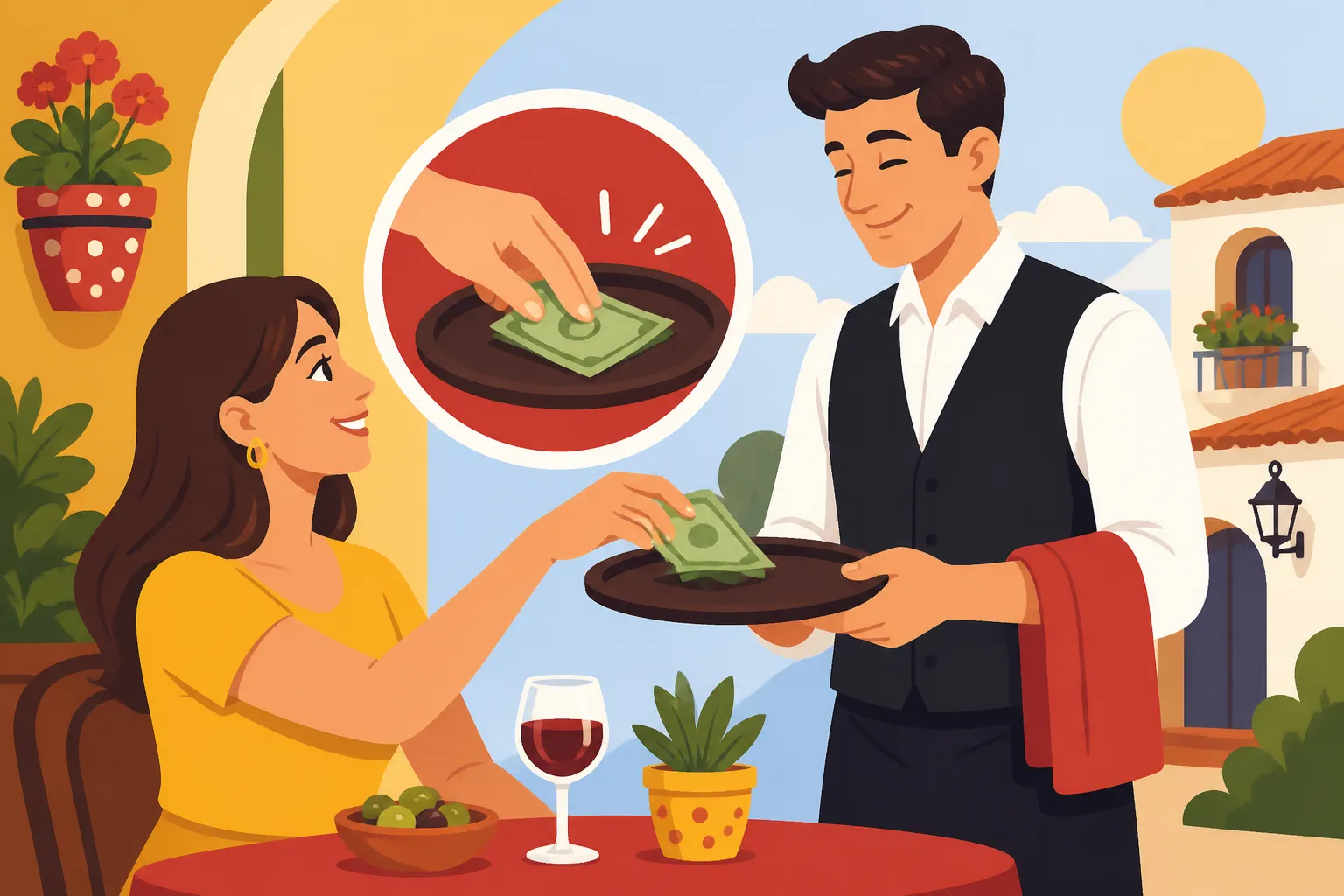
It’s often easier and more common to leave cash on the table after paying the bill. You'll often see Spaniards leave a few coins or a small note discreetly tucked under the receipt plate.
What Influences the Amount?
Several factors might subtly influence how much you decide to tip, beyond just the raw bill amount.
- Service Quality: This is, without a doubt, the biggest differentiator. Was your server just doing their job, or did they go above and beyond? Did they offer a friendly smile, help you with your Ordering Food and Drinks in Spanish: A Practical Phrasebook, or ensure your meal was perfect? The better the service, the more inclined you might be to leave a small token.
- Type of Establishment: A tiny, family-run bar de barrio in a residential area typically receives smaller, if any, tips compared to a more formal restaurant in a city center that caters to a mixed clientele. At the former, regulars are just happy to be there, and the service is often warmly familiar rather than overtly attentive.
- Bill Size: While in some cultures, tips are a direct percentage, in Spain, it’s less about strict math. On a smaller bill (e.g., €10-€20), leaving a €1 or €2 coin makes for a higher percentage but is perfectly common. On a much larger bill (say, €150 for a group dinner), you wouldn’t necessarily leave €15-€30. A €5-€10 tip for truly excellent service on a large bill would be considered very generous.
- Personal Preference: Ultimately, as an expat, you’ll develop your own rhythm. Some people, feeling grateful for the hospitality or simply accustomed to tipping more, might choose to be a bit more generous if they can afford it, especially in places they frequent. There's no judgment for this, as long as you're not making a huge fuss about it.
Practicalities of Tipping in Spain: Cash, Card, and Cultural Nuances
Understanding the cultural backdrop of tipping is one thing, but actually executing it can bring up a few logistical questions. How do you actually leave the money? And what about those card machines that now ask for a tip?
Cash is King for Tips
Here’s the golden rule for tipping in Spain: cash is always preferred. Always. When you pay with cash, you simply leave the desired amount on the table, often under a plate or in the billfold, after the server has brought your change. This ensures the money goes directly to the staff who served you, which is why it's universally preferred. If you’re traveling or just starting to settle in, it’s a good idea to always carry some small denominations—€1 and €2 coins, and a few €5 notes. This comes in handy not just for tips, but also for small purchases or when places prefer Cash vs Card in Spain: What’s Accepted and Where.
A common scenario: your bill is €38, and you pay with a €50 note. The server brings you €12 in change. You can then simply leave €1 or €2 on the table as you depart. There’s no need to make a big show of it or hand it directly to the server with a flourish. A discreet exit, leaving the coins, is the most Spanish way to do it.
Tipping on Card Machines: A Growing Trend (But Still Different)
The rise of digital payments has brought a new element to tipping in Spain, particularly in more modern or tourist-centric establishments. You might occasionally encounter a card machine that presents an option to add a "propina" to your payment. For many expats, this is where the old anxieties about tipping resurface!
It's important to remember that this isn't a long-standing Spanish tradition. It's often a feature adopted from international payment systems or to cater to foreign visitors. You are absolutely not obligated to use this option. If you prefer, you can select "no tip" on the machine and then, if you still feel inclined, leave a small cash tip separately. There's also a common concern, and sometimes a valid one, that tips added via card might not always go directly to the serving staff, but might be pooled by the establishment or even subject to higher taxes for the employer. While regulations vary, leaving cash eliminates this ambiguity.
When you're planning your trips and bookings through sites like Booking.com or tours with GetYourGuide, keep in mind that these platforms don't factor in restaurant tipping culture. Your accommodation or tour costs are separate from your dining experience, and any tipping at restaurants would be an additional, optional expense. Similarly, when booking travel tickets through platforms like Omio, the ticket price is your only concern; restaurant tips are a completely separate cultural consideration to budget for.
Other Tipping Scenarios (Delivery, Hairdressers, etc.)
While our focus here is on restaurants, it's worth a quick mention that the same general philosophy of "optional, small, for exceptional service" extends to other service industries in Spain.
- Food Delivery: For a food delivery driver, rounding up to the nearest euro or leaving a couple of euros for a large order or difficult delivery (e.g., many flights of stairs) is a nice gesture, but not strictly required.
- Hairdressers/Barbers: For an excellent cut or color, you might leave a few euros (e.g., €2-€5) for your stylist, but it's not a set percentage of the service cost.
- Taxi Drivers: Most people just round up to the nearest euro or decline the change, especially if it’s only a few cents. For a very long trip or if the driver went out of their way, a €1 or €2 tip is generous.
In all these cases, the key takeaway is that it’s usually small, optional, and for service that truly impressed you, rather than a standard expectation.
Navigating the Social Side of Tipping and Avoiding Awkwardness
Part of truly integrating into Spanish life is understanding the unspoken rules and social graces that govern everyday interactions. Tipping, or the lack thereof, can be one of these areas.
The Art of Discretion: Blending In
In Spain, tipping isn't meant to be a grand, ostentatious gesture. In fact, drawing too much attention to it can sometimes feel a bit awkward, almost like you're trying to prove something. The "Spanish way" is to be discreet. If you decide to leave a tip, simply place the coins or note on the table, perhaps under the bill tray or a plate, as you prepare to leave. Don't wait around for a thank you or engage in an extended conversation about it. It’s a quiet acknowledgement of good service.
This discretion extends to all aspects of Spanish life. Whether you're using the public transport in Spain, or navigating your way through busy markets, subtlety is often valued over overt displays. So, when it comes to propina, a quiet gesture speaks volumes.
What If You Don't Tip? No Hard Feelings
This is perhaps the biggest relief for many expats. If you receive standard, perfectly acceptable service at a restaurant or bar in Spain and choose not to leave a tip, it is absolutely not considered rude or insulting. The staff will not glare at you, chase you down, or make you feel guilty. They are paid for their work, and a tip is genuinely extra, not expected.
It's a huge difference from places where a no-tip situation might imply dissatisfaction with the service. In Spain, no tip simply means "the service was fine, thank you." You should never feel pressured or anxious about not tipping, especially if you're on a tight budget or the service was just average. Focus on being polite, saying gracias, and enjoying your Spanish Meal Times and Dining Etiquette Explained.
When to Break the "Rules" (and Feel Good About It)
While the general rule is "tip little or nothing," there are certainly times when you should feel good about being a bit more generous. If a server truly went above and beyond—maybe they helped you navigate a complex menu despite a language barrier, surprised you with an extra dessert for your birthday, or were incredibly patient with your struggling Spanish (a fantastic way to practice your Spanish Language and Everyday Communication for Visitors!)—then a more substantial tip is absolutely appropriate and genuinely appreciated.
In these instances, leaving a €5 note for a mid-range meal, or even €10 on a larger bill, will be met with genuine gratitude. It shows you recognize their effort and the excellent service they provided. It's a lovely way to reward truly exceptional hospitality and make someone's day, without it being an ingrained obligation. So, feel free to let your appreciation guide you when the service genuinely shines.
| Establishment Type | Typical Scenario | Recommended Tip | Notes |
|---|---|---|---|
| Casual Bar/Cafe | Quick coffee, single drink, small tapas order | Few cents to €0.50 | Round up or leave small change from a few euros bill. |
| Tapas Bar (Multiple items) | Several rounds of drinks and tapas, €15-€25 bill | €1 – €2 | For good service, especially if you stayed a while. |
| Mid-Range Restaurant | Menú del día, a la carte meal, €30-€60 bill | Nothing for standard, €2-€5 for good/excellent | Based on service quality; not a fixed percentage. |
| Upscale Restaurant | Fine dining, multi-course, €70+ bill | Nothing for standard, €5-€10 for good/excellent | For truly exceptional service; again, not a strict percentage, but a sign of appreciation. |
| Food Delivery | Driver brings food to your door | Round up or €1-€2 | Optional, especially for difficult deliveries or large orders. |
| Taxi | Standard ride | Round up to nearest euro | For short trips, rounding up is common; €1-€2 for longer journeys or extra help with luggage. |
Disclaimer
The information provided in this guide is for general informational purposes only and is based on common cultural practices and expat experiences in Spain. Tipping customs can evolve, and individual experiences may vary. Always use your discretion and judgment.