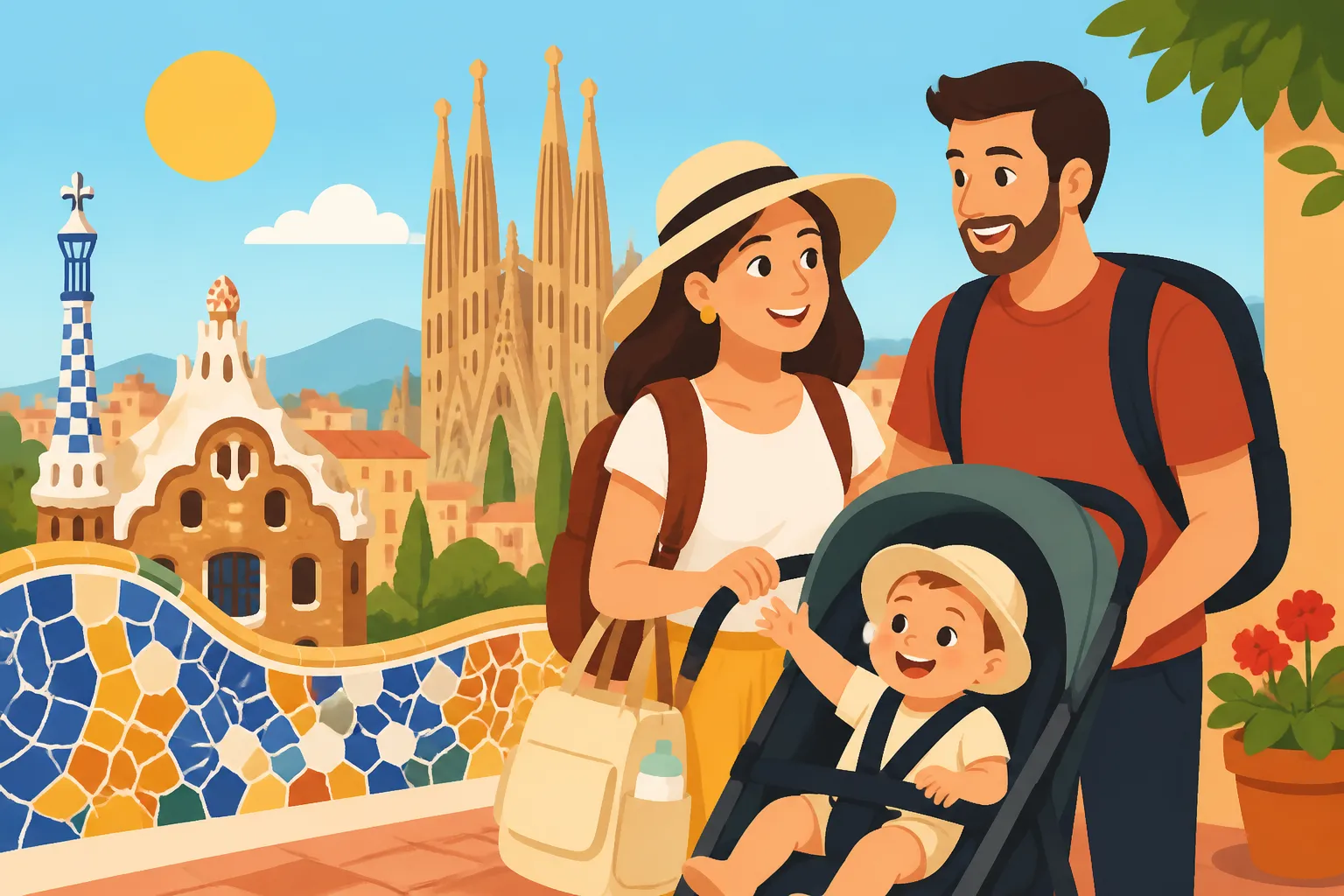
How to Travel Spain With a Baby or Toddler
Traveling to Spain with a baby or toddler often triggers a wave of anxiety, ranging from how to navigate historic cobblestone streets with a stroller to wondering if your toddler’s mid-meal meltdown will result in glares from locals. This guide provides an exhaustive roadmap for parents, covering everything from transportation logistics and dining etiquette to health emergencies and finding the right gear, ensuring your family adventure is as seamless as possible.
Disclosure: This post may contain affiliate links. We may earn a commission at no extra cost to you if you make a purchase through these links. Read full disclosure.
Navigating Transportation with Little Ones
Moving from city to city in Spain requires a bit more foresight when you have a diaper bag the size of a suitcase and a toddler who has just discovered the joy of running in opposite directions. The good news is that Spain’s infrastructure is generally excellent, but there are nuances to every mode of transport that can make or break your travel day. Whether you are landing in the capital and need to know How to Get From Madrid Airport to the City Center or planning a cross-country trek to the south, your choice of vehicle matters immensely.
The Magic of the Spanish Rail System
The train is arguably the gold standard for traveling with small children in Spain. The high-speed AVE trains are spacious, quiet, and—crucially—feature changing tables in most restrooms. Unlike planes, there is no "fasten seatbelt" sign that keeps you trapped in your seat for hours. If your toddler needs to walk, you can stroll to the cafeteria car for a juice box. When booking, tools like Omio are invaluable for comparing schedules and ensuring you get a seat in the "preferente" or "turista plus" sections, which often offer more legroom for the inevitable mountain of snacks and toys.
For shorter distances, utilizing Regional and Local Trains in Spain (Cercanías and Media Distancia) is highly effective. These trains are generally stroller-friendly, with dedicated spaces for wheelchairs and prams. However, be mindful of peak commuting hours in cities like Madrid or Barcelona; trying to board a Cercanías train at 8:30 AM with a double stroller is a recipe for stress. Always aim for the middle of the day when the cars are emptier and you can breathe.
Car Rentals and the Car Seat Dilemma
If you plan on exploring the white villages of Andalusia or the rugged coast of Galicia, a car is a necessity. However, driving in Spain with a toddler introduces the strict European car seat regulations. It is highly recommended to bring your own seat if it is approved for air travel, as rental company seats can be hit-or-miss in terms of cleanliness and age-appropriateness. If you do rent, be prepared for a daily fee that can add up quickly.
Driving itself is straightforward, but parking in historic centers is a nightmare. Many "pueblos blancos" have streets so narrow you might find your side mirrors brushing against ancient stone walls. When choosing a vehicle on a site like Booking.com, which often integrates car hire, opt for the smallest car that will comfortably fit your luggage and the car seat. A massive SUV might feel safe, but it will limit where you can actually go.
Strollers vs. Carriers on Cobblestones
This is the eternal debate for parents visiting Spain. Cities like Seville, Toledo, and Granada are famous for their beautiful but brutal cobblestones. A lightweight "umbrella" stroller will likely rattle your toddler’s teeth and might even lose a wheel. If you must bring a stroller, ensure it has sturdy, all-terrain wheels. However, the most seasoned expat parents will tell you that a high-quality baby carrier is your best friend for visiting cathedrals, alcazars, or Exploring Spain's Cities on Foot: Walking Route Ideas.
Accommodation and the Daily Rhythm
Where you sleep and how you structure your day will define your sanity. Spain operates on a schedule that is notoriously "late" by Anglo-American standards. Understanding this rhythm is the key to avoiding a "hangry" toddler and an exhausted parent. When searching for a place to stay, using Booking.com to filter for "Apart-hotels" or apartments with kitchens is a game-changer. Having a fridge for milk and a stovetop to boil pasta at 5:00 PM when every restaurant is closed is a survival necessity.
The Siesta is Your Secret Weapon
Many tourists find the afternoon "siesta" (roughly 2:00 PM to 5:00 PM) frustrating because shops close, but for parents of toddlers, it is a blessing. This is the perfect time to head back to your accommodation, escape the intense Spanish sun, and let everyone nap. By the time the city wakes up again at 5:30 PM, your child will be refreshed and ready for the evening "paseo" (the traditional evening stroll).
While the city rests, you can take care of logistical needs. If you are staying in an apartment, this is when you might want to check the kitchen. For instance, knowing about Tap Water in Spain: Safety, Taste, and Filtration Tips is important; while the water is safe to drink in most of the country, the high mineral content in coastal areas like Valencia might upset a sensitive toddler’s stomach, making bottled water a safer bet for formula or drinking.
Sourcing Baby Supplies Locally
You do not need to pack three weeks' worth of diapers and wipes. Spain has fantastic supermarkets like Mercadona, Carrefour, and El Corte Inglés that stock high-quality baby products. The brand "Dodot" is the local version of Pampers and is widely considered the best. For baby food, look for "potitos"—the Spanish term for jarred purees. They are available everywhere, including pharmacies, and often feature high-quality ingredients like hake, veal, and Mediterranean vegetables.
| Item Category | Local Name / Tip | Where to Buy |
|---|---|---|
| Diapers | Pañales (Dodot is the top brand) | Supermarkets & Pharmacies |
| Baby Food | Potitos | Mercadona, Carrefour, Pharmacies |
| Formula | Leche de fórmula | Pharmacies (Farmacias) |
| Wipes | Toallitas | Supermarkets |
| Sunscreen | Crema solar (look for "infantil") | Pharmacies & Perfumerías |
Safety and Baby-Proofing in Rentals
Spanish homes and rentals often feature tiled floors and marble surfaces. While beautiful, they are unforgiving for a toddler who is just learning to walk. Before letting your child loose, do a quick sweep of the apartment for low-lying glass decor or unsecured heavy furniture. It is also worth noting that many older buildings in Spain have balconies with railings that might be spaced further apart than what you are used to back home. Always keep balcony doors locked and supervised. For more general advice on staying secure, read about Staying Safe in Spain: Practical Safety Tips for New Residents.
Dining Out and Social Integration
One of the most beautiful aspects of Spanish culture is how much they genuinely love children. In many countries, taking a toddler to a nice restaurant at 9:00 PM would result in judgmental stares. In Spain, it is entirely normal to see babies in strollers parked next to tapas bars well past midnight. You will find that waiters are incredibly patient, and elderly locals will likely stop to coo at your baby or offer a stray "guapo" or "guapa."
Mastering the Tapas Bar with a Toddler
Tapas are actually the perfect "kid food." Since they are small plates, you can order a variety of things to see what sticks. "Tortilla de patatas" (potato omelet) is a universal toddler favorite—it’s soft, bland, and filling. "Croquetas" (usually ham or chicken) are also usually a hit, though they are served very hot, so be sure to cut them open first.
However, you should be aware of Spanish Meal Times and Dining Etiquette Explained. Lunch is the big meal of the day, usually served between 1:30 PM and 3:30 PM. Dinner doesn't typically start until 8:30 PM at the earliest. If your toddler needs to eat at 6:00 PM, look for "Cafeterías" or bars that serve "raciones" all day, as many formal restaurants will be closed for the afternoon break.
High Chairs and Changing Tables
While Spain loves children, its older infrastructure doesn't always love strollers. Many traditional bars are cramped and may not have high chairs (tronas). If you are heading to a popular spot, it is wise to bring a portable fabric high chair that ties onto a regular chair. Similarly, changing tables are becoming more common in modern malls and large restaurants, but in a small local bar, you may have to get creative with a changing mat in the stroller or on a closed toilet lid.
To ensure you have a table at a more family-friendly establishment, you can book experiences through GetYourGuide that often highlight accessible and family-oriented food tours. This takes the guesswork out of finding a place that won't mind a messy toddler under the table. Also, remember to ask What Time Do Spaniards Eat Lunch and Dinner? specifically for the region you are in, as northern Spain and southern Spain can vary slightly in their punctuality.
The Plaza Culture: The Ultimate Playground
Every Spanish neighborhood is centered around a "plaza." These squares are often car-free and serve as the living room of the city. For a parent, the plaza is your best friend. You can sit at a "terraza" (outdoor table) with a cafe con leche or a glass of wine while your toddler runs around the open space within your sightline. Most plazas have a small "parque infantil" (playground) nearby with slides and swings. This is where your child can interact with local kids, providing a wonderful cultural experience for both of you.
Health, Safety, and Activities
No one wants to think about their child getting sick on vacation, but being prepared will save you hours of panic. Spain has an exceptional healthcare system, and as a tourist, you will have access to it, though the process varies depending on your residency status. For the most part, minor ailments can be handled by the local "farmacia," which is much more than just a place to buy aspirin.
The Power of the Spanish Pharmacist
Spanish pharmacists are highly trained and can offer medical advice for minor issues like teething, mild fevers, or diaper rash. If you see a green neon cross, the pharmacy is open. If it is after hours, look for the "Farmacia de Guardia"—the designated 24-hour pharmacy for that neighborhood. You can find more detail in our guide on Pharmacies in Spain: Prescriptions, Over‑the‑Counter Meds, and Practical Tips.
If the issue is more serious, you should head to the "Urgencias" (emergency room). Spain has both public and private hospitals. If you have travel insurance, you may prefer a private clinic for faster service and a higher likelihood of finding an English-speaking doctor. For immediate life-threatening emergencies, dial 112. It is helpful to familiarize yourself with Emergency Healthcare in Spain: 112, Urgent Care, and What to Expect before you arrive.
Engaging Activities for Small Children
While your toddler might not appreciate the fine art in the Prado, they will love the "Parque del Retiro" right next door. Most major Spanish cities have incredible parks. In Valencia, the Turia Gardens (a diverted riverbed) is a paradise for families, featuring the "Gulliver Park" where children can climb over a giant model of Gulliver.
When planning visits to major monuments, use GetYourGuide to book "skip-the-line" tickets. Waiting in a two-hour queue for the Alhambra with a restless three-year-old is a nightmare you want to avoid. Also, consider nature-based trips; for example, exploring What National Parks Are Easy to Visit From Major Cities? can provide a much-needed break from city noise and allow your little one to explore the outdoors safely.
Managing Minor Mishaps
From scraped knees on ancient stairs to sudden stomach bugs, you need to know How to Handle Minor Injuries in Spain: First Steps and Where to Go. Most towns have a "Centro de Salud" (local health center) where you can be seen for non-emergencies. If you are staying for an extended period and need more specialized care, knowing How to Find a 24‑Hour Clinic in Spain (Urgencias) is essential. Always carry your child’s passport and any insurance documentation with you to these appointments to speed up the registration process.
Disclaimer
This guide is intended for informational purposes only and does not constitute professional medical, legal, or financial advice. While every effort has been made to ensure the accuracy of the information regarding travel in Spain with children, local regulations and services can change. Always verify specific requirements with official government sources or healthcare providers before your trip.