Balearic Islands: Ferry vs Flight Priced Out for Each Island
Oh, the Balearic Islands! Just thinking about Mallorca's dramatic coastlines, Menorca's serene coves, or Ibiza's vibrant energy can set an expat's heart a-flutter. But then comes the logistical headache: how do you actually get there? For years, I’ve navigated the maze of flights versus ferries, and let me tell you, it's never a straightforward choice. This guide is going to strip away the confusion, pitting flights against ferries for each major island and showing you how to make the best, most cost-effective decision with the help of platforms like Omio.
Disclosure: This post may contain affiliate links. We may earn a commission at no extra cost to you if you make a purchase through these links. Read full disclosure.
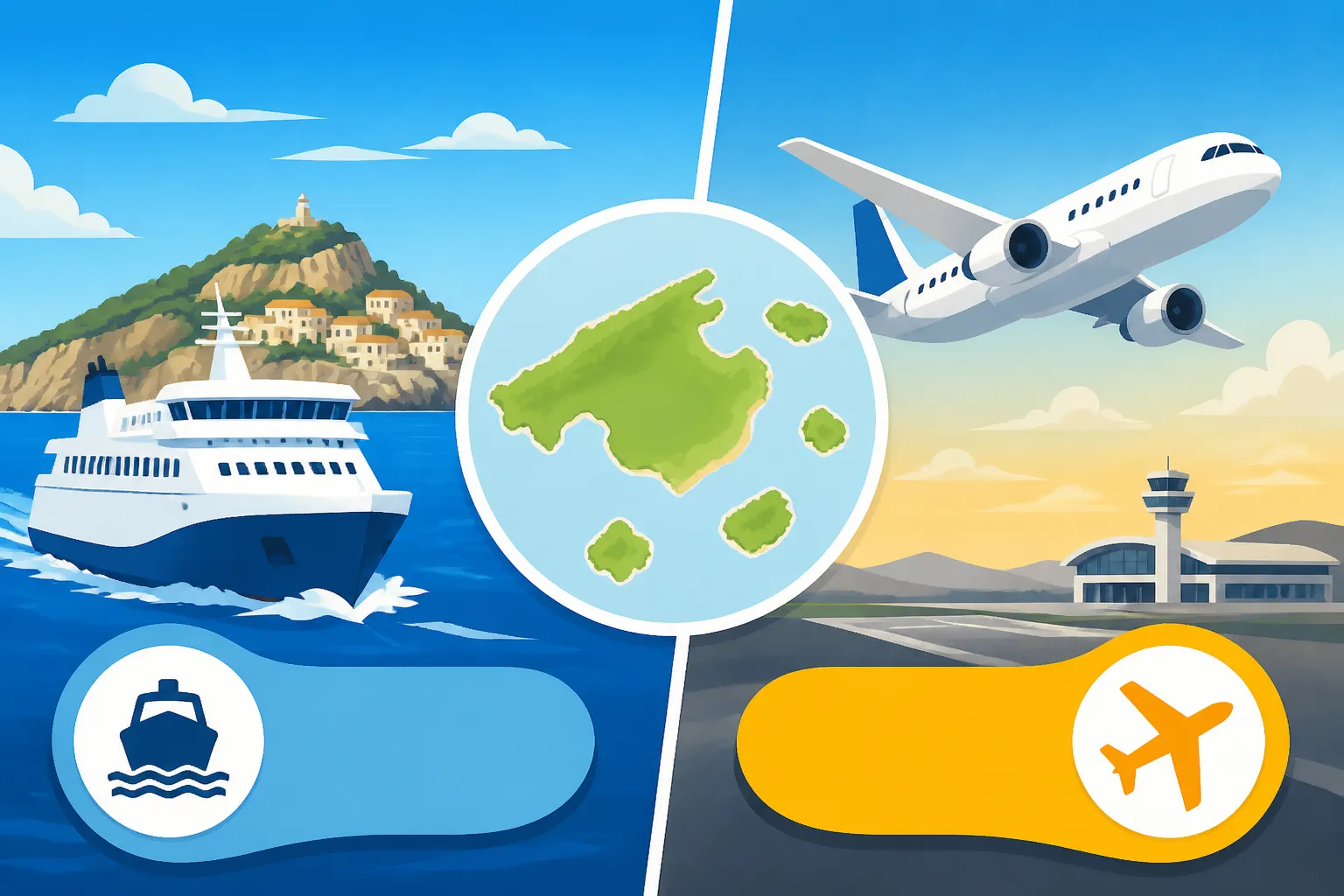
The Eternal Dilemma: Ferry or Flight to the Balearics?
When you’re dreaming of those crystalline waters, the last thing you want to be doing is sifting through endless tabs trying to figure out if flying is truly cheaper than taking the ferry, or vice-versa. This isn't just a simple booking decision; it's about how you envision your island escape unfolding. Do you want to arrive quickly, or is the journey part of the adventure? The Balearic Islands, while close, feel a world away, and getting there can be half the fun – or half the headache!
Why This Choice Matters for Expats and Tourists
For many of us living in Spain, or even just visiting, the Balearics are a quintessential escape. But unlike a quick train ride to another mainland city, island hopping introduces new layers of complexity. You're probably thinking about luggage, especially if you're a seasoned expat who has learned to travel with more than just a carry-on. Maybe you want to bring your car, filled with beach gear or provisions for a longer stay, which immediately makes the flight option a non-starter. Or perhaps you're traveling with a furry friend, adding another variable to the mix. It's not just about the ticket price; it's about the entire experience and whether it aligns with your travel needs and desires for that particular trip.
Factors Beyond Just Cost: Time, Convenience, and Experience
While price is often the first thing we look at, it’s far from the only consideration. Think about the time involved. A flight might be just an hour, but factor in getting to the airport, security checks, boarding, and then transport from the island airport to your accommodation – suddenly that "quick" flight stretches significantly. Ferries, on the other hand, often offer a more relaxed pace. You typically arrive at the port closer to departure time, board, and can immediately stretch out, enjoy the sea air, or settle into a cabin. It’s a completely different rhythm. If you’re bringing a car, the ferry is the obvious choice, allowing unparalleled freedom once you arrive. If you’re traveling with pets, many ferry lines are much more accommodating than airlines, who often require pets to travel in the cargo hold. The journey itself can be a pleasant part of your holiday, offering stunning views of the Spanish coastline and the open sea, rather than just being a means to an end.
Mallorca: The Big Island's Travel Costs (Ferry vs. Flight)
Mallorca, the largest of the Balearics, is a firm favorite for a reason. From the bustling capital of Palma to the dramatic Serra de Tramuntana mountains and pristine beaches, it offers something for everyone. Its popularity means it's incredibly well-connected, giving you plenty of options, but also making price comparisons essential, especially during peak season.
Flying to Palma de Mallorca: Speed and Sky-High Views
Palma de Mallorca Airport (PMI) is one of Spain’s busiest airports, especially during the summer months. You’ll find direct flights from almost every major mainland city, including Madrid, Barcelona, Valencia, Seville, and even smaller regional airports. This means competition among airlines is fierce, which can often translate into good deals if you book in advance.
Budget carriers like Ryanair, Vueling, and easyJet dominate the routes, offering a quick hop over the Mediterranean, usually lasting between 45 minutes to an hour from Barcelona or Valencia. During the low season (November to March), you can often snag flights for as little as €20-€40 one-way if you're flexible with dates and travel light. However, don't be fooled by these initial prices; budget airlines are notorious for their add-ons. Checked luggage, seat selection, and even priority boarding can quickly inflate the cost, turning that €20 ticket into a €70-€100 affair. In the high season (June to August), expect prices to surge, often starting at €80-€150 one-way, and potentially much more for last-minute bookings.
The main pros of flying are undoubtedly speed and the sheer number of departure points. For a short weekend trip where every minute counts, flying is often the winner. The cons, as any seasoned traveler knows, include the often-stressful airport experience, strict luggage limits, and the added cost and time of getting to and from the airports. Plus, if you need a car on the island, you'll have to rent one upon arrival, which is another significant expense to factor into your overall budget.
Taking the Ferry to Mallorca: Your Car, Your Pet, Your Pace
For those who prefer a more leisurely journey or need to transport a vehicle, the ferry is an excellent alternative. Major ferry operators like Balearia, Trasmediterránea (now part of Grimaldi Lines), and Grandi Navi Veloci (GNV) run regular services to Mallorca. The primary departure ports on the mainland are Barcelona and Valencia, with some routes also available from Denia, though these are more common for Ibiza and Formentera.
The ferry journey from Barcelona to Palma de Mallorca typically takes between 7.5 to 9 hours for an overnight trip, or around 4-5 hours on faster daytime ferries (which usually cost more). From Valencia, it's roughly 7 to 8 hours. Prices vary wildly depending on the time of year, whether you’re traveling during the day or overnight, and crucially, if you’re bringing a car. For a foot passenger, you might find tickets as low as €30-€60 one-way in the low season, climbing to €80-€120+ in high season. If you add a standard car, expect the price to jump significantly – often €100-€200 in the low season, and €250-€400 or more during peak summer months. If you’re interested in exploring how to get around the mainland to these ports, check out our guide on Traveling Around Spain: Trains, Buses, Flights, and Car Hire.
The huge advantages of the ferry are the ability to bring your own car, eliminating rental costs and giving you immediate freedom to explore the island, and greater flexibility with luggage. Many people also appreciate the option to book a cabin for overnight journeys, allowing for a comfortable night's sleep. It's also typically a more pet-friendly option. The obvious downside is the time commitment; a 4-9 hour journey is not for everyone, especially if you’re only going for a few days. However, for a longer stay, or if you plan on exploring the island extensively by car, the ferry can be surprisingly economical when all factors are considered.
Menorca: The Tranquil Island's Transport Options
Menorca, often dubbed the "quieter" Balearic, offers a serene escape with unspoiled beaches, charming towns, and ancient history. While it might not have the sheer volume of connections that Mallorca does, getting there is still relatively straightforward, though options narrow outside of the bustling summer months.
Flights to Mahón: Quick Access to Serenity
Menorca Airport (MAH), located near the capital Mahón, is the island's main aerial gateway. During the summer, it sees a decent number of direct flights from major Spanish cities like Madrid, Barcelona, and Valencia, with some international connections too. However, outside of the peak tourist season, direct flights become less frequent, and you might find yourself with a layover, usually in Palma de Mallorca or Barcelona.
Similar to Mallorca, budget airlines like Vueling and Ryanair are your go-to for flights to Mahón. In the low season, if you're lucky and book well in advance, you might find flights for €30-€70 one-way. But as Menorca is very seasonal, prices skyrocket in July and August, easily hitting €100-€200+ for a one-way ticket, especially if booked closer to your travel date. Always factor in those pesky luggage fees!
Flying is the quickest way to reach Menorca, typically under an hour from mainland hubs. This is ideal for those seeking a short, relaxing getaway where they want to maximize their time on the island itself. The downside is the limited availability outside of summer and the potential for higher costs if you need to check bags or travel during peak demand. Given Menorca’s charm often lies in its remote coves, flying means you’ll likely need to rent a car on arrival, adding to your overall budget, unless you plan to rely solely on local buses or taxis.
Ferry Journeys to Ciutadella or Mahón: The Scenic Route
Ferries to Menorca mainly operate from Barcelona and Valencia, docking at either Ciutadella or Mahón. Balearia and Trasmediterránea are the primary carriers. The arrival port is a significant detail here, as Ciutadella is on the western side of the island and Mahón on the eastern, so choose the one closest to your accommodation to minimize further travel.
From Barcelona, a ferry to Ciutadella can be as quick as 3.5 to 4 hours on a fast ferry, or 7 to 9 hours for a slower, overnight crossing. From Valencia, the journey is longer, typically 9 to 12 hours. Foot passenger tickets can range from €40-€80 in the low season to €90-€150+ in the high season. Adding a car can push the price significantly higher, often starting at €150-€250 in the off-season and easily reaching €300-€500+ in peak summer. This is where comparing thoroughly with Omio can really save you a pretty penny!
Bringing your car via ferry to Menorca is often a game-changer. The island is perfect for exploring by car, with countless hidden beaches and quaint villages accessible only by road. It offers a sense of freedom that public transport can't match. You can also bring more luggage without worrying about airline surcharges, and traveling with pets is generally much easier. The main drawback remains the longer travel time compared to flying. However, if you're planning a week or more on Menorca and want to truly discover its untouched beauty, the ferry, particularly an overnight one with a cabin, can be a comfortable and practical choice. For more details on exploring the Balearic Islands, you might find our specific guide on The Balearic Islands: Choosing Between Mallorca, Menorca, and Ibiza really helpful!
Ibiza: The Party Island and Its Travel Expenses
Ibiza, famed for its legendary nightlife, beautiful beaches, and bohemian vibes, draws a different crowd but faces similar travel dilemmas. Its popularity, particularly in summer, means travel options are plentiful but prices can soar.
Jetting to Ibiza: Dive into the Vibe Faster
Ibiza Airport (IBZ) is a bustling hub, especially from late May to early October. Like Mallorca, it boasts excellent connections from most major Spanish cities – Madrid, Barcelona, Valencia, Seville, and many others. During the summer, you'll find an explosion of flights from both budget and national carriers, including Ryanair, Vueling, easyJet, and even some charter options.
In the shoulder seasons (April-May, Oct), you might find flights for €40-€80 one-way if booked in advance. However, if you’re planning a summer trip to Ibiza, be prepared for significant price hikes. July and August see flight prices frequently hitting €100-€250+ one-way, with last-minute bookings often pushing past €300. The speed of a flight is a major draw for those eager to hit the beaches or the clubs as soon as possible, with flight times from the mainland usually under an hour.
The clear advantage of flying to Ibiza is its speed, allowing you to maximize your precious holiday time. However, the drawbacks are equally clear: potentially exorbitant prices during peak season, strict luggage restrictions and associated fees, and the usual airport grind. If you’re traveling during the peak party season, be prepared for crowded airports and potentially long queues, which can detract from the relaxed vibe you’re seeking.
Ferrying to Ibiza: Starting the Party on the Waves
For a more relaxed, or perhaps more economical, way to reach Ibiza, ferries are a solid option. Services mainly depart from Barcelona, Valencia, and Denia. Balearia and Trasmediterránea are the key players here, offering a mix of fast and slower vessels.
From Denia, the fast ferry to Ibiza can take as little as 2 to 3 hours, making it the quickest ferry option from the mainland. From Valencia, journeys are typically 5.5 to 7 hours, and from Barcelona, it's a longer haul, usually 8 to 9 hours for an overnight trip. Foot passenger tickets can be found for €30-€70 in the low season and around €80-€130+ during summer. If you add a car, the prices can range from €100-€200 in the quieter months to a substantial €250-€450+ in peak season, making it a considerable investment.
The ferry offers several benefits for Ibiza-bound travelers. It’s ideal if you plan to explore beyond the main resorts, especially with a car. You can load up on luggage without extra fees and avoid the airport rush. Many opt for an overnight ferry from Barcelona or Valencia, grabbing a cabin and waking up refreshed in Ibiza. This can feel like an extension of your holiday rather than just transport. The cost can be particularly appealing if you're traveling with a group and splitting cabin costs, or if bringing a vehicle for an extended stay. While slower, it allows for a seamless arrival with your own transport, ready to hit the ground running.
The Smart Way to Compare and Book: Omio Takes the Stress Out
Okay, so you've seen the general lay of the land for each island. Flights are often quicker but can be pricey with hidden fees, especially for luggage and during high season. Ferries are slower but offer flexibility for cars and luggage, and can be a more relaxing experience. The question then becomes: how do you actually compare all these options without losing your mind? This is precisely where Omio steps in as your absolute best friend.
Why Omio is Your Best Friend for Balearic Travel
I cannot stress enough how much a platform like Omio simplifies the usually agonizing process of comparing travel options to the Balearics. Gone are the days of opening 10 different tabs for airlines, then another 5 for ferry companies, trying to manually match dates, times, and prices. Omio aggregates everything – flights, ferries, and even trains (though trains are obviously less relevant for island travel directly) – into one clean, user-friendly interface. It's truly a game-changer for anyone navigating Spanish travel logistics.
It doesn’t just show you what’s available; it presents it in a clear, comparative format, allowing you to instantly see the trade-offs between speed and cost, convenience and experience. You can see prices for different operators side-by-side, understand the total journey time, and often get a much clearer picture of the final cost before you commit. For expats, who often juggle multiple travel needs – sometimes a quick solo flight, sometimes a family trip with a car on a ferry – Omio is invaluable. It validates that specific frustration of trying to piece together complex itineraries from disparate sources. The app is fantastic too, making booking on the go incredibly easy.
A Step-by-Step Guide to Using Omio for Your Trip
Using Omio for your Balearic adventure is wonderfully straightforward. Here's how it works:
- Enter Your Details: Head over to the Omio website or open the app. Input your origin city (e.g., Barcelona, Valencia, Denia), your desired Balearic Island destination (Mallorca, Menorca, or Ibiza), your travel dates, and the number of passengers. Crucially, it will ask if you want to include "ferries," so make sure that box is ticked!
- Compare and Filter: Once you hit "Search," Omio will work its magic, pulling up all available flights and ferry crossings for your specified dates. The results will be displayed clearly, often sorted by price or duration. You'll see direct flights, flights with layovers, fast ferries, and overnight ferries. You can use the filters on the side to narrow down options by price range, departure time, travel type (flight or ferry), and even specific operators. This means you can easily toggle to see "Ferries only" or "Flights only" if you have a preference.
- Review and Book: Each option shows you the approximate journey time, the operator, and the base price. Click on an option, and Omio will guide you through adding any extras, like checked luggage for flights or a vehicle for ferries. This transparency is what makes it so useful – you get to see the actual potential cost upfront. Once you’re happy, proceed to booking directly through the platform. Omio streamlines the entire process, confirming your booking and often providing e-tickets directly to your email or app. So, next time you're planning a trip to one of Spain's gorgeous islands, honestly, just go check out Omio now! It'll save you so much time and hassle.
Practical Tips for Booking Your Balearic Adventure
Beyond choosing your mode of transport, a few seasoned expat tips can make all the difference to your budget and sanity when planning a trip to the Balearics.
Timing is Everything: When to Book for Best Prices
This is perhaps the golden rule of travel, and it's especially true for the Balearic Islands. For both flights and ferries, booking well in advance can lead to substantial savings. For flights, aiming to book 2-3 months ahead for peak season travel is a good strategy. If you're flexible with your dates, consider traveling during the shoulder seasons (April-May or September-October), when the weather is still fantastic, but crowds are thinner and prices considerably lower.
Ferries, particularly if you plan to take a car, should be booked even further in advance, sometimes 3-6 months out for high season, as vehicle spots are limited and fill up quickly. Last-minute ferry bookings with a car in summer are almost always exorbitant or completely unavailable. If you’re traveling outside of summer, you’ll have more leeway, but still, don’t leave it until the last minute if you want the best deals.
Luggage, Cars, and Pets: Hidden Costs to Consider
Those initial cheap flight prices can be deceiving! Budget airlines make their money on extras. Always compare the total cost, including any checked luggage fees, against the price of a ferry ticket. Sometimes, a slightly more expensive ferry ticket becomes cheaper when you factor in two checked bags on a flight.
Bringing a car is a major decision point. If you truly need a car on the island, a ferry is almost certainly the way to go. However, be realistic about whether you actually need it. Many areas, particularly in Ibiza and Mallorca, have good public transport or scooter/quad rental options. Factor in ferry car costs, fuel, and parking once you arrive. For pets, check both airline and ferry policies thoroughly. Most ferries are more accommodating, offering dedicated pet areas or even allowing small pets in cabins for an extra fee. Airlines typically require pets to travel in temperature-controlled cargo holds, which isn't for every animal (or owner!).
Alternative Mainland Departure Ports
Don’t limit your search to just Barcelona and Valencia. While these are the largest ferry hubs, Denia, south of Valencia, is a crucial departure point for fast ferries to Ibiza and Formentera. Sometimes, you might find a cheaper flight to a mainland city other than Barcelona or Valencia, from which you can then take a bus or train to a different, less-trafficked ferry port. It adds a layer of complexity, but if you're on a tight budget, it might unlock better deals. For example, if you find a super cheap flight to Alicante, it might be worth the bus journey to Denia for a fast ferry to Ibiza. Our guide on Public Transport in Spain: Cards, Discounts, and Etiquette can help you navigate these additional mainland journeys.
Balearic Islands Travel Comparison: Ferry vs. Flight (Estimates)
This table provides a high-level overview of estimated costs and factors for traveling to the Balearic Islands from mainland Spain (e.g., Barcelona or Valencia). Prices are highly seasonal and dependent on how far in advance you book.
| Factor | Flight (Low Season) | Flight (High Season) | Ferry (Low Season, Foot) | Ferry (High Season, Foot) | Ferry (Low Season, Car) | Ferry (High Season, Car) |
|---|---|---|---|---|---|---|
| Average Price (one-way) | €20 – €70 | €80 – €250+ | €30 – €80 | €90 – €150+ | €100 – €200 | €250 – €450+ |
| Travel Time | 45 min – 1.5 hours | 45 min – 1.5 hours | 3.5 – 12 hours | 3.5 – 12 hours | 3.5 – 12 hours | 3.5 – 12 hours |
| Car Transport | No | No | Yes (extra cost) | Yes (extra cost) | Yes (included in car price) | Yes (included in car price) |
| Pet Transport | Strict/Cargo (extra) | Strict/Cargo (extra) | Easier (kennel/cabin, extra) | Easier (kennel/cabin, extra) | Easier (kennel/cabin, extra) | Easier (kennel/cabin, extra) |
| Luggage Limits | Strict (extra for checked) | Strict (extra for checked) | Generous | Generous | Generous | Generous |
| Comfort/Experience | Fast, but airport hassle | Fast, but crowded airports | Relaxed, scenic, cabins available | Relaxed, potentially crowded decks | Relaxed, convenient | Relaxed, convenient |
| Best For | Short trips, solo | Quick access (if price okay) | Budget/leisurely travel | Budget/leisurely travel | Extended trips, island exploration | Extended trips, island exploration |
Note: "Low Season" generally refers to November-March, "High Season" to June-August. Shoulder seasons (April-May, Sept-Oct) fall in between.
Disclaimer
The information provided in this guide is for general informational purposes only and does not constitute professional advice. While we strive to keep the content up-to-date and accurate, travel regulations, prices, and services can change rapidly. Always verify the latest requirements and costs directly with airlines, ferry operators, and official government sources before making any travel plans. Specific brand mentions are for illustrative purposes and do not imply endorsement. Always read terms and conditions carefully, especially regarding cancellations, luggage, and pet travel policies.